
Israeli officials said on April 6 that an airstrike killed the head of intelligence for Iran’s Islamic Revolutionary Guard Corps (IRGC), Maj. Gen. Majid Khademi, as fighting intensified and diplomatic efforts raced to avert further escalation ahead of a U.S. ultimatum.
Israeli Defense Minister Israel Katz said on April 6 that the strike was part of a broader campaign targeting Iran’s leadership and military infrastructure.
“The Revolutionary Guard are shooting at civilians and we are eliminating the leaders of the terrorists,” Katz said on April 6.
“Iran’s leaders live with a sense of being targeted. We will continue to hunt them down one by one.”
The Israel Defense Forces (IDF) confirmed the killing in a post on X, describing Khademi as a key figure involved in advancing attacks abroad and monitoring domestic dissent within Iran.
Iran’s state-affiliated Tasnim News Agency separately confirmed Khademi’s death, saying that he was “martyred” in what it described as a “terrorist attack by the American-Zionist enemy” during the ongoing war.
The IRGC said in a statement cited by Tasnim that Khademi had played a central role in Iran’s intelligence and security apparatus for decades.
The killing is one of the highest-profile targeted strikes against Iran’s military leadership since the conflict escalated sharply in late February.
Escalation on Multiple Fronts
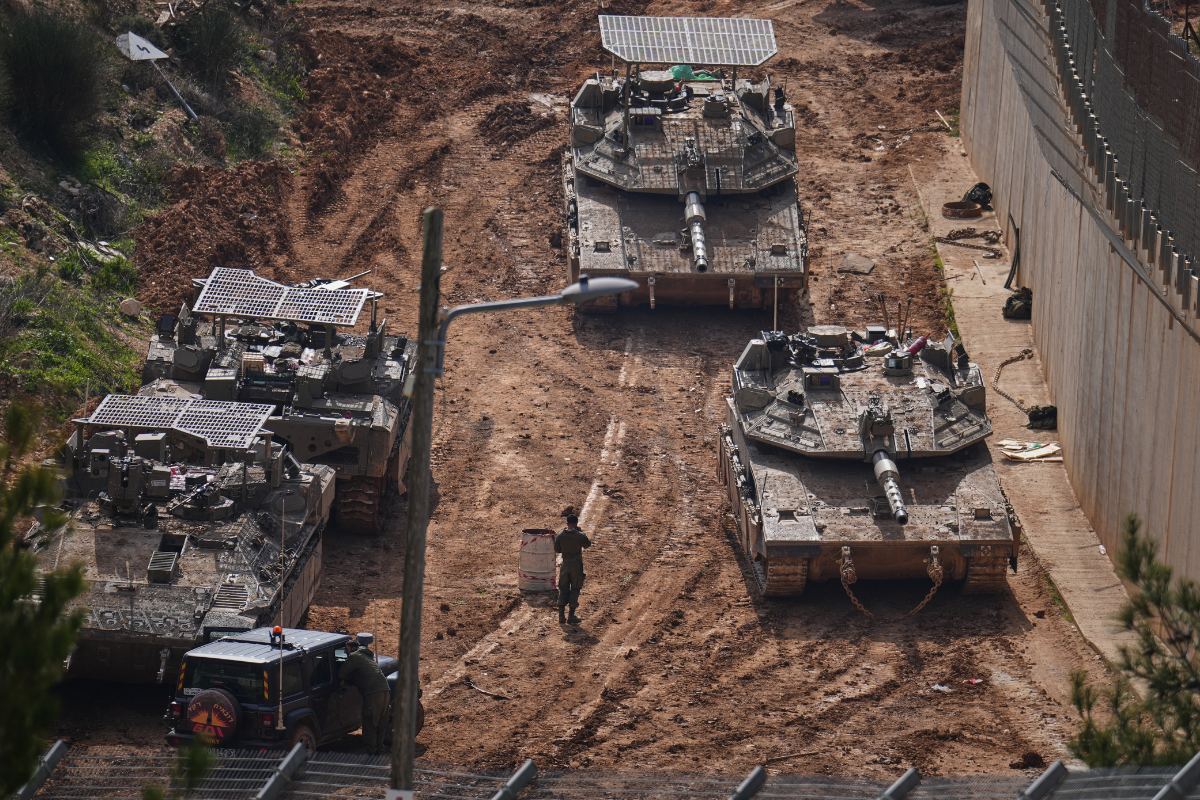
The strike came amid continued exchanges of fire between Israel and Iran, with the conflict risking spillover into a broader regional war.
In northern Israel, two people were killed after an Iranian missile struck a residential building in Haifa early on April 6, according to local authorities. In Iran, explosions were reported overnight in Tehran, with thick black smoke seen rising near Azadi Square after an apparent strike near the Sharif University of Technology.
Katz said Israel had also inflicted significant damage on Iran’s industrial base.
“We have severely damaged Iran’s steel and petrochemical industries,” he said. “We will continue to crush the Iranian national infrastructure and lead to the erosion and collapse of the terrorist regime.”
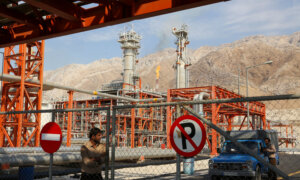
Separately, the IDF stated it had eliminated the head of commerce at the IRGC’s oil headquarters in Tehran.
According to the IDF, the operative—identified as Mohammad Reza Ashrafi Kahi—oversaw the commercial operations of the IRGC’s oil headquarters, estimated to bring in billions of dollars annually, and supported the “advanced development of the IRGC’s military capabilities,” as well as those of Iran’s regional proxies such as the Hezbollah terrorist group.
Cease-Fire Efforts Intensify
The battlefield developments unfolded as diplomatic efforts accelerated to secure a cease-fire between the United States and Iran.
Regional mediators—including Turkey, Egypt, and Pakistan—were working on April 6 to bring both sides back to the negotiating table ahead of a deadline set by U.S. President Donald Trump to reopen the Strait of Hormuz to all vessels.
Senior Israeli officials who spoke to Epoch Magazine in Israel described the situation as a “race against time,” with talks intensifying as the deadline approaches.
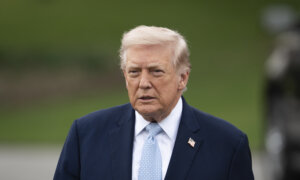
Trump told Axios on April 5 that Washington was “in deep negotiations” with Tehran and expressed hope that a deal could be reached before the deadline, which he has extended to 8 p.m. ET on April 7.
“There is a good chance, but if they don’t make a deal, I am blowing up everything over there,” Trump said.
Iran has so far refused to fully reopen the Strait of Hormuz—a key U.S. condition for deescalation—although it has allowed limited passage for ships it considers friendly.
The narrow waterway, located between Iran and Oman, handles roughly one-fifth of global oil and gas shipments, making it one of the world’s most critical energy choke points.
Shipping traffic through the strait remains sharply reduced, down by more than 90 percent from the same period last year, according to shipping data. A small number of vessels—including Omani-operated tankers, a French-owned container ship, and a Japanese gas carrier—have transited in recent days under tightly controlled conditions.
Uncertainty over the status of peace talks and the direction of the conflict has led to volatility in the oil market. Brent crude briefly rose as high as $111.89 on April 5 and was trading at about $108.80 early on April 6.
Iranian officials have signaled little willingness to accept a cease-fire under current conditions, rejecting proposals they say would benefit Washington.
According to Tasnim, Iranian Foreign Ministry spokesman Esmaeil Baqaei said at an April 6 press conference that cease-fire initiatives serve as a pause for the United States to regroup for further attacks.
Baqaei acknowledged efforts by regional mediators, saying that exchanges of messages conveying both Iran’s position and that of the United States have been exchanged since the beginning of the conflict.
Negotiating under the threat of ultimatums or ongoing U.S.–Israeli attacks was inappropriate, Baqaei was cited as saying, noting that the focus of Iran’s leadership was on defending the country.
Chris Summers and The Associated Press contributed to this report.