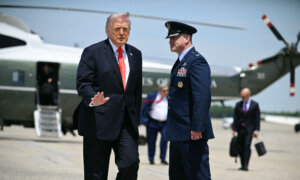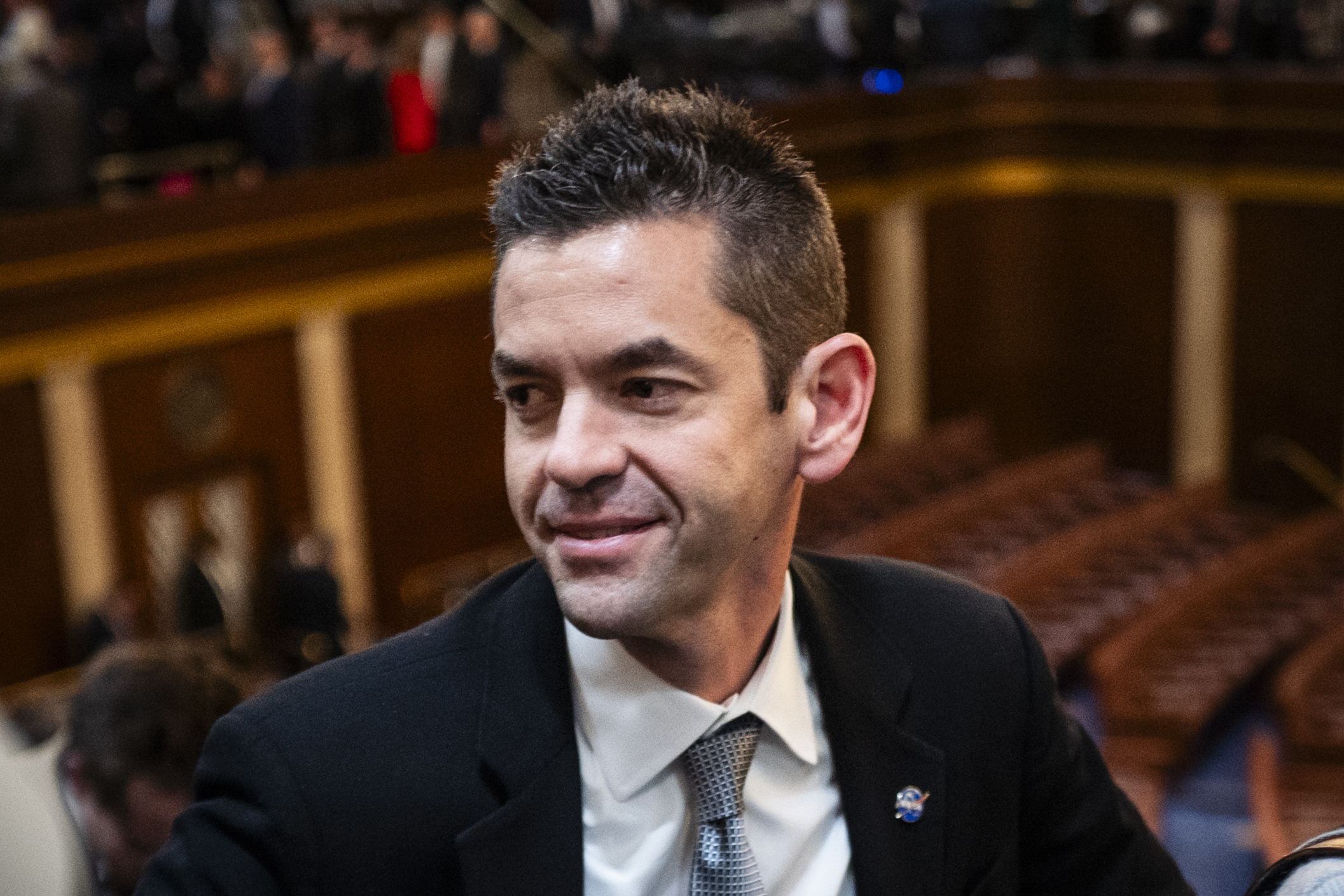

NASA Administrator Jared Isaacman told members of the House Science, Space, and Technology Committee on April 22 that whether or not Congress decides to accept the Trump administration’s proposed budget, the space agency could be doing a lot more with the money it is given.
“NASA’s proposed budget is still greater than every other space agency science budget in the world combined,” he said.
“I don’t think we’re talking about doing less. What we’re trying to do is concentrate resources on the needle-moving scientific objectives that no other agency is capable of doing and doing it with greater frequency.”
The White House’s proposed NASA budget for fiscal year 2027 was $5.6 billion less than its proposed budget for 2026.
While it includes roughly $900 million more toward America’s push to land astronauts on the Moon and establish a permanent base, it cuts billions from NASA’s Science Program, hundreds of millions from Space Technology funding, and NASA’s Office of STEM Engagement.
Committee members appeared to join in a bipartisan rejection of the proposal, with both sides of the aisle expressing the initial opinion that it was not enough.
“I simply do not believe that this budget proposal is capable of supporting what President [Donald] Trump himself has directed the agency to accomplish over the course of his two terms, nor what Congress has directed by law,” Committee Chairman Brian Babin (R-Texas) said in his opening remarks.
“To be clear, I’m a conservative Republican. I am a budget hawk. Our nation is nearly $39 trillion in debt. We must address this alarming situation and soon, but we must be smart in how we do so. Shortchanging NASA is simply not smart.”
Over the course of several hours, Isaacman addressed the lawmakers’ concerns triggered by the proposed budget.
Those worries included the continued employment of people in their respective districts, the continuation of certain science projects, and the endurance of STEM grants and internships for students aspiring to join NASA.
Isaacman, meanwhile, stressed confidence that his agency could continue to do the work expected of it.
The agency’s core issue came down to how taxpayer money was being spent, and the solution was to optimize that funding for the most deliverable outcomes. That means cutting, revamping, or reviving programs that have already cost millions upon millions of dollars over the years.
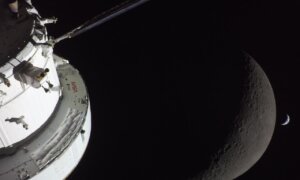
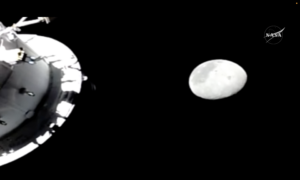
But that increase in delivered outcomes, like the recent Artemis II mission, will continue to engage and inspire the next generation of scientists and engineers to keep NASA’s momentum going.
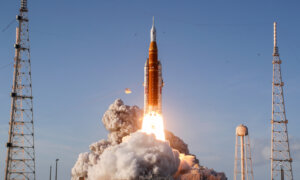
The administrator gave several examples of that optimization, including standardization of the Space Launch System moon rocket.
Originally destined to be bespoke for each Artemis moon mission, the rocket responsible for returning astronauts to the Moon will have one standard configuration that meets the baseline payload requirements and allows for more launches in a shorter amount of time.
Another example was a transition from a workforce of contractors to one made up of civil servants.
Isaacman said billions of dollars were spent on staffing-related agencies to employ outside contractors full-time, including some who worked at Mission Control in Houston. He said that there are some contractors who excel in matters outside of NASA’s core competencies and should remain in a flexible contractor role. He delegated the decision of what NASA’s core competencies are and which workers should be brought in-house to the director of each NASA center.
The administrator also lamented over the billions of dollars spent on projects that never came to fruition despite receiving years of investment. Some were outright canceled, like the unmanned Mars Sample Return mission, the cost of which he said ballooned to more than $10 billion.
While the White House’s proposal suggested a manned mission to Mars would achieve all the same objectives, Isaacman argued that the project spent billions of dollars that could have gone to other means of scientific discovery.
Meanwhile, the realization of spacecraft utilizing nuclear propulsion was pushed to the forefront after costing taxpayers more than $20 billion since the 1960s.
Isaacman rejected concerns that his agency was cutting back on flagship science missions, specifically calling out the Nancy Grace Roman telescope that will be launched in the near future, as well as the Dragonfly mission set to deliver a helicopter drone to Saturn’s moon, Titan.
He also looked to the growing private sector as a means to help that optimization and saw a future where commercial enterprise developed various on-orbit assets from weather satellites to space stations so NASA could focus on pushing the frontier of what was possible.
“We should constantly be recalibrating our mission to doing the near impossible—what others are incapable of doing—and freeing up what we’ve already mastered to industry, where competitive dynamics can improve the quality and capability of the service and ideally make it available at lower cost,” he said.