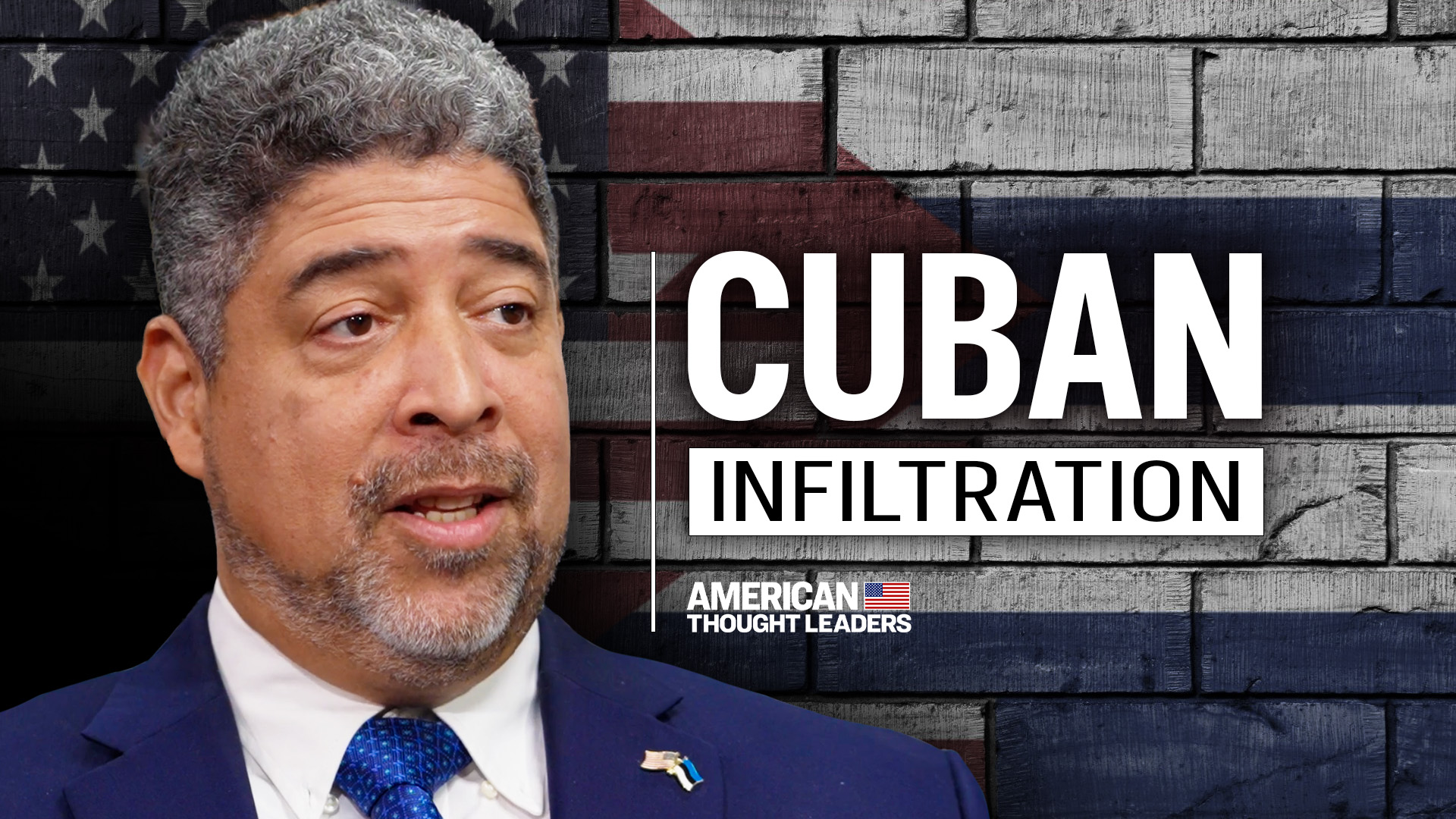
[RUSH TRANSCRIPT BELOW]“The Cuban regime has been very successful at portraying itself as harmless,” but in reality, Cuba’s intelligence service is “more formidable than the KGB,” says John Suarez, the executive director of the Center for a Free Cuba.
A new 100 page State Department report details the full scope of Cuba’s operations, penetrating all levels of the U.S. government, including the CIA and State Department.
How did a country like Cuba become what the State Department describes as the “capital of 21st century communism?”
Suarez says the regime’s long-term infiltration operations recruit agents early, especially via university exchanges.
For instance, Ana Belén Montes spied for Cuba for 17 years as a senior Defense Intelligence Agency analyst, leaking critical information that compromised U.S. intelligence operations.
In another case, a high-ranking U.S. diplomat, Victor Manuel Rocha, shaped American foreign policy for 40 years to benefit Havana until his arrest in 2023.
The Chinese Communist Party is among Cuba’s top backers, installing infrastructure in Cuba to spy on U.S. communications.
In this episode, we trace how this small island built a global intelligence network and how sympathizers in free societies help whitewash the regime.
Views expressed in this video are opinions of the host and the guest, and do not necessarily reflect the views of The Epoch Times.
IMMERSED: Round closes July 30. Invest before the round closes. Learn more about Immersed here.
RUSH TRANSCRIPT
Jan Jekielek:
John Suarez, such a pleasure to have you on American Thought Leaders.
John Suarez:
Thank you for the invitation.
Mr. Jekielek:
So many people are learning for the first time that the Cuban government has multiple proxies working on its behalf against America right here on the ground. Tell me what we know.
Mr. Suarez:
What we know is that they had a bad experience on the Friday after Thanksgiving in 1962 when Cuban diplomats tried to carry out a bombing campaign in several high-profile commercial establishments, Macy’s being one of them in New York City. And the FBI broke it up. It was hugely embarrassing. A number of diplomats were declared persona non grata. And after that, the Cuban regime began using proxy terrorist groups.
One of the most notorious ones was Las Fuerzas Armadas de Liberación Nacional, the Armed Forces of National Liberation, a Puerto Rican terrorist group, trained, funded, provided logistical support, and through the 1970s and 1980s carried out 130 bombings in the New York area. They caused the first evacuation of the Twin Towers.
And on January 24th of 1975, they attacked a historic landmark called Fraunces Tavern. This was a place that had been around since before the establishment of the United States government. In fact, George Washington bade farewell to his troops there in 1783. And on January 24th, 1975, at lunchtime, one of these terrorists went in, left a bomb, it went off, it killed four, and did great structural damage.
The bomb maker of the group, William Morales, who was later captured, tried, and sentenced, escaped from prison, made his way down to Mexico, got in a shootout with federales, and from there wound up in Cuba, where he’s currently harbored today. The son of one of the four men killed, Frank Connor, his son Joe Connor, actually testified before Congress in December demanding the return of William Morales and to get justice for his father. So this is an ongoing tragedy.
Mr. Jekielek:
So this new report that many people are telling me is the most comprehensive thing they’ve seen, and kind of maybe not just of this country, but among other countries, even. There are many things in there that you, of course, already knew about, but kind of give me a picture of what’s in there and why is it so significant?
Mr. Suarez:
I think it really demonstrates that Cuba punches above its weight. The Cuban regime has been very successful at portraying itself as harmless. It’s a poor Caribbean island that poses no threat. And the reality is that that report demonstrates that Cuba has intelligence services more formidable than the KGB [Committee for State Security]. They’ve had successes in penetrating all levels of the U.S. government; the Pentagon with Ana Belén Montes, and the State Department with Walter Kendall Myers and his wife. There was the recent case of Manuel Rocha, who had been ambassador to Bolivia and sat on the National Security Council. He'd been spying for Cuba for 40 years.
Not mentioned in the report is a CIA defector, Philip Agee, who defected to Cuba in 1968. And there are many other such cases. And what it reveals, and Chris Simmons, who was one of the counterintelligence agents mentioned in the report, says explicitly that the Cuban intelligence service is superior to that of the KGB.
Mr. Jekielek:
I don’t even know how is that measured? You know, because we always consider the KGB, or I guess now the FSB [Federal Security Service of the Russian Federation], as being sort of, you know, a very potent force. In what ways is it?
Mr. Suarez:
In the ways that they were able to penetrate all aspects of the U.S. government, trafficking information. They were doing it at times for the Soviet Union, but after the collapse of the Soviet Union, they began doing that work more in selling to different adversaries of the United States. And they got Americans killed. We know just the information Ana Belén Montes was providing led to the death of scores of soldiers in Central America, including American soldiers.
Mr. Jekielek:
So she was, you know, actually very important in her role.
Mr. Suarez:
She was a high-ranking analyst at the Defense Intelligence Agency, which is the military counterpart to the CIA. She had knowledge of methods and materials of intelligence gathering that the director of the CIA did not have access to. And she was working for the Cubans for 17 years, Manuel Rocha for over 40 years. And the way that the Cubans achieved this was by recruiting them when they were just students. So they get them early.
So when you have these exchange programs with universities, that is a prime ground that the intelligence services use to identify and recruit agents. They found people that were ideologically sympathetic through Venceremos Brigades, where they would get Americans to go and cut cane in Cuba. And they would have those who come out that are agents of influence. But within those agents influencing positive things about the regime, they would also identify and recruit agents that would be doing more serious work for their espionage capabilities. And they’ve penetrated everywhere: government, academia, business.
We just saw a MAGA [Make America Great Again] Republican candidate for Congress in Rhode Island just a few weeks ago file his paperwork to be an open agent of the Cuban dictatorship, saying that he had met with Raul Castro’s grandson. He’s an agent of influence, but a legal one because he registered. These others are illegals that were acting in a clandestine manner to spread the influence of the regime.
Mr. Jekielek:
I mean, I’ve been hearing, that’s interesting, the case that you’re describing of the registered agent. Isn’t Cuba somehow trying to make nice with the U.S. government at the moment, given the realities?
Mr. Suarez:
There’s a double discourse. They are in dialogue with elements of the U.S. government. We’ve been hearing the stories about Raúl Guillermo Rodríguez Castro [El Cangrejo], Raul Castro’s grandson, meeting with U.S. counterparts. But inside Cuba, repression has been skyrocketing. There are more political prisoners today than there were in January, and the rhetoric of the regime is quite hostile against Secretary Rubio, for example, and other elements of the government trying to play off the Secretary of State from the president. So they’re playing their games to try to hang on to power.
Mr. Jekielek:
They really must not like that Secretary Rubio is of Cuban ancestry.
Mr. Suarez:
They do not, because they know that Secretary Rubio has their number. And you can see it by the policies enacted by the administration. They’ve identified the new class, which has enriched itself under the Castro regime, that has offshore accounts through something called GAESA [Grupo de Administracion Empresarial S.A.], which is a military conglomerate that runs somewhere between 60 to 80 percent of the Cuban economy. And they’re freezing assets. They’re identifying regime elites living here in the United States, engaged in God knows what kind of activities, and deporting them back to Cuba or detaining them.
One of the pilots that had been involved in the hunt for Brothers to the Rescue pilots in February of 1996 led to the death of three Americans and a U.S. resident. Well, that pilot was residing in Florida. He'd actually gotten in during the Biden administration. He lied on his immigration application. They’ve prosecuted him, and he’s also looking at murder conspiracy for the Brothers to the Rescue shootdown.
Mr. Jekielek:
How do you tell, for example, and I know your organization, of course, has been targeted by the Cuban regime for all sorts of reasons. But how can you tell if someone is in good faith, someone who is looking for freedom and trying to get away from Cuba, or someone coming to sow chaos or worse.
Mr. Suarez:
It’s very difficult. Oftentimes you don’t, you can’t tell. What we try to do is look at the fruits that somebody produces. And it could be that they’re an agent or that they’re crazy, but you can see if they’re sowing chaos and harm to distance yourself from them. But you don’t know because if they’re very good operatives and they know that you’re looking for that, they’re going to be providing you with useful information to gain your trust.
That is until they get an order from Havana that they have to carry out something not so favorable, and they do it, and that’s when you realize, ah, this is who this individual is. But oftentimes you don’t know. I can tell you this. I used to meet with members of the democracy movement, Brothers to the Rescue, and I did see some of the members of the Wasp Network, and I had no clue who they were at the time.
Mr. Jekielek:
Yes, this is the challenge, frankly, with dealing with any, let’s say, dissidents or even any variety of dissidents that are coming from regimes, because some portion of them are, of course, people who are here to do the opposite, kind of, for the opposite reason.
Mr. Suarez:
In the report, they described how a Cuban defector who was a high-ranking intelligence officer appeared before the CIA and then revealed that everybody they thought was working for the CIA in Cuba was actually a double agent working for the Cuban government. And because the Cubans knew that the CIA was going to burn them, they went ahead preemptively and showed video of CIA agents meeting who they thought were their agents that they were supposedly handling.
And no, they were being monitored by the Cuban intelligence service. So, they were able to fool the CIA in a systematic, global fashion inside of Cuba. As someone who’s an amateur, just a human rights activist, not an intelligence specialist, I recognize the limitations there.
Mr. Jekielek:
But I’m sure you’ve been accused of being on the CIA’s payroll and stuff, right? Like, this seems to be kind of par for the course, right, about countering a regime?
Mr. Suarez:
I was accused in Geneva of that once , I immediately denounced it. I had a colleague who didn’t take it so seriously, and she was Slovakian. And I warned her, you need to say you’re not and denounce it, and she didn’t do it. And then when she tried to go back to the UN a few years later, you needed to get credentials from NGOs to be able to enter the building. And the organization that had sponsored her, because of that controversy, refused to allow her to get a credential. She wasn’t CIA. So, this is just from slander.
Mr. Jekielek:
So, this just works even in the official setting. It’s not just for, you know, to kind of pump up the detractors.
Mr. Suarez:
But I can tell you the other thing they tried to do to me, because I was visiting Norway and I was lobbying for the release of political prisoners, and they sent the Cuban embassy letters to all the members of parliament and to all the NGOs claiming I was a terrorist. So, I had news crews coming in asking me if I was a terrorist.
Now, at the time, they were saying that I was hanging out in South Africa when I was about 12-years-old and working for the apartheid regime, which was obviously a lie. So, I was able to denounce that and deny it quickly and show that the charge was ridiculous. But on top of that, I had, by just pure happenstance, met with the sister of a Danish student, Joachim Lovschall, who had been murdered by a Cuban soldier while studying Spanish in Cuba.
So this young Dane—the official version of the Cuban government was that he crossed the wrong, the wrong sidewalk in a security zone. There were no signs, there were no warnings, and the warning was to be shot at over the head with an AK-47. And unfortunately, the soldier’s AK-47 jammed, and that’s why they cut him in half. That was the official story, but they never identified the soldier, and there was never any formal inquest. The father went over there to try to find something out, but they couldn’t.
So when I was approached and asked if I was a terrorist, I completely shut that down quickly. And then I said, you might want to ask the ambassador. I just met with the sister of this young man, Joachim Lovschall, if they'll identify the soldier who shot and killed him, which they still haven’t done. This was in 1997 when it took place.
Mr. Jekielek:
Over the next three to five years, spatial computing is positioned to redefine how we work, moving our daily tasks from physical desks into immersive digital environments. In fact, Apple, Meta, Google, and Qualcomm are investing billions into spatial computing, betting that it’s going to become a core part of everyday life. And today’s sponsor, Immersed, is at the forefront of this coming shift. This company is basically reshaping how people create, collaborate, and connect through AI and spatial computing. They have over a million users. Fortune 500 companies rely on it, and it’s become the number one productivity app on the Meta Quest store. Immersed is positioned to lead this shift, a shift that could prove to be the biggest since the iPhone came along.
And alongside their software platform, Immersed has also developed a lightweight headset designed specifically for productivity. So essentially, they have the trifecta: the hardware, the software, and the AI strategy. And already, Fortune 500 teams are using their tech, with users spending upwards of something like 60 hours each week working inside the platform, which gives this company a competitive advantage in a rapidly growing market.
Now, of course, we can’t predict the future; nobody can do that. But every major tech shift creates massive wealth for early investors who recognize the pattern. And to that end, shares are currently available at 79 cents per share through a Regulation A+ offering open to retail investors. More than 9,000 investors have already participated. If you’re interested in checking out Immersed, check out the link in the description. And now, back to our program.
Mr. Jekielek:
So tell me where you come from and how you ended up doing what you do today and what it is exactly you do today.
Mr. Suarez:
What happened to me was I wanted to be a biologist. I ended up working in a lab for a number of years, and I would go to staff meetings. And one year, we had some folks come in to explain to us that the scientific method, logical reasoning, and mathematics were racist and patriarchal. And that got me into conservative activism. A couple of years went by, and then Morton Blackwell of the Leadership Institute approached me to work as a youth coordinator in Nebraska in a congressional race.
When I was out there, I ran into Cuban diplomats. They were lobbying in the Midwest, which shocked me at the time. And I went back in 1994, this time to Iowa. And then I ran into Sandra Levinson from the Center of Cuban Studies out of New York, a personal friend of Fidel Castro’s, who had been taking young Americans to cut cane in Cuba from the 60s. In the 90s, when this took place, she was still taking young Americans to be brainwashed in Cuba. And this was just after the August 5th, 1994 uprising.
She was portraying that things were perfect in Cuba. She claimed there were no political prisoners and that the only problem was the U.S. economic sanctions. And I was horrified by that. And that got me thinking we needed an English-speaking anti-Castro voice. And that’s where I got active with other students. We set up something called the Free Cuba Foundation.
Then a couple of years later, I ended up at New College, which was a very Left-wing school at the time. I ran into Frank Calzon, who was the head of the Center for a Free Cuba, and I debated some communists. Things went well in the debate, and then Frank and I developed a relationship. And then a couple of years later, I went to work for him as a program officer. And then when he retired in 2019, I was at Freedom House and their Latin America programs. And the board of directors of the center approached me to take over as executive director, which is what I am currently.
Mr. Jekielek:
So, what do you do and your organization?
Mr. Suarez:
The organization was established in 1997. We take part in the U.S.-Cuba policy debate, and also the European-Cuba policy debate. We reach out to the diplomatic community. So we also talk about Latin America and Canada. We also help victims of repression, getting humanitarian assistance to the families of political prisoners on the island. We take victims of repression to speak.
We’ve taken folks like Sirley Avila Leon, a woman who, for speaking up, was attacked with a machete. She lost a hand and lost the use of her knees. We had her speak at the UN Human Rights Council. She also was able to visit with the president in the White House. We’ve also done things at the Inter-American Commission for Human Rights and occasionally get op-eds published in major publications. Most recently, regarding the indictment of Raul Castro, I had a piece published in the Wall Street Journal.
Mr. Jekielek:
Well, so let’s talk about that: What happened in Venezuela, the U.S. operation in Venezuela, and then this indictment and so forth? It is described by some people as a kind of U.S. overreach, right? How do you respond to that?
Mr. Suarez:
I think not too many talk about the Cuban overreach, where Cuba has been involved in undermining democracies. And Venezuela had had a decades-long democracy. They attempted and failed repeatedly to send guerrillas and armed groups to overthrow the Venezuelan government in the 1960s. And then they found a different vector using Hugo Chavez.
In the 1990s, and then a spy whom they had recruited and developed from a very young age, which was Nicolas Maduro. And we found that when the U.S. went on that police action to take Mr. Maduro, who was under indictment, that his Praetorian Guard were not Venezuelans. They were Cubans, 32 of them officially killed in the engagement with U.S. forces. So for this being a small country, Cuba has been punching above its weight, and not only in the Americas.
A book from the Naval Annapolis Press has a chapter called The Zoo program that runs from 1967 to 1969, where Cubans traveled to Vietnam to torture American POWs under the custody of the North Vietnamese. Cubans were also involved in supporting Mengitsu Haile Mariam in Ethiopia, a war criminal who engaged in genocide against his own people. Well, Cuban troops were assisting in destroying, killing cattle, and poisoning wells of water.
So, people would die on a large scale, and also took part in something called the Red Terror in the early 80s. The Cubans were also involved in Paris when Carlos the Jackal was murdering French people in terror actions while in hiding. Cuban diplomats were visiting his hideout, and it was spotted by French intelligence. Three Cuban diplomats were declared persona non grata and kicked out of France.
Mr. Jekielek:
So, they’ve been doing a lot, right, these Cuban intelligence officers were really originally trained by the Soviets, right, by the KGB, and then became like a special forces or something.
Mr. Suarez:
Not just the KGB, they were trained by the KGB, the East German Stasi, and the Czechoslovak StB. So the East Germans had the reputation of being the best of the best. So the Cubans had the KGB, the East Germans, and the StB, and their own native ability. We must recall that in the Cuban War of Independence in the 1890s, the Cubans were involved in engineering the assassination of a Spanish prime minister by an anarchist.
The interesting part of it was that the anarchist initially wanted to assassinate the royal family. And the Cuban independence fighters convinced them that that was a waste of time because they were figureheads and encouraged them to go after the prime minister. Why? Because the prime minister was the supporter behind the scenes of a general that was putting Cubans into concentration camps during the War of Independence. And when that prime minister was assassinated, that general was reassigned.
So the Cubans have a good ability at conspiracy already, apparently. And then you add that with the East German Stasi, the KGB, and the Czechoslovak StB, and they punch way above their weight. And American intelligence services have described them. Chris Simmons, a counterintelligence guy who caught Ana Belen Montes, said that they are better than the KGB as an intelligence service.
Mr. Jekielek:
And so, given the level of activity, and again, sort of exposed in this report or documented or compiled in this new State Department report, that reflects in your mind that this isn’t by any means overreach. This is a fair police action and so forth. Like, just explain to me what the charges are against him.
Mr. Suarez:
The problem is that to go into the Soles cartel and the drug trafficking out of Venezuela, we should go back to the origins of drug trafficking in the Americas. In 1961, one of the instructions, and there’s a book called Red Cocaine from the 1980s that goes into this. There was a Czechoslovak StB agent, a high-ranking official, that was meeting regularly with Raul Castro in the early 60s. And they had been tasked by the Soviet Union to improve the capacity and grow the drug trafficking networks in Latin America.And they were doing that throughout the 1960s.
In the 1980s, there’s a documentary from PBS, WGBH Frontline, which you can find the transcript of online, called Cuba and Cocaine, which demonstrates again how the Cuban intelligence service was facilitating drug trafficking, how drug traffickers would land their planes in Cuba, be fed, vetted, and then fly out to go to the United States. It had images of the U.S. Coast Guard being blocked by the Cuban Coast Guard protecting speedboats filled with cocaine heading to the United States.
Now, when in 1989, Manuel Noriega was captured for his involvement in drug trafficking, Fidel Castro and Raul Castro both got very nervous. Raul Castro actually had an indictment back then sitting with a prosecutor that was shelved during the Clinton administration for his involvement in drug trafficking. Carlos Lehder, a major drug dealer, describes how when there was a conflict between Manuel Noriega and some of the cartels, the mediator to make peace was Fidel Castro.
So by the time you get to 1989, and Manuel Noriega does a purge of the military, he finds some scapegoats and people that could identify him directly with the drug traffickers. They’re executed and they claim that they’ve stepped away from drug trafficking. Well, when Hugo Chavez comes on the scene, the Soles cartel is named after the insignia on generals’ uniforms in Venezuela. They were involved in low-level trafficking of drugs.
Well, the Cubans get involved, and they help improve their capacity and grow it geometrically. And they become a major source of cocaine into the United States and also Europe. And that’s the Soles cartel. And that’s being run by Cubans, but also Nicolas Maduro, for their role in trafficking cocaine through this instrument called the Soles Cartel.
Mr. Jekielek:
And Raul Castro?
Mr. Suarez:
Raul Castro was indicted for his role in the Brothers to the Rescue shootdown of 1996. And we'll see if they want to go back and revisit that chapter in terms of the drug trafficking.
Mr. Jekielek:
What do you think should happen next? Clearly, the U.S. has some intent in changing the status quo in the Americas. Well, we’ve seen it already.
Mr. Suarez:
As we discussed a few months ago, the United States has said, the Trump administration has said quite explicitly, they’re not going to tolerate the status quo. Their negotiations with Mr. Maduro did not go well. So, Mr. Maduro is now in the U.S. District of Southern New York. They’re also putting pressure on Nicaragua.
But what seems, at least in this hemisphere, there has been a full court press with Cuba, and they’re negotiating with Raul Castro’s grandson, who isn’t the intellectual heavyweight. It’s probably his uncle, who is Alejandro Castro Espin, a brigadier general, son of Raul Castro, who was the negotiator for Cuba or for Havana during the Obama administration. He was the counterpart to Ben Rhodes. He was also the person who accompanied Raul Castro on visits to Moscow to meet Mr. Putin.
We also haven’t mentioned, and I think it’s important to point out that currently, since 2022, there have been over 25,000 Cubans fighting in Ukraine, including Cuban special forces, Avispas Negras. Miguel Díaz-Canel met with Vladimir Putin and wished him success in his military operation against Ukraine. So you have all these pieces, and the Trump administration is saying, We’re not going to tolerate this anymore. You cannot be engaged with American adversaries 90 miles away from our shores.And they’re pushing for change on the political and economic front.
The regime has responded with 176 measures, but the fundamental change has not been made, which would be an independent judiciary and rule of law, which would actually spark investment in Cuba. And secondly, a democratic opening, which would necessitate three things: release of all political prisoners, setting the date for free and fair elections, and restoring basic civil liberties. Inside the island, it’s something we haven’t had since 1960.
Mr. Jekielek:
So, would you say this is the best shot in a very long time right now?
Mr. Suarez:
Yes, I think it’s probably the best shot since 2002. And in 2002, there was a citizen-led initiative by Cubans called the Varela Project, which eventually attained over 30,000 signatures calling for change using existing laws within the system. And that was quashed by Fidel Castro, who basically ignored the law on their books and changed the Cuban constitution to make it unreformable, so it would always be a communist regime, according to statute. And then the organizers of the petition drive were jailed. And then on July 22nd, 2012, the head of the movement, Oswaldo Paya, and his youth leader, Harold Cepero, were murdered by Cuban state security.
So the citizen-led effort was put down. And it was put down in part because you had the United States at that point during the Obama administration demonstrating that they were willing to legitimize and engage with the dictatorship. And there were no serious consequences for the murder of opposition leaders. And there was also a reduction in support for the Democrats while they were encouraging investment in the private sector in Cuba, which means the sons and daughters of the new class and GAESA.
So what you saw during the Obama era was an empowerment of the Cuban military in the economic sector. And what we’re seeing with this current administration is that they’re going after that military conglomerate. They’re sanctioning elites. They’re identifying them when they’re in the U.S. and other places. They’re trying to freeze bank accounts and pursue accountability with the indictment of Raul Castro and others involved in the murder of American citizens.
And also, what they’re doing in Venezuela when they went after Nicolas Maduro obviously impacted the Cubans as well, as I already mentioned, the 32 killed. But the Cubans were also involved in getting resources from drug trafficking, which has been collapsed also by the actions of this administration.
Mr. Jekielek:
What about the protests of a few years back? How did that connect with, was that an opportunity? That wasn’t as big an opportunity in your view because it wasn’t structured.
Mr. Suarez:
It was a spontaneous cry of despair across the island. It was a mistake made by the security apparatus, a rare mistake, which was when protests broke out in San Antonio de los Banos, just outside of Havana, and they didn’t shut down the internet in the country. The internet stayed running, and everybody across the country was able to find out protests were taking place, and they got inspired. Why was the kindling such that people wanted to take to the streets knowing what the consequences would be?
Well, the Cuban dictatorship had decided that they wanted to pitch their image as a medical superpower, and they were going to produce their own vaccines. They called them Abdala and Soberana, homegrown vaccines. So, in December of 2020, vaccines started to circulate in the rest of Latin America from Russia, China, and the U.S. And Cuba does not allow any of that vaccine into its country because it wants to say it’s going to inoculate Cubans with Cuban vaccines. So, January goes by, February, March, April. The Cuban government does not document deaths in Cuba, but the Cubans are burying relatives in mass graves and listening to this happy talk in the official propaganda channels.
And by the time the vaccines came out in June, July, they were ineffectual, and they were burying large numbers of people. And that was, I think, a determining factor in what caused that explosion of anger and demand for freedom and regime change in July of 2021. Then what is interesting, in August, a month after those massive protests, is when the Chinese COVID vaccine arrived in Cuba.
Mr. Jekielek:
So, mentioning the Cuban medical system, we’ve been hearing for years how high quality, in Canada at least, right, and maybe in the U.S., although I haven’t heard it as much, that the Cuban system is just fantastic. And, you know, and, but, in fact, people do go to Cuba for medical care. So it’s not entirely untrue. And so, what is the reality of the medical system in Cuba?
Mr. Suarez:
The reality is that prior to the revolution, the Cuban system was an excellent medical system in Cuba, widely available to most Cubans. And you had some premier doctors. In fact, growing up in Miami, many of them were exiled. One of them was Dr. Castellanos, a pioneering cardiac surgeon, who searched the arteries and veins with x-ray. He pioneered that in the 1930s. He was actually nominated for the Nobel Prize in Medicine.
And there were multiple nominations for the Nobel Prize in Medicine pre-Castro. There have been no nominations for Nobel Prizes in Medicine under the Castro regime. So the doctors aren’t the same quality as what there was before. The system has been politicized. So the doctors are revolutionaries first and doctors second. So there have been instances where dissidents have died under suspicious circumstances.
Also there’s a two-tiered system. The average Cuban, especially post-1990, doesn’t have access to decent healthcare. You have to be part of the regime elite or a tourist from abroad. One of the doctors that had hung around that was very good, she ended up having to defect to Argentina because she was protesting this two-tiered system. And it exists to the present day.
You'll see images of these very substandard, filthy hospital facilities where Cubans only go if they’re really in bad shape because it’s not very hygienic. And you have to bring everything: the towels, the blankets, the pillows. And you have to be able to take food.
You have to be able to slip the doctor something. It is not free. In theory, it’s free, but in practice, if you want to get care, you have to pay them something because the doctors aren’t making enough money to survive on their own from the government salaries.
Mr. Jekielek:
How does Cuba fund itself?
Mr. Suarez:
You have the remittances from the diaspora abroad, of which the military is able to take a good chunk. You have drug trafficking.
Mr. Jekielek:
I just want to expound on that for just a moment, okay? So basically, the people that have escaped Cuba, right, they make it.
Mr. Suarez:
To help their families, they’re sending money back, and the regime is able to take a chunk out of that.
Mr. Jekielek:
So, in a way, they kind of tolerate it because that’s part of their revenue stream.
Mr. Suarez:
Yes. Prior to the Soviet Union collapsing, it was verboten up until 1980, from 1959 to 1980. It was looked on very negatively for you to have contact with your family abroad. If you did, you could be subject to an act of repudiation. If you were a child and you were trying to talk to a grandparent or something living abroad, they would take you out and just have people screaming at you and probably mark it against you as being not ideologically conforming. And that could also impact your ability to get into higher education.
So after the economic crisis, they used to call the diaspora worms. And then the saying in Cuba was that the worms became butterflies. And then they would say in Cuba, they would do a play on the word faith. In Spanish, it’s fe, which means you have to have faith to survive in Cuba. And then they say fe, family in the exterior, to be able to get the remittances to survive.
Mr. Jekielek:
Fascinating. Okay. So part of it is these remittances. What else?
Mr. Suarez:
The other part of it is, has been the Russians, and Putin sunk $32 billion, and the Chinese put in billions. Currently, one of the main sources of funding is the European Union and Spain. There was a report that came out just a couple of weeks ago demonstrating that Spain has sunk in over the last 10 years over $2.5 billion into the Cuban regime. And they’ve forgiven much of the debts accrued, as have the Russians and the Chinese and the Paris group. So that’s another major source of funding.
And then the other thing that they’ve been doing with investors who come in building hotels, and they’ve been siphoning money from that and from tourism. But that’s collapsed over the last five years, thanks to the pandemic. So they’ve been having a tougher time of things.
Mr. Jekielek:
How is the Chinese Communist Party [CCP] connected with them?
Mr. Suarez:
With the Chinese Communist Party, first, there are two phases. The first phase was between 1959 and 1966. In fact, a Chinese dissident wrote an essay for me a few years back describing how when they had the great leap forward, when millions of Chinese were starving to death because of Mao’s policies, Mao was shipping rice to Cuba. At a time when Cuba didn’t need the rice, but it was trying to compete with the Russians as to who was the greater communist power with more influence. But by 1966, Russia was demonstrating they could provide more to the Cubans and the Chinese.
So Fidel Castro kicked them to the curb, insulting them. They held the Tricontinental conference in Havana in 1966, which I mentioned, where they gathered all the terrorist and guerrilla groups together to spring up a terrorist internationale. There was a large delegation of Russians, but also a large delegation of Chinese officials were there. And this was in Havana in January of 1966, so literally 60 years ago this year.
So the relationship cools. And then when Mikhail Gorbachev comes around with perestroika and glasnost, Fidel Castro views that as a threat, begins purging the military of elements contaminated by those ideas, and starts censoring Soviet materials. And then when Tiananmen Square happens, and China’s relations temporarily cool with the United States, he reaches out to Beijing. He supports the Tiananmen Square massacre.
Then there are the visits where Fidel Castro goes to China, and Raul Castro goes to China. There are pictures of Fidel Castro on the Great Wall. And then those visits are reciprocated with high-ranking Chinese officials. And in 1992, one year after the collapse of the Soviet Union, the first Chinese spies arrived in Cuba to work in facilities to do signals intelligence and spy on the United States. And that has continued to the present day. And a couple of years ago, there was evidence that those bases were updated and expanded, and they’re operating as we speak.
Mr. Jekielek:
Something that really struck me recently was this speech that Secretary Rubio gave about far-Left extremism. And he did make connections to Cuba in that speech. How did that speech grab you? And number two, what connections are there?
Mr. Suarez:
I can say firsthand from the Latin American Studies Association, LASA, conference where I went years ago. I was asked by Frank Calzone to do it. And we went in, and there was a contingent of Cuban intelligence officers and far-Leftists. And we were handing out anti-Castro material and supporting at that time Ambassador Otto Reich. He was up for a position in the George W. Bush administration. And you could see the reaction from these hardcore Leftists. Some of them were Left-wingers from the academy, but others were from Havana and obviously were Cuban intelligence officials. And this was at an academic conference here in the States.
So they’ve been working very close together for decades, and that hasn’t declined. Now, the way they do it, some of them do it illegally through clandestine agents. And we saw the Wasp Network that was broken up in 1998. A number of those people had their sentences commuted in 2017 and returned to Cuba to a hero’s welcome. And there are others that do it openly, but they do it openly by registering as agents, going through all the requirements to be able to travel to the island on academic exchanges.
But to do an academic exchange with Cuba, you have to go along with the Cuban government. Otherwise, they’re not going to allow you in. So you can do it legally; you can legally be an agent of influence for the regime and advocate for extremist positions. There’s a First Amendment, there are civil liberties here, and you can advocate for a radical change of government. You have the Democratic Socialists of America that openly espouse support for the model.
Bernie Sanders, for God’s sakes, went on a honeymoon to the Soviet Union and met with Daniel Ortega and was praising China when he was in the Democratic primary. I don’t know if you recall this. He actually came out and said that communist China was the greatest example of a state that lifted the most people out of poverty, without mentioning the tens of millions murdered by Mao. Well, starved by Mao, and then millions also executed by Mao with the Cultural Revolution.
Mr. Jekielek:
Right. It’s just that’s a pet peeve of mine that people don’t tend to. There’s a technical truth about the lifting of the millions, but after driving people to mass starvation and cannibalism and so forth.
Mr. Suarez:
Also, the question is, how much of that uplift was due to U.S. policies underwriting, subsidizing communist China, and shifting the industrial base of the United States for cheap labor to Beijing, which I don’t think served U.S. interests? And it did not lead to liberalization of China. What it led to was a more perfect, modern totalitarianism, which now threatens democracies across the world.
Mr. Jekielek:
Last question: Your reaction to Secretary Rubio’s speech about communism at large and the threat of Left-wing extremism.
Mr. Suarez:
I think it’s a fair assessment that there is a threat from the Left-wing. There’s a threat from Left-wing extremism. We see it with the Democrat Socialists of America. We see it with Hasan Piker, who just came out praising Mao. It’s not a secret. They’re very transparent about their position.
But I'd say there are also Right-wing extremists as well. And we have people now, you know, resurrecting Hitler and trying to, I mean, Kanye West, for God’s sakes, has a song and a video to it. So there is this polarization, extremes that are embracing totalitarianism, and we need to find a way to embrace the democratic center and reject those extremists, be they Nazis or be they communists.
Mr. Jekielek:
Well, John Suarez, such a pleasure to have had you on.
Mr. Suarez:
Thank you.
This interview has been partially edited for clarity and brevity.