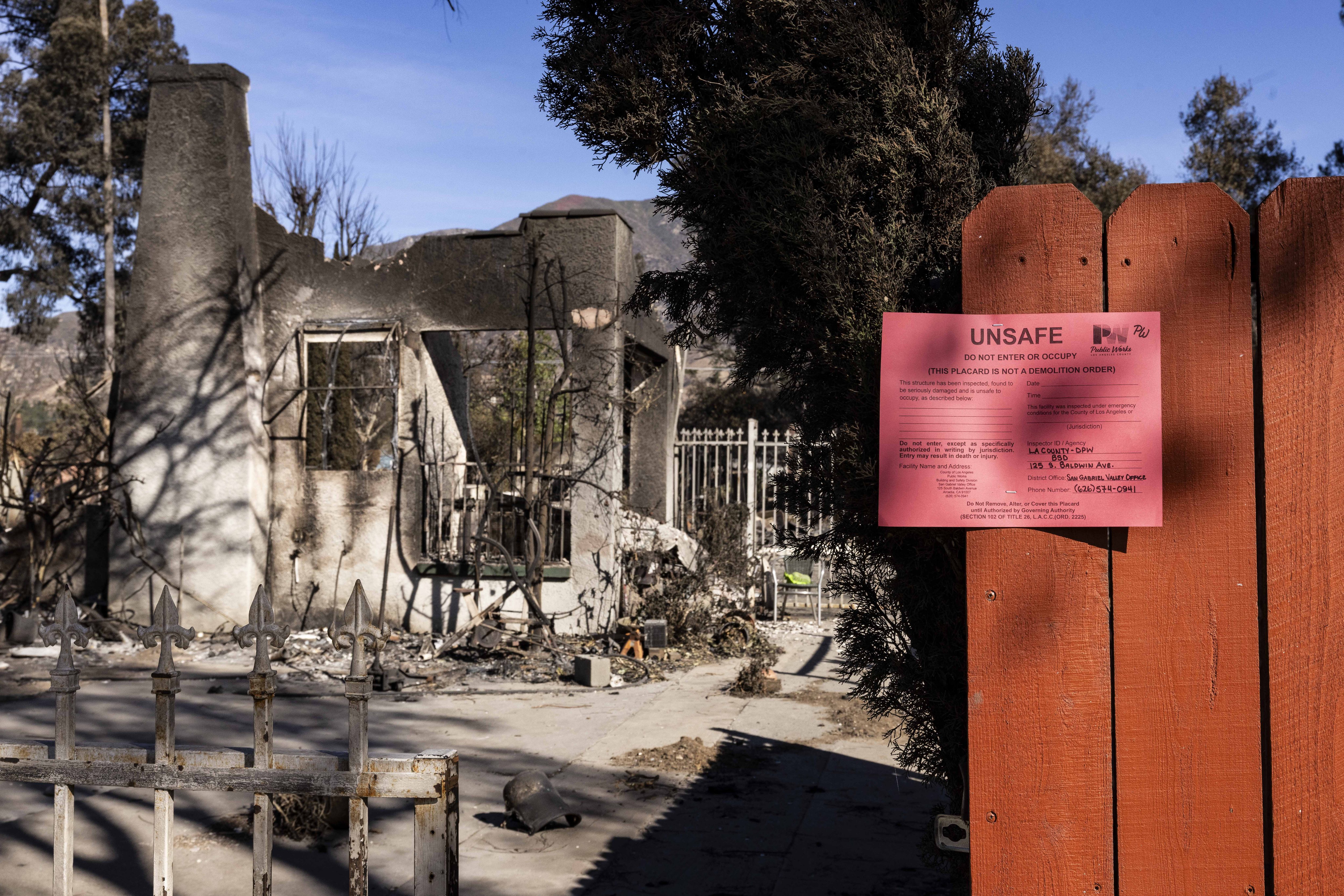

LOS ANGELES COUNTY—Survivors of the Eaton Fire urged state and county officials on July 7 to hold insurance companies accountable as they struggle to rebuild six months after the blaze destroyed their communities.
As Gov. Gavin Newsom and Insurance Commissioner Ricardo Lara joined other officials at a news conference held in Pasadena, California, to mark six months since the deadly Eaton and Palisades fires claimed 30 lives and destroyed thousands of structures in January, Eaton Fire Survivors Network—a nonprofit group advocating for fire survivors—held a news conference to voice concerns about insurance companies a few miles away in Altadena.
“Families are draining savings, maxing out credit cards, and watching generations of wealth evaporate because of the failures of our insurance companies,” Joy Chen, a spokesperson for the Eaton Fire Survivors Network, said.
According to Chen, 70 percent of insured survivors have faced delays, denials, or underpayments.
“These are not just statistics,” Chen said. “These are parents spending everything they have to keep a roof over their heads, their children waking up at night and still afraid. They’re seniors trying to live in homes filled with toxic contaminants because they have no place to go.”
Chen said residents affected by the fires have had to battle their insurers while trying to put their lives back together. The delays and denials were “pushing thousands of [residents] to the brink,” she said.
The group has received $10 million in funding from the California Community Foundation and Snap Inc. founders Evan Spiegel and Bobby Murphy.
Lara launched a formal investigation into the state’s largest insurer—State Farm—in June. The company insures about 1 million homeowners in California.
“Californians deserve fair and comprehensive treatment from their insurance companies,” Lara said in a statement in June. “No one should be left in uncertainty, forced to fight for what they are owed, or face endless delays that often lead consumers to give up.”
The California Department of Insurance has received general allegations from wildfire survivor groups regarding State Farm’s processing of claims. Some alleged patterns include reassignment of multiple adjusters, inconsistent management of similar claims, and inadequate record-keeping or information sharing among claims teams, according to Lara.
In response, State Farm said in a statement: “A fair review will find that thousands of State Farm customers are being helped by our teams on the ground in Los Angeles County and are very satisfied. Our efforts will remain on serving all our customers and meeting our obligations under the contract while providing the necessary information to the [Department of Insurance].”
In a July 8 update, the company said: “For six months, thousands of State Farm employees, associates, and agents have been helping customers recover from the devastating wildfires in Los Angeles. ... Given the magnitude of this event and its impact on so many families, we are still actively working with customers through the claims process. Anyone with a question or a concern should reach out to us.”
State Farm reported receiving about 13,000 wildfire-related claims from the Los Angeles fires and said it had paid out more than $4 billion to affected policyholders.
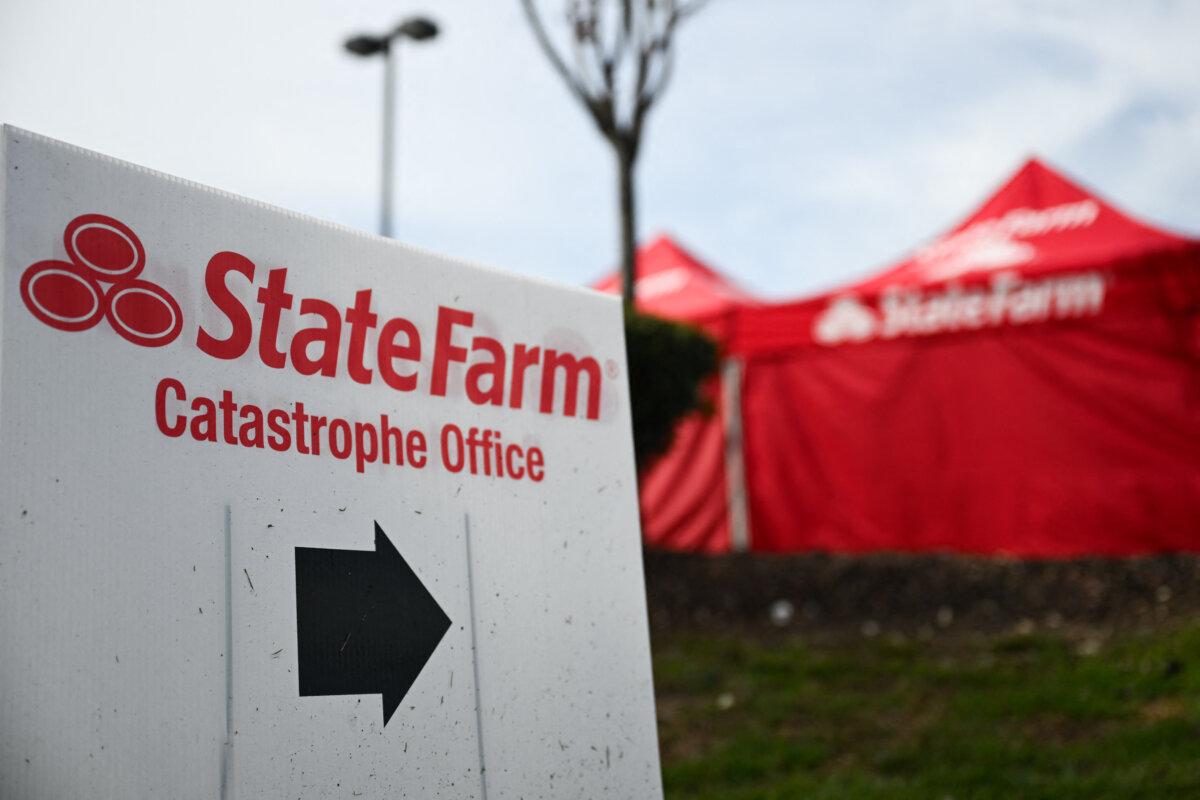
A State Farm sign points to a mobile office near the LA wildfire burn zone on Feb. 21, 2025. (Patrick T. Fallon/AFP via Getty Images)
A number of insurance companies have stopped renewing homeowner policies in California in recent years, and State Farm also announced in 2024 that it would not renew about 72,000 policies for homes and apartments in the state.
California approved a 17 percent rate increase for State Farm’s homeowner insurance customers on May 13.
The company had requested a 22 percent emergency rate rise in March, which was reviewed by administrative judge Karl Fredric J. Seligman during a three-day hearing in April.
Since January, the Insurance Department has recovered more than $40 million for survivors of the Eaton and Palisades fires through its intervention in formal consumer complaints. As of May 12, insurance companies had paid out nearly $17 billion to residential and commercial insurance policyholders affected by the fires, according to the agency.
Newsom acknowledged the six-month mark on July 7 at a news conference and released a social media statement before the event.
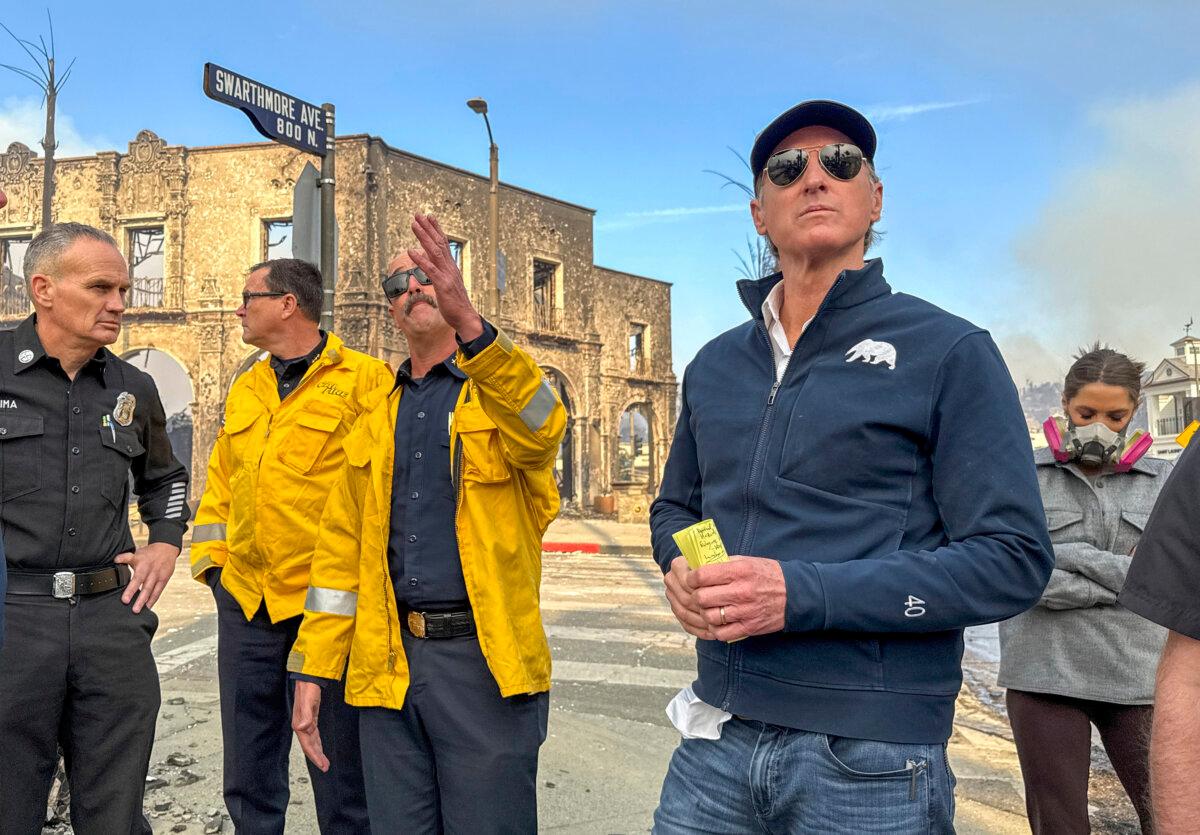
California Gov. Gavin Newsom (R) surveys damage with Cal Fire's Nick Schuler in Pacific Palisades, Calif., on Jan. 8, 2025. (Jeff Gritchen/The Orange County Register via AP)
“In the six months since the horrific L.A. firestorms, California showed what’s possible when government moves at the speed of need: clearing debris from over 10,000 parcels faster than any major wildfire in U.S. history,” Newsom said in a post on social media platform X. “Plus, all water systems have been restored, and all school campuses affected by the fires have been cleared. But there’s more work to do.”
The governor said debris had been removed from all but “a few hundred” parcels burned in the two fires.
“All told, 96 percent now of all the debris has been removed,” Newsom said. “We could say, it’s substantially complete.”
A total of 12,048 homes destroyed in the fires left behind debris that needed to be cleared, according to the governor.
Crews have removed more than 2.5 million tons—or 5 billion pounds—of ash, debris, metal, concrete, and contaminated soil, according to Newsom’s office. That tops the 1.8 million tons removed from ground zero after the 9/11 terrorist attacks in New York City in 2001.
In all, the state received more than $5 billion in direct and indirect federal assistance, with some funds earmarked to help small businesses, Newsom reported.
“Recovery after all defines us,” Newsom said at the news conference. “It’s not what happens to us; it’s how we respond to what’s happened to us.”

Firefighters work near a church destroyed in the Palisades Fire in Los Angeles on Jan. 10, 2025. (David Ryder/Reuters)
The state is now moving into the rebuilding phase, Newsom said. The state and county are working on a framework that prioritizes financial pathways for survivors to return home, increases access to affordable designs, and increases available builders. Issues around permitting and addressing public infrastructure are also priorities, he said.
On July 8, Newsom and the California Department of Housing and Community Development announced $101 million in funding to help fast-track the rebuilding of affordable multifamily rental housing in Los Angeles areas affected by the fires.
Newsom also issued a new executive order on July 7 that he said reduces barriers to rebuilding by expanding environmental exemptions for homes and schools and exempting homes from some building codes.
Los Angeles County Fire Department investigators have not yet released information on what might have caused the January fires. The department did not respond to a request for information about the investigation.
County Supervisor Kathryn Barger also spoke at the news conference, saying it was an opportunity to “look ahead.”
“My heart belongs to the community of Altadena and Pasadena,” she said. “We have a roadmap to help us navigate the next phase of recovery of all. This is going to be something that is going to help people navigate the rebuilding effort.”
Los Angeles Mayor Karen Bass did not attend the news conference on July 7 but was represented by Deputy Mayor Rachel Freeman. Bass was captured on video confronting Immigration and Customs Enforcement officers during an operation in the city’s MacArthur Park while the news conference was being held.
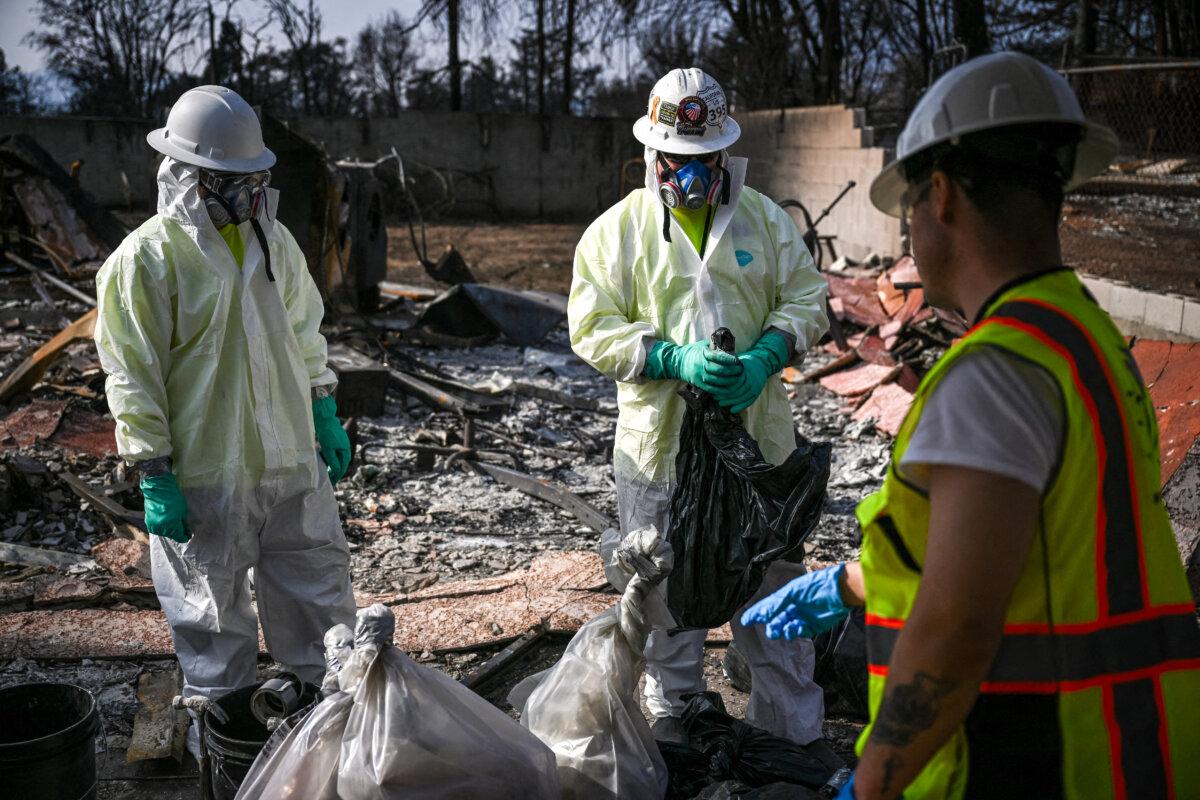
Contractors for the Environmental Protection Agency remove hazardous waste as they search the burn area after the Eaton Fire in the Altadena neighborhood of Los Angeles County on Jan. 30, 2025. (Patrick T. Fallon/AFP via Getty Images)
Hundreds of Altadena residents, community groups, and faith leaders were expected to attend a vigil on the night of July 7, alongside fire survivors, to honor the 18 lives lost in the Eaton Fire.
Pasadena Mayor Victor Gordo also spoke at the news conference.
“What we have experienced in our region and the state of California is a moment in time,” Gordo said. “Everyone in this room played a role in helping us get through that moment in time. But we’re not finished.”
City News Service contributed to this report.