
Fulton County, the most populous county in Georgia, is asking a federal judge to quash a federal subpoena for the personal information of election workers involved in the 2020 election.
A grand jury issued the subpoena on April 17 as part of a criminal investigation into irregularities in the election.
The county’s lawyers called the subpoena overbroad and a product of a “fishing expedition” meant “to target and harass the President’s perceived political enemies,” according to a May 4 court document.
President Donald Trump unsuccessfully challenged Georgia’s election results in 2020, losing the state by some 11,000 votes. He was later charged with a criminal conspiracy based on a rationale that he mounted his effort with a corrupt intent. The case was dismissed after Trump was elected president again.
The criminal probe led by his appointees now rests on a somewhat analogous legal theory: If known irregularities in the election were intentional, they would have amounted to federal crimes, even if they did not affect the election’s outcome, according to an affidavit backing a raid of Fulton’s election offices earlier this year.
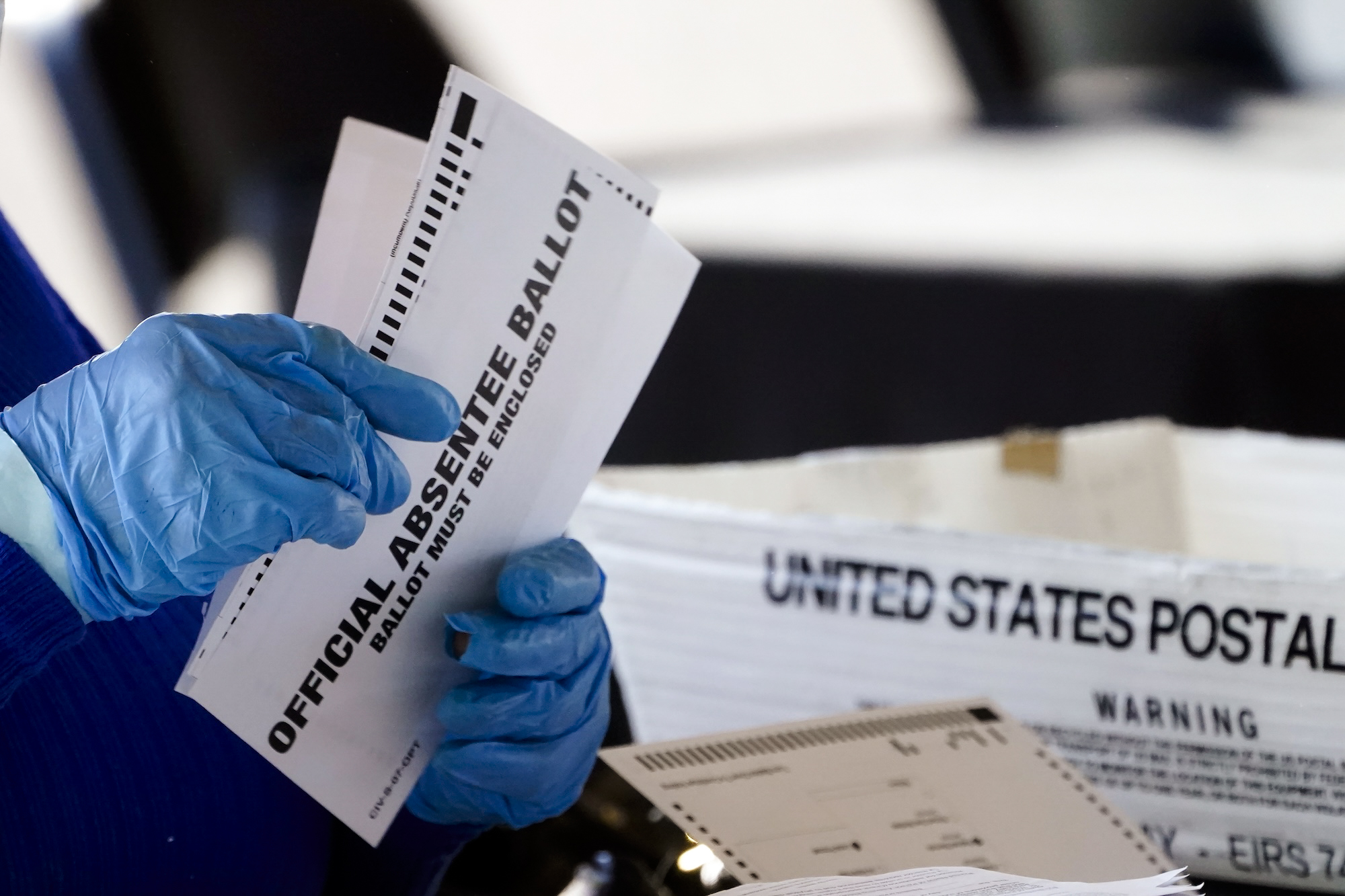
The April 17 subpoena demands the names and contact information of people responsible for handling the 2020 ballots in various capacities, from precinct managers to recount volunteers. It also demands personal information of third-party contractors used by the county’s election board.
It is not clear whether the FBI plans to interview all the individuals. The county’s lawyers said it involves thousands of people.
The basis for the subpoena is also not clear, as grand jury proceedings are commonly sealed from the public.
The previous search warrant affidavit identified a litany of issues, including missing signatures on tabulation records, inconsistencies with how tabulators were “closed” after counting, and errors during the two recounts.
Some of the most puzzling errors happened during the hand recount, in which ballots were counted in batches and the final tally for each batch was supposed to be put into an electronic auditing system.
Results for some of the batches were wrong when checked later against ballot images for each batch. For example, one batch consisted of 85 votes for then-presidential candidate Joe Biden, 12 for Trump, and three for other candidates. But someone entered it into the auditing system as 200 votes for Biden and none for others. There were at least three other batches with similarly glaring errors.
The Trump administration has been moving to ramp up enforcement of federal election laws. Aside from the criminal probe in Georgia, the FBI also collected a large volume of Arizona election records from the Arizona Senate as part of a grand jury investigation earlier this year.
In addition, the Department of Justice is suing dozens of states, including some with GOP-controlled legislatures, for unredacted voter rolls after some state officials refused to provide them voluntarily over privacy and other concerns.
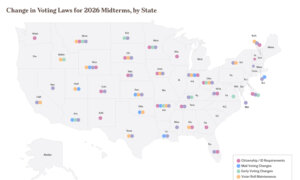
Trump has also backed the Safeguard American Voter Eligibility (SAVE America) Act, which would require proof of citizenship in order to register to vote. The bill passed the House along partisan lines but stalled in the Senate, where Republicans have only 53 seats—seven short of overcoming the filibuster.