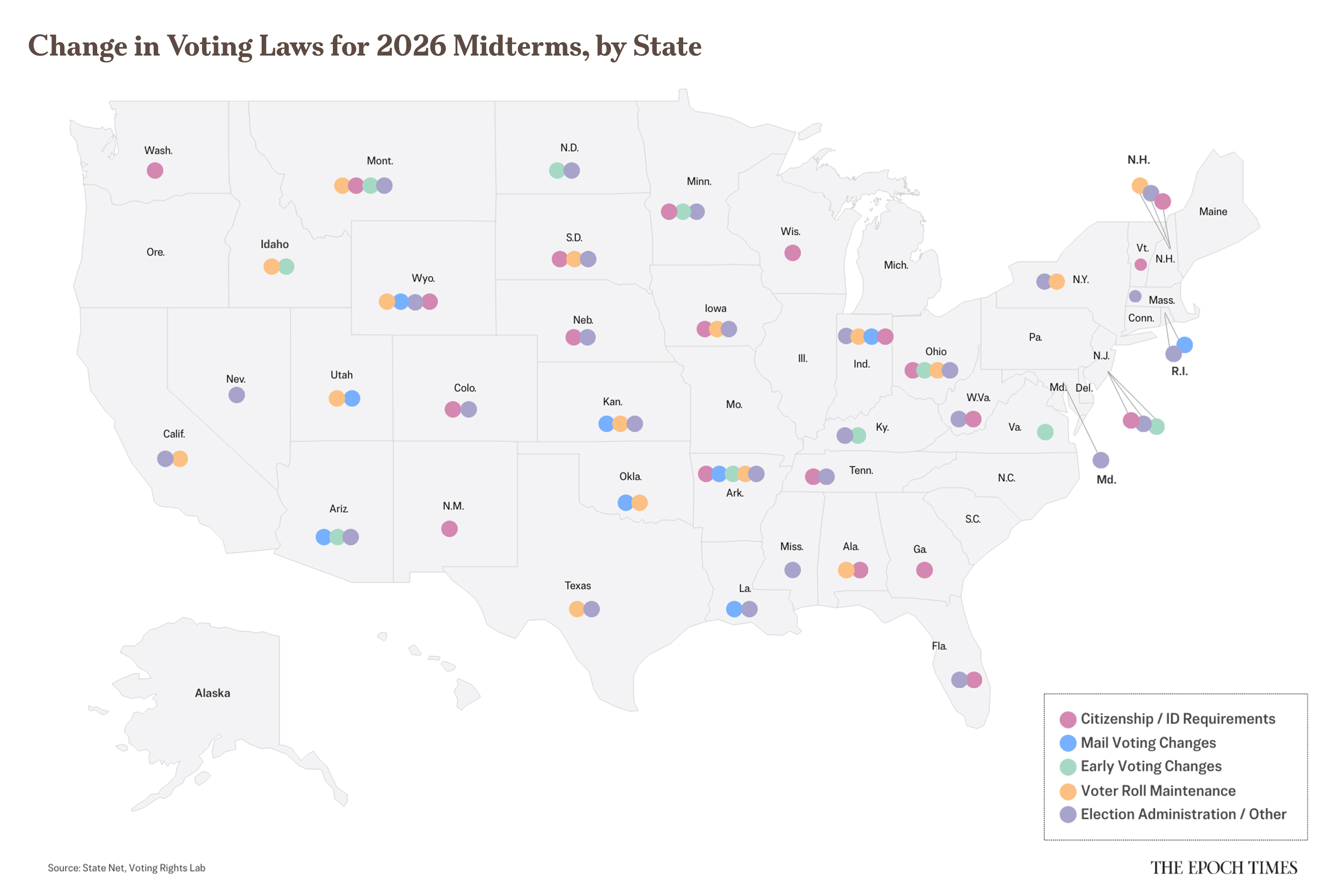
With the midterm election primary season beginning, voters will need to consider how voting rules have changed since 2024. Many states have passed laws relaxing or tightening requirements, including laws regarding how and when to vote by mail and making changes to early voting.
Nearly 200 bills affecting elections were passed by state legislatures in 2025 and so far in 2026. Here are the ones that most affect the 2026 midterms, based on a review by the Voting Rights Lab, an advocacy group.
Alabama
Alabama passed a law that says driver’s licenses issued to noncitizens aren’t valid voter ID.
Another new law requires more frequent voter roll maintenance and bans the use of the Electronic Registration Information Center, Inc. (ERIC), a nonprofit focused on election integrity, for determining address changes. Many Republicans have criticized the use of ERIC data for voter registration outreach because of concerns about the privacy and confidentiality of voter information.
Arizona
Arizona moved its primaries from August to July. It also increased access for poll watchers and people designated by political parties to challenge votes.
In addition, it passed a law saying that only voters on the permanent mail voting list can receive mail-in ballots.
The same law stipulates that local government offices must be open on Fridays and the weekends right before and after an election to let people cure ballots with signature or ID issues, if any such ballots are outstanding.
Arkansas
Arkansas has an amendment to its state constitution on the 2026 ballot that would explicitly state that only U.S. citizens can vote in any election in the state. The state already requires a photo ID to vote.
The state has also adopted a slew of election-related bills since 2025.
One law aims to collect from federal courts the lists of people disqualified from jury duty for being noncitizens and for other reasons so that their names can be removed from voter rolls.
Another law requires early-voting locations in cities with populations of more than 15,000, even if there is already one in the same county.
Yet another law requires every absentee voter to sign an oath on the ballot return envelope attesting not only that the voter is qualified to vote, but also that he or she hasn’t received any unauthorized assistance in filling out his ballot and that the signature was witnessed by someone older than 18.
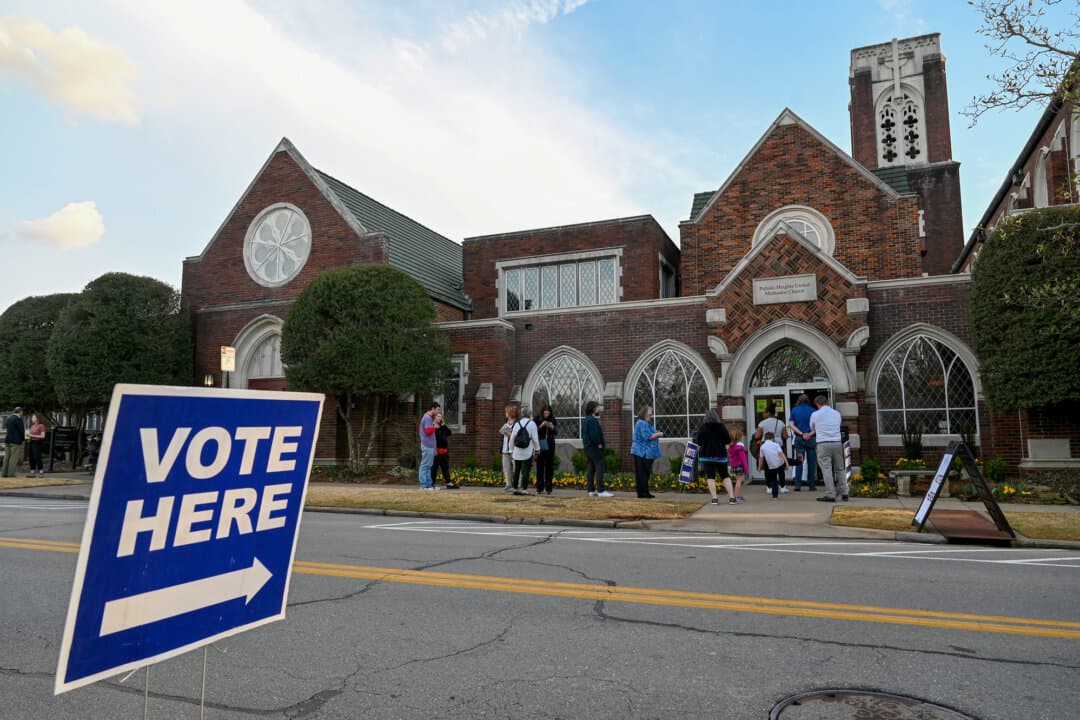
Voters wait to cast ballots on Super Tuesday outside a church in Little Rock, Ark., on March 5, 2024. Arkansas voters will consider a 2026 ballot amendment to the state constitution specifying that only U.S. citizens may vote in elections. (Will Newton/Getty Images)
There’s also a new law tightening the rules for administrators of long-term care facilities that provide voting assistance. Another center staff member now needs to serve as a witness.
County election boards will also be allowed to close early-voting locations because of inclement weather, provided at least one remains open.
Another new law requires people who help disabled voters at polling places to be at least 18 and present photo IDs.
California
California passed several election-related laws, including one addressing its problem with long-delayed election results. Officials must now finish counting ballots within two weeks of Election Day or file an extension with the secretary of state.
Another law allows observers to watch not only signature verification for mail-in ballots but also the process of verifying signatures on cure statements.
The state also passed a law to shorten the deadline for voters to return ballot curing statements from 28 days after the election to 22 days for regular elections.
The same law also allows voters to work with nongovernment organizations to complete their signature verification statements and envelope statements.
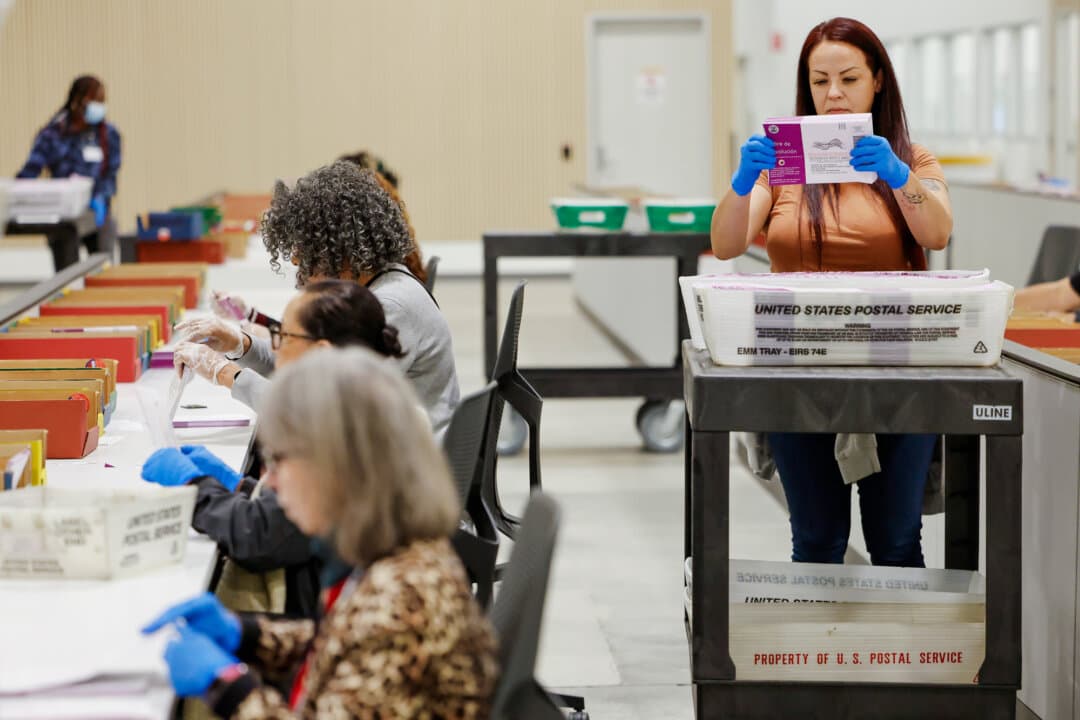
Election workers process ballots at the Los Angeles County Ballot Processing Center in the City of Industry, Calif., on Nov. 4, 2025. California has passed several election laws addressing issues such as delayed results, signature verification, and ballot return deadlines. (Mario Tama/Getty Images)
Yet another new law extends the deadline for receiving mail-in ballots to seven days after Election Day, up from three days. It applies only to all-mail elections, which any county can hold if it meets certain criteria.
There’s also a new law that requires counties to run voter registration programs.
Another law makes it a felony to knowingly offer anything of value to a person so that the person votes or registers to vote, with some exceptions, such as transportation to polls or giving employees time off to vote.
Colorado
Colorado passed a bill that allows candidates to pick their own election watchers. Previously, the candidate’s party would pick.
Another new law allows first responders and their spouses to request that their addresses on the voter rolls be confidential.
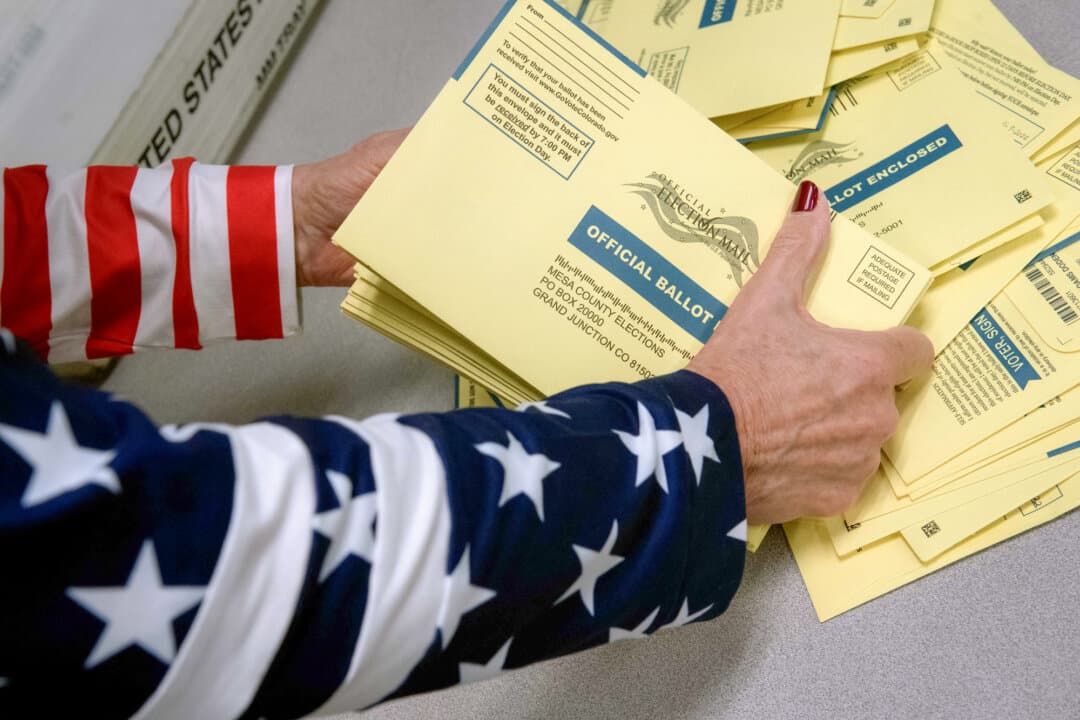
An election worker sorts ballots during the U.S. midterm election at Mesa County Central Services in Grand Junction, Colo., on Nov. 8, 2022. (Jason Connolly/AFP via Getty Images)
The state also passed a law making it a civil infraction to intimidate election officials, anyone trying to vote, or anyone helping others vote. It states that carrying a visible firearm or even an imitation firearm creates a “presumption of ... intimidation” regardless of intent.
Yet another law created a new right to sue political subdivisions over voter suppression or vote dilution based on race or language. Any action that results in voter participation disparity between a minority and a majority counts as suppression. The law also expands access to multilingual ballots.
Florida
Florida created a new felony crime for voting as a noncitizen. It established that believing oneself to be a citizen and not knowing whether one is a citizen are not defenses. It also made it a felony to knowingly solicit a noncitizen to vote.
Georgia
The state passed a law that prohibits the use of driver’s licenses in electronic format as voter ID.
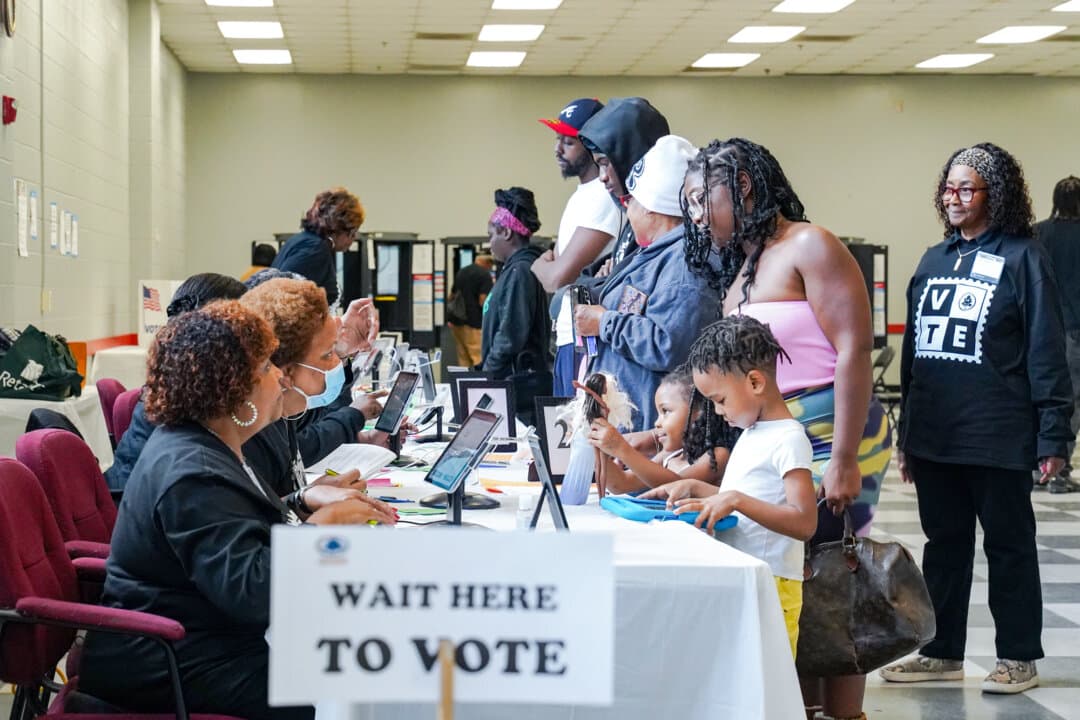
Voters line up to cast their ballots at the C.T. Martin polling location in Atlanta on Nov. 5, 2024. The state passed a law that prohibits the use of driver’s licenses in electronic format as voter ID. (Megan Varner/Getty Images)
Idaho
Idaho moved its voter registration deadline closer to Election Day—11 days out instead of 24. It also made the early-voting period three weeks rather than two.
Another law requires officials to collect more data to identify ineligible voters, including from the federal Systematic Alien Verification for Entitlements database, and to use that data to remove such people from voter rolls more often.
Indiana
The state now allows voters to request replacement mail-in ballots by email. Voters are now also allowed to take pictures of their ballots at some voting places and post them on social media. The law enacting these changes also requires officials to check the voter rolls more frequently for ineligible individuals.
Another law requires people who register to vote with IDs issued to noncitizens to provide proof of citizenship, such as a birth certificate or a passport; bans the use of a post office box as a voter registration address; allows voters to challenge voters in other precincts; and requires rejection of mail-in ballots with inaccurate dates or signatures.
Yet another law requires officials to collect more data and remove ineligible voters from the rolls more often. It also bans the use of a student ID as a voter ID.
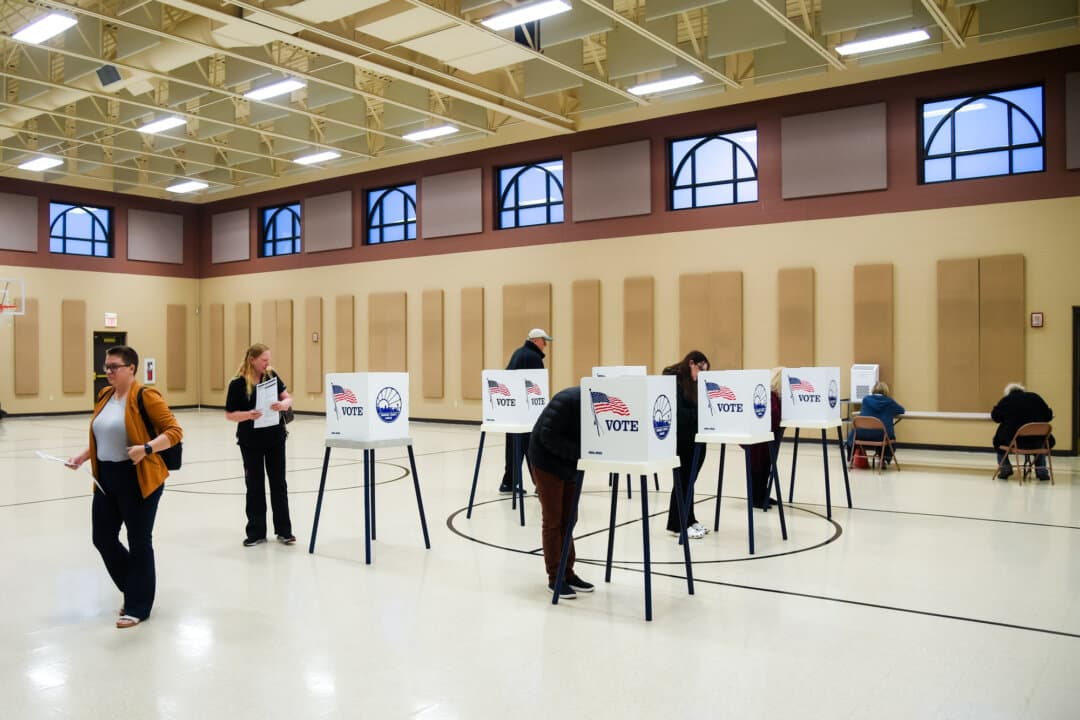
Voters cast their ballots at St. John's Lutheran Church in Topeka, Kan., on Nov. 8, 2022. (Michael B. Thomas/Getty Images)
Iowa
Iowa expanded the collection of information to determine whether a person is not a U.S. citizen, including information from the Department of Transportation.
It also requires voters to affirm their citizenship in the voter declaration before voting. The bill also puts county sheriffs in charge of investigating election crimes. Previously, the state attorney general conducted investigations. The bill also bans ranked-choice voting.
Kansas
Kansas passed a bill that requires the Department of Motor Vehicles to send the secretary of state a quarterly list of driver’s licenses issued to noncitizens so that they can be removed from voter rolls.
Another law requires mail-in ballots to be received by 7 p.m. on Election Day. Previously, they had to be postmarked by that time but could arrive up to three days after Election Day.
Yet another law bans government agencies from accepting federal funds for election administration, except for election security.
Kentucky
The state established a new Unit of Election Investigations and Security within the state attorney general’s office. The unit is responsible for investigating violations of election law.
The state expanded the list of excuses for voting an in-person early ballot. It also requires that video surveillance from ballot drop boxes remain available for at least 60 days after the election and for longer in certain circumstances, such as during litigation. The bill also bans credit cards from being used in the process to prove one’s identity in the absence of a proper voter ID.
Louisiana
Louisiana now requires a Social Security number or an ID number to change one’s name on the voter rolls after marriage. Under the same law, the state now also allows voters to cure defective ballots by receiving a replacement ballot from a registrar.
Previously, voters had to cure ballots in person. The bill also allowed voters’ grandparents or grandchildren to return absentee ballots on their behalf. Most other close relatives were already allowed to do so. The law bans unaffiliated voters from voting in both the Democratic and Republican primaries. They can vote in only one.
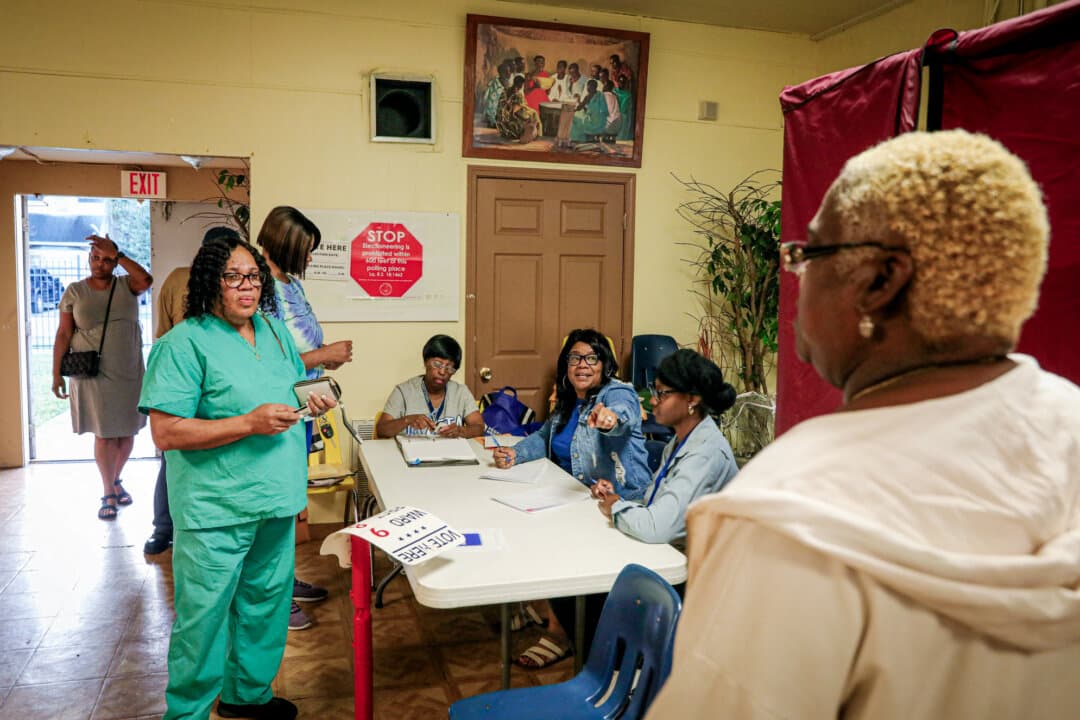
Voters cast ballots at St. David’s Baptist Church in the 9th Ward of New Orleans, La., on Nov. 5, 2024. Louisiana now requires a Social Security number or ID number to change a name on voter rolls after marriage. (Sandy Huffaker/AFP via Getty Images)
Maryland
The state now allows high school students serving as poll workers to be paid or receive credit toward their graduation. But people will no longer get paid for completing poll worker training if they don’t actually serve as poll workers during the election.
Another law expands access to translators and multilingual voting materials.
Massachusetts
The state now requires its Department of Corrections to provide voter registration information to people leaving its prisons.
Minnesota
A new law requires mail-in ballots delivered in person to arrive by 5 p.m. on Election Day, rather than 8 p.m.
It also requires a state license or ID number, as well as the last four digits of one’s Social Security number, to request a mail-in ballot. One of the numbers can be substituted with a certified statement that the voter doesn’t have it. Previously, only one number was required, and the voter could make the statement instead.
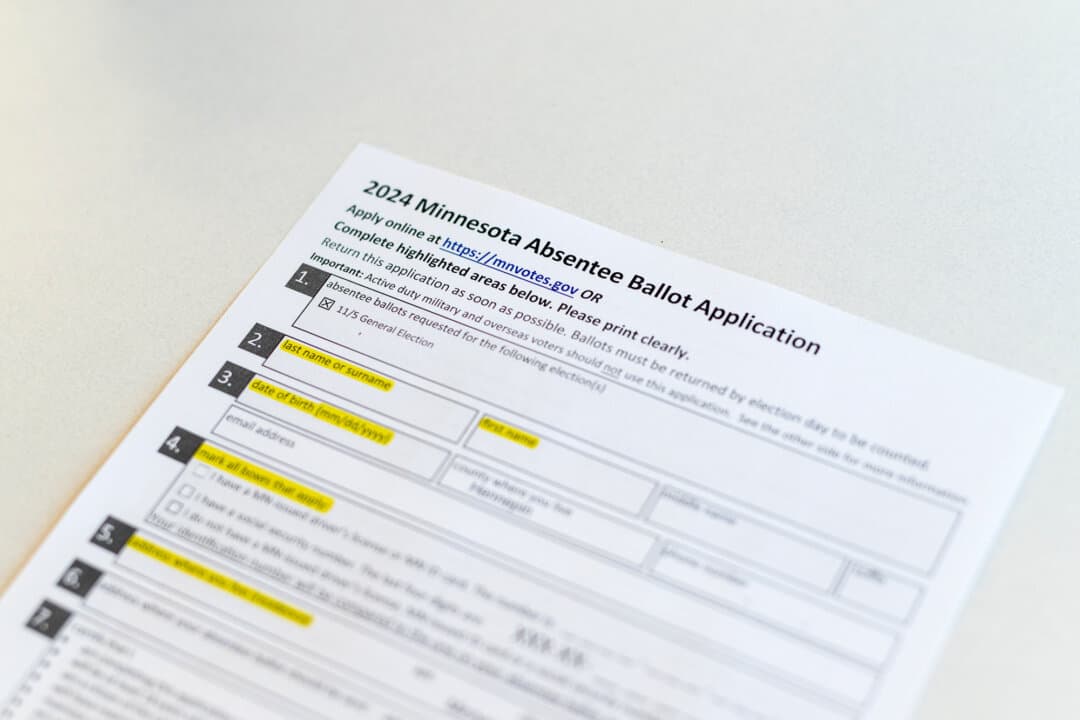
An absentee ballot request form is displayed at the Minneapolis Elections and Voter Services building in Minneapolis on Sept. 20, 2024. A new Minnesota law moves the in-person mail ballot deadline to 5 p.m. on Election Day and requires an ID number and the last four digits of a Social Security number to request a ballot. (Stephen Maturen/Getty Images)
In addition, each location where ballots are counted must now have an equal number of election judges from each major party.
Previously, the requirement applied only to precincts. Election judges will also need to swear an oath that they won’t knowingly share false information about voting or interfere with voting processes. It requires that ballots be sent out at least 28 days before an all-mail election, rather than the previous 14.
Mississippi
The state banned changing polling place locations within 60 days of the election except in “exigent circumstances.”
Another law made it a felony for a person assisting a voter to willfully fail to deliver that person’s vote.
Montana
Montana voters must include their dates of birth with their signatures when registering to vote and when returning their mail-in ballots.
The list of acceptable voter IDs has been cut short. Only “current, valid, and readable” IDs, such as a driver’s license, passport, or military ID, will do. Alternatively, a voter can use any current photo ID, along with a current utility bill or another such document showing the voter’s name and address.
Residents need to register to vote by noon on Election Day for any federal election and by noon on the day before Election Day for any other election. Previously, registrations were accepted until the polls closed on Election Day.
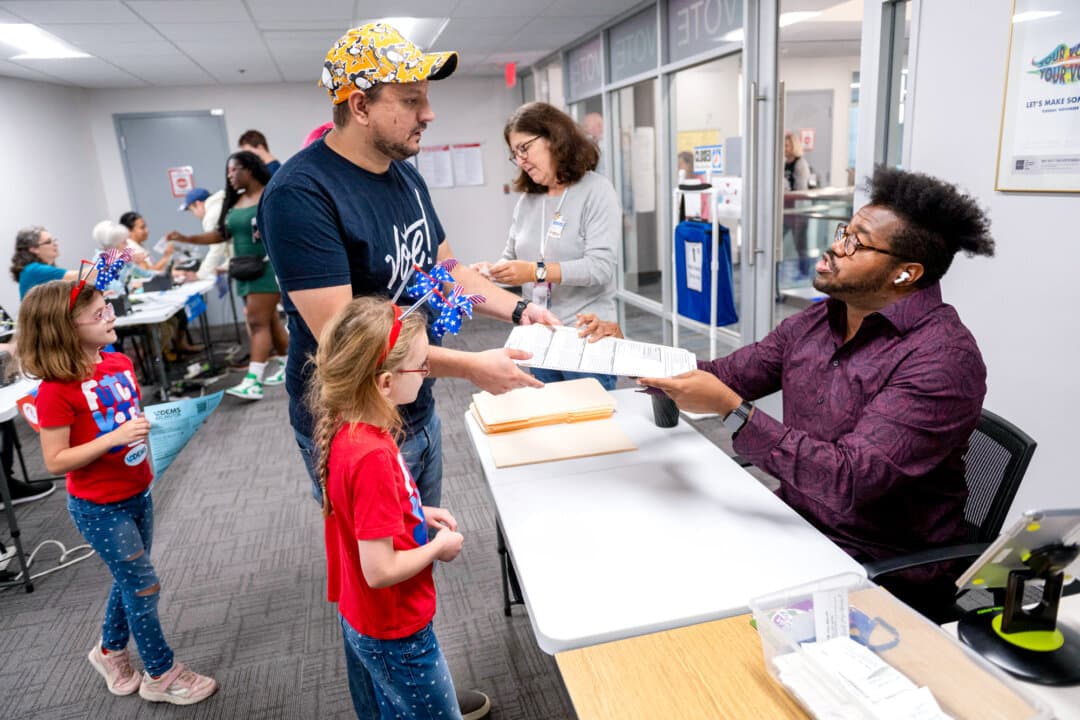
A voter gets instructions on where to go as he gets ready to cast his early vote at a polling station in Arlington, Va., on Sept. 20, 2024. (AFP via Getty Images)
The state no longer requires lists of people who voted by mail to be posted conspicuously at polling places.
Another law bans officials from moving a voter from inactive to active status merely because he signed a petition for a statewide ballot issue.
Also, voters requesting cancellation of their registration now need to sign such requests.
A new law makes it easier to remove from the voter rolls people whose voter registration applications contain missing or unverified information.
Also, the secretary of state will no longer be able to reject a county’s plan to hold an all-mail election.
Nebraska
The state now requires officials to match signatures on mail-in ballot envelopes with voter records. Previously, they needed only to verify that the name and address matched.
Poll watchers can’t be excluded from ballot-counting places unless they are provided with video surveillance. Poll watchers must maintain at least eight feet from ballots, ballot boxes, sign-in registers, and counting equipment. Each vote-counting device must be tested in the presence of party-appointed observers at least three times.
Nevada
Voters can now request that their mail-in ballots be sent earlier than the date set by the county or city clerks.
The secretary of state must provide multilingual election services, including translation services, for voters via a toll-free phone line.
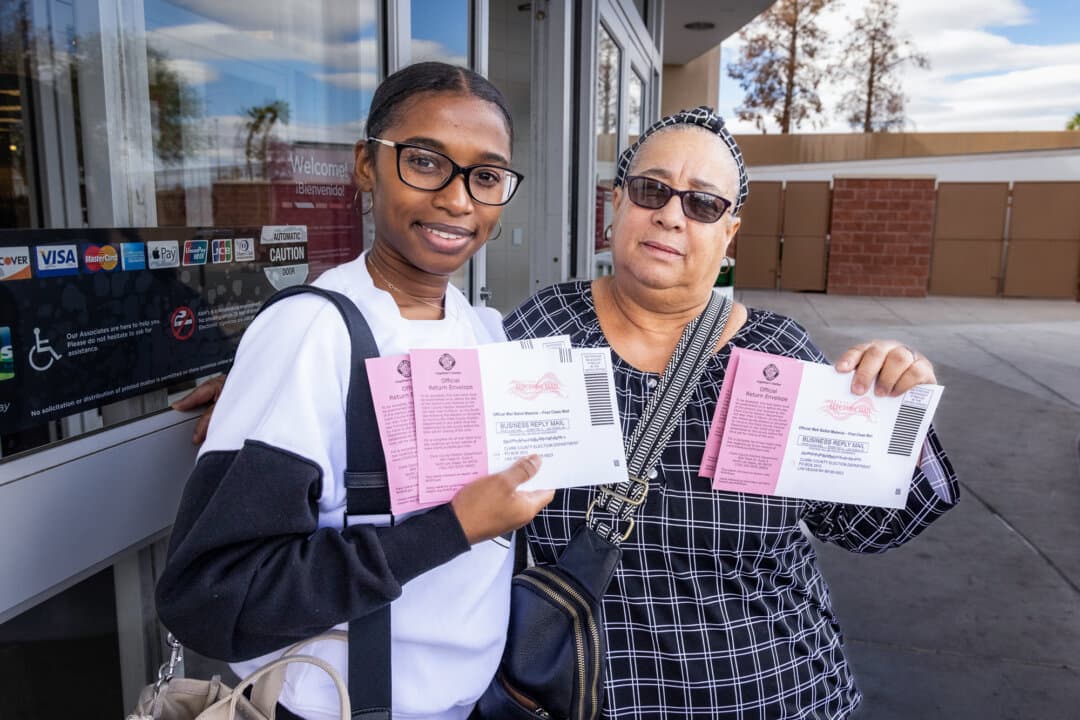
People prepare to vote in Henderson, Nev., on Oct. 19, 2024. Nevada voters can now request that their mail-in ballots be sent earlier than the date set by the county or city clerks. (John Fredricks/The Epoch Times)
New Hampshire
The state now allows an in-person voter to request that his ballot be counted by hand. That voter will hand it to an election officer for counting after the polls close.
Mail-in ballot applications can’t be accepted unless received or postmarked within six months before an election. Each such application will need to include a photo ID copy or a notarized signature. Previously, only name and address were required.
Also, people sending their voter registration application by mail will need to include proof of citizenship, age, domicile, and residency.
The state no longer allows challenges from 10 or more voters to delay the processing of mail-in ballots until after the polls close.
Another bill requires voter roll maintenance every year, rather than every decade.
After each election, the secretary of state must audit at least eight randomly selected vote-counting machines.
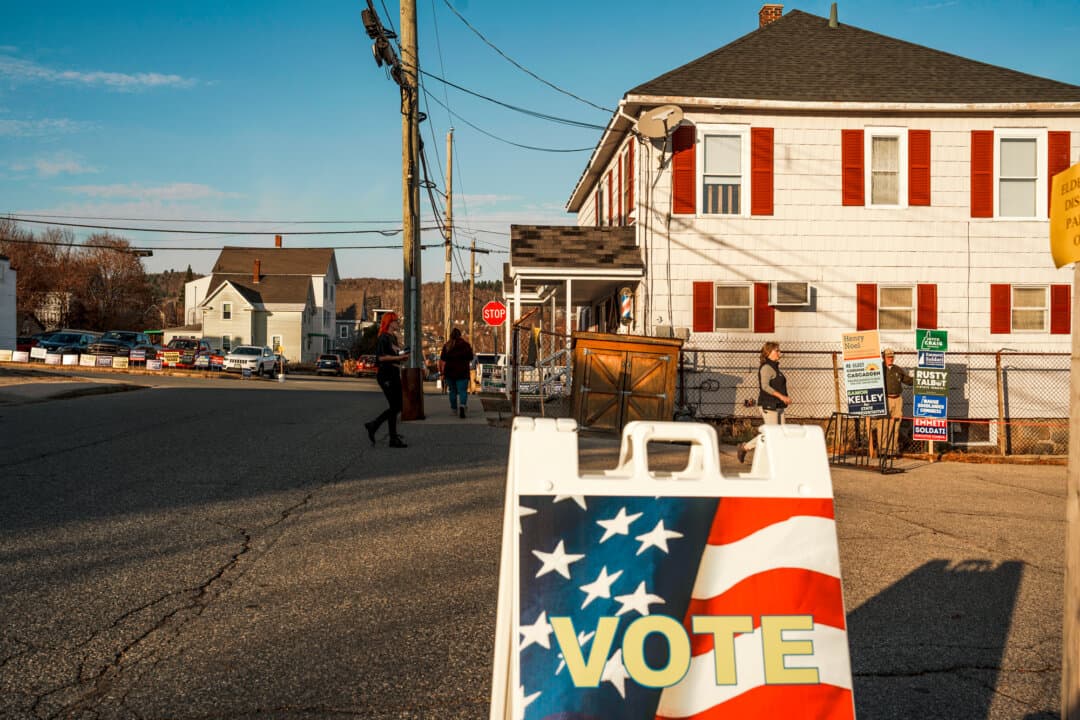
A ‘VOTE’ sign stands outside Precinct 1, where voters cast their ballots, in Berlin, N.H., on Nov. 5, 2024. The state now allows in-person voters to request that their ballots be counted by hand. (John Tully/Getty Images)
New Jersey
County election boards are now allowed to expand their electioneering ban to 200 feet from 100 feet of polling place entrances and ballot drop boxes.
Early primary voting now starts seven days before Election Day.
The state now allows third-party machines to be used in post-election audits.
Residents will be automatically registered to vote only if they apply for a REAL ID driver’s license or REAL ID card. If they apply for other IDs, they must opt in to voter registration. Previously, all applicants were automatically registered, unless they opted out.
Voters who fail to complete the mail-in ballot certificate or fail to include or seal the inner or outer envelope will have a chance to cure the issue. Previously, those ballots would be rejected.
New Mexico
Unaffiliated voters can now vote in primaries.
New York
Providing meat, drink, tobacco, refreshments, or other provisions in connection with voting is now allowed. Previously, it was a misdemeanor.
The New York State Board of Elections must join ERIC or its successor by July 31.
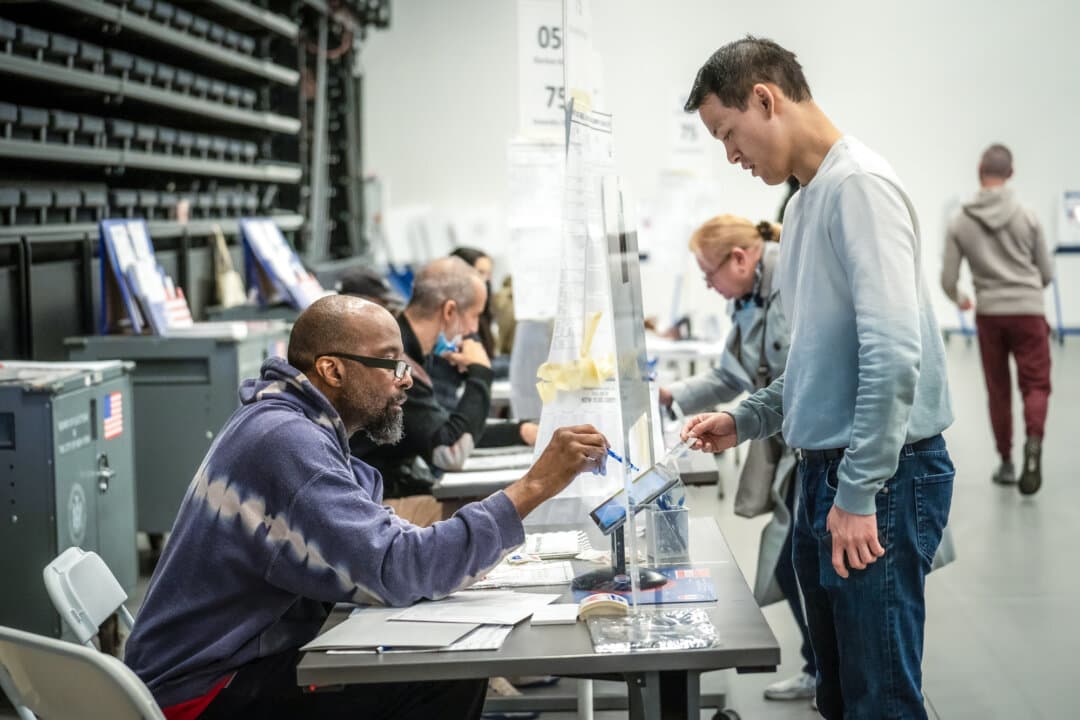
A voter shows his photo identification to poll workers as he arrives to cast his midterm election ballot in New York City on Nov. 8, 2022. (Samira Bouaou/The Epoch Times)
North Dakota
All mail-in ballots must be returned by the close of polls on Election Day. They cannot be returned at a polling place. They need to be mailed or hand-delivered to the county office or put in a drop box. Under the same bill, the state prohibited the use of private entities to administer an election.
Ohio
The Department of Motor Vehicles is no longer required to give all driver’s license and state ID applicants an opportunity to register to vote. It’s now required to offer the opportunity only to those who’ve proven their citizenship.
A different bill allows residents to register to vote electronically during Department of Motor Vehicles transactions. But the state board of elections needs to review each such registration. The bill also prohibits third parties from pre-filling voter registration forms or mail-in ballot requests, except in limited circumstances.
Mail-in ballots need to be received by the close of polls on Election Day. Previously, four days after Election Day sufficed if the ballots were postmarked before Election Day.
Election officials are required to challenge the vote of anybody who tries to use an ID indicating that the person isn’t a citizen. Such individuals will need to provide a document proving citizenship, such as a birth certificate, a passport, or an ID that indicates citizenship.
Officials also need to maintain voter rolls more frequently and collect more data to identify ineligible voters. Identified noncitizens will be removed from the voter rolls before they are notified, rather than notified first.
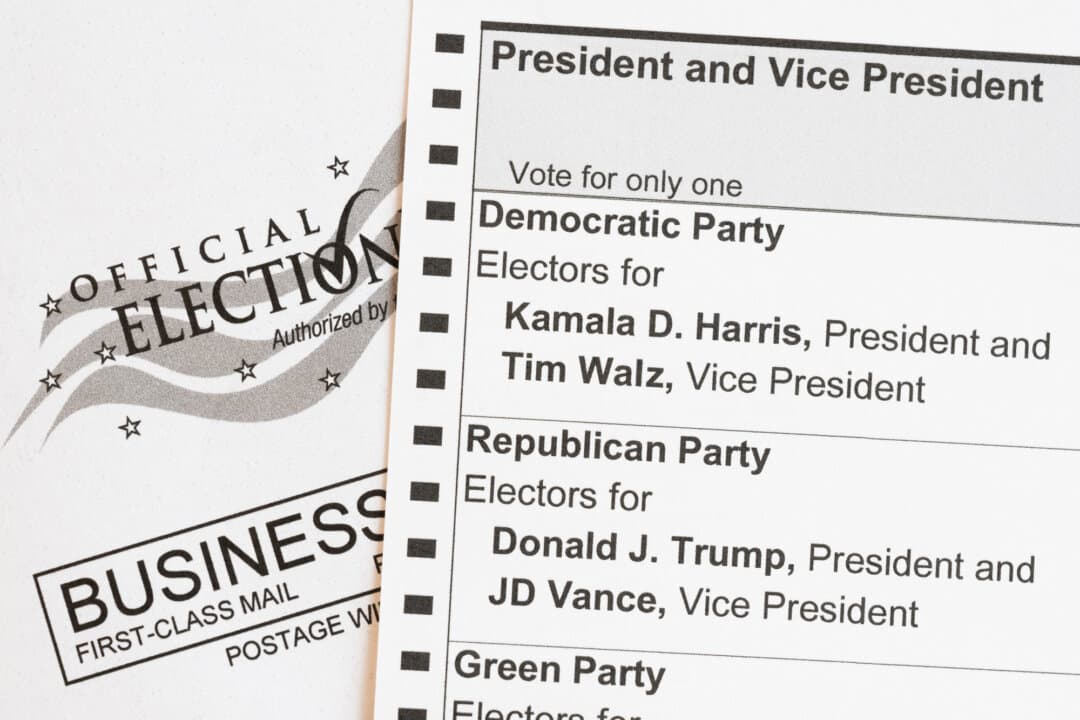
An absentee voter mail-in ballot shows the names of the presidential and vice presidential candidates for the U.S. general election in Arlington, Va., on Sept. 25, 2024. (Saul Loeb/AFP via Getty Images)
Oklahoma
Oklahoma banned the use of vote centers where residents of multiple precincts can vote, except in emergencies.
It also established a process to remove noncitizens from voter rolls based on federal, state, and local databases indicating citizenship. Identified noncitizens will have 30 days to provide documents acceptable for obtaining a REAL ID to prove their citizenship.
Rhode Island
The state made it a misdemeanor to threaten bodily harm to election officials or their families based on their election duties.
Any voter can now sign up for the permanent mail voting list. Previously, only disabled people and those indefinitely confined because of illness could sign up.
South Dakota
The state expanded access to voter files and will now include information about mail-in ballot requests and returns.
Voters registered at a post office box or other nonresidence location will be allowed to vote only in federal elections unless they provide descriptions of their actual residences.
The state also created a new process for challenging a voter’s eligibility based on residency, felony conviction, mental incompetency, or death.
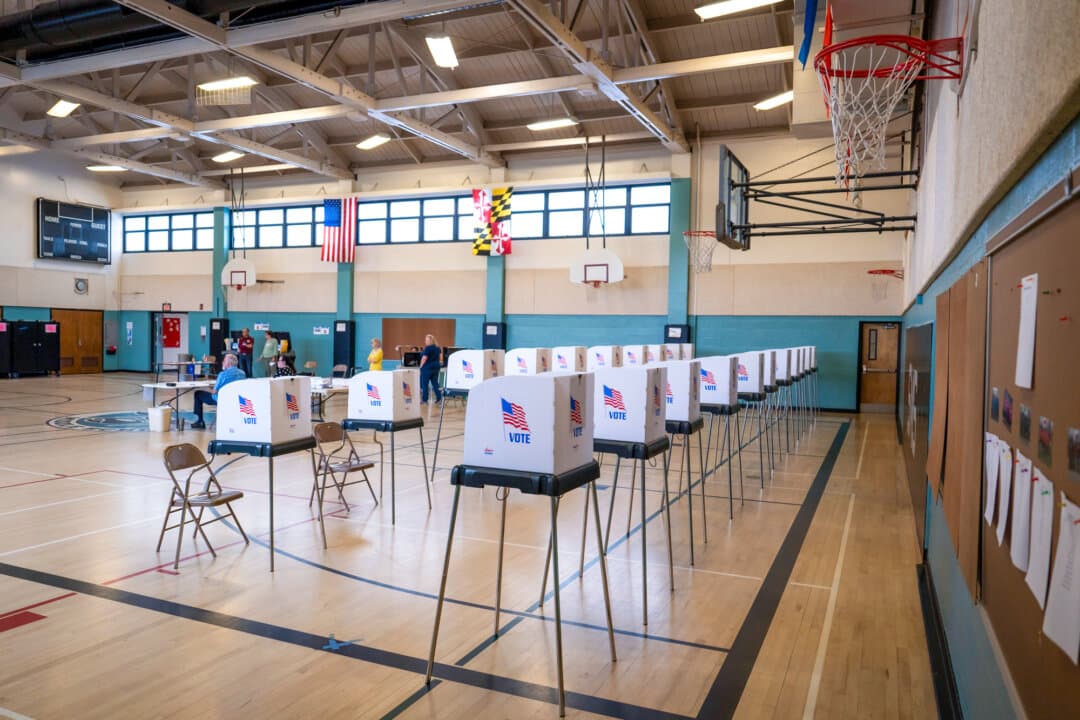
A voting site during the primary election in Elkridge, Md., on May 14, 2024. (Madalina Vasiliu/The Epoch Times)
Tennessee
A driver’s license in electronic form no longer counts as voter ID.
The state also overhauled the process for felons to restore their voting rights.
When registering to vote in person, residents now need to provide an acceptable ID, such as the state’s driver’s license, passport, or military ID.
Texas
Anybody guilty of a first- or second-degree felony can no longer serve as a poll watcher.
Voters who want to vote curbside must sign a form affirming their need to do so. Failure to do so is a misdemeanor. People who transport more than seven voters to the polls during early voting and Election Day must sign a form explaining what they’re doing. Intentional failure to do so is a misdemeanor.
Texas also increased penalties for voter fraud.
Local law enforcement is now required to report to the state attorney general any probable cause to believe that there has been an election law violation.
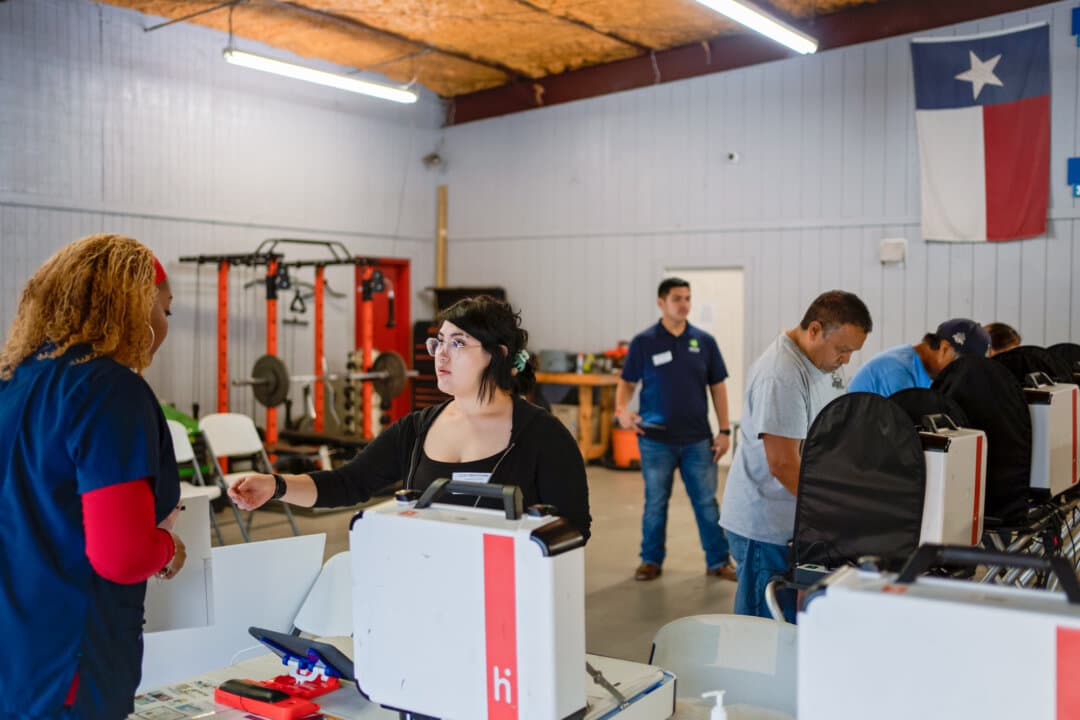
An election clerk hands a voter a ballot at Westfield Road Volunteer Fire Department Station 2 in the East Aldine Community of Houston on Nov. 5, 2024. (Danielle Villasana/Getty Images)
The secretary of state is now required to use data from the Department of Public Safety to identify voters that moved and are registered in multiple jurisdictions.
People who register to vote in Texas after moving will have their prior residence information conveyed to officials in their previous jurisdictions so they can be removed from voter rolls there.
Under new rules, voters may be informed of issues with their mail-in ballots more quickly.
Utah
Voting history records will include details on the voting method, the mail-in ballot return date, and other data.
The state also passed a bill to abolish all-mail elections, but it goes into effect in 2029.
Vermont
Vermont officials can now start processing mail-in ballots 45 days before the election, rather than 30 days. Residents will be automatically registered to vote at the Department of Motor Vehicles only if they attest to citizenship or provide proof of citizenship.
Virginia
Virginia residents can now regularly register to vote up until 10 days before the primary or general election.
Officials will be required to report mail-in voting results no later than 5 p.m. 10 days after an election.
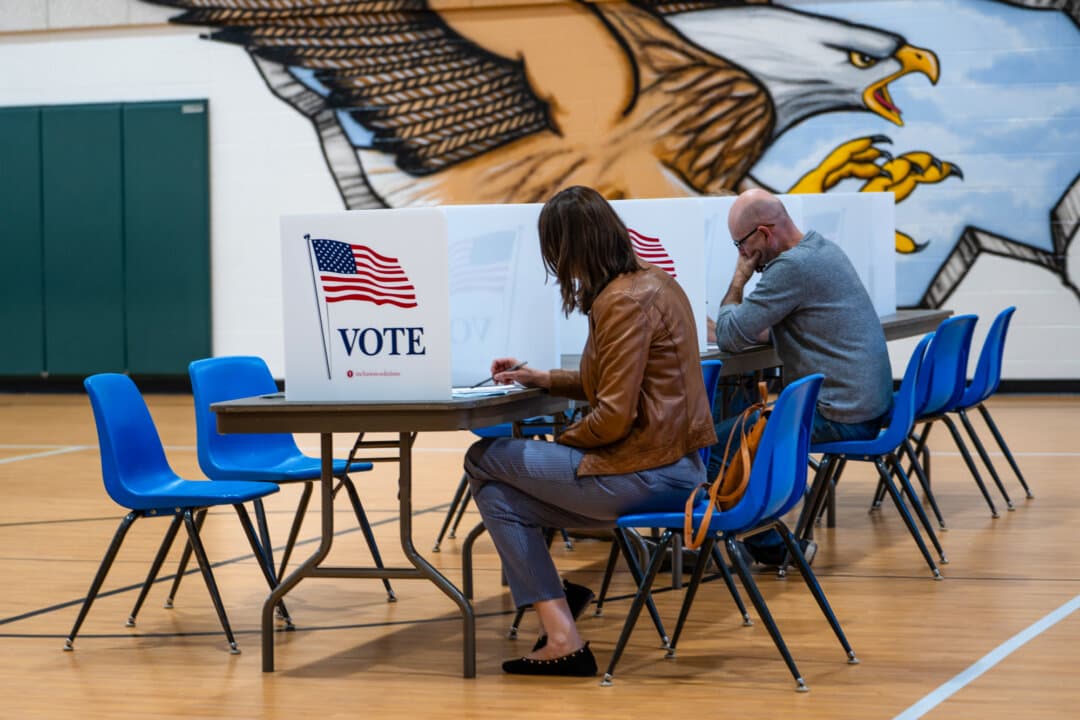
A polling place at Emerick Elementary School during the general elections in Purcellville, Va., on Nov. 4, 2025. (Madalina Kilroy/The Epoch Times)
Washington
The state began a process to expand automatic voter registration to government agencies beyond the state’s driver’s licensing agency.
West Virginia
Only photo IDs are now accepted as voter ID for casting a regular ballot, with some exceptions.
Voters who recently changed their addresses within their counties can now cast regular ballots at their new precincts if they provide proof of their new addresses and their registrations are updated before the canvass.
Wisconsin
The state passed an amendment that enshrined voter ID in its constitution. The state already had voter ID laws on the books.
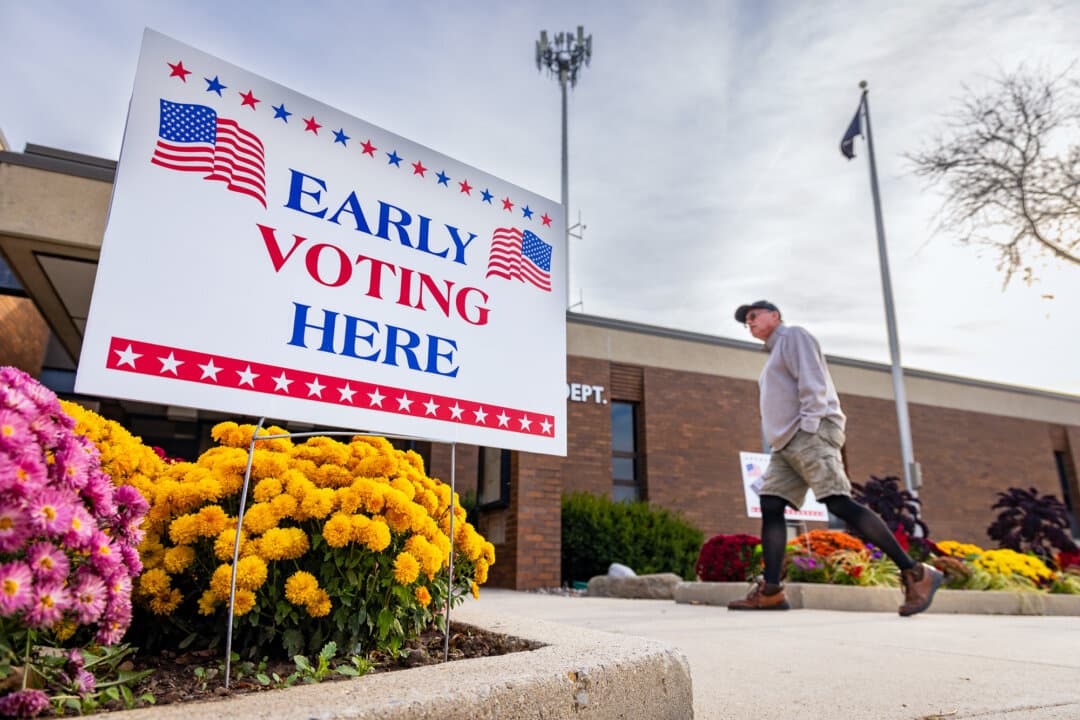
People prepare to vote early in Brown Deer, Wis., on Oct. 22, 2024. (John Fredricks/The Epoch Times)
Wyoming
Wyoming now requires proof of citizenship for voter registration. A state driver’s license or ID card works only if it doesn’t indicate that the person is a noncitizen. A passport or birth certificate is accepted, too.
The state also banned officials from accepting, soliciting, or using any nongovernment funding or services for election administration.
Wyoming also expanded the use of data from the Department of Motor Vehicles and Systematic Alien Verification for Entitlements to determine voter ineligibility. Voters are notified of the intent to cancel their registrations.
Officials are also prohibited from distributing unsolicited mail-in ballot applications.