
For the past decade, Gen. Charles Flynn has thought about the threat of the Chinese communist regime every day.
Flynn retired as commanding general of the United States Army Pacific in November 2024, and before that he served as assistant deputy chief of staff for operations and then deputy chief of staff for operations for the Army.
His experience in the Indo-Pacific began in 2014, when he assumed command of the 25th Infantry Division in Hawaii.
A decade ago, few Americans were as concerned with the Chinese regime’s threat to the free world as they are today, and at that time, Flynn had just spent 14 years zeroed in on the Middle East.
“I knew everything about Kabul and Kandahar and Kunduz and Baghdad, but I really had not been paying any attention at all to China in the Indo-Pacific,” Flynn told “American Thought Leaders” host Jan Jekielek.
Ahead of the new assignment, his brother, now-retired Gen. Michael Flynn, invited him to the U.S. Defense Intelligence Agency, which he led at the time, for an overview of the threats the United States faced in the Indo-Pacific.
“And it hit me as I was stuck in traffic on my drive back to Fort Bragg that I’ve got a lot of studying to do,” he said.
What Flynn began to learn that day still drives his mission.
“This century is going to be defined by the relationship between the United States and China,” he said.
“We’re 10 years from that window of modernization, organizational change, and the technology injects into the military in China. We cannot wait. Speed is our biggest problem right now. We have to have a greater sense of urgency to counter what the Chinese are doing in the region.”
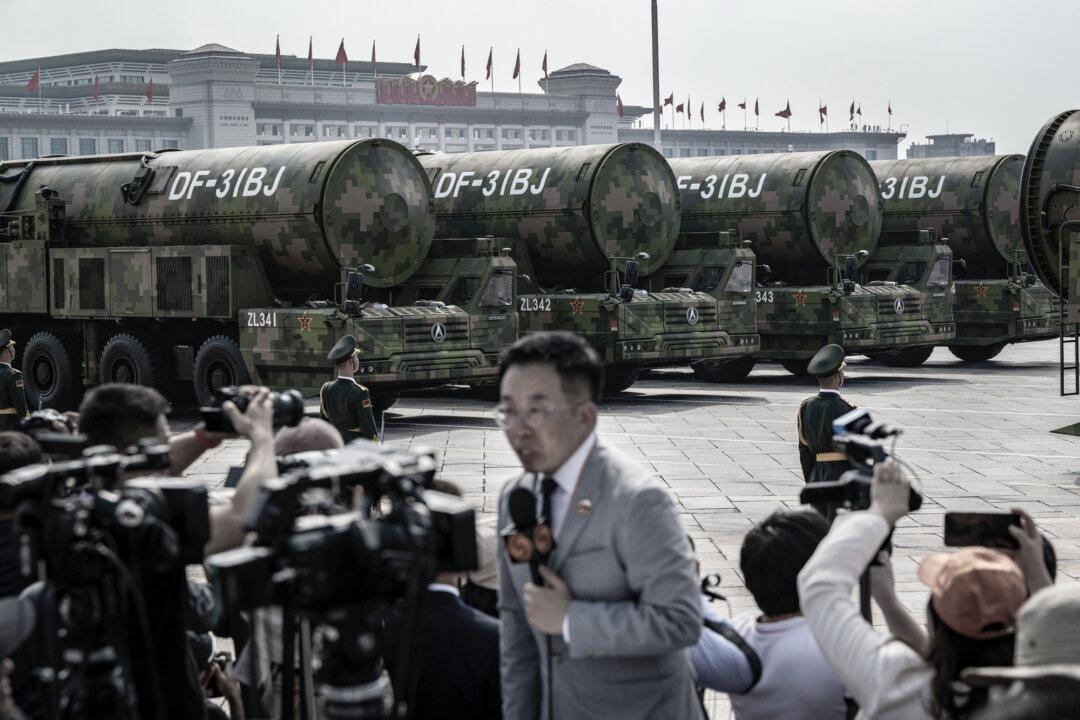
Nuclear-capable DF-31BJ ballistic missiles are unveiled on transporters during a military parade in Tiananmen Square in Beijing on Sept. 3, 2025. (Kevin Frayer/Getty Images)
Stake in the Pacific
With territories as far as Guam and treaty allies in the First Island Chain, the United States has security obligations as well as interests in the Indo-Pacific, where the Chinese Communist Party (CCP) has been aggressively expanding its influence.
When Flynn turned his focus on the Pacific in 2014, the CCP was ramping up construction of artificial islands in the contested Spratly Islands.
“We told them not to build islands. They built islands. We told them not to militarize and arm the islands. They militarized them. We told them not to position forces on those islands. They did that,” Flynn said.
“This is why I say that China has been on an incremental, insidious, and irresponsible path to create conditions where they gain regional hegemony because they have global aspirations.”
Flynn saw those islands as more than an indication of bad faith by the CCP, which claims that the construction is for non-military use despite satellite imagery evidence to the contrary.

“I’m a land guy, so I see these land features being made, and I see terrain being created. Why? To choke off the super highway through the South China Sea,” he said.
Beyond being militarily advantageous, disruption in the area has tremendous economic implications because the area is believed to be rich in energy and mineral resources, it is the site of fishing rights to 125 million people, and it is one of the busiest shipping lanes in the world, Flynn said.
For years, the United States has maintained that the Indo-Pacific is a priority theater, but Flynn and others have told The Epoch Times that allies don’t always feel that U.S. actions are backing up those words.
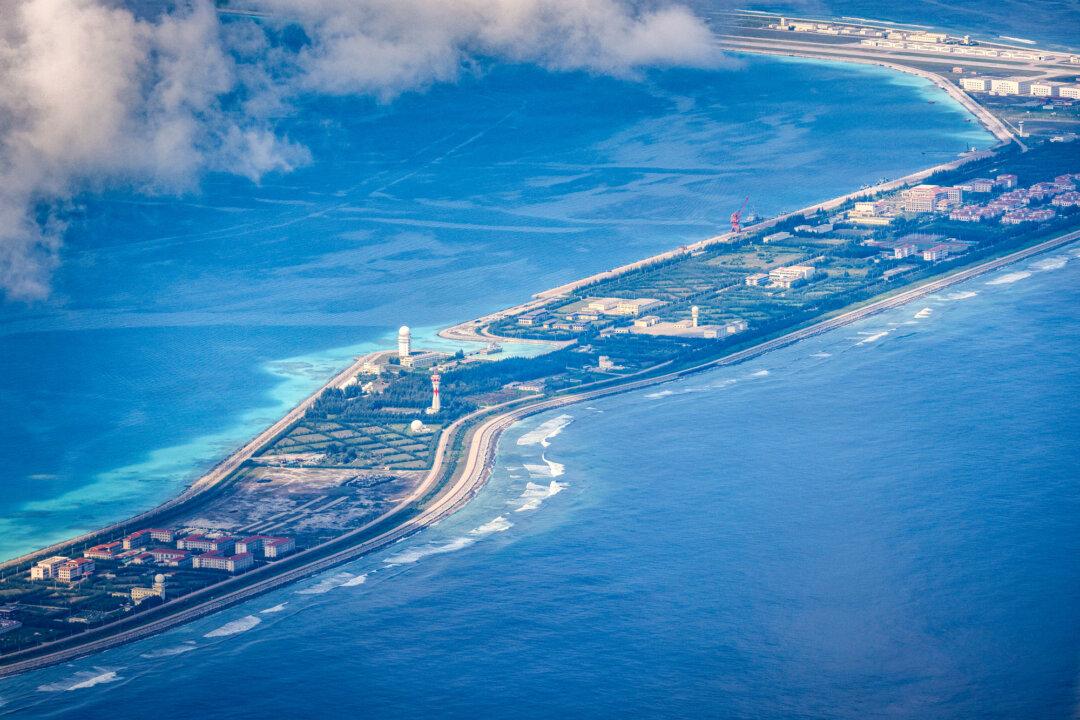
Buildings and structures sit on an artificial island built by China in the Spratly Islands in the South China Sea on Oct. 25, 2022. The Chinese Communist Party has expanded its influence in the Indo-Pacific by building and militarizing artificial islands in the South China Sea, a key trade route. (Ezra Acayan/Getty Images)
In 2022, Flynn was in a meeting with the chief of defense, the army chief, and the minister of defense of a member of the Association of Southeast Asian Nations the same day a $33 billion U.S. support package for Ukraine was approved. Those defense officials bluntly expressed their concerns that this would take U.S. attention away from the Indo-Pacific.
“They said: ‘Are you serious? ... What is going to happen now? Are you going to be here?’” he said.
“And I think that that really struck me at that particular point, and I thought, boy, if we don’t signal and message our will to our treaty allies and partners in the region, we’re going to create a lack of confidence in the United States in the Indo-Pacific at a time when we can ill afford to have that.”
Flynn said he spent the remainder of his time as U.S. Army Pacific commander general trying to “pull together the Army leaders in the region.”
Now the Trump administration has issued a national security strategy that places the United States’ focus squarely on the Western Hemisphere. As for the Indo-Pacific, Flynn said he thinks the strategy correctly identifies the countries’ interests in protecting their sovereignty.
‘Help Those That Help Themselves’
The strategy calls for cooperation with partners in the region to establish deterrence as an economic imperative.
“This administration is going to help those that help themselves,” Flynn said, pointing to expectations that allies increase defense spending. “They’re going to want you to put some money on the table. Why? Because it’s an investment in your own defense and protecting your own territorial integrity and national sovereignty, and a large part of their security umbrella in the region are their land forces, just like China.”
Flynn often stresses that more attention needs to be paid to the land forces in this region.

Washington is sometimes the hardest place to make this argument, he said, because most people look at the map of the region and “see a lot of blue.”
He said the misconception is that the area is a naval or air force theater.
“It’s a joint and multinational theater, and it can only be solved by joint and multinational applications in all domains,” Flynn said.
He said that when the CCP is buying up telecom companies near U.S. bases or local media companies to publish articles criticizing the United States to try to sway the people, that’s important information gained from being on land.
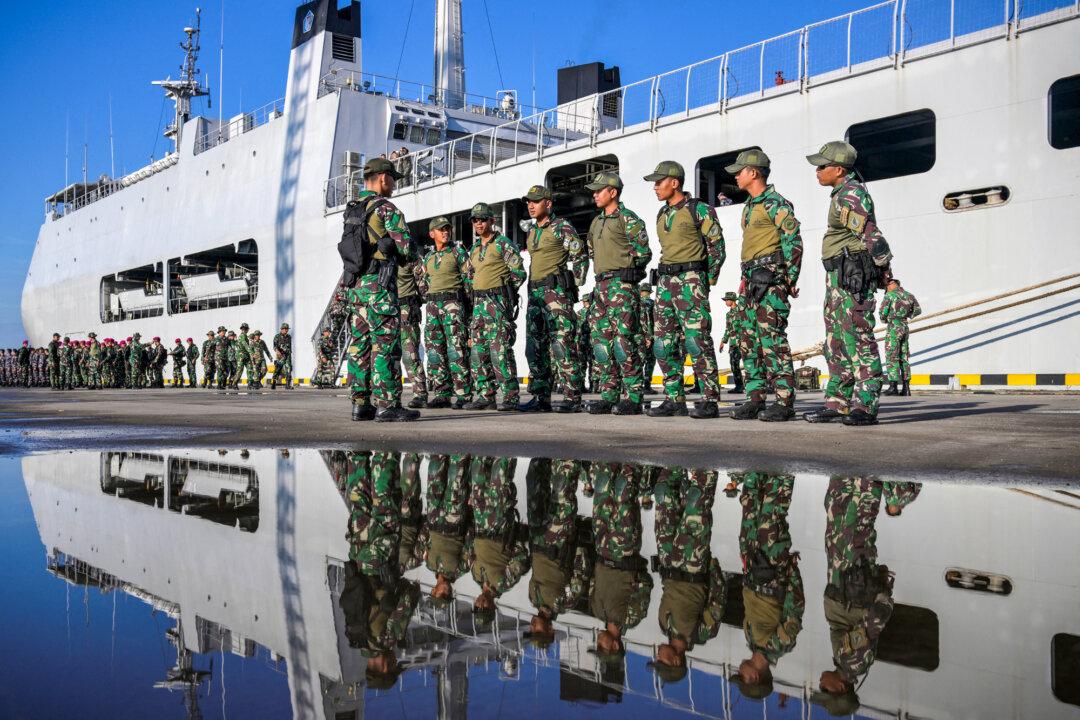
Indonesian National Armed Forces soldiers line up for a departure ceremony in front of the warship KRI Makassar-590 at Tanjung Priok seaport in Jakarta, Indonesia, on Aug. 29, 2025. Ret. Gen. Charles Flynn said Washington often miscasts the Indo-Pacific as a naval or air domain, noting that most Asian militaries are predominantly army, including Indonesia’s, at about 75 percent. (Bay Ismoyo/AFP via Getty Images)
Flynn pointed out that most Asian militaries are predominantly army, meaning they would partner well with the U.S. Army.
“India, 80 percent of its military is army; Indonesia, 75 percent; Thailand, 75 percent; Vietnam, 80 percent,” he said. “The Philippines, 70 percent of its military is its army; it has more divisions than the U.S. Army does.”
Flynn spent his 10 years in that region trying to pull together a strategic land power network to counter the CCP’s expansion, adding that he saw toward the end of that period that some of those forces were “beginning to step up” in new ways.
“[These nations] don’t want to be beholden to the security umbrella of the United States,” he said. “They want to be able to be enabled by it, and they want confidence in it in the event that there’s a problem, but they really do want to partner with us.”
What the United States provides is a technological edge and training, Flynn said, aligning the new national security strategy with what he’s seen on the ground.

Early last year, the United States put a new capability in the hands of a Philippine task force, a mid-range land-based missile. A task force landed in the middle of the night at the northernmost tip of the Philippine islands, offloaded, and set it up.
Within a day, the CCP issued a statement meant to intimidate the Philippines by implying it was becoming a tool of the United States.
“What did the Philippines say? They countered right away by saying, ‘We will train, we will project, and we protect our people any way that we choose,’” Flynn said.
They stood up for their sovereignty, he said, and he noted that Japan has recently done the same.
The United States also has the military edge over the CCP in terms of land power, Flynn said.
The Chinese military has designed an anti-access/area denial arsenal designed to defeat U.S. air and maritime power, and degrade, deny, and disrupt space and cyber capabilities, he said.
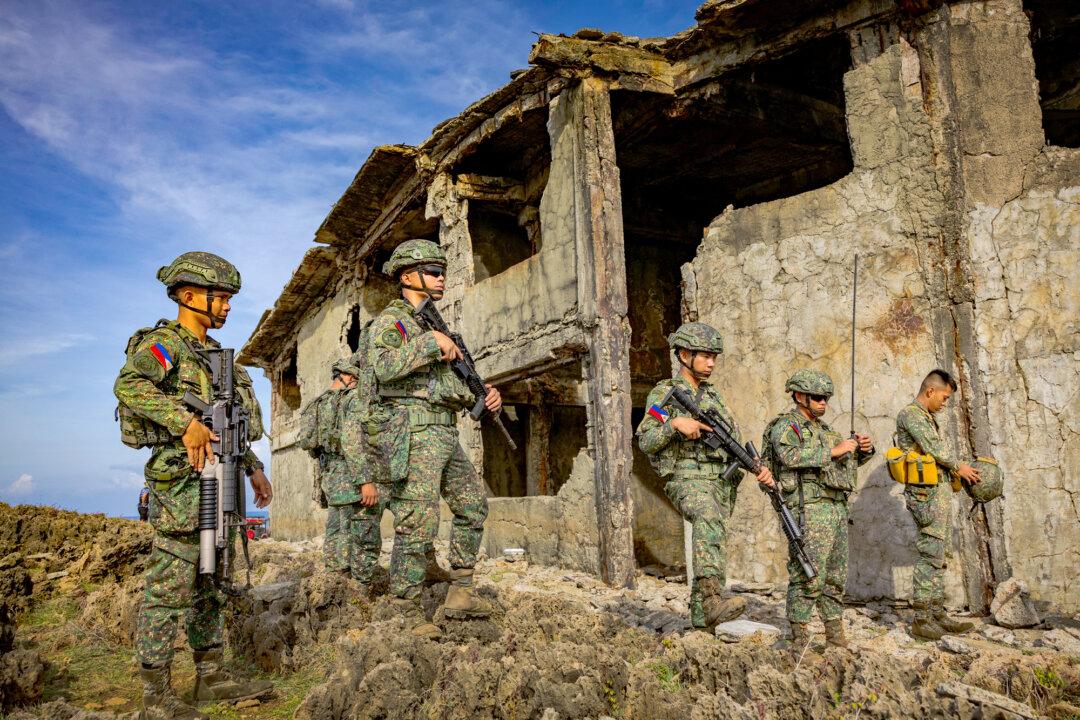
Philippine Marines take part in live-fire exercises with U.S. Marines in Burgos, Philippines, on June 4, 2025. Early last year, the United States provided a Philippine task force with a new land-based midrange missile capability, prompting the CCP to step up intimidation of the Philippines. (Ezra Acayan/Getty Images)
“It’s not designed to find, fix, and finish distributed mobile, reloadable, and networked land forces inside the Indo Pacific,” Flynn said.
Chinese naval and air incursions are “happening every day at alarming rates” and are occupying the attention of the United States, Japan, Korea, Taiwan, and others.
“My point is that we have a way of increasing the indications and warnings to our national command authority by watching the army,” he said. “You can’t invade Taiwan with the Chinese navy and the Chinese air force ... but when they start moving that army, then there’s a problem.”
Flynn added that his idea of increasing army engagement with partners is not to add more U.S. bases, but “more faces in more places with less bases.”
“What that means is dynamic, rotational, and an increase in multinational and joint exercises that are out in the region,” he said.
“We can’t afford to have our deterrence questioned in the Indo-Pacific,” Flynn said, pointing to the history of World War II, which metastasized from a decade of regional wars.
“I could argue that the two regional wars that we have ongoing today is because our deterrence faltered. ... Add a third—you’ve got a global war on your hands.”
Securing Supply Chains
Flynn recently visited a magnet company, where he was shown five jars of different magnets at various stages of processing.
“He said, ‘That’s what we make,’ and I said to him, ‘[What] in those five Mason jars do you own?’” Flynn said. “He went to the third one said, ‘Well, probably half of that, and that’s all downstream to the production of the magnet.’”
“This is not a magnet that you put on your refrigerator, OK, this is a magnet that you put in an F-35 or you put into a precision munition, or you put into a supercomputer,” Flynn said. “So it became very real to me that if we don’t regain control of the far end of that supply chain, then that is an incredible vulnerability for the United States of America.”
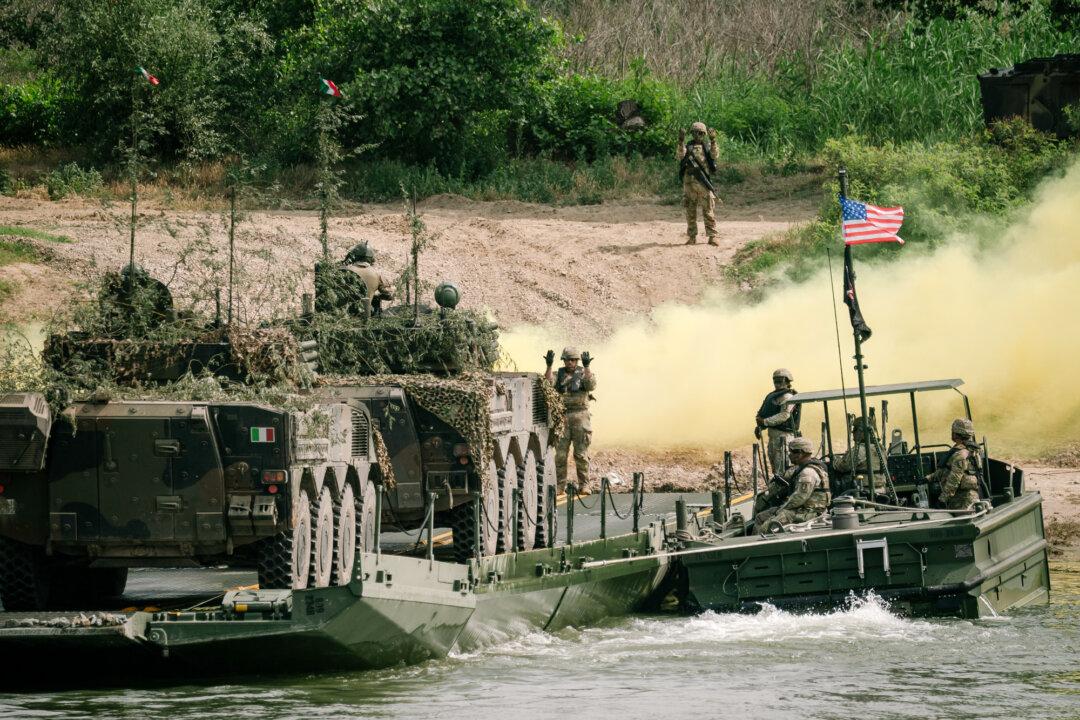
U.S., Romanian, and Italian soldiers take part in a military exercise in Frecatei, Romania, on June 13, 2025. Flynn has suggested increasing U.S. Army engagement with forces from other countries in the Indo-Pacific. (Andrei Pungovschi/Getty Images)
Speed is of the essence when it comes to securing the supply chain on critical and strategic materials, Flynn said, for several reasons.
First, the CCP has already demonstrated a willingness to weaponize the supply chain. Second, reshoring takes time; factories need to be built and technologies for proprietary capabilities that don’t exist in the United States need to be tried and tested. And third, according to Flynn, 60 percent of the trade workforce will be at retirement age by 2030.
Here, Flynn has another military-related solution.

“There’s a massive cohort of soldiers that go into the military—sailors, airmen, marines, [Space Force] guardians—they do their time in uniform for three, five, six years, and then they depart. Well, they have leadership skills. They’re educated,” he said.
“So why don’t we grab that group and say, ‘Hey, we’re going to give you, you know, we’re going to pay 90 percent of your academic bill to get into the trades’?” he said.
Flynn said that he has confidence in the “innovator” aspect of the United States’ DNA but that creating that training pipeline is imperative to unlocking it.
“The equipment may be advanced, the technology may be advanced, but you’re still going to need people to do certain things in mechanical ways that only people can do,” he said.
“Not to mention you want the mental agility of the human to be able to innovate, create, and then build things that are new and creative, and look for opportunities that you may not see otherwise.”
Correction: Due to an editing error, a previous version of this article misstated the number of years retired Gen. Charles Flynn was commanding general of the United States Army Pacific, as well as his title. The Epoch Times regrets the errors.