
The U.S. Department of Energy (DOE) funded research done in collaboration with Chinese researchers and institutes linked to China’s defense research and industrial complex, according to a congressional report published on Dec. 17.
Lawmakers with the House Select Committee on the Chinese Communist Party (CCP), Senate Select Committee on Intelligence, and House Permanent Select Committee on Intelligence are calling on the federal agency to improve due diligence.
Rep. John Moolenaar (R-Mich.), chair of the House Select Committee on the CCP, in a statement called the investigation’s findings “deeply alarming,” as the practice effectively puts “American taxpayers on the hook for funding the military rise of [the] nation’s foremost adversary.”
“The department must stop providing funding to grantees who allow this exploitation and protect hard-earned taxpayer dollars,” he said.
Sen. Tom Cotton (R-Ark.), chairman of the Senate Intelligence Committee, said the lapse gave Beijing “front-row access to critical dual-use technologies” such as those used in next-generation military aircraft, electronic warfare systems, and radar.
Rep. Rick Crawford (R-Ark.), chairman of the House Intelligence Committee, said the findings were more evidence of the CCP “actively working to exploit lapses in research security” and amounted to “systemic plunder.”
“It is time to take a more vigilant approach to ensure we are enforcing safeguards in academia and in both government and private research,” he said.
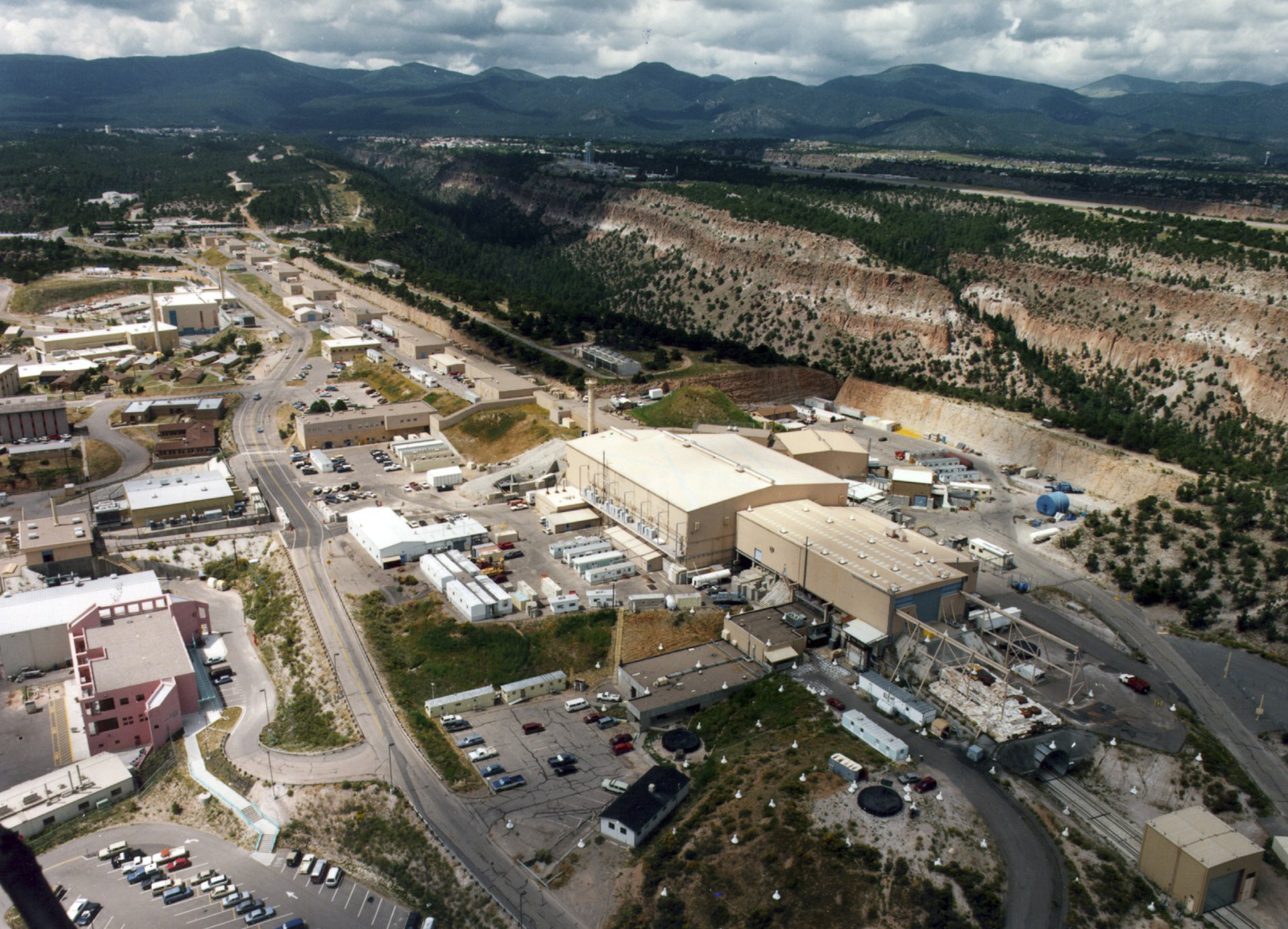
The DOE oversees 17 national laboratories and funds research to advance energy, environmental, nuclear, and other transformative science technologies.
The lawmakers also noted that as of 2025, about 2,000 Chinese nationals work in DOE-backed labs. They said DOE executives provided reasoning the lawmakers found naive.
“Multiple DOE executives ... defended [the Chinese nationals’] continued presence ... by claiming, in effect, that we want them in our labs so they can see how advanced we are—and go back to China telling their colleagues, thus giving up on beating the United States,” the report states.
The lawmakers said decades of empirical evidence show that the CCP’s strategy is to embed scientific talent abroad to “absorb, replicate, and leapfrog U.S. capabilities through reverse-engineering and targeted technology transfer.”
The DOE told The Epoch Times that it would review the congressional report.
“The Department of Energy takes seriously its responsibility to steward federal funds and safeguard critical research capabilities,“ a spokesperson said. ”It will continue rigorous due diligence and oversight of awards, including those made during the Biden administration, to ensure the integrity and security of DOE programs. The Department will review the House report to better assess, understand, and validate its assertions.”
Advancing Chinese Tech Capabilities
The investigation found about 4,350 research papers published between June 2023 and June 2025 that acknowledged DOE funding or research support, as well as research relationships with Chinese entities. Half those papers were written in partnership with entities in the Chinese defense research and industrial base.
Those entities include some of China’s leading universities for defense research, known as the “Seven Sons of National Defense.” They also include China’s National University of Defense Technology; the Chinese Academy of Engineering Physics, which is China’s primary nuclear weapons research and development complex; the Chinese Academy of Sciences, which describes itself as the highest consultancy for science and technology in China and is among the biggest research institutions in the world; and other institutions that have played a part in the CCP’s mass surveillance of citizens.
Some of the papers also cite research support from Chinese institutions such as the use of two Tianhe supercomputers from the National Supercomputer Center Zhengzhou, which were developed by a Chinese military research institution on the U.S. Commerce Department entity list.
Others have extensive access to U.S. research infrastructure. For example, a 2023 paper on machine learning was coauthored by researchers from Princeton University, the Flatiron Institute, Xiamen University, Peking University, Tsinghua University, ByteDance, China’s leading search engine Baidu, and China’s National University of Defense Technology. Computational resources for the project were provided by an array of U.S. platforms and institutions.
The risk that the co-research will advance Chinese defense capabilities is not hypothetical, the report’s authors said.
They pointed to Chinese language sources, such as one that credited nitrogen research done in collaboration with a U.S. professor as contributing to breakthroughs in high-yield explosives and advancements in Chinese nuclear weapons development. The individual, unnamed in the report, received an award from the Chinese regime for his work.
According to the report, documents from a Chinese governmental body credited another such collaboration with advancing Chinese aerospace technology.
“[It led China] to develop new materials and technologies for cutting-edge defense weapons and equipment, such as nanomaterial synthesis, multiscale fine structure control, as well as additive manufacturing technology and continuously narrow the technology gap with more advanced countries,” the document states.
Other research areas include aircraft propulsion, high-performance cooling, electrocatalytic water splitting, quantum communication, quantum phase transition, iron bonding with light elements, and other aerospace, quantum, and artificial intelligence-related topics.
Research Gap
The report follows a House Select Committee on the CCP investigation published in September, which found that the Pentagon funded Chinese military-related research through grants as well.
The report identified some 1,400 research papers with Pentagon funding that listed Chinese collaborators. A little more than half of those collaborators had ties to the Chinese defense research and industrial base.
The committee has also published several reports over the past few years highlighting areas in which U.S. institutions receiving federal funding—generally universities—are collaborating with Chinese institutions with ties to the regime. These reports have resulted in some universities ending their partnerships with Chinese institutions.
Other researchers have also sounded the alarm on the academic loophole enabling the sharing of sensitive research with Chinese state-linked entities.
On Dec. 8, analyst firm Strategy Risks published a report finding that top Western universities collaborate “extensively” with Chinese artificial intelligence labs, including some with ties to the CCP’s genocide of Uyghurs.
Chinese institutions and media outlets have also highlighted the role of overseas research in advancing Chinese capabilities. The report cites a 2017 South China Morning Post article titled “America’s Hidden Role in Chinese Weapons Research.” According to the article, there were so many scientists who worked at the DOE’s Los Alamos National Laboratory and other top U.S. labs before returning to China that they earned the nickname “Los Alamos Club.”