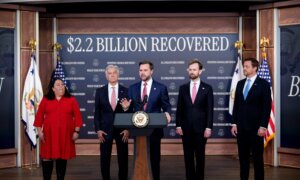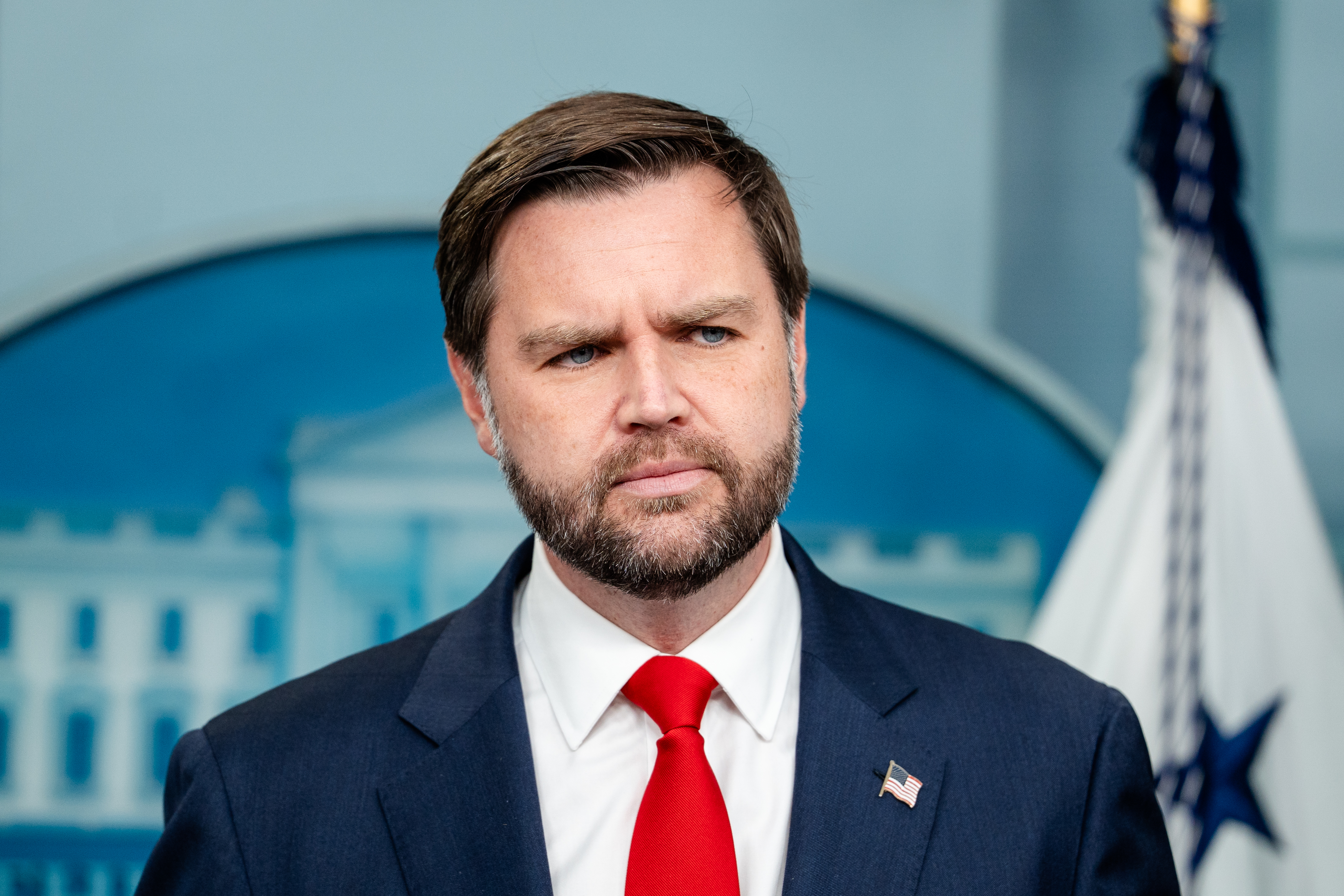
The Trump administration will withhold $1.3 billion in Medicaid payments to California because of potentially fraudulent billing patterns, Vice President JD Vance announced on May 13.
The action comes among a host of others taken recently to crack down on fraudulent activity in Medicare and Medicaid.
“We want to protect these programs for the kids and the families who need them,” Vance told reporters. “We want to ensure that the American taxpayer isn’t getting fleeced.”
Analysis of Medicaid billing patterns in California aroused suspicion, according to Dr. Mehmet Oz, administrator of the Centers for Medicare and Medicaid Services.
“We’ve discovered $630 million in billing from folks who are egregiously the top 5 percent of outliers in billing. These numbers are so big you can’t imagine anyone billing for these [amounts],” Oz told reporters.
California itself is an outlier among states, Oz said.
“In California, the growth of spending on personal care services is twice the rate of the average of the rest of the country,” Oz said.
“We estimate there’s $500 million that could be a risk of being taken from federal taxpayers.”
The withholding, technically called a deferral, leaves open the possibility that the payments could be made if the spending is found to be legitimate.
Criminal Prosecution
Vance also announced a push to enlist states to partner with the federal government on fraud enforcement by actively prosecuting fraud cases.
Although all states have federally funded Medicaid fraud control units, some do not appear to prosecute criminal cases involving fraud, Vance said.
Hawaii has brought no criminal indictments for Medicaid fraud over the past few years, Vance said. New York has also prosecuted few cases relative to the size of its Medicaid program, which is one of the nation’s largest.
To encourage more aggressive enforcement, the administration has written to all 50 states requiring them to document the effectiveness of their enforcement efforts.
“If they do not aggressively prosecute Medicaid fraud, we are going to turn off the money that goes to these anti-fraud units,” Vance said.
Previous Actions
Earlier in the day, the Centers for Medicare and Medicaid Services announced a six-month moratorium on new Medicare provider enrollments for hospices and home health agencies, which it considers at high risk for fraud.
On April 23, Oz wrote a similar letter to states, asking them to develop a plan to revalidate the eligibility of Medicaid providers offering services at high risk of waste, fraud, abuse, and corruption and to inform the agency of their plans.
Officials said they have identified billions of dollars in fraudulent or potentially fraudulent spending, leading to actions such as deferring $259 million in payments to Minnesota.
On April 15, the agency suspended payments to 773 hospices and 23 home health agencies based in Los Angeles that are suspected of fraud.
Fewer than 20 of those Medicare providers recently removed from the program because of suspicious billing activity have called to complain, Oz said, offering that as evidence that they likely were not legitimate.
The action has halted about $70 million in suspected fraudulent payments to date, according to the agency.
The agency withheld a total of $350 million in Medicaid payments from Minnesota in February and April because of suspected fraudulent activity.
Partnering With States
Vance and Oz said the objective of fraud enforcement is to protect both taxpayer dollars and Medicare and Medicaid beneficiaries, who risk losing benefits through identity theft and other fraud schemes.
“To put it in the context of affordability,” Oz said, “we would be able to double the life expectancy of the Medicare Trust Fund if we could deal with the fraud issues, just in Medicare.”
The federal government as a whole loses up to $520 billion to fraud, waste, and abuse each year, according to the Government Accountability Office.
Medicaid alone accounted for an estimated $34 billion in improper payments in 2024.
Vance and Oz said the federal government has gained cooperation from both Democrat- and Republican-led states on its anti-fraud campaign, citing Maryland and Ohio.
“There are a lot of governors, Democrat and Republican, who recognize that this is a very serious problem, that we’re offering resources to try to help solve that problem,” Vance said.
OJ Oleka, CEO of the State Financial Officers Foundation, welcomed the push for greater enforcement.
“Real accountability with real teeth is indispensable for winning the war on fraud, protecting its victims, and getting reluctant states off the fence and into this fight,” Oleka said in a statement provided to The Epoch Times.
Oz mentioned Minnesota and California as states that had been less cooperative, stating that the former had sued unsuccessfully to prevent the deferral of funding earlier this year.
“We are concerned that some governors see these programs as jobs programs, and the downstream impact of that resembles political patronage that we’re very serious about,” Oz said.