

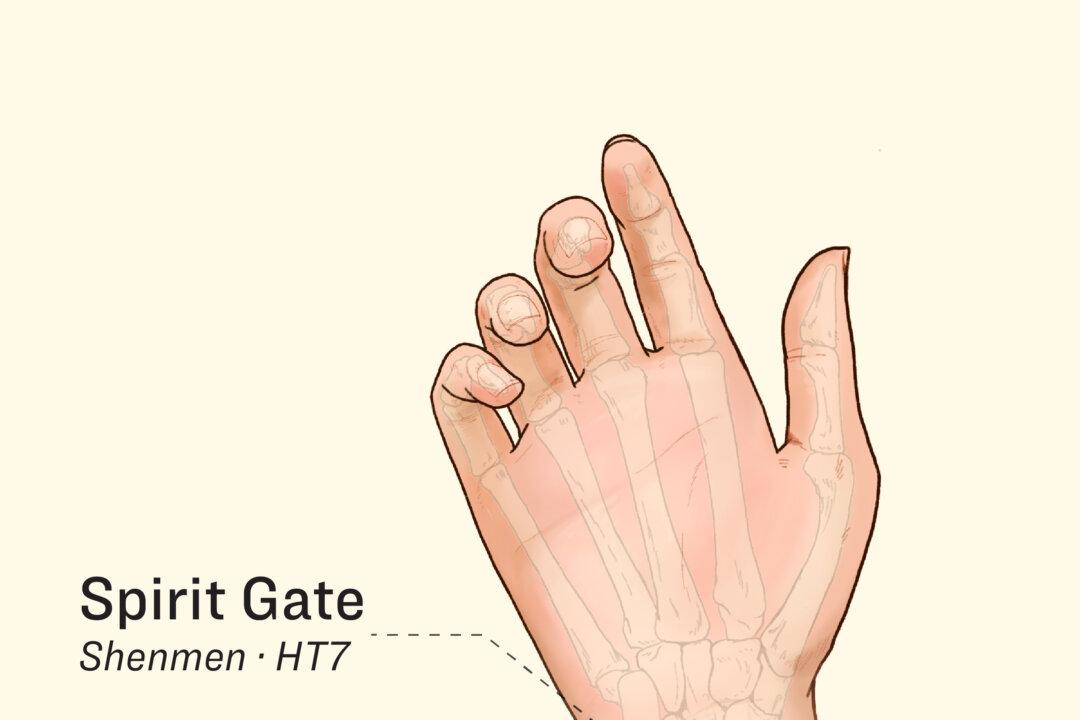
Spirit Gate Acupoint: Your Mind’s Off Switch
Insomniacs often suffer from a frustrating paradox—complete physical exhaustion paired with a racing mind. Hu recommends massaging the spirit gate (shenmen, HT7), an acupoint renowned for quieting the mind. Located on the heart meridian, this point helps ease anxiety, settle restless emotions, and support falling asleep. It is particularly effective for those plagued by frequent dreams, easy awakening, or light sleep.
Meditation: The Sleep Game-Changer
Beyond acupressure, pre-bedtime meditation is a powerful aid in promoting sleep. Hu and his wife have meditated faithfully for more than 20 years with transformative results. Since starting, he has slept deeply and awakened refreshed. His wife, who previously struggled with stress-related insomnia, found her mind gradually calming through meditation. She no longer feels restless at bedtime. Now she falls asleep as soon as she lies down, sleeps soundly, and wakes feeling energized.
The 2-Minute Soothing Exercise
Another pre-bedtime relaxation technique recommended by Hu is the two-minute sleep method, also known as “sleep in the military.” Even soldiers facing high-pressure missions can fall asleep within two minutes using this method.
- Close your eyes and gently release tension from your head, face, eyes, tongue, and jaw.
- Let relaxation flow through every part of your body—from the top of your head to the tips of your toes.
- Breathe deeply, sinking into the mattress with each exhale.
- Clear your mind by imagining yourself floating on a serene lake, or by silently repeating “don’t think” for 10 seconds.
Foods That Invite Sleep
Restful sleep requires a peaceful mind and an abundance of qi (energy) and blood. Beyond acupressure and meditation, you can support sleep through proper nutrition.
- Semen Ziziphi spinosae (Suanzaoren): Widely used for treating insomnia, offering sedative and anti-anxiety effects while helping protect the cardiovascular system.
- Foxtail Millet (Xiao Mi): Rich in tryptophan, which promotes serotonin production to soothe emotions.
- Lotus Seed Extract: Provides neuropharmacological activity that helps you fall asleep faster and extend sleep duration.
Nutritionist Zhang Yi-Ting told The Epoch Times that several key nutrients in the diet can help relax the body while regulating your biological clock: tryptophan, melatonin, vitamin B6, vitamin B12, folate, magnesium, calcium, and potassium.
Tryptophan
Tryptophan is the raw material for producing serotonin and melatonin, helping stabilize mood and promote sleep.
Melatonin
Melatonin directly regulates sleep rhythms, aiding sleep onset and alleviating jet lag.
Vitamin B6, Vitamin B12, and Folate
These nutrients help convert tryptophan into serotonin and melatonin, maintaining nervous system stability.
Magnesium
Magnesium helps relax nerves and muscles, reducing nighttime cramps and anxiety.
Calcium and Potassium
Calcium promotes melatonin synthesis, and potassium helps relax nerves and stabilize heart rhythm.
Foods to Avoid
Zhang warns against sleep-disrupting foods.
Daily Habits That Build Better Sleep
Dr. Lin Chih-Hao, attending neurologist at Taiwan’s Lin Hsin Hospital, noted on NTD’s “Health 1+1” that healthy daily habits are essential for deep sleep. NTD is a sister outlet of The Epoch Times. The following are some healthy daily habits:
- Sync Your Body Clock: Go to bed at a fixed time each night, get plenty of sunlight during the day, and limit naps to 30 minutes or less.
- Create a Sleep-Friendly Environment: Keep the bedroom quiet, dark, and cool; use white noise—such as wind, rain, or ocean sounds—if helpful.
- Avoid Screens Before Bed: Refrain from using phones, tablets, or other electronic devices to minimize blue light interference with melatonin production.
- Exercise Regularly: Stay active during the day, but avoid intense exercise within three hours of bedtime.
- Establish a Bedtime Ritual: Unwind with consistent, calm activities every night—such as reading, taking a warm shower, meditating, massaging, or listening to soothing music—to signal to your body that it’s time to sleep.
- Track Your Patterns: Record bedtime, the number of nighttime awakenings, and the time spent in bed versus actual sleep time to identify issues and improve sleep efficiency.
Why Deep Sleep Matters for Your Brain
Building sleep-smart habits isn’t just about feeling rested—it’s essential for brain health and longevity.