
Membership-based wholesale retailer Costco’s latest earnings spotlighted a growing K-shaped divide among its shoppers.
In recent months, economists and corporations have referenced a divergence between high- and low-income households, leading to two distinct economic trajectories across the U.S. marketplace. This K-shaped divide features the “upper arm” of the K flourishing and the “lower arm” declining.
“In short: the rich get richer (or at least keep thriving), while many others fall further behind. This is exactly what we’re seeing in the U.S. right now,” Milan Cacic, portfolio manager at CIBC Woody Gundy, said in a Nov. 21 research note.
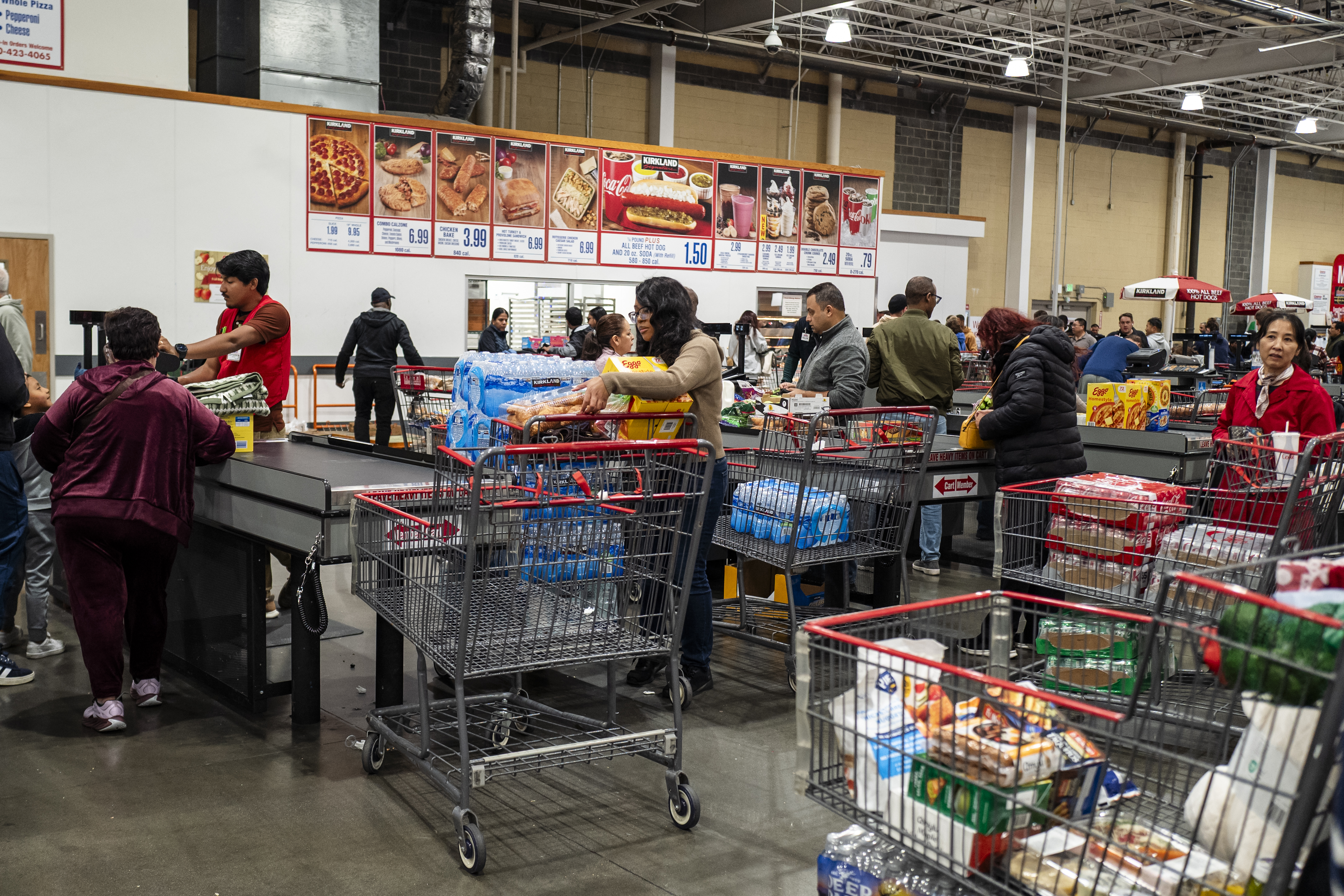
Costco reported its quarterly results on Dec. 11, posting 8.2 percent year-over-year sales growth driven by stronger digital demand and continued expansion of its store network. In the three months ending on Nov. 23, revenues and net income topped market estimates, coming in at $67.31 billion and $2 billion, respectively.
But the numbers highlighted a trend: affluent, value-oriented shoppers contributing to sales.
Executive Members drove the previous quarter’s performance, accounting for 74.3 percent of total sales—despite representing slightly fewer than half of all members.
Launched in 1997, the executive membership program costs $130 per year—a base fee of $65 plus a $65 upgrade—providing users with 2 percent cash back on purchases totaling up to $1,250 annually. The nearly 40 million Executive Members also receive other perks, including exclusive offers, discounts, and $10 monthly credit on same-day delivery orders of at least $150. Some stores also open their doors to Executive Members an hour earlier.
To make an Executive Membership pay for itself, users would need to spend approximately $6,500 annually, or $540 per month, through the 2 percent reward, excluding other benefits.
In March 2023, then-Costco CFO Richard Galanti noted that the typical Executive Membership user “spends more and shops more” than other customer segments.
Other companies have noticed the bifurcation unfolding across the U.S. economy.
Walmart, for example, says core low- and middle-income customers are trimming their discretionary spending. However, wealthier shoppers are adding to the retail juggernaut’s sales.
“We continue to benefit from higher-income families choosing to shop with us more often,” Walmart CEO Doug McMillon told analysts during the company’s third-quarter earnings call on Nov. 20.
Supermarket giant Kroger said it is seeing the split in the data.
“Low- and middle-income households are really looking for deals. They’re using coupons more. They’re making smaller, but more frequent trips. And they’re buying more private-label products. They’re also eating out less,” Kroger CEO Ronald Sargent said in a September earnings call.
“When you look at the higher income households, while they’re also concerned about the economy and food prices, they’re still spending.”
Tale of Two Shoppers
Heading into the busy holiday shopping season, Bank of America economists noted that the K-shaped patterns among shoppers persisted.
In November, spending by high-income households rose 2.6 percent year-over-year, compared with a 0.6 percent gain for low-income groups.
“While lower-income households have had relatively healthy spending growth, they still lagged middle- and higher-income households,” they said in a Dec. 10 report. “In fact, the lower-income cohort saw the weakest holiday spending growth in the week up to Cyber Monday.”
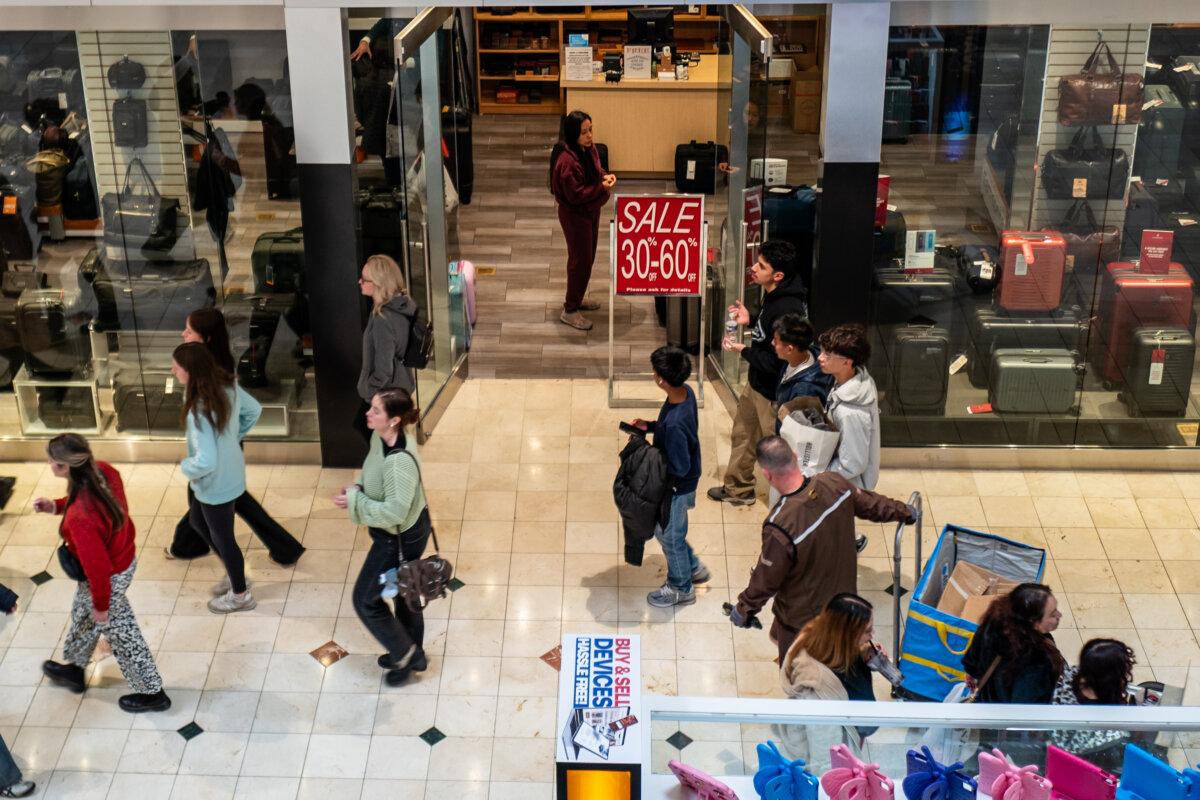
Shoppers on Black Friday at a mall in Bethesda, Md., on Nov. 28, 2025. (Madalina Kilroy/The Epoch Times)
Federal Reserve officials are monitoring this development in the economy.
Recent Federal Reserve findings indicate that K-shaped trends are forming in the United States. Broad consumer spending weakened further, but higher‑end retailers continued to hold up, according to the latest Beige Book—a periodic report summarizing economic conditions across the central bank’s 12 districts.
Speaking to reporters at the post-meeting press conference on Dec. 10, Fed Chair Jerome Powell acknowledged that much of the consumption lately has been driven by wealthier shoppers.
“If you listen to the earnings reports for consumer-facing companies that deal with low- and moderate-income people, they’ll all say that we’re seeing people tightening their belts, changing products they buy, buying less,” Powell said.
“Most of the consumption does happen by people who have more means,” he continued. “The top third accounts for way more than a third of the consumption.”
With elevated price pressures continuing, consumers are being a bit more cost-conscious.
Almost half (46 percent) of U.S. consumers plan to keep their holiday spending in line with 2024 levels, and about one-quarter of shoppers plan to spend less, according to McKinsey survey data.
“Nearly half of U.S. consumers said inflation was among their top three concerns, though concerns about rising prices dropped seven percentage points from the same time last year,” the report stated. “This suggests that many consumers are beginning to accept elevated prices as the new normal.”
Many are also turning to buy-now, pay-later programs to fund their holiday shopping.
From Nov. 1 to Dec. 1, buy-now-pay-later spending exceeded $10 billion, a 9 percent year-over-year increase, according to Adobe Insights. Additionally, it forecasts that $20.2 billion will be spent using this method during this year’s Christmas season.
Next week, the Department of Commerce’s Census Bureau will release the delayed October retail sales report. The five-day Thanksgiving weekend was a record-breaking event for retailers.
“Early retail data shows record sales over the Black Friday and Cyber Monday weekend, but much of the rise appears to come from higher prices rather than increased sales volumes,” Stephen Kates, Bankrate financial analyst, said in a statement to The Epoch Times. “This suggests that inflation remains a persistent impediment for consumers.”