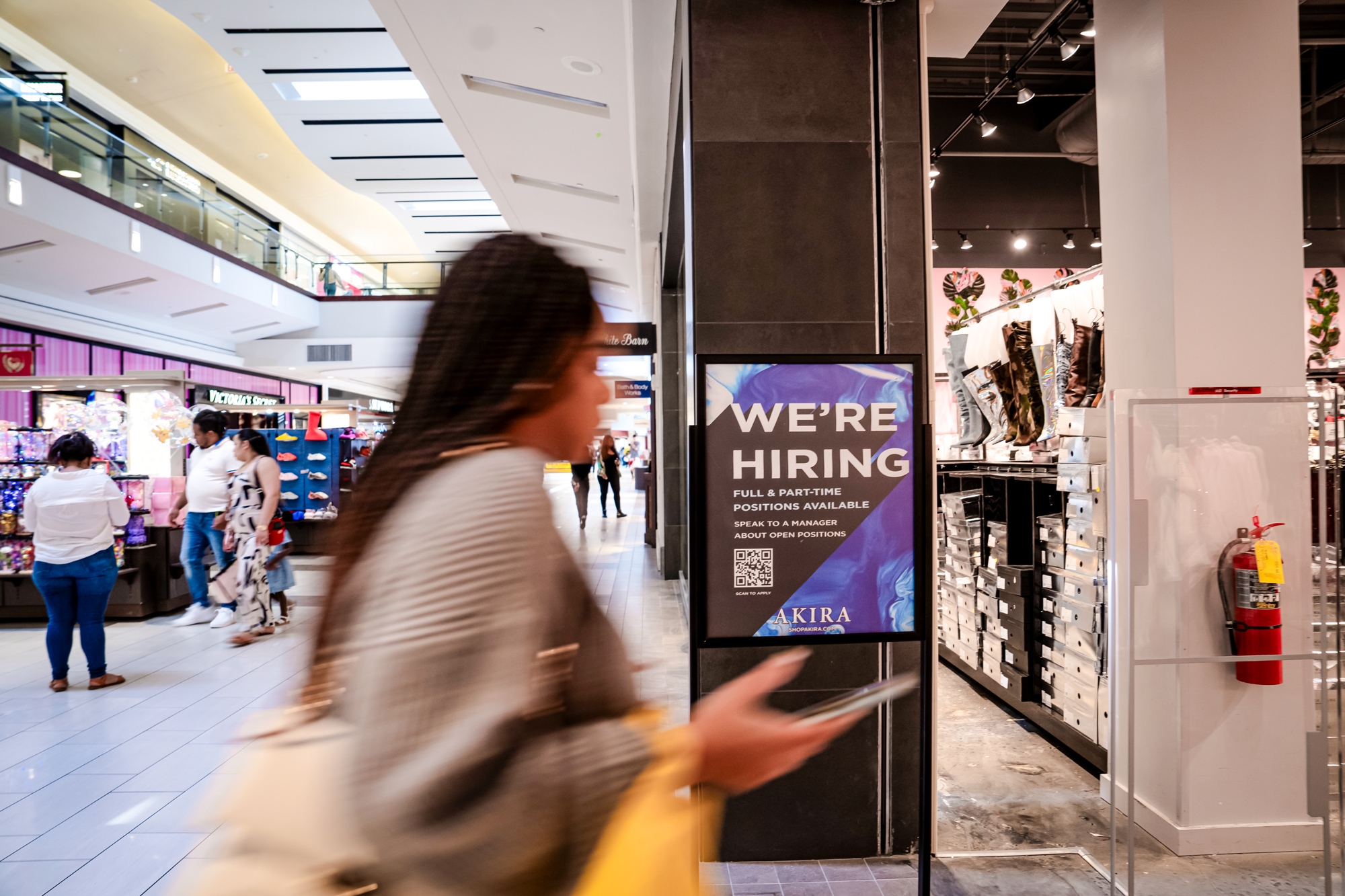

U.S. payrolls beat expectations in November, even as the unemployment rate rose more than anticipated, a combination that suggests further cooling in the labor market.
Employers added 64,000 jobs last month after shedding 105,000 positions in October, according to delayed data from the Bureau of Labor Statistics (BLS).
November’s jobless rate rose to 4.6 percent—the highest since September 2021— from 4.4 percent in September.
Economists had expected a gain of 50,000 jobs and an unemployment rate of 4.4 percent.
The bureau also revised September payroll growth down by 11,000, from 119,000 to 108,000. August payroll employment was also adjusted lower by 22,000, from a loss of 4,000 jobs to a loss of 26,000 jobs.
Average hourly earnings edged up by 0.1 percent, or 5 cents, to $36.86—compared with the 0.4 percent gain registered in October. On a 12-month basis, average hourly earnings have slowed to 3.5 percent from 3.7 percent.
Health care and construction accounted for most of the employment gains, with payrolls ballooning by 46,000 and by 28,000, respectively. Social assistance jobs also rose by 18,000.
Transportation and warehousing employment fell by 18,000, “reflecting a job loss in couriers and messengers.” The sector’s headcount has fallen by 78,000 since January.
Several factors have dragged down transportation and warehousing payrolls over the past 12 months, including softening freight demand, slower goods movement, and bankruptcies among key carriers such as Yellow.
The federal workforce also eliminated 6,000 positions after a 162,000 drop in October. Federal government employment has plunged by 271,000 since the beginning of the year.
“Federal employees on furlough during the government shutdown were counted as employed in the establishment survey because they received pay, even if later than usual, for the pay period that included the 12th of the month,” the BLS noted.
“Employees on paid leave or receiving ongoing severance pay are counted as employed in the establishment survey.”
Economic observers have paid close attention to federal payrolls, attempting to determine whether the current administration’s policies are weighing on the civil workforce.
Full-time employment levels fell by 983,000 from September, while part-time payrolls soared by more than 1 million.
Individuals working two or more jobs topped 9.3 million, rising from 8.8 million.
The labor force participation rate ticked higher to 62.5 percent, while average weekly hours also rose by a hair to 34.3.
Mixed Reaction to Mixed Picture
U.S. stocks were mixed following the November jobs report, with the leading benchmark averages little changed before the opening bell.
Yields for U.S. Treasury securities were also mixed. The benchmark 10-year yield was flat at about 4.18 percent, while the 30-year yield picked up a single basis point to end at 4.86 percent.
The U.S. dollar index, a measure of the buck against a weighted basket of currencies, fell by 0.18 percent, adding to its year-to-date decline of 9.6 percent.
Market reactions to recent events, including the Federal Reserve’s rate action last week and now the jobs data, have been muted, according to Ken Mahoney, CEO of Mahoney Asset Management.
“We believe the market had a pretty poor reaction to news of huge stimulus and the rate cut, so in some way we see this period in the market as clear distribution, and even though we are cutting rates, something seems amiss in the market indexes, particularly tech,” Mahoney said in a note emailed to The Epoch Times.
“So it is hard to say much this stockpile of economic data will really do to help lift markets and will remain to be seen. We are overall cautious and think that is warranted by the action.”
Assessing US Employment Conditions
The nonfarm payrolls report arrives at an unusually off-cycle moment this month—a Tuesday in mid-December rather than the customary first Friday. Alongside the November figures, the release also folds in partial employment data for October, resulting from the 43-day federal government shutdown.
Officials cautioned that the household portion of the monthly nonfarm payrolls report, which calculates the unemployment rate, will be affected for several months because of the lingering effects of the spending impasse.
Prior to the November jobs report, economic observers combed through other measures to determine the U.S. labor market’s health.
The most up-to-date data comes from the Department of Labor’s weekly initial jobless claims report.
For the week ending on Dec. 6, the number of Americans filing for first-time unemployment benefits increased by 44,000 from the previous week to 236,00—the sharpest weekly jump since March 2020.
At the same time, continuing jobless claims—a measure of individuals currently receiving unemployment benefits—fell to 1.838 million, the lowest since mid-April.
October job vacancies stalled at 7.67 million, rising by 12,000 after a September spike of 431,000, according to the BLS.
Job quits declined by 187,000 to a five-year low of 2.941 million in October. The quits rate—a measurement of job leavers as a proportion of total employment—dipped to 1.8 percent.
Economists monitor the quits figures because they can signal workers’ confidence in the broader economy.
Employee sentiment has been trending downward since mid-2022 and has firmly plunged since the summer.
Glassdoor’s Employment Confidence Index—the share of workers reporting a positive six-month business outlook—declined to 44.6 percent in November, down from 45.9 percent in October.
“Despite the end of the government shutdown, workers remain concerned about the trajectory of the economy especially as a wave of layoffs gripped the headlines at the start of the month,” Daniel Zhao, chief economist at Glassdoor, said in a Dec. 11 note.
Last month, U.S.-based employers announced 71,321 planned job cuts, the highest for the month since 2022, according to global outplacement firm Challenger, Gray, and Christmas. However, this was a more than 50 percent decline from October’s 153,074 layoffs.
A rebound could be underway as payroll processor ADP reported that private employers added an average of 16,250 jobs per week in the four weeks ending on Nov. 29.
This environment—typically described by economists and policymakers as “low fire, low hire”—has forced the Federal Reserve to engage in a delicate balancing act.
Monetary officials have warned throughout 2025 that the institution’s dual mandate of maximum employment and price stability has been under threat.
As a result, the Fed has taken a gradual approach to unwinding restrictive policy, following through on three consecutive quarter-point interest rate cuts. Looking ahead, the central bank anticipates only a single rate cut in 2026.
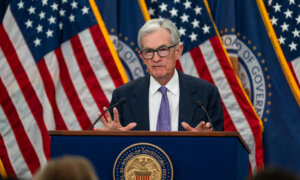
“Fed Chair Jerome Powell said last week that payroll numbers may be overstated by up to [60,000] jobs a month. Translated, that means the job market could be weaker than it looks,” Mark Hamrick, senior economic analyst at Bankrate, said in a statement to The Epoch Times.
“The data-dependent Fed has delivered three consecutive interest rate cuts because of downside risks to the job market. For now, the betting is that the Fed is on hold for a while.”