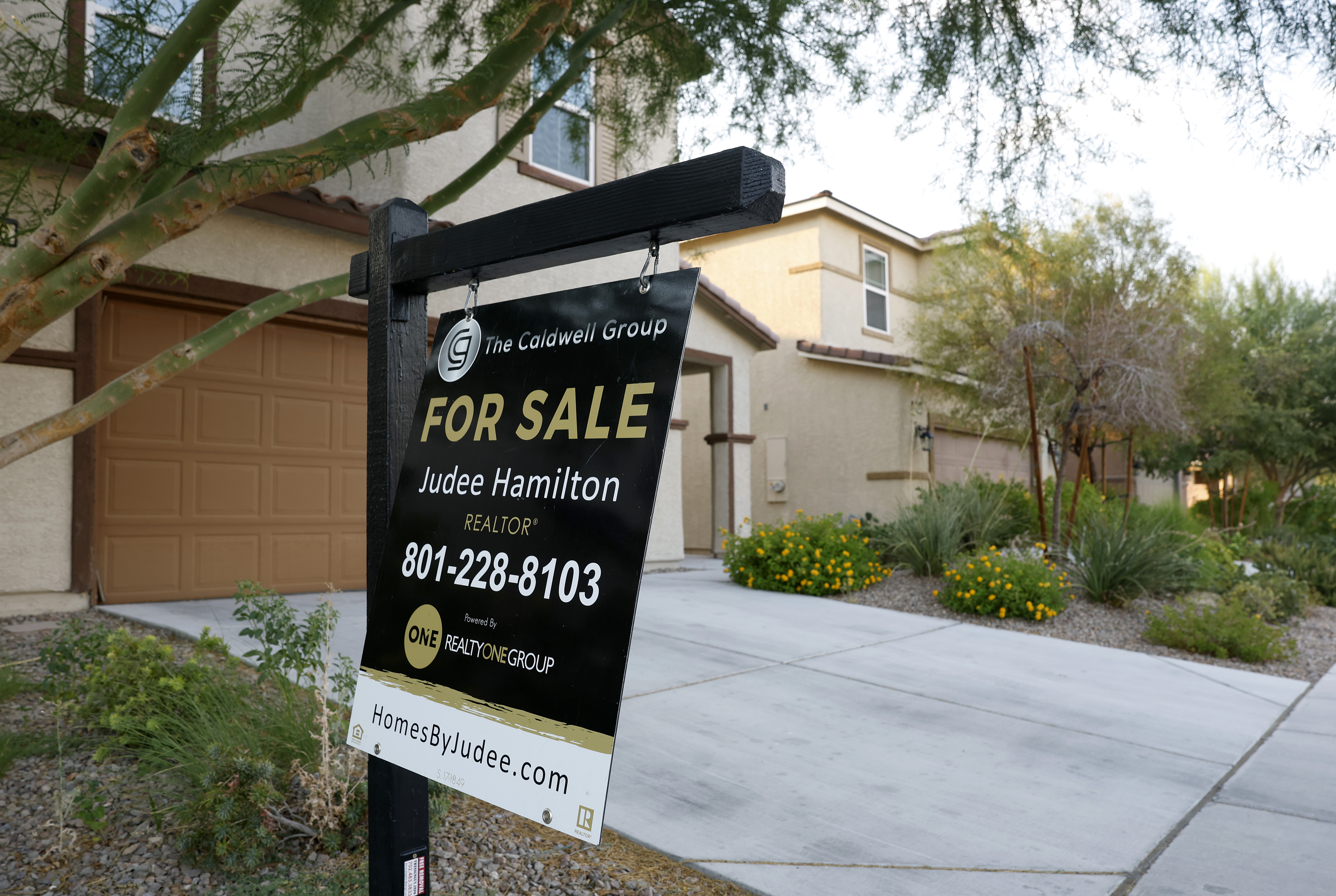

Home affordability is expected to improve in 2026 as part of a “great reset” in the housing market, according to a Dec. 2 forecast from Redfin. The company anticipates some long-awaited relief for younger Americans hoping to purchase a home and start families.
For years, rising home values, slow wage growth, and climbing mortgage rates have put homeownership out of reach for millions. Data from the Federal Reserve Bank of St. Louis show that the average home sales price increased from roughly $272,000 in 2009 to $513,000 in 2025—an 88 percent jump. During the same period, the average annual wage rose from $40,711 to $69,846, a 72 percent increase, according to the Social Security Administration.
More recently, mortgage rates have also risen sharply, from about 2.7 percent in 2020 to more than 6 percent today, making monthly payments significantly higher, based on data from the Federal Reserve.
Rising housing inventory—expected to increase in late 2025—may also put downward pressure on prices, according to Federal Reserve listing data.
2026 Trends
Redfin forecasts that some of the pressures driving these trends will ease beginning in 2026.
Mortgage rates are expected to edge lower, with the average 30-year rate falling to 6.3 percent from 6.6 percent in 2025, as a softer labor market prompts the Federal Reserve to cut interest rates. The company also expects wage growth to outpace home price growth for the first time since the Great Recession.
These shifts, Redfin says, should help lift affordability enough to bring buyers back to the market, with existing-home sales projected to rise by 3 percent in 2026 to an annualized rate of 4.2 million.
Affordability challenges vary widely by region, with states such as California and Texas experiencing some of the steepest declines. Recent analyses from the Federal Reserve Bank of Atlanta and Realtor.com’s state-by-state housing report card highlight deepening geographic disparities shaping the broader market.
A Harris Poll for Coldwell Banker Real Estate found that the worsening conditions have made homeownership especially elusive for Generation Z, with most respondents saying they do not expect to own a home until age 40. The survey also noted that delays in buying a home are causing some young adults to postpone major life milestones, including having children.
A recent report from the National Association of Realtors (NAR) found that first-time buyers accounted for just 21 percent of all homebuyers over the past year—a historic low.
Before 2008, the share of first-time buyers had a historical norm of 40 percent. At the same time, the share of first-time buyers is at its lowest level, and the age of first-time buyers has reached its highest level on record. The median age of first-time buyers is now 40. In the 1980s, first-time buyers were, on average, in their late 20s, the report noted.
The report also pointed to surging down payments, which reached levels not seen in decades. The median down payment this year was 19 percent—10 percent for first-time buyers and 23 percent for repeat buyers, the highest since 1989 and 2003, respectively.
However, the Redfin report stated that the potential improvement in affordability would not be sufficient to immediately increase homeownership for young families.
Elaborating further, Redfin sees several other trends at work in the “great reset” of the housing market. For instance, it expects apartment rents to edge higher in 2026, about 2 percent to 3 percent year over year by the end of 2026, roughly the pace of inflation, as demand rises and supply falls.
Higher rents, in turn, will reshape households, with more roommates, more adult children living with their parents, and fewer babies.
“Household makeup will shift further away from the nuclear family, with more adult children living with their parents and vice versa. We also expect more friends to pool resources to buy homes together, often with prenup-style agreements,” the report said.
The persistence of high housing costs, Redfin stated, will unite politicians across party lines to develop sensible policies that may start to chip away at the housing affordability crisis, such as promoting longer-term mortgages that ease monthly payments.
Monthly Payments Matter Most
San Antonio-based Danny Johnson, founder of Danny Buys Houses, also said that affordability could improve where wage growth outpaces home values.
“We tend to focus on the home prices, but what people truly care about are the monthly payments. If we can afford the monthly payments with enough to live the lifestyle we are used to, we will buy houses,” he told The Epoch Times.
“The combination of higher home prices, property taxes, and insurance costs has made these monthly payments untenable for many.”
Johnson said he believes that home prices will remain flat in some areas and decline slightly in others as wages continue to rise. He noted that San Antonio—one of the markets Redfin expects to cool—has already seen a slowdown.
“Houses are selling at the same levels, but they are often selling for as much as $10,000 to $30,000 below list price,” he said.
In Salisbury, Maryland, real estate agent Marco Smith said he expects any affordability improvements to unfold slowly.
“We may not see appreciable gains in affordability right away in 2026, but over the next two or three years, more money is likely to flow into the economy, at which point we will begin to see an end to the affordability crisis slowly,” he told The Epoch Times.
A Transitional Year
Industry analysts have said they expect 2026 to serve as a transitional year, with affordability gradually improving and offering a more hopeful outlook for prospective buyers.
Nick Krautter, CEO of City & State RE in Portland, Oregon, said he anticipates that slightly lower mortgage rates will draw more buyers. However, many current homeowners may stay put until rates fall closer to the 3 percent to 4 percent range seen during the pandemic.
“Home prices will lower slightly even in this low inventory environment with buyers needing to take more time to buy,” he told The Epoch Times.
Krautter said he does not foresee wage growth rising enough to significantly improve affordability, warning that artificial intelligence will displace more medium- and high-paying jobs.
He also pointed to rising insurance premiums, property taxes, and repair costs as hidden pressures on homeowners.
“In many locations, property taxes alone can cost more than $1,000 a month,“ he said. ”If you haven’t had to replace a roof or a furnace lately, you'll be in for profound sticker shock. Tariffs will only increase the costs of imported home supplies and appliances.”
The NAR stated that it expects the market to remain divided, with cash-rich buyers thriving and first-time buyers continuing to struggle.