
The retail industry experienced significant volatility in 2025, as elevated inflation, a weakening labor market, rising household debt, and intensifying competition contributed to uneven retail sales throughout the year.
Looking ahead, the outlook for 2026 remains mixed. Lower borrowing costs may provide some relief to households, but persistent inflationary pressures and a weak labor market are expected to continue to shape the retail environment.
Sales Volatility in 2025
Retail sales started 2025 on a weak footing, falling by 0.9 percent in January from the previous month and remaining flat in February, according to Trading Economics. Sales rebounded sharply in March, then declined again in April, followed by gains over the next four months, underscoring a volatile monthly pattern throughout the year.
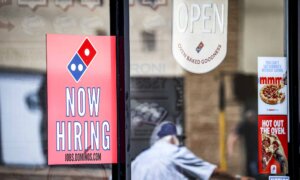
The volatility in sales reflects a combination of high prices, rising household debt that is straining budgets, and growing concerns about labor market weakness.
After moderating in early 2025, inflation edged higher over the summer, according to Trading Economics; the year-over-year consumer price index hit about 3 percent in September—above the Federal Reserve’s 2 percent target.
Trading Economics also found that nonfarm payrolls, the broadest measure of the labor market, fell from 323,000 in December 2024 to minus 13,000 in June 2025, reflecting, in part, a measurement-methods adjustment.
Household balance sheets came under additional pressure as debt continued to climb. A Fed report shows that household debt increased by $197 billion to $18.59 trillion in September. Mortgage balances rose by $137 billion to $13.07 trillion and credit card and student loan balances also increased.
A McKinsey survey conducted in late 2025 highlighted growing consumer anxiety around the cost of living and job security.
The survey found that a rising share of consumers cited “making ends meet” as a top concern, up by 2 percentage points, while worries about job security increased by 3 percentage points from the previous quarter. Generation Z consumers reported particularly acute job security concerns, driven in part by worries over rising health care costs.
A Tale of 2 Stories
Although retail sales remained volatile throughout the year, intensifying competition, the adoption of new technologies and the integration of online and offline sales channels have fragmented the retail market. Some retailers adapted and thrived, while others struggled to keep pace with shifting consumer behavior and intensifying competition.
Dollar General, Dollar Tree, Walmart, Costco Wholesale, BJ’s Wholesale, and TJX Companies fell into the first group, reporting solid sales and earnings by emphasizing value pricing and efficient cost structures. Their strategies attracted bargain-seeking shoppers across income levels, including higher-income consumers.
Dollar General and Dollar Tree expanded their assortments and adopted multichannel pricing strategies, thereby boosting store traffic and improving margins.
John Zolidis, president of Quo Vadis Capital and a longtime observer of both retailers, reiterated a long-standing recommendation.
“Our opinion remains that transforming to multi-price will improve the concept and unit economics by enabling assortment expansion, making the store more relevant to more shopping occasions and to more customer types,“ he told The Epoch Times. ”This is already happening.”
Walmart leveraged its scale to keep grocery and general merchandise prices low while investing heavily in supply-chain efficiency and cost controls.
BJ’s and Costco continued to benefit from growing demand for membership clubs, drawing in a loyal base of higher-income shoppers.
TJX Companies, through off-price chains such as T.J. Maxx and Marshalls, focused on delivering value through discounted branded merchandise.
These retailers also benefited from omnichannel strategies that enable customers to order online and pick up their purchases locally, helping to offset competitive pressure from Amazon.
Walmart has undergone a strategic transformation in recent years, evolving into a multichannel retailer through investments in software, digital acquisitions, the launch of Walmart Connect, and the purchase of Vizio Holding Corp. These initiatives have positioned the company as a multi-platform advertising and commerce network.
The company has also leveraged its extensive store footprint to advance unified retailing—the integration of online and offline sales—thereby enabling consistent product delivery across channels.
By contrast, Target and Best Buy struggled throughout the year, reporting weak sales and earnings. While both benefited from omnichannel initiatives, these efforts were insufficient to offset weakness in discretionary spending and intensifying competitive pressure. Zolidis expressed skepticism about Target’s near-term turnaround prospects, pointing to declining same-store sales.
Target faced challenges from weak discretionary demand, elevated inventory earlier in the year, and margin pressure from promotional activity.
Best Buy continued to grapple with softer demand for consumer electronics following the COVID-19 pandemic-era pull-forward and increased price sensitivity among consumers, which is delaying major purchases.
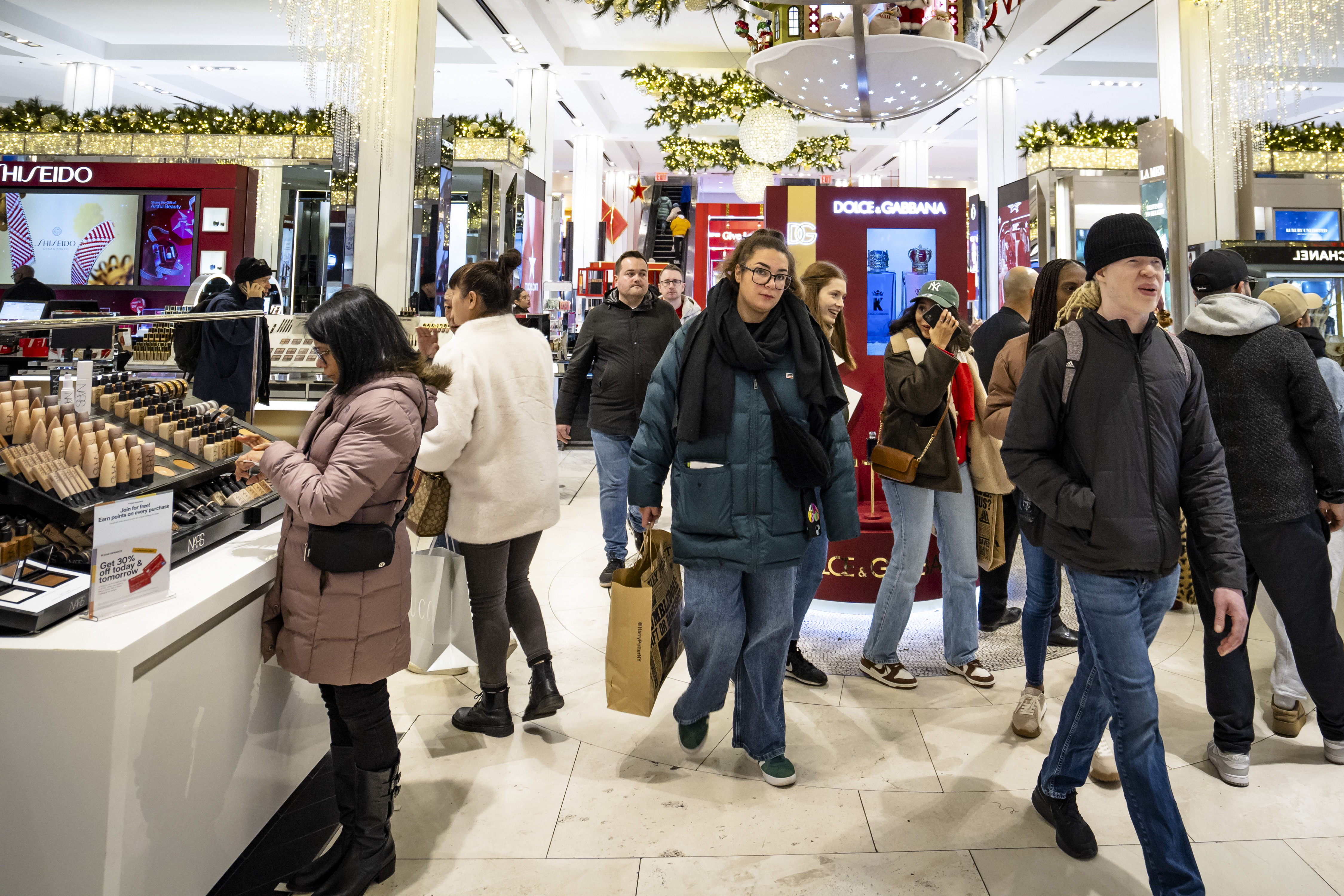
Consumer spending patterns shifted toward necessities, including meat, dairy, and shelf-stable groceries. At the same time, discretionary categories such as jewelry, home improvement, and gardening saw reduced spending, according to the McKinsey survey.
“For retail, spending didn’t vanish as feared; the story was that the consumer is fine, just more selective and looking for value, convenience, and a sale while tariffs nudged shelf prices, squeezed vendor terms, and forced more creative sourcing and inventory gymnastics,” Michael Ashley Schulman, chief investment officer at Running Point Capital, told The Epoch Times.
Looking Toward 2026
Looking ahead, analysts expect volatility in the retail sector to persist into 2026. Monetary easing could lower borrowing costs and reduce debt-service burdens, freeing up discretionary income. At the same time, elevated inflation and a weak labor market are likely to continue weighing on sentiment.
Wall Street performance, an essential driver of spending among affluent consumers, also presents mixed signals, with lower short-term interest rates offset by high equity valuations.
A report from the Federal Reserve Bank of Richmond states that consumer demand is slowing; nominal personal consumption expenditures are growing at a slower pace than in the immediate post-COVID-19 pandemic period.
“Falling demand is associated with declines in both prices and quantities, and both forces would depress the growth rates of nominal consumption,” the report reads.
Nominal personal consumption expenditures grew by 4.7 percent year over year in July, down from 5.4 percent in July 2024, 6.2 percent in July 2023, and 9.4 percent in July 2022.
However, the Federal Reserve Bank of Richmond said recent growth rates remain above the 4 percent average recorded in the five years before the COVID-19 pandemic.
“The 2026 outlook feels balanced between premium brands with real differentiation and sharp value players, but with a carve-out for affordable luxuries like perfume and drinks with healthy infusions,“ Schulman said. ”A shiny example of someone doing it right is Ralph Lauren, whose trending premium brand is reflected in its share price, up over 60 percent year-to-date.”
David Hunter, CEO of Local Falcon, said the continued expansion of e-commerce and artificial intelligence is reshaping retail.
“For retailers, e-commerce is already starting to feel less like online shopping and more like having a personal virtual shopping assistant,“ he told The Epoch Times. ”Consumers no longer sort through endless tabs. Instead, they ask the AI for exactly what they need and receive instant, tailored answers.”
“As this trend continues to evolve, retailers need to ensure their product data, reviews, pricing, and inventory are clean, consistent, and easily understood by AI systems,” Hunter said.