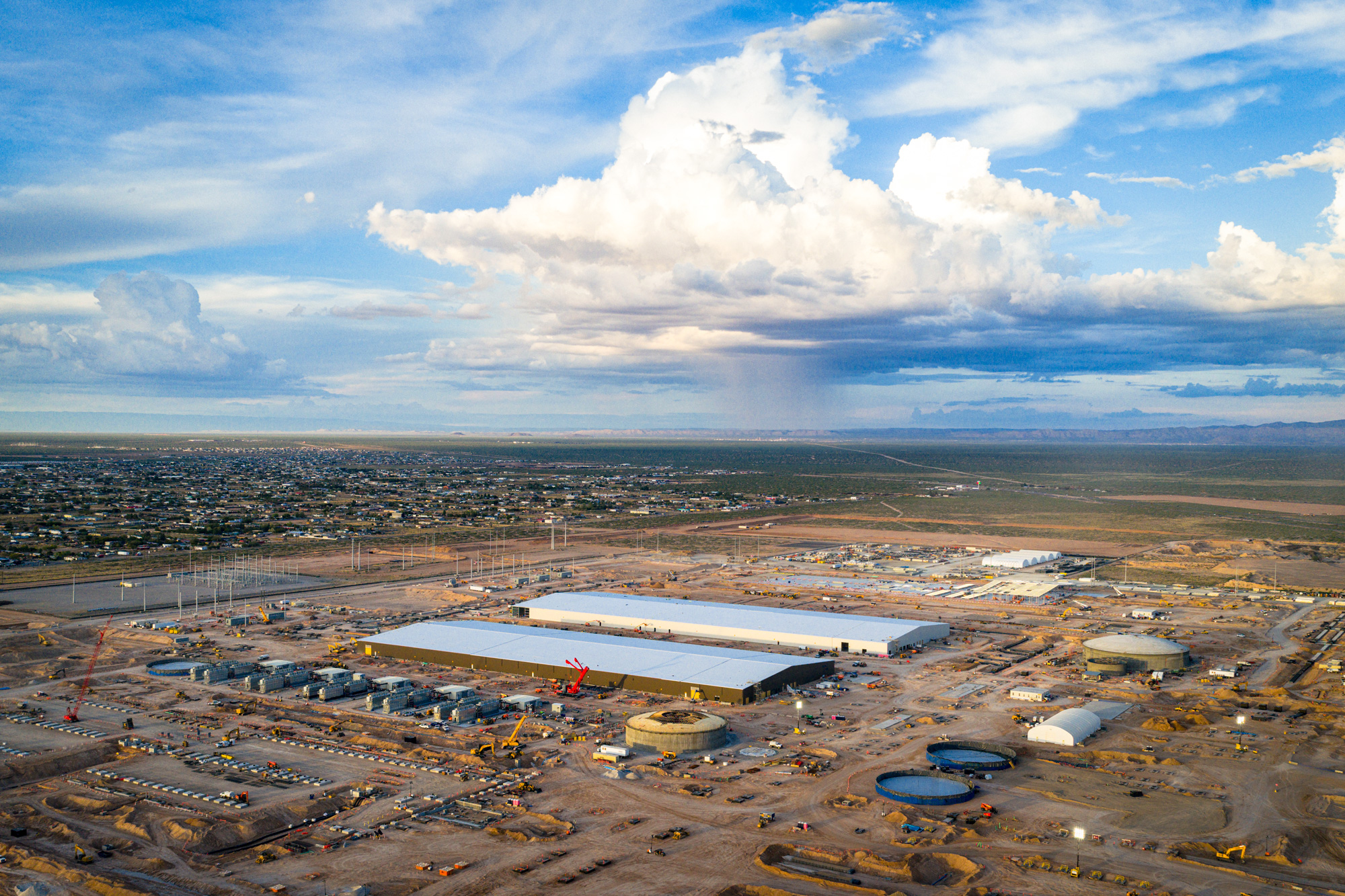

Outrage over proposed data centers surged across America, from the Birthplace of Rock ’n’ Roll to Kansas corn country, amid a heated U.S.–China technology race, turning server farms into one of the defining issues of the midterm elections this fall.
In some primaries, candidates who backed the artificial intelligence (AI) boom have been given the boot by voters who preferred politicians encouraging guardrails—or a hard stop—before big tech turned country pastures into concrete parks.
Meanwhile, the Trump administration says AI-related development is imperative to protect U.S. interests and ensure national security.
Americans have grown protective of remaining open space after seeing acreage—larger than the size of Florida—be converted from rural or agricultural land into urbanized landscape between 1982 and 2017, according to data released by NumbersUSA’s USA Sprawl project.
Much of the development was driven by population growth, but there is now concern that data centers will consume additional land.
“It’s not that Americans think that all of that development was bad, but they’re taking the trade-offs very seriously,” Jeremy Beck, co-president of NumbersUSA, told The Epoch Times.
“They’re concerned about water. They’re concerned about resources,” he said, citing polls.
Voters told The Epoch Times they’re worried new tech developments would strain local water resources, increase electricity bills, boost governmental surveillance, or become another abandoned building if the AI bubble bursts.
“Data centers … make the national AI and energy debate a local issue,” Energy policy analyst Yagiz Sullu told The Epoch Times.
“Most voters may not track data center policy, but they do notice changes in electricity bills, water use, new infrastructure, tax incentives, and development in their neighborhoods.”
Voters in a handful of states had their primary election votes swayed by a candidate’s stance on data centers, those voters told The Epoch Times.
In Wyoming, the issue shaped the state’s gubernatorial and U.S. Senate primaries in mid-August in very different ways.
President Donald Trump’s endorsement fell short in the Cowboy state’s gubernatorial primary when his pro-data center pick, Megan Degenfelder, lost to Republican Eric Barlow.
In Kansas, a man who was dragged out and arrested at a City Commission meeting for clapping when people spoke in opposition to the data center told The Epoch Times he fears the AI bubble could pop and leave his city with more empty buildings.
“I don’t want them to spend, you know, five to 10 years building a data center, only for the AI bubble to finally burst and crash,” Lux Claridge, a physics teacher, said.
Claridge and his wife, Jessica Danford, said they were “all in” on Democrat Cindy Holscher to be the next governor of Kansas over Republican Ty Masterson due to Holscher’s proposed moratorium on data centers.
Some candidates have underscored just how large the impact of data centers and AI was for their constituents.
During the U.S. Senate primary in Wyoming, voters told The Epoch Times they backed candidates who worked to protect their communities and appreciated when U.S. Rep. Harriet Hageman, the Republican nominee for U.S. Senate, demanded accountability from Meta after its Cheyenne Data Center contaminated the city’s wastewater system.
Hageman, a Trump-backed Republican, is saddling up to face Democratic state Rep. James Byrd, who wants a “full stop” on data center development, in the general election for the U.S. Senate seat this fall.
Some pro-data-center candidates kept their names on the ticket.
In Nevada’s gubernatorial primary election, incumbent Joe Lombardo, who is pro-data centers, won in a landslide and will face Democratic Attorney General Aaron Ford this fall.
Lombardo promised to protect people from rising costs as he vouched for data centers, suggesting they will bring jobs, investment, and economic growth to Nevada.
Ford wants to pause new tax breaks for the centers until they can prove they will provide their own clean energy, grid upgrades, and water.
In the Texas U.S. Senate race, Attorney General Ken Paxton beat incumbent John Cornyn in the GOP primary runoff election and then pitched a “Texas First Data Center Plan” on Aug. 24, which would put guardrails on proposed data centers.
His opponent, Democrat James Talarico, also proposed guardrails and stopping “data centers from being built in our communities if they cannot meet the most basic demands of those communities.”
Meanwhile, in Arizona, both gubernatorial candidates agreed to issue a moratorium on tax incentives and subsidies for businesses seeking to bring a data center to the state.
In Tennessee, Trump-backed GOP state Sen. Brent Taylor will face Democratic state Rep. Justin Pearson for the remapped District 9, which stretches all the way from the Memphis area to just south of Nashville.
Pearson has strongly opposed Elon Musk’s Colossus, a supercomputer that powers Grok.
“In Congress, one of my top priorities will be to establish data center regulations to protect our families,” Pearson wrote on Sept. 3.
Taylor suggested he will make “data centers pay their own way instead of passing the costs on to everyone else.”
The election this fall can help determine whether the president’s agenda during his remaining years in the White House will be a success or a stalemate, including on AI.
Trump dismissed concerns about data centers and AI in a Truth Social post on Sept. 14. The president urged that expansion continue to win the world’s AI race, especially against China.
“There is a SICK conspiracy going on against AI and Data Centers, and the only one that is happy about it is China,” Trump said.
“WHOEVER WINS AI, WINS! We are leading China, and all others, and will continue to do so. Conspiracy Theorists, Treasonists, Traitors, and Leakers, BEWARE! Thank you for your attention to this matter!”
—Jacki Thrapp
BOOKMARKS
The Trump administration is taking steps to prevent Chinese nationals from exploiting a visa-free travel program to the Northern Mariana Islands, according to White House border czar Tom Homan. Speaking to Epoch Times senior editor Jan Jekielek in an “American Thought Leaders” interview aired on Sept. 26, Homan called birth tourism a “driver of illegal immigration.”
Feral hogs, an invasive species, are taking over America’s farmlands and forests—but hunters told The Epoch Times’ Jacob Burg they have a solution in mind. Often weighing between 75 and 250 pounds, feral hogs are large, fast, and destructive. They cause billions of dollars in damage to agriculture every year and foul soil, native plants, crops, waterways, and grasslands, making them among the most harmful invasive species in the United States.
Patrick “Tate” Adamiak spent almost five years living with the constant noise, confusion, and uncertainty of prison while serving a 20-year sentence for violating the National Firearms Act during a period of overzealous prosecution by the Biden administration. On Sept. 3, President Donald Trump granted the Navy veteran executive clemency, releasing him from prison and restoring his constitutional rights. The Epoch Times’ Michael Clements spoke to Adamiak about his experience following his release from prison.
Trump has rejected the idea of cooperating with Beijing on artificial intelligence (AI), despite discussing the emerging technology with Chinese leader Xi Jinping last week. “I would rather not integrate because we’re leading by a lot,” Trump told reporters. “When you’re leading, you don’t open it up to each other.”