Nearly six years after production wrapped, the Nov. 6 release of a film celebrating the efforts of medical workers during Wuhan’s COVID-19 lockdown in China has sparked backlash on Chinese social media.
Many netizens have expressed their concerns that the movie risks glossing over the suffering caused by the Chinese Communist Party’s (CCP’s) draconian lockdown policies during the outbreak.
The film, “Angels in White,” stars Andy Lau and Yang Zishan and depicts the efforts of Wuhan’s doctors, nurses, medical professors, and frontline workers who treated patients during the 76-day lockdown of Wuhan—the city where the coronavirus outbreak was first identified.
Production under director Herman Yau wrapped in December 2020 after just over a month of filming. The project faced registration hurdles and was refiled under a new name in 2023. It didn’t receive approval for release until July 2025 and was briefly scheduled for release that August, only to be withdrawn from the calendar.
A Painful Chapter for Wuhan
Cases of an unexplained pneumonia were reported in Wuhan in late 2019. Li Wenliang, an ophthalmologist at Wuhan Central Hospital, warned fellow medical professionals in a WeChat group about a SARS-like outbreak. Police reprimanded Li and other doctors who raised the early warnings.
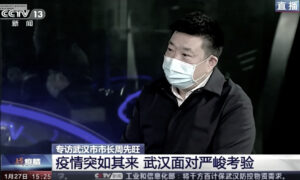
On Jan. 23, 2020, Wuhan imposed a sweeping lockdown, suspending most travel into and out of the city. The restrictions lasted 76 days, ending at midnight on April 8.
The film revisits this period that remains traumatic for many people who lived through the pandemic in China.
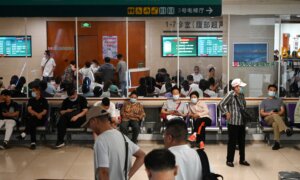
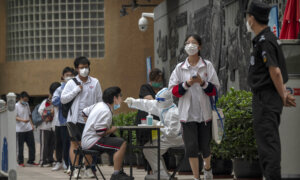
During the lockdown, residents faced not only the threat of infection but also severe restrictions on their movement and access to basic necessities. Some were confined to their homes, struggled to obtain medication, or went without food.
Debate Over the Film’s Emphasis
The delayed release prompted speculation about why a film completed in 2020 is only now reaching theaters.
Hu Ying, a movie blogger writing on Chinese news portal NetEase, described the production as “the most awkward new film.” He suggested the earlier delay may have been due to negative and weary public sentiment toward the outbreak. In 2021 and 2022, China remained under draconian lockdowns, and such movie topics were not likely to have been well received.
A prominent Chinese-language X account, @Finding8964, which focuses on Chinese political commentary, criticized the film’s apparent emphasis on the heroism of medical workers while overlooking the CCP’s early handling of the outbreak, including efforts to suppress warnings from doctors on the frontline, and the circumstances that led to the crisis.
“[The film] turned the so-called 76 days, 10 million people, life hanging by a thread, into a heroic blockbuster,” Finding wrote. “[In reality, the regime just] sealed off the city and blocked the roads.”
The criticism reflects a broader dispute over how the pandemic should primarily be remembered—whether the focus should be on the sacrifices of medical workers and ordinary residents, or on the regime’s policies that contributed to the suffering of those same people.
U.S.-based China current affairs commentator Li Linyi told The Epoch Times that Wuhan’s frontline medical workers deserve the greatest respect for their efforts during the outbreak.
“During a major epidemic, frontline medical workers were the hardest-working and made the greatest sacrifices,” Li said.
He argued, however, that the film’s framing obscures public debate about the CCP’s actions during the crisis.
“I believe what people resent is the CCP’s propaganda messaging, which uses this to erase the regime’s concealment of the truth during the pandemic and the fact that its extreme measures created a humanitarian disaster,” he said.
“The CCP has never admitted its mistakes and instead portrays the suffering caused by the pandemic as a victory under its leadership in fighting the epidemic. This is extremely shameful.”
Tang Bing and Yi Ru contributed to this report.