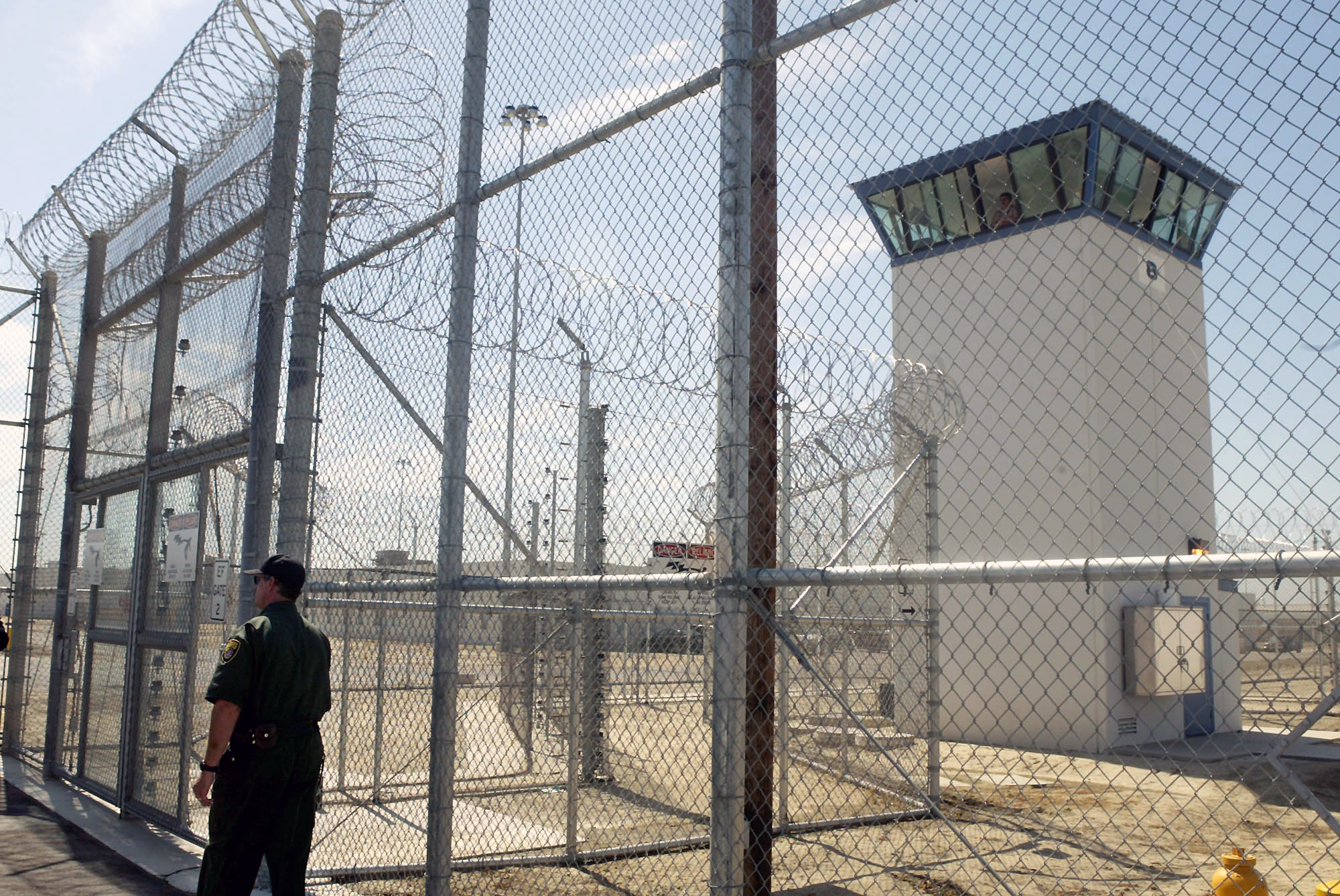

California’s move to reduce criminal punishments and mandate rehabilitation instead of prison sentences has led to prison populations shrinking enough to allow the state to close one of its facilities in Southern California, state officials said Aug. 4.
The California Department of Corrections and Rehabilitation (CDCR) announced plans to shutter the California Rehabilitation Center in Riverside County by the fall of 2026.
“The adult prison population has steadily declined in recent years, which has allowed CDCR to eliminate its reliance on in-state and out-of-state contract prison capacity,” the CDCR reported.
California’s fiscal 2026 budget called for a prison closure to address the state’s $12 billion deficit.
The Riverside County prison is a medium-security facility with a population of about 1,191 staff and 2,766 prisoners.
The building first opened in 1928 as the Lake Norconian Club, a luxury hotel. In December 1941, President Franklin D. Roosevelt turned the resort into a Naval hospital. The federal government donated the hospital to the state in 1962 for use as a narcotics center. In the 1980s, it also started housing prisoners, according to prison officials.
The closure will leave the state with 30 prisons.
The state is making efforts to help staff, volunteers, and inmates transition through the closure. The state will also give support to the local community with an economic resiliency plan.
The full closure is projected to save the state about $150 million each year, officials reported.
The state’s prison population is at its lowest point since the late 1980s, numbering about 91,000 this year, according to the CDCR. In 2006, the population was more than 173,000.
California reached the 35-year low after taking several steps to reduce population and overcrowding, according to a report by the Public Policy Institute of California published in February.
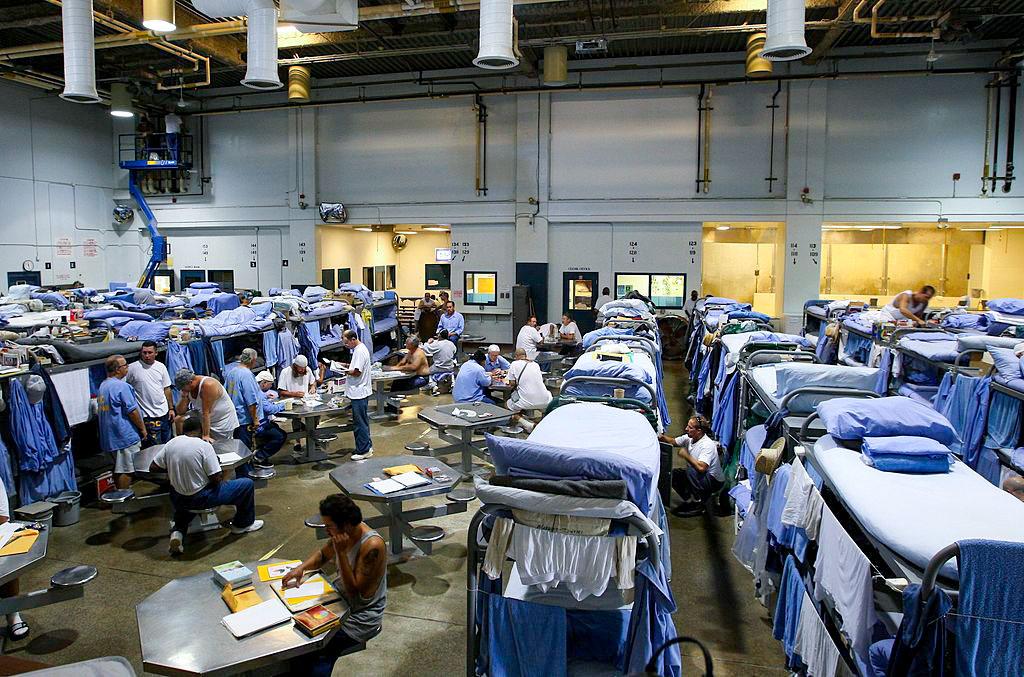
Inmates at the Mule Creek State Prison interact in a gymnasium that was modified to house prisoners, in Ione, Calif., on Aug. 28, 2007, when overcrowding was a problem in the state. California has since reduced its prison population to a 35-year low in 2025 through a combination of policy changes and diversion programs. (Justin Sullivan/Getty Images)
Lawmakers have prioritized keeping people convicted of drug and property crimes out of prison by mandating rehabilitation through diversion programs.
In 2014, voters passed Proposition 47, which reclassified certain drug and property offenses from felonies to misdemeanors, except for people with specific prior convictions. The goal was to reduce prison populations and redirect funds to community programs.
Other law changes and voter-approved propositions also mandated that eligible nonviolent drug offenders receive treatment and supervision in the community rather than prison or jail time.
The state was given a mandate to decrease its prison population in 2011, when the U.S. Supreme Court ruled that the state had to reduce overcrowding in its prisons to 137.5 percent of its “design capacity” within two years. The prisons were operating at about 180 percent of design capacity at the time.
California also allowed inmates to be released early during the COVID-19 pandemic.
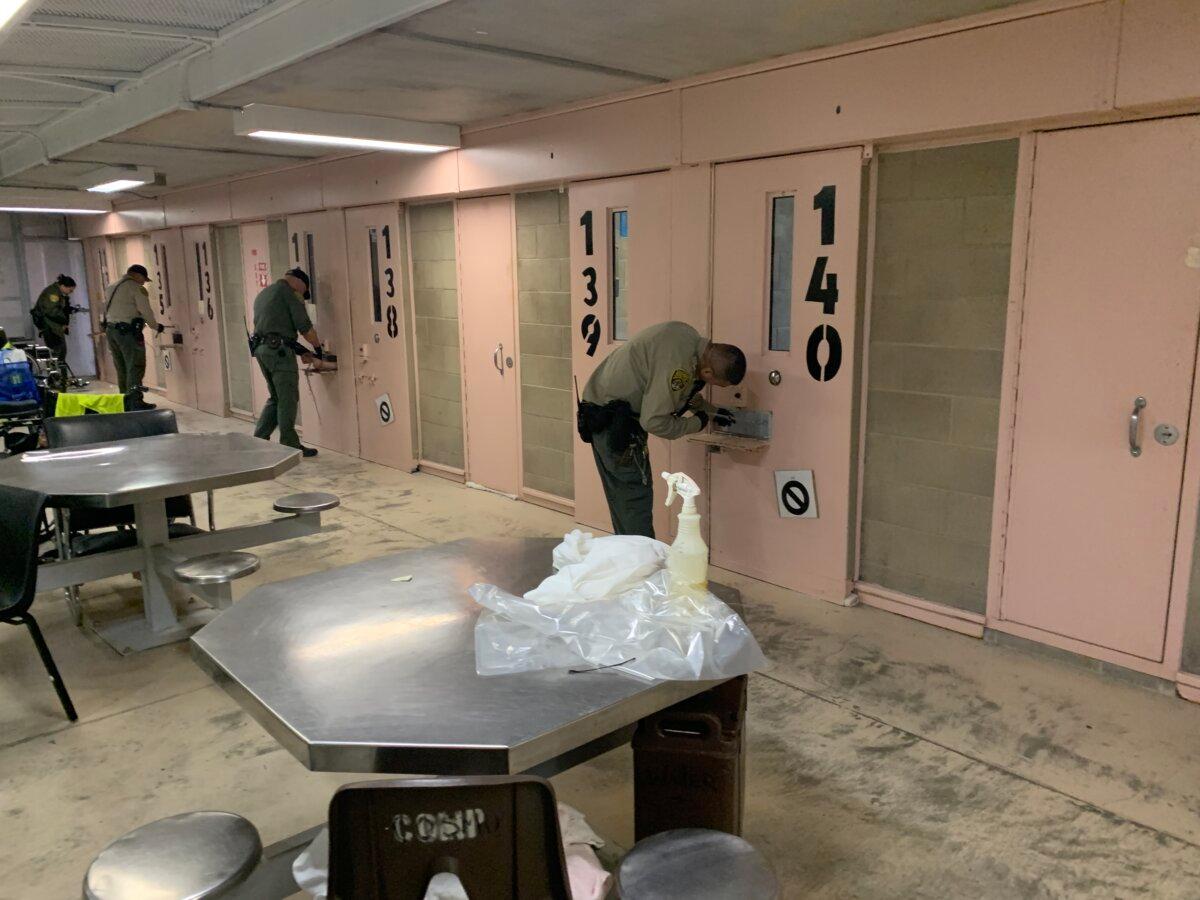
Officers check on prisoners at the Central California Women’s Facility in Chowchilla, Calif. (California Department of Corrections and Rehabilitation)
As a result, the CDCR has closed three institutions: Deuel Vocational Institution in Tracy, California Correctional Center in Susanville, and the Chuckawalla Valley State Prison in Blythe.
The department has also deactivated 11 facilities, portions of two other facilities, and 42 housing units across 11 prisons. Deactivated sites remain under state control and could be repurposed or reopened.
Riverside County Sheriff Chad Bianco, who is also running for governor in 2026, criticized the state’s decision to close the facility and accused California Gov. Gavin Newsom of having “soft-on-crime policies” that “put criminals ahead of victims.”
“Shutting down another state prison while violent criminals continue to ravage our communities isn’t reform; it’s reckless,” Bianco said in a statement provided to The Epoch Times.
The sheriff said he believed that the state should not weaken its ability to hold criminals responsible.
“As governor, I'll stand with victims, put public safety first, and reopen the prisons Gavin Newsom shut down,” Bianco said.