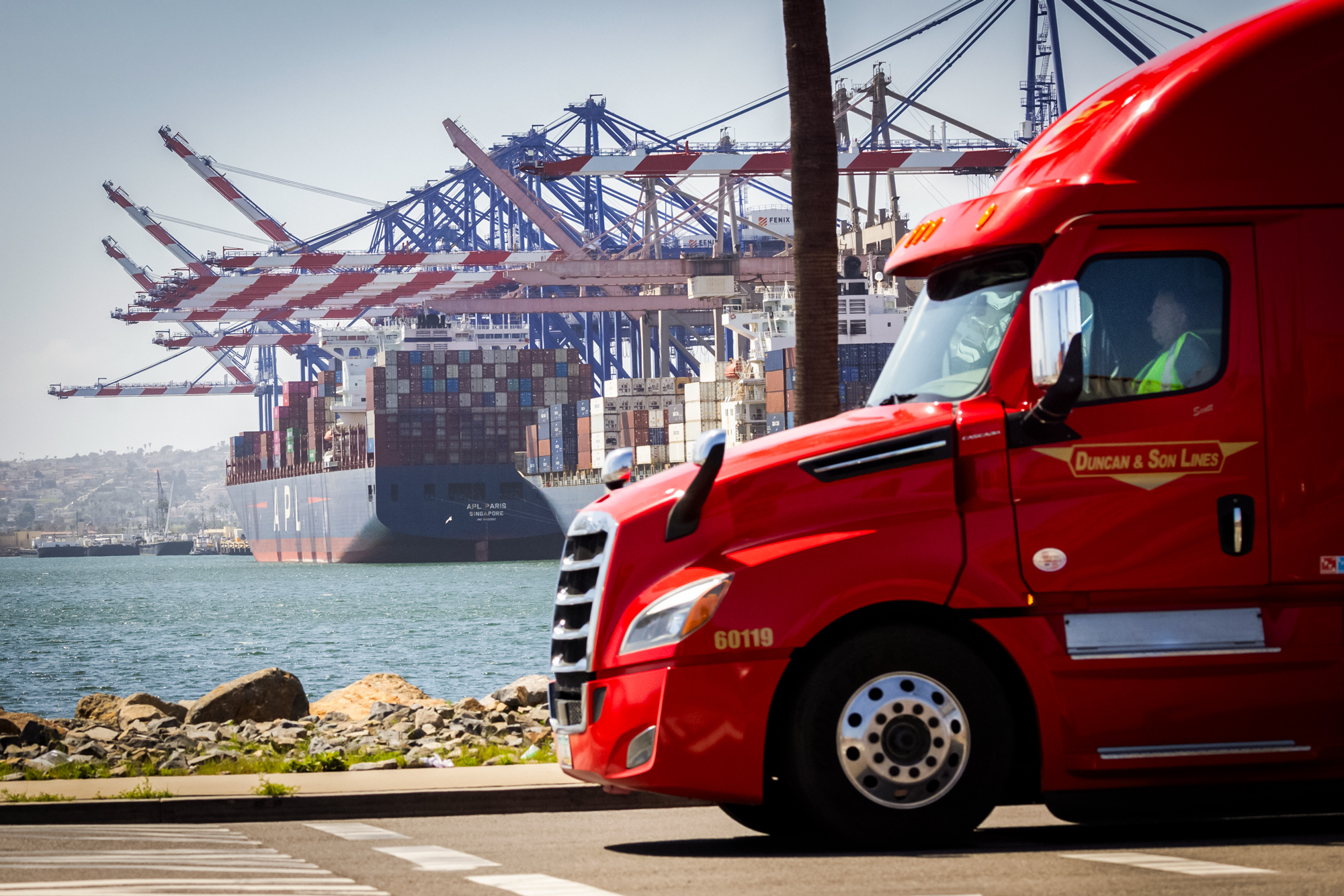

LONG BEACH, Calif.—Cargo volumes at the Port of Long Beach—located adjacent to the Port of Los Angeles and part of the same port complex—fell 16.4 percent in June compared to the same month last year, port officials said July 16, though a pause on new tariffs could fuel a rebound in the coming weeks.
Dockworkers and terminal operators processed 704,403 twenty-foot equivalent units (TEUs) in June, with imports down 16.9 percent to 348,681 TEUs, exports down 10.9 percent to 87,627 TEUs, and empty containers falling 17.4 percent to 268,095 TEUs.
“We’re anticipating a cargo surge in July as retailers stock up on goods ordered during the 90-day pause placed on tariffs and retaliatory tariffs,” Port of Long Beach CEO Mario Cordero said in a statement.
“The Port of Long Beach is prepared to handle the influx by tracking trade moving through the harbor with the Supply Chain Information Highway, our digital solution to maximize visibility and efficiency in cargo movement,” he added.
The port has moved 4.7 million TEUs through the first half of 2025, up 10.6 percent from the same period in 2024.
“No matter the economic situation, our facilities, dockworkers, and marine terminal operators continue to make this the premier gateway for trans-Pacific goods movement,” Long Beach Harbor Commission President Bonnie Lowenthal. “Over the long term, we’re investing in infrastructure projects to keep cargo moving efficiently and sustainability to preserve our status as the Port of Choice.”
President Donald Trump recently signed an executive order extending the date for new “reciprocal” tariffs—excluding China—to Aug. 1. The tariffs were initially set to take effect July 16. The extension allows for continued negotiations with 14 countries, including Japan, Korea, South Africa, Laos, Malaysia, Indonesia, and Bangladesh.
More recently, Trump added Mexico and the European Union to the list of countries that could face tariffs of up to 30 percent.
Japan and Korea could face a levy of 25 percent, while South Africa, Bosnia, Herzegovina, Indonesia, Bangladesh, and Thailand may see a tax at or above 30 percent.
According to the White House, Trump sent letters to those countries explaining that, starting Aug. 1, they will be subject to new reciprocal tariff rates “designed to make the terms of our bilateral trade relationship more reciprocal over time and to address the national emergency caused by the massive U.S. goods trade deficit.”
In some cases, countries will face lower tariff rates than those initially announced on April 2, while others may see higher rates, officials said.
Trump has said the tariffs aim to promote domestic building and manufacturing, and he pledged to fast-track approvals to bring back American jobs.