

California state officials are hoping the cancellation of a scheduled 25 percent tax increase on the state’s legal marijuana trade will help the struggling industry survive the threat of a growing black market.
Gov. Gavin Newsom on Sept. 22 signed Assembly Bill 564 to roll back the state’s scheduled cannabis tax increase, which went into effect July 1, and freeze the industry’s state excise tax rate at 15 percent until 2028.
“We’re rolling back this cannabis tax hike so the legal market can continue to grow, consumers can access safe products, and our local communities see the benefits,” Newsom said.
California has issued nearly 8,000 licenses to cannabis-related operators, according to state data.
The industry, which had revenue of over $4.7 billion in 2024, recorded taking in $1.088 billion—the lowest sales in five years—from January to March 2025.
The bill’s author, Assemblyman Matt Haney, a San Francisco Democrat, said in March that the extra tax would have devastated the state’s legal cannabis industry by forcing many small businesses to close and driving more consumers to the black market.
Taxes as high as 45 percent in some areas have already weakened California’s licensed cannabis industry, allowing states with lower taxes—such as Michigan and Colorado—to surpass California’s marijuana sales, according to Haney.
“California’s cannabis economy can bring enormous benefits to our state, but only if our legal industry is given a fair chance to compete against the untaxed and unregulated illegal market,” Haney said in a statement on Sept. 22. “AB 564 helps level the playing field.”
California’s legal marijuana industry employs hundreds of thousands of people and generates millions in revenue each year, according to officials.
But tax receipts have plummeted in recent years.

A bag of marijuana in Los Angeles on Jan. 24, 2019. (Robyn Beck/AFP via Getty Images)
In 2016, California voters passed Proposition 64, which legalized recreational marijuana use by adults. The excise tax increase was part of a larger plan to minimize the industry’s tax burdens.
Three years ago, Newsom signed AB 195, which suspended the state’s cannabis cultivation tax and kept the 15 percent cannabis excise tax.
The 2022 legislation called for the state’s Department of Tax and Fee Administration to adjust the tax every two years, starting this year, to a rate that would generate the amount of revenue that would have been raised by the canceled cultivation tax, but not to exceed 19 percent.
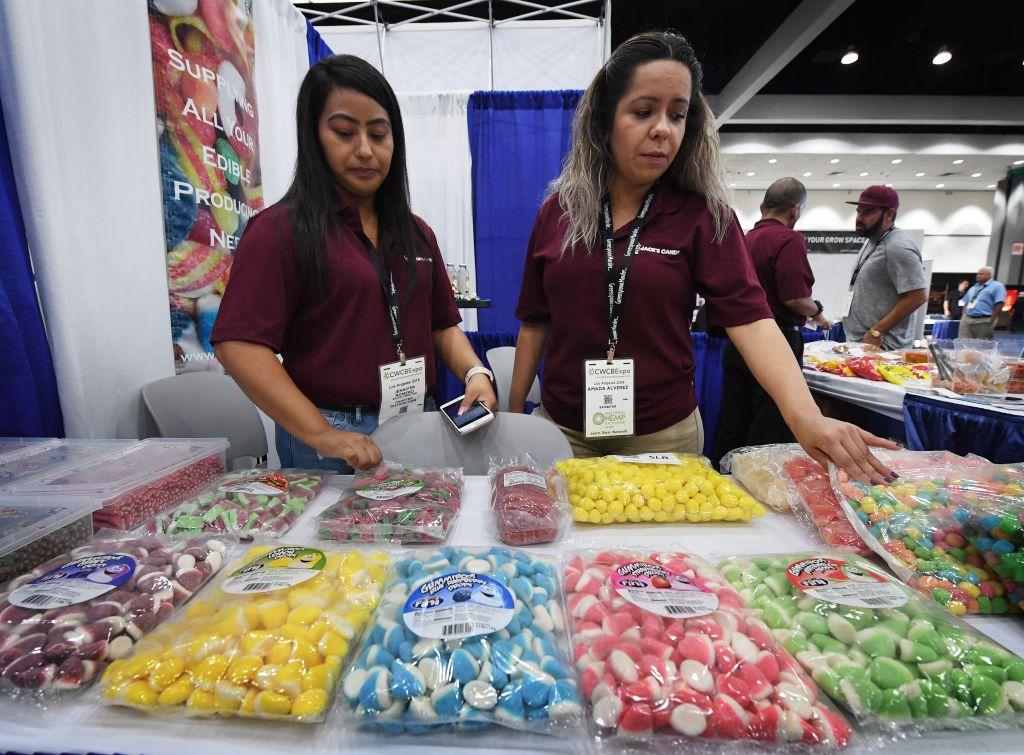
Cannabis-infused gummy candy is displayed during the Cannabis World Congress at the Convention Center in Los Angeles on Sept. 27, 2018. (Mark Ralston/AFP via Getty Images)
The bill was backed by major cannabis industry organizations and will go into effect Oct. 1.
“This signing brings us closer to fulfilling Prop. 64’s promise: accessing safe, regulated [cannabis] while generating sustainable tax revenue for child care, youth prevention, and public health programs,” the California Cannabis Operators Association said in a social media post.
Newsom’s administration took other recent actions to protect the state’s legal market, including enforcement efforts against illegal operators and dedicating cannabis tax revenue to fund civil and criminal enforcement activities, Newsom said.
A task force established in 2022 by Newsom has seized and destroyed over 317 tons of illegal cannabis worth an estimated $890 million, according to the governor’s office.