
California may fund the $7,500 rebate for electric vehicle (EV) purchases canceled by President Donald Trump as one attempt to keep the state’s zero-emissions market alive.
In June, California Gov. Gavin Newsom ordered several state agencies—including the California Air Resources Board (CARB), the Energy Commission, and the Department of Consumer Affairs—to recommend ways to expand the use of zero-emission vehicles and continue the state’s momentum to meet its aggressive clean air and climate goals as the federal government rolls back support.
The regulators issued their report on Aug. 19 and compiled a list of ideas for Newsom to consider.
“While [the Trump] administration quits the race [and] draws back federal support, the world races forward—[California] won’t back down from the fight for clean air for all,” CARB stated in a Facebook post on Aug. 19.
The report was developed after public meetings, according to CARB, and details six areas of action. It proposes replacing the federal tax credits and funding point-of-sale rebates, vouchers, or other credits to drive new EV sales.
The federal government offered a $7,500 EV rebate, known as the Clean Vehicle Credit. It was a tax incentive to promote the purchase of new EVs and fuel cell electric vehicles. The credit program ends on Sept. 30.
“Incentives should support new and used vehicle purchases and leases and be available for individual vehicle purchases as well as bulk purchases by fleet operators,” the agencies stated in the report.
The regulators also suggested going after private investment in the zero-emissions vehicle market, boosting EV charging and hydrogen fueling stations, reducing EV charging costs, and directing state agencies to purchase zero-emissions vehicles as they replace their fleets.
Trump canceled the state’s EV mandate and removed federal incentives for electric vehicles in his “Unleashing American Energy” executive order signed on his first day in office, Jan. 20.
The order also directed the Environmental Protection Agency (EPA) to cancel waivers issued to California and other states that limited sales of gasoline-powered automobiles.
Lawsuits from California have followed since January.
Trump has since signed three Congressional Review Act resolutions to block several of California’s vehicle emissions regulations made possible by EPA waivers, including a resolution to overturn the state’s ban on selling new gas-powered cars after 2035.
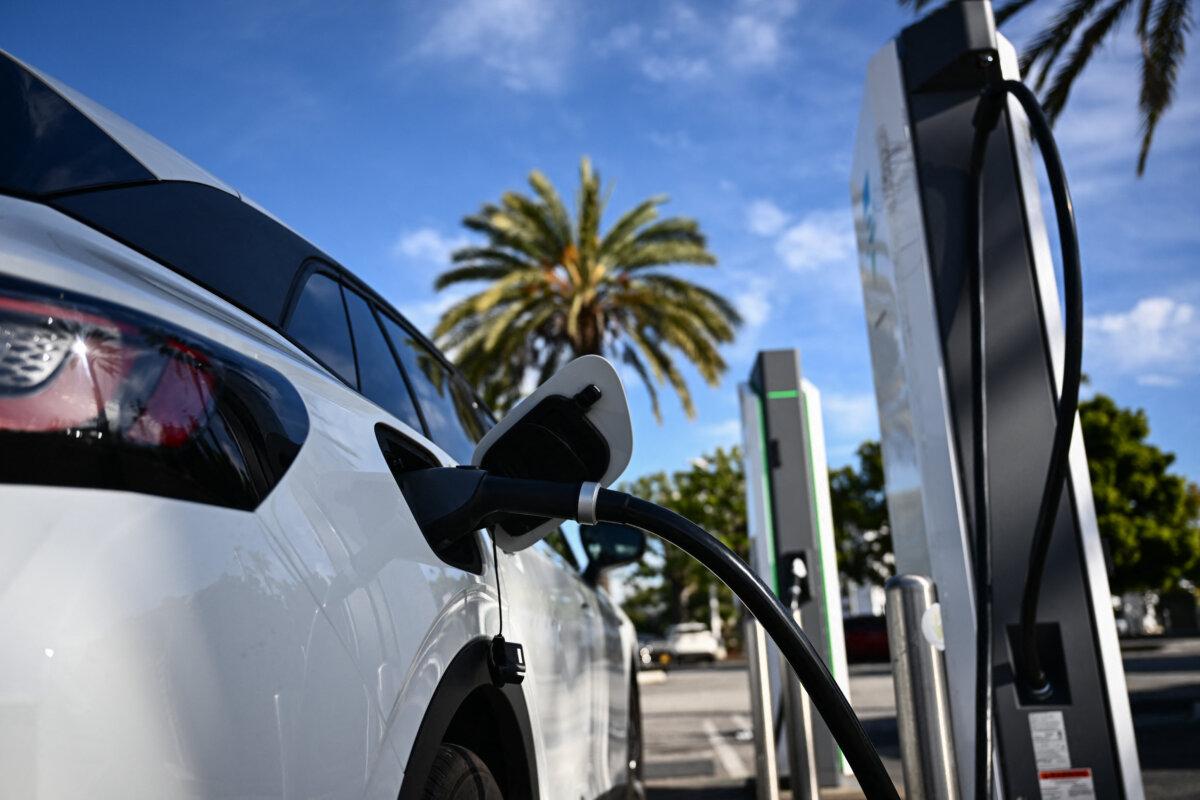
An electric vehicle charges at a shopping mall parking lot in Torrance, Calif., on Feb. 23, 2024. State regulators are looking at ways to continue encouraging electric vehicle sales despite federal rollbacks. (Patrick T. Fallon/AFP via Getty Images)
Newsom has since looked for ways to continue the state’s climate action programs.
Upon signing his order in June, he said in a statement that he would not let the Trump administration’s action “in the pockets of polluters stand in the way of commonsense policy to clean [California’s] air, protect the health of [California’s] kids and compete on the global stage.”