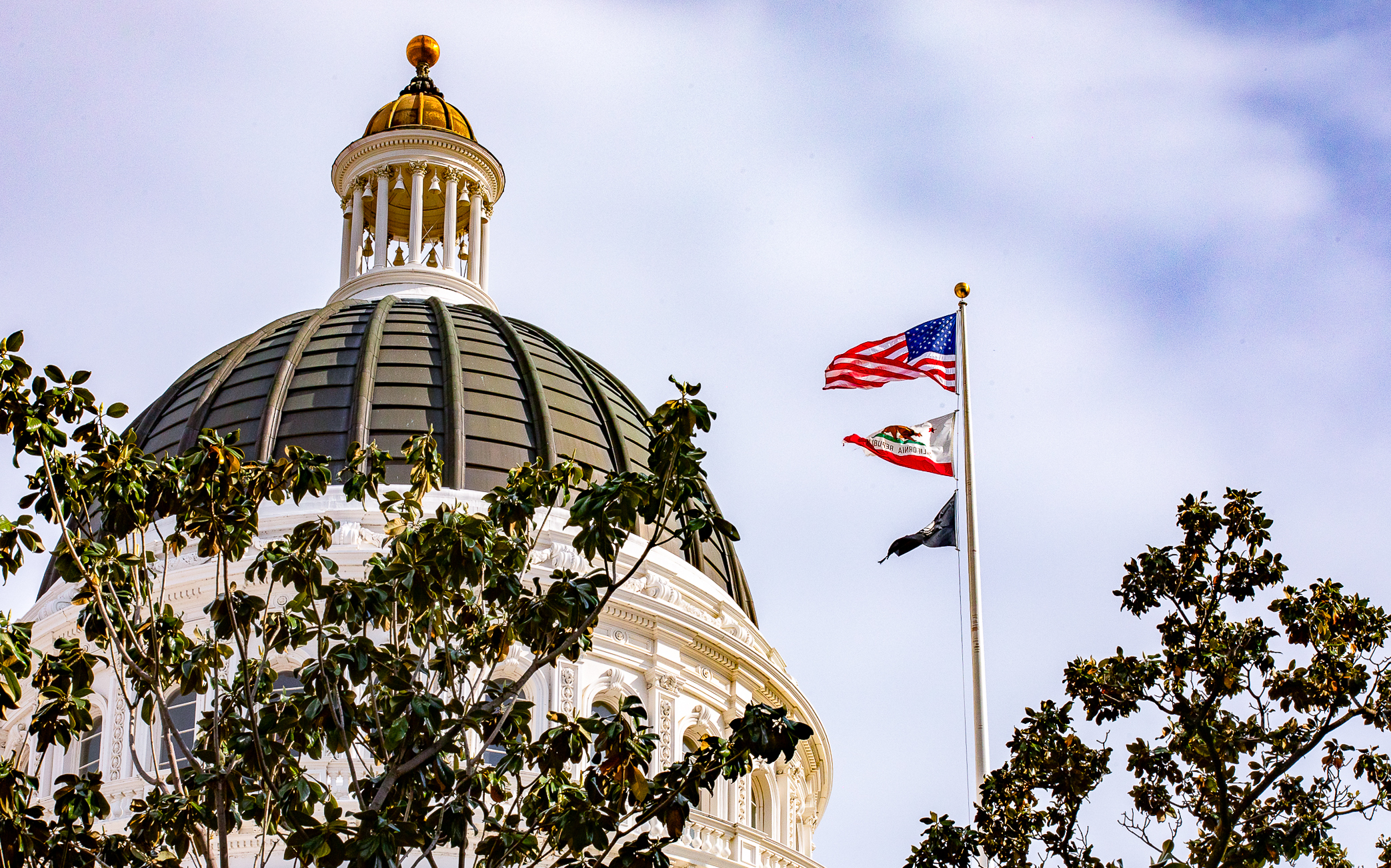

California state lawmakers who voted to place Proposition 50 on the November ballot could be banned from seeking public office for up to 10 years under a newly proposed ballot initiative.
The California secretary of state has approved the measure to begin the signature collection process. Proposed by state Assemblyman Carl DeMaio, the measure has until April 20, 2026, to garner 874,641 signatures to qualify for next year’s midterm ballot.
Titled “Eliminates Right of Legislators Who Voted for Temporary Changes to Congressional District Maps in Response to Texas’ Partisan Redistricting to Hold Specified Offices for 5–10 Years,” the measure aims to “guard against conflicts of interest in the process of redistricting” by amending the state Constitution, according to the ballot initiative text, which was first submitted to the state attorney general’s office in August.
The proposal seeks to impose a five-year ban on appointive office, legislative staff positions, and other specified offices and a 10-year ban on elective office, for any state legislator who voted in favor of the Prop. 50 redistricting map. The ban would apply to positions at the federal, state, county, and city levels within California.
This ban would make state lawmakers who supported Prop. 50 abide by the same restrictions as members of the state’s independent, 14-member redistricting commission. Commissioners are subject to a 10-year ban from seeking elective office and a five-year ban from appointive office positions under Article XXI of the state Constitution.
The ban would serve as “a cooling off period to ensure they do not personally or politically benefit from their participation in redistricting decisions,” according to the proposed ballot initiative.
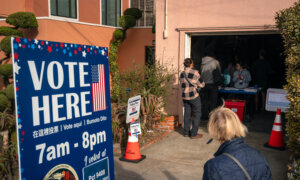
The redistricting maps presented under Prop. 50—which voters will decide on during the Nov. 4 statewide special election—would replace the independent redistricting commission’s current maps and would be in effect until 2031.
Voters approved the creation of the independent commission through ballot measures passed in 2008 and 2010, with the goal of removing politics from the process of drawing congressional, state Senate, state Assembly, and state Board of Equalization districts.
If Prop. 50 is approved, the commission will continue to exist under state law, but commissioners will temporarily lose authority to draw California’s maps. They will regain authority after the 2030 census.
Supporters of Prop. 50 have said it is necessary to counter Republican-led states that are also redrawing congressional maps ahead of the 2026 election. Opponents have said, however, that California’s maps amount to gerrymandering and would strip away the independent redistricting commission’s authority, going against what voters have decided.
The state’s attempt at redrawing congressional district maps has garnered national attention. Former President Barack Obama has joined California Gov. Gavin Newsom in urging support for Prop. 50, saying it serves as a test for American democracy.
Republican lawmakers have criticized Newsom’s approach.
“Two wrongs don’t make a right, and Prop 50 is a perfect example,” DeMaio’s Reform California podcast quoted an anti-Prop. 50 advertisement as saying, during an Oct. 29 episode. “Prop. 50 takes power away from [the state residents] by destroying the independent citizens’ redistricting process, and Prop 50 wastes $300 million—money that should go to our schools. Rigging elections is wrong.”
DeMaio is also leading another election-related measure, titled “Establishes Additional Voter Identification and Citizenship Verification Requirements,” which is likewise in the signature-gathering process.
That measure would require voters to show proof of identity when voting at the polls or present the last four digits of a government-issued ID number when voting by mail, in addition to the current requirement that they show identification when registering to vote.
It would further require the state to provide voter identification cards upon request and would require election officials to report annually the percentage of voters whose citizenship they have verified.
The voter ID proposal has until March 18, 2026, to garner 874,641 signatures. As of Oct. 22, it had garnered 25 percent of the required signatures.
If enough signatures are collected and verified, the two proposals will appear on the 2026 midterm ballot.