
Millions of Americans are recovering from the recent winter storm that snarled travel and cut power amid frosty temperatures.
But authorities say those impacted aren’t out of the woods yet. Federal agencies warn that scammers could have already moved in to some areas.
Here are some of the best ways to stay safe, according to authorities and experts.
Storm Damage
The winter storm that sprawled across multiple states left almost 900,000 without power, canceled more than 11,000 flights, and caused multiple deaths in New York City alone.
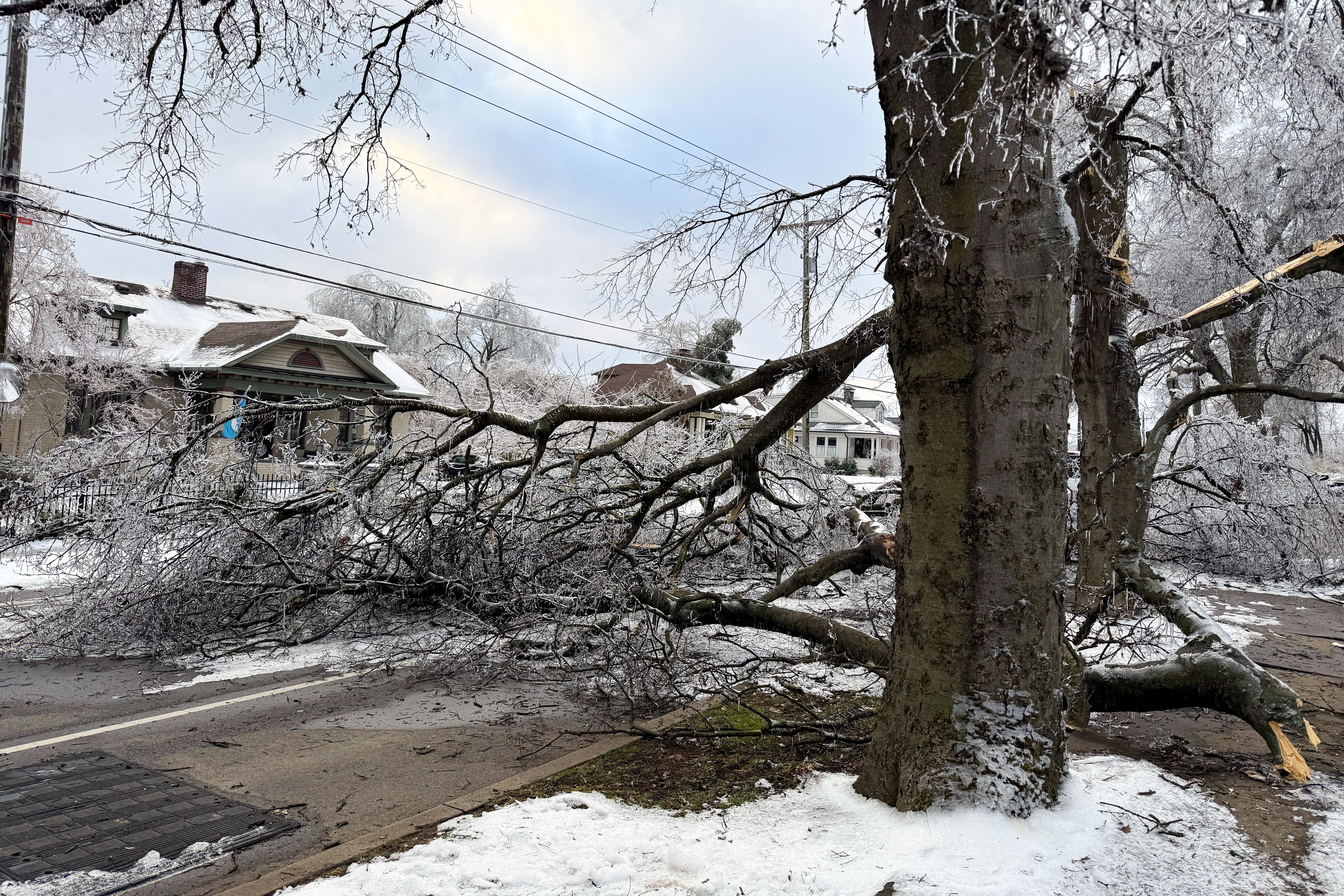
Trees, weighted down by ice and sleet, snapped in several southern states, taking out power lines and leaving many without heat.
Just days after the massive arctic blast, a winter bomb cyclone is expected to hit the East Coast on Jan. 30 and 31.
A bomb cyclone, known by meteorologists as bombogenesis, is what happens when a midlatitude cyclone of weather rapidly intensifies over about 24 hours, prompting a drop in barometric pressure.
This can happen when cold air collides with warm air, as is likely to occur over the weekend on the East Coast.
The National Weather Service stated this “could be [the] longest duration of cold in several decades.”
Utility Scams
The vulnerability created by the storm is thought likely to attract scammers posing as utility companies or contractors, the Federal Trade Commission (FTC) warned on Jan. 29.
“It’s going to take time to recover from the winter storm that affected a large part of the country,” the agency said in an advisory on Jan. 29. “After a big storm like this one, utility and other scammers aren’t far behind.”
The FTC warned Americans not to respond to unexpected messages via phone, text, or email nor click on any links associated with such messages.
“Instead, contact the utility company using the number on your bill or the company’s website. Verify whether the message came from them,” the agency said.
It also advised that only scammers ask to be paid via money transfer, gift card, or cryptocurrency. No utility company or legitimate business would ask for that kind of payment, the agency said.
Additionally, they encouraged skepticism of anyone who promised immediate cleanup or repairs after weather emergencies, warning that unlicensed contractors and scammers often chase big storms.
“If they want cash up front, walk away,” the agency said. “And if they won’t give you copies of their license, insurance, or a contract in writing, that’s a red flag.”
Federal Emergency Assistance
The Federal Emergency Management Agency (FEMA) was activated on Jan. 25 after President Donald Trump approved 12 state federal emergency disaster declarations, which allowed states to access federal resources for their weather response.
Approximately 900 FEMA staffers, along with resources from other federal agencies, were deployed to affected areas to support emergency operations.
On Jan. 25, FEMA described the following states as areas of concern: Arkansas, Georgia, Indiana, Kentucky, Louisiana, Maryland, Mississippi, North Carolina, South Carolina, Tennessee, Virginia, and West Virginia.
However, it’s important to know that FEMA doesn’t charge an application fee. Anyone who wants money to help someone qualify for FEMA funds is likely a scammer.
Matthew Stern, fraud expert and CEO of CNC Intelligence, which is a digital forensics firm, told The Epoch Times in an emailed statement that following a storm is a vulnerable time when “fraudsters take advantage.”
“They impersonate trusted organizations and create a sense of urgency—telling people they need to act quickly to restore services, change travel plans, secure a refund, or repair damage—which can pressure them into responding before verifying whether a message or offer is legitimate,” Stern said.A tree blocks the road days after an ice storm in Nashville, Tenn., on Tuesday, Jan. 27, 2026. (AP Photo/Travis Loller)
In the past the FTC has warned that if your property needs work due to downed trees or other storm-related damage, choosing the correct repair expert is crucial.
The agency encourages homeowners to check out the identification, licenses, and proof of insurance of anyone bidding for the work: “Don’t believe any promises that aren’t in writing.”
It’s also important to guard personal information from someone who could be posing as a government official, the FTC said. Scammers often demand money, a credit card, or Social Security numbers from their victims.
What to do When
Before agreeing to or paying for any repair, documentation is crucial, according to the Texas Department of Insurance.
Reporting any damage to your insurance company is recommended as is taking pictures and video of the damage. It’s also important to not throw anything away until an insurance adjuster gives the all clear, the agency recommended.
Temporary repairs to prevent more damage is also a good idea, as is removing water and covering anything broken during a storm.
The Texas Department of Insurance also points out that it is important to keep a list of repairs and save receipts for anything purchased as a stopgap and not make any permanent repairs before an insurance adjuster sees the damage.
FEMA also recommends checking in with vulnerable neighbors after the winter storm, as the cold can create serious health risks. It also notes that offering to help the elderly shovel snow can be of major assistance, as can helping with pets.
For needs that go beyond what friends, neighbors, or local groups can provide, calling 2-1-1 can help. The nationwide service connects people with community resources for food, utilities, transportation, and other forms of assistance.