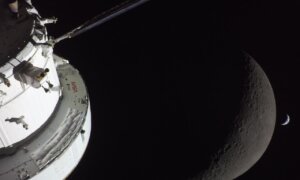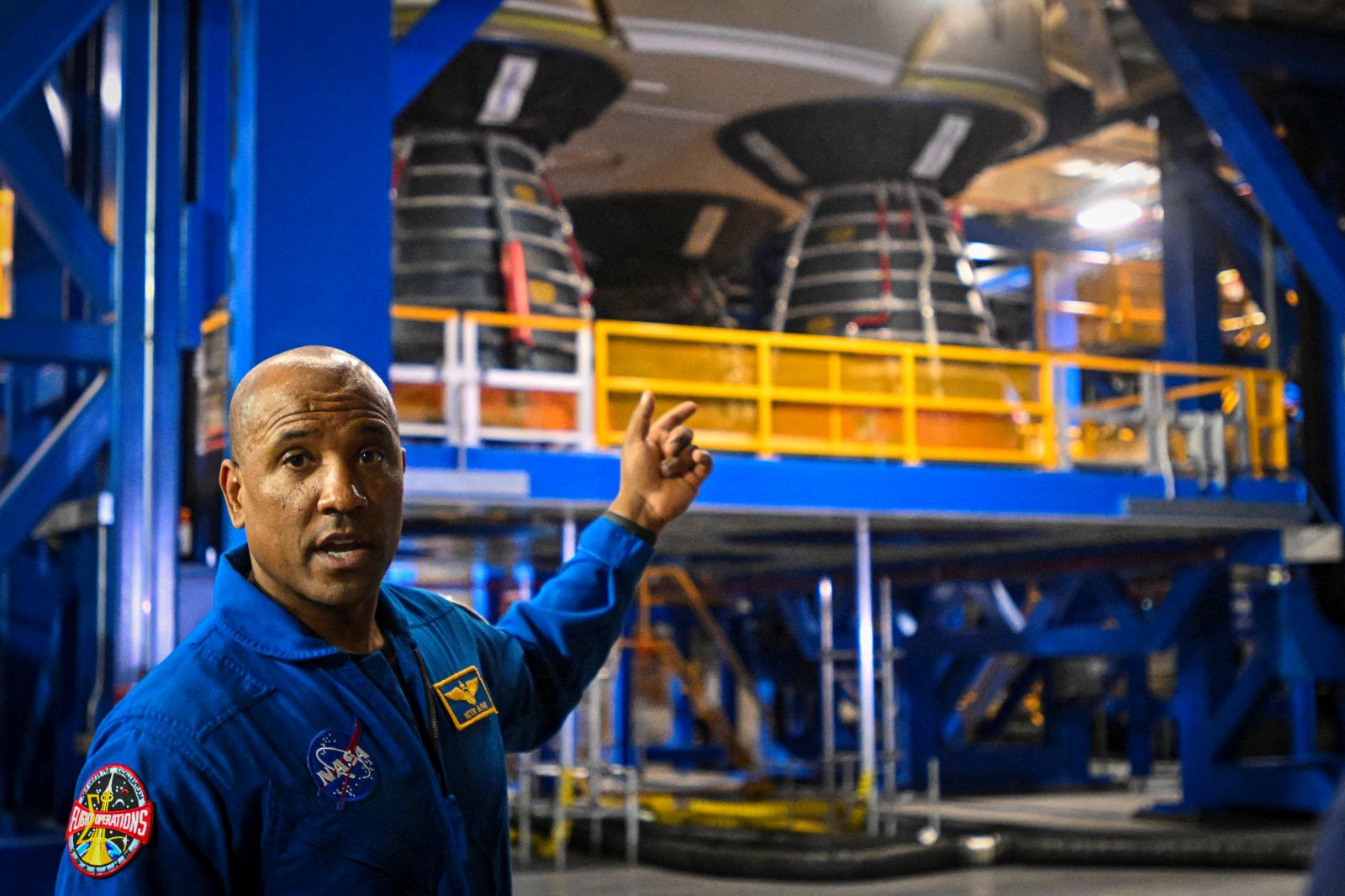

HOUSTON—Artemis II could launch its moon mission as early as the first week of February 2026, according to a statement made by NASA official Lakiesha Hawkins on Sept. 23.
Hawkins, who is the acting deputy associate administrator for the Exploration Systems Development Mission Directorate, and other mission leaders shared the news during a news conference at Johnson Space Center in Houston. However, she did not give a specific launch date.
“Right now, that window could open as early as the 5th of February,” she said, adding that the date will be determined based on progress with necessary preparations.
Once that first launch window opens, she explained, there will be “launch periods” Artemis II can take advantage of each month, lasting four to eight days depending on the moon’s position in relation to the Earth. There is also a chance that it would be an evening launch.
The 10-day mission will be the first time humans have traveled around the Moon since Apollo 17 in December 1972.
Inside their Orion spacecraft, Commander Reid Wiseman, Pilot Victor Glover, Mission Specialist Christina Koch, and Mission Specialist Jeremy Hansen from the Canadian Space Agency will be on what’s called a “free return trajectory,” which is a course that uses the moon’s gravity to turn the craft back toward Earth.
The preestablished mandate was to send the four-person crew around the moon no later than April 2026.
April 5, 2026, will be Easter Sunday, opening up the possibility that this fly-by mission will further mirror that of Apollo 8, which made its historic trip around the moon during Christmas time 1968.
However, mission leaders expressed to The Epoch Times their confidence that Americans would not have to wait that long for liftoff, including the Artemis II mission manager, Matthew Ramsey, and Sharon Cobb, the associate program manager for NASA’s moon rocket, called the Space Launch System.
Countdowns until launch could also be seen posted on an Orion capsule simulator, and the Mission Control Center, already set to end that first week of February.
“The crew’s ready,” Artemis II flight director Jeff Radigan told The Epoch Times.
“They’re completing their final training. We’ve got our final training here in the control center,” he said.
“We'll all be ready to go. And so it’s just, you know, making sure [of] all the final checks, and we get to [the] launchpad, and are able to get up.”
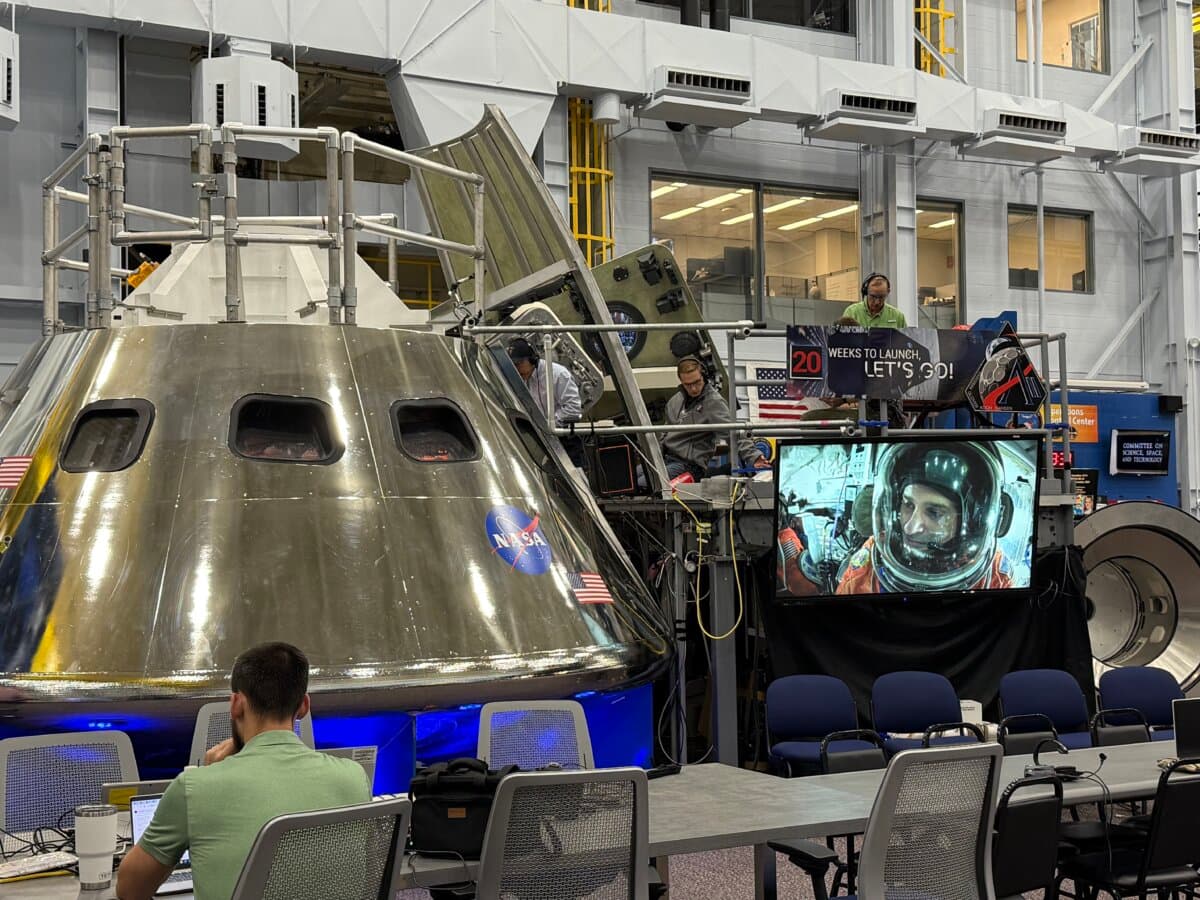
Engineers and Artemis II backup crew members conduct a simulation inside a mock-up of the Orion crew capsule at Johnson Space Center in Houston, Texas, on Sept. 23, 2025. (T.J. Muscaro/The Epoch Times).
NASA has been assembling its moon rocket at Kennedy Space Center in Florida for the past several months, and it is nearing completion.
According to Ramsey, the rocket could be topped with the Orion crew capsule and fully assembled as soon as mid-October. Once that happens, the Space Launch System will undergo several tests leading up to its launch.
The mission will primarily be a test flight, paving the way for Artemis III and all subsequent missions by testing spacecraft systems and recording the biological and psychological effects deep space has on a human crew.
According to Radigan, the crew will test Orion’s manual controls in high Earth orbit and will fly by the moon at a range of 5,000 to 9,000 nautical miles.
Depending upon the position of the moon during the mission, he told The Epoch Times that Artemis II could finally break the record set by Apollo 13 in 1970, traveling farther from the Earth than any other human crew in history.
“Most of the launch dates will have us breaking the record of Apollo 13 for furthest from Earth,” he said. “Every once in a while, we'll run into a case where we actually go further past, further past the moon, but not quite further from Earth.”
The mission will also focus on observing the far side of the moon, putting the crew in a position to study lunar regions that have yet to be seen by human eyes.