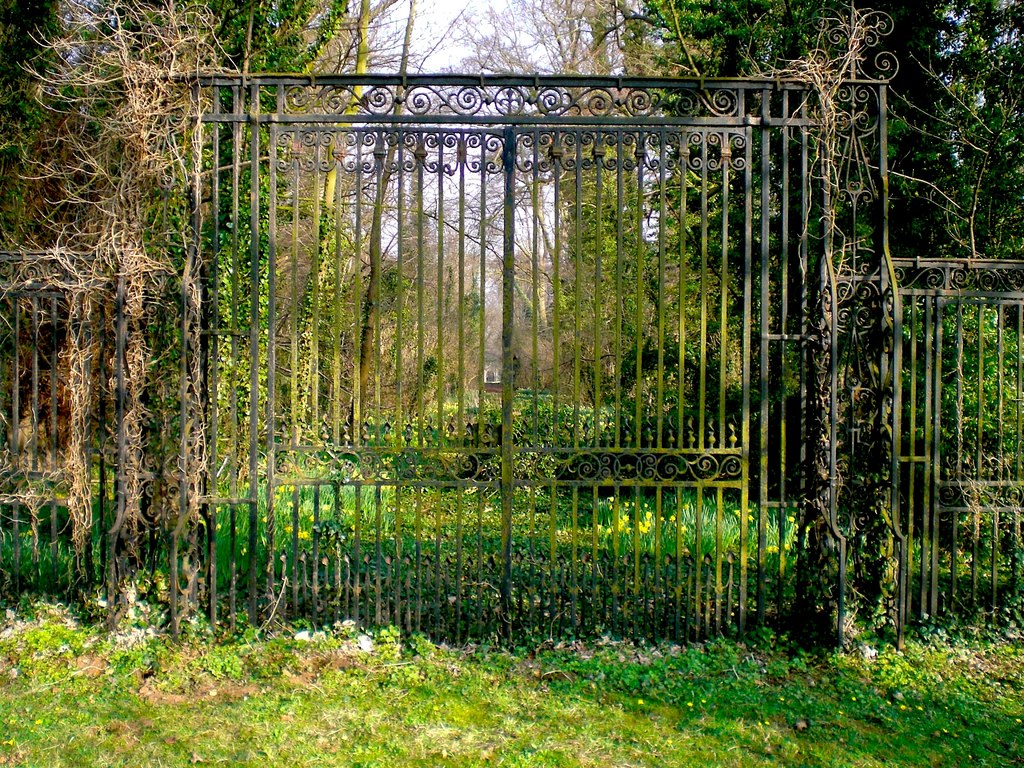

The first paragraph of Nathaniel Hawthorne’s “Rappaccini’s Daughter” offers some information, clues if you wish, to this peculiar story that modern readers are likely to miss. The first sentence tells of a young man from long ago, Giovanni Guasconti, who comes to study at Italy’s University of Padua. What Hawthorne doesn’t explain is that the university during the Renaissance and Early Modern period was one of the premier medical and scientific institutions in the world. Not only that, the university also sported the world’s first botanical garden designed for scientific and medical study.
In this same paragraph, Giovanni Guasconti rents an apartment in a decrepit mansion once owned by one of Padua’s prominent families. One member of this ancient family, Giovanni recalls, was included by Dante “as a partaker of the immortal agonies of his Inferno.”
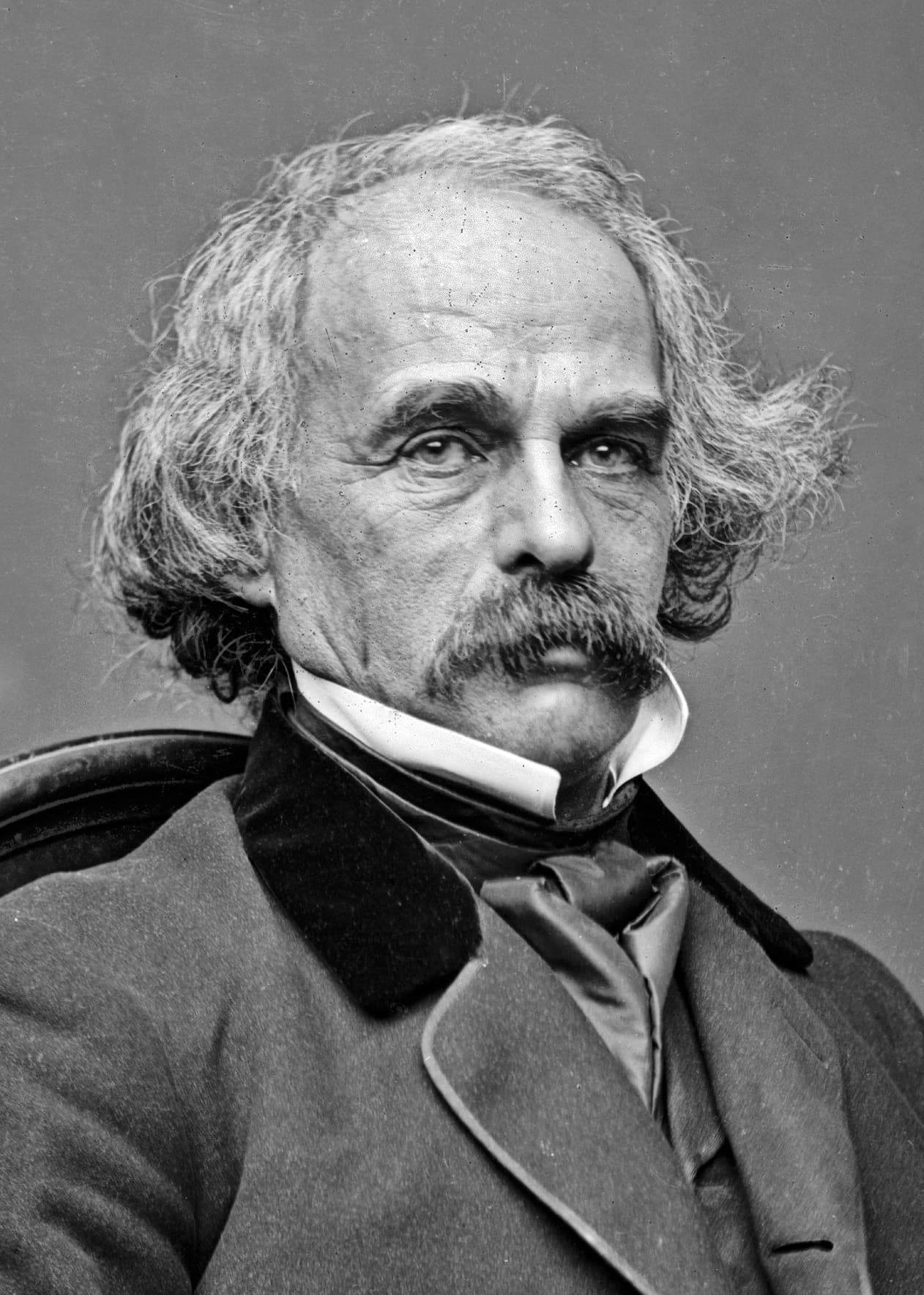
Nathaniel Hawthorne, whose exploration of science and morality in "Rappaccini's Daughter" remains relevant today. (Public Domain)
It helps us to know this backstage history, for a garden, science, and Dante all play a part in Hawthorne’s tale, as strange a story as he ever wrote.
The Garden and the Girl
Immediately after his arrival, Giovanni becomes aware of the beautiful garden on the property below his window. Here is a fountain “that sung with song unceasingly and without heeding the vicissitudes around it.” Here are “flowers gorgeously magnificent” and a shrub “that bore a profusion of purple blossoms, each of which had the lustre and richness of a gem.” Here grow more sinister plants that “crept serpent-like along the ground or climbed on high, using whatever means of ascent was offered them.”
Here in the garden as well are professor and physician Giacomo Rappaccini and his daughter Beatrice. The professor is “a tall, emaciated, sallow, and sickly looking man, dressed in a scholar’s garb of black.” Beatrice is the opposite, “arrayed with as much richness of taste as the most splendid of the flowers, beautiful as the day, and with a bloom so deep and vivid that one shade more would have been too much.” Garden, medicine, and Beatrice, whose name matches that of Dante’s muse and great love, have already bonded in this opening.
And with her appearance Giovanni begins, as did Dante, his infatuation with Beatrice.
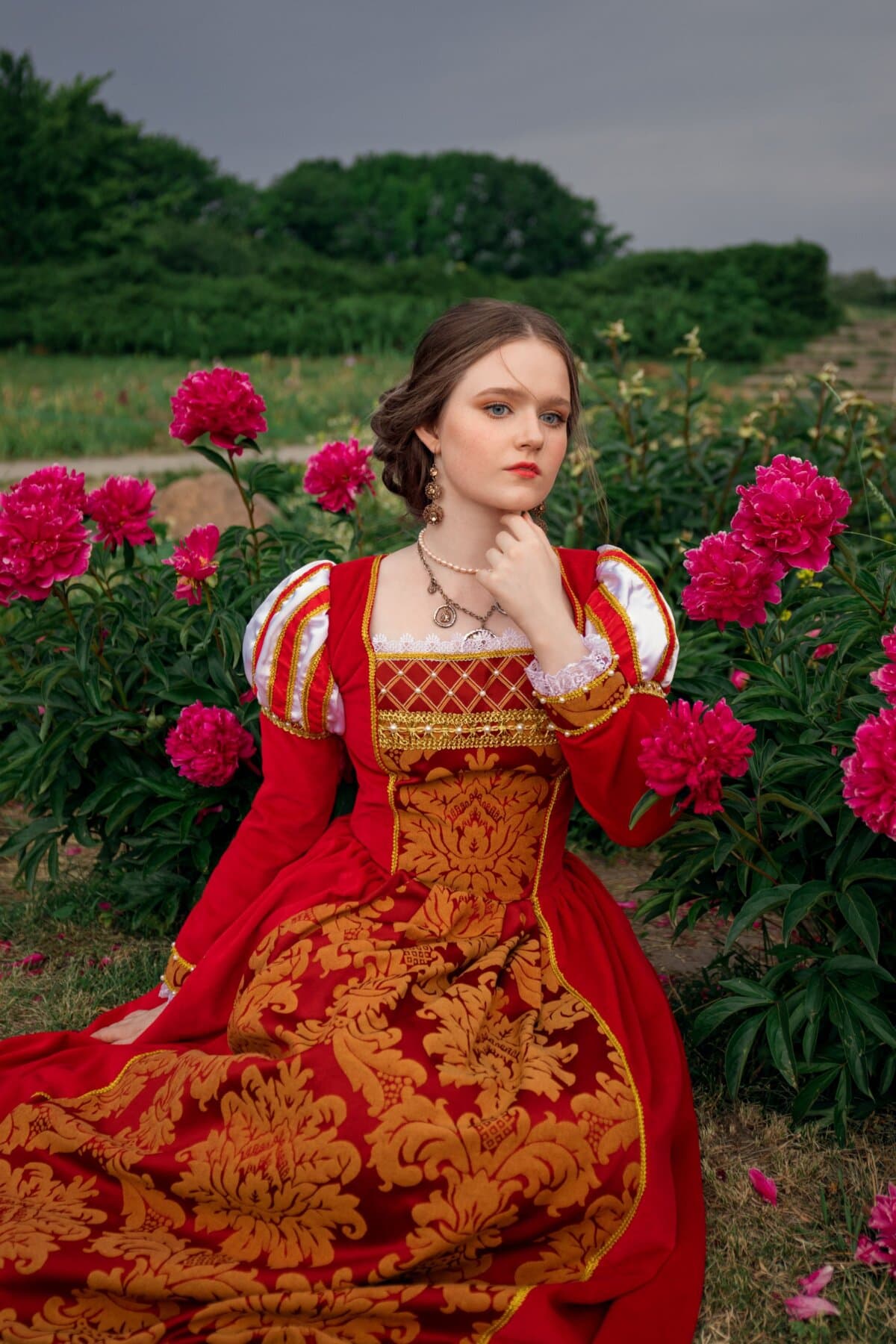
In Nathaniel Hawthorne’s fable, Giovanni falls in love with the beautiful Beatrice in her father’s garden. (snova.mir/Shutterstock)
On the same day, he pays a visit to an old family friend, Pietro Baglioni, a professor of medicine at the university. From Baglioni he learns of Rappaccini’s eminence as a physician and researcher, but also that “he cares infinitely more for science than for mankind. His patients are interesting to him only as subjects for some new experiment.” Baglioni also informs Giovanni that Rappaccini takes a particular interest in poisons derived from flora planted in his garden.
Back in his room, Giovanni again spots Beatrice walking among the flowers. Though still entranced by her, he notices with astonishment that a drop of water from a flower she’s plucked falls on a lizard, which immediately dies. Next, a flying “beautiful insect” hovers near her, but then drops dead at her feet. Giovanni then tosses down a bouquet of flowers he’s purchased to the girl, calling out “Signora, there are pure and healthful flowers. Wear them for the sake of Giovanni Guasconti.”
The Experiment
Days later, Giovanni encounters Baglioni in the street, and Rappaccini walks past both men, delivering a cold salutation to Baglioni but looking intently and speculatively at Giovanni. An excited Baglioni warns Giovanni that the doctor of poisons has now made him a part of an experiment.
Back at the door of his lodgings, Lisabetta, the old woman who manages the decaying mansion, tells Giovanni of a secret passageway into Rappaccini’s garden. Though he suspects Rappaccini may have a hand in the old woman’s revelation, he follows her, enters the garden, and soon stands face to face with Beatrice. The two stroll about conversing “like brother and sister,” though already slipping into a more intimate sphere of affection.
At one point, when Giovanni reaches out to pluck a flower from the shrub he noticed the first day, Beatrice cries out and quickly catches his hand, telling him that touching the plant is fatal, after which she flees and disappears inside the house. Only then does the young man notice Rappaccini watching him from the shadows.
Their garden stroll becomes a daily occurrence. Soon the two are deeply in love, having seen it in the other’s eyes, and professing their mutual attraction “in those gushes of passion when their spirits darted forth in articulated breath, like tongues of long-hidden flame.” Still, they never so much as touch each other. Beatrice always withdraws.
Much later, a visit from Baglioni brings the story and the experiment to a conclusion. He speaks of an attractive but strangely disagreeable scent in Giovanni’s room, tells him an old tale from India of a maiden who had consumed so many poisons that to embrace her meant death, and then by way of consolation, leaves Giovanni with a silver flask containing what he says is an antidote to Beatrice’s poisons. Once Baglioni leaves, and now having fully realized that he too has become as toxic as Beatrice, an agitated Giovanni angrily confronts her in the garden, castigating her for making him an outcast from the world of the living.
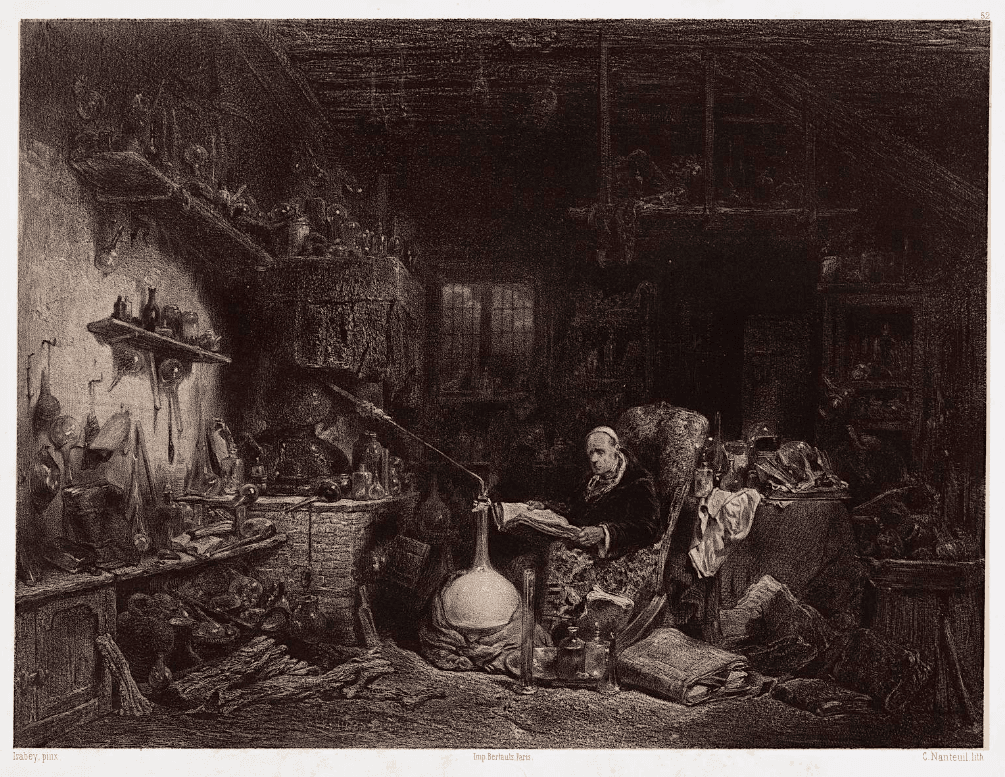
"The Alchemist," circa 1850, by Celestin Nanteulil. Inside the laboratory where scientific ambition takes root among the poisons. (Mark Cartwright/CC BY-SA)
Beatrice cries out that she meant only to love him for a while, that she intended no harm, and that “though my body be nourished with poison, my spirit is God’s creature, and craves love as its daily food.” Giovanni’s rage subsides, and he consoles her by offering the antidote. She drinks from the flask, but the potion brings death rather than a cure. Before she dies, her father appears, ecstatic that his experiment has worked, declaring that she will no longer be lonely, that as she stands apart from others, Giovanni “now stands apart from common men.”
As both men stare down at her body, Baglioni appears in Giovanni’s window and cries out, “Rappaccini! Rappaccini! And is this the upshot of your experiment?”
Why ‘Rappaccini’s Daughter’ Matters Today
For scholars, Hawthorne’s story is itself a garden rich with meaning. Here, however, we’ll look at an interpretation that most generally impacts our current state of affairs.
Literary critics have pointed out that Rappaccini’s garden is a sort of Eden, but rather than being a paradise, it is a hell redolent with poison. What many of these interpreters fail to add is that the Garden of Eden was God’s work, whereas Rappaccini’s is man’s. Here, perhaps, is Hawthorne warning of what happens when people regard themselves as gods, as creators of their own morality, even blindly so. The results of this theology are today all around us.
Moreover, and more directly, “Rappaccini’s Daughter” teaches that science is a double-edged sword, simultaneously bringing good and bad to mankind. Rappaccini concocts medicines from toxins while poisoning Beatrice, an experiment that ends in utter disaster.
We see this same dichotomy everywhere. The atom unleashed has the ability both to destroy the world and to provide it with a rich source of energy. Big agriculture feeds billions but may also be contaminating them with chemicals. A product of technology, social media draws people closer together while simultaneously dividing them into groups or increasing the isolation of individuals. Depending on the source you read, artificial intelligence may result in paradise or extinction.
Hawthorne’s tale, then, is cautionary, that when we “care more for science than for mankind” the results may be dire. Balance, as is nearly always the case, is the path to follow.
What arts and culture topics would you like us to cover? Please email ideas or feedback to features@epochtimes.nyc