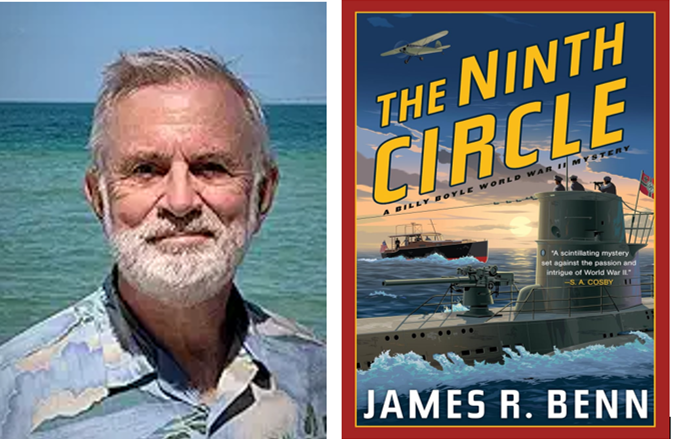
It’s January 1945. Capt. Billy Boyle and his friend and partner, Lt. Piotr (Kaz) Kazimierz, are in Havana, Cuba. “The Ninth Circle: A Billy Boyle Mystery,” by James R. Benn, takes Billy outside the main theaters of war during WWII.
They’re far from the bitter winter of northwestern Europe, but they’re very much in the middle of the war effort; Billy and Kaz work in the Office of Special Investigations for the Supreme Headquarters Allied Expeditionary Force (SHAEF).
The pair troubleshoots for Gen. Dwight D. Eisenhower. They investigate sensitive crimes—those with potential military or political impact.
This case finds them in Cuba on loan to Royal Navy Intelligence; their agent in Cuba, Lt. Cmdr. Hugh Sinclair was assassinated. The Royal Navy is investigating but has asked SHAEF for an independent, parallel investigation.
Max, one of Sinclair’s agents, is drinking a cold Hatuey with Billy and Kaz at a waterfront bar, waiting for Hector, another Sinclair asset. Hector has information about who killed Sinclair. The rendezvous is a trap. Kaz discovers a bomb at the place. The trio narrowly escapes before the bomb explodes.
Before they can question Hector, he is killed by a hit-and-run driver. Someone is trying hard to stop the investigation into Sinclair’s death, and to eliminate those, like Max and Hector, who worked for Sinclair.
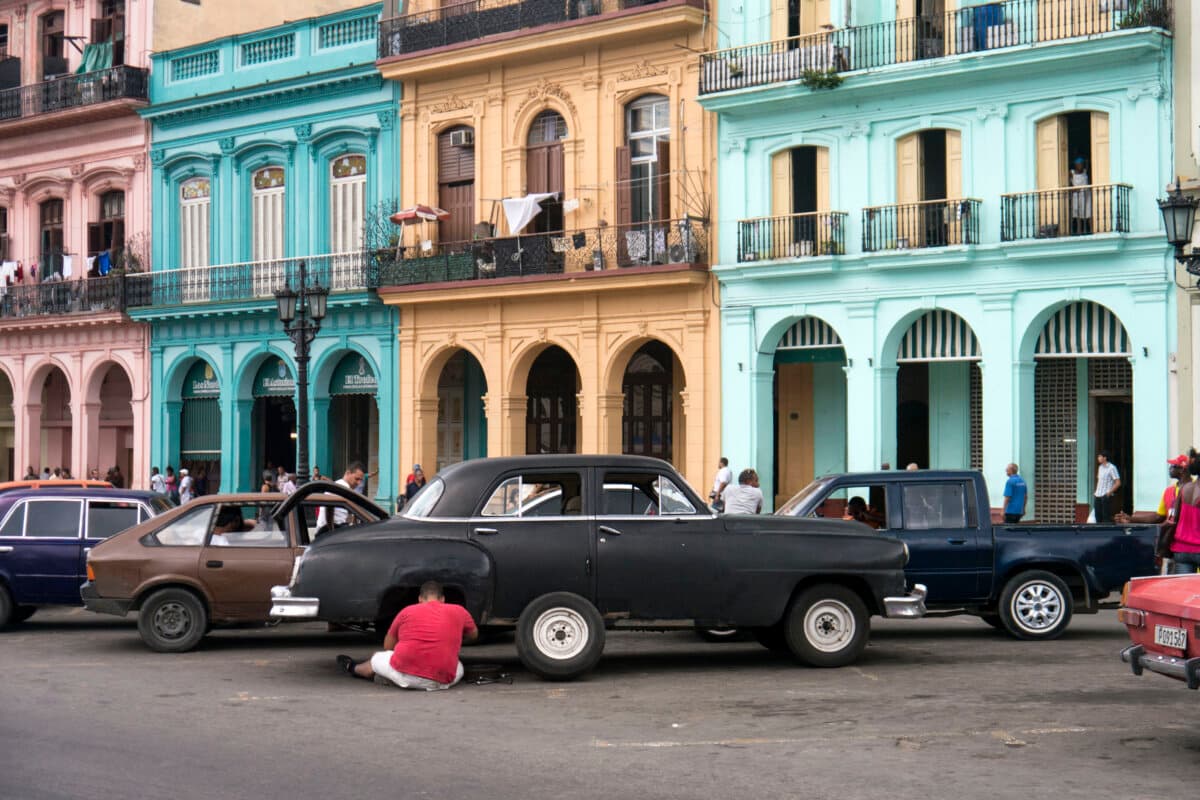
All the action takes place on the streets and byways of 1940s Havana. (<a href="https://www.flickr.com/people/97355030@N00">Bryan Ledgard</a>/<a href="https://creativecommons.org/licenses/by/2.0">CC BY 2.0</a>)
Backwater
The question: Why? The Caribbean and Cuba are a military backwater. The U-boats active in 1942 and 1943 are gone or on the ocean bottom. Sinclair’s work was not worth killing over. Has something new arrived?
Answers begin to emerge when Billy and Kaz meet their counterparts at the British legation. A new German spy ring may be infiltrating Cuba, run by the Sicherheitsdienst, the Nazi military’s intelligence wing.
A Royal Navy intelligence officer arrived from Britain on an independent mission. Lt. Cmdr. Ian Fleming is tracking a rumor that a German Type XXI U-boat was sent to the Caribbean. If so, he wants it captured.
The vessel is a revolutionary design, and the Royal Navy wants to study it. Fleming suspects that Sinclair’s murder is linked to the U-boat.
As Billy and Kaz seek Sinclair’s killers and bring those responsible to justice, they become enmeshed in a web of intrigue. Hector’s wife is threatening to denounce Max to Havana police if Max does not find Hector’s killer in three days. Max is actively being sought for assassination, even as he helps Billy and Kaz.
The two dig deeper, uncovering secrets. Their path takes them to Havana’s Chinatown, tourist bars, and Havana’s upscale casinos; they go to Ernest Hemingway’s Cuban home and his deep-sea fishing boat, Pilar.
Their discoveries lead them to New Providence, in the Bahamas. Edward, Duke of Windsor, is there, in exile due to his pre-war Nazi sympathies. He serves as governor-general, accompanied by Wallis Simpson, the woman he abdicated the English throne to marry. Whatever the Germans hope to accomplish centers on them.
As they investigate, they encounter a colorful assortment of characters who assist or hinder them. Fleming plays a part, but not necessarily to Billy’s and Kaz’s benefit. Finding Sinclair’s killers is less important to Fleming than the submarine.
Other historical figures include Meyer Lansky, Gregorio Fuentes, and Francisco Castro. Lansky is a mobster, but anti-Nazi. Fuentes and Castro were associated with Hemingway. Fuentes was a fisherman believed to be the model for the old fisherman in Hemingway’s “The Old Man and the Sea.” Castro looked after Hemingway’s home while Hemingway was a war correspondent in Europe. Both were members of the “Crook Factory,” a team Hemingway assembled to hunt U-boats from his boat.
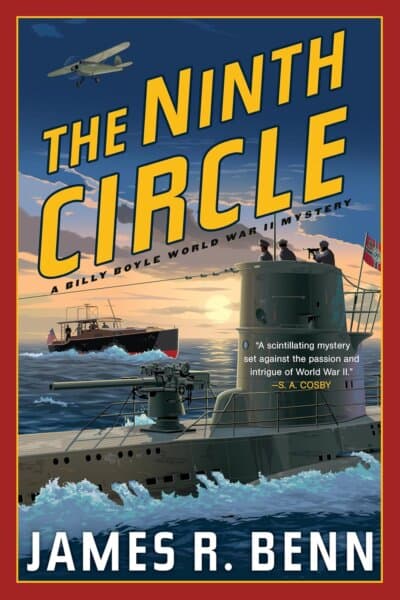
There's lots of intelligence action in the backwaters of Cuba during WWII.
More About Billy and Kaz
This is the 21st book in a long-running series. Billy was a Boston Police Department detective before the war. His family is Boston-Irish cops. Benn makes Billy distantly related to Eisenhower by marriage.
His father and uncle arranged for Billy to be on Eisenhower’s staff when Eisenhower was an obscure lieutenant colonel working in war planning in Washington. They wanted to keep him out of combat.
Then “Uncle” Ike gets put in charge of U.S. Army forces in Europe. He takes Billy with him. Eisenhower believes there will be times when an experienced detective on hand is needed for sensitive investigations.
Kaz, a Polish count, studied at Oxford when World War II began. Commissioned in the Polish Armed Forces in the West, he was assigned to SHAEF as a translator. He soon moved to the Special Investigation Office, where he’s worked with Billy for the past two years.
The pairing seems improbable, but for purposes of a mystery series, it works. The author deftly mixes fiction with history throughout the series, including this book. Readers who know enough history can sort it out. The behavior of historical figures appearing is always consistent with their real biographies.
The result entertains and excites readers. Benn offers readers fast-paced fiction with plenty of action and an engaging cast of fictional and historical characters.
‘The Ninth Circle (A Billy Boyle WWII Mystery )’
By James R. Benn
Soho Crime: Sept. 1, 2026
Hardcover, 400 pages
What arts and culture topics would you like us to cover? Please email ideas or feedback to features@epochtimes.nyc