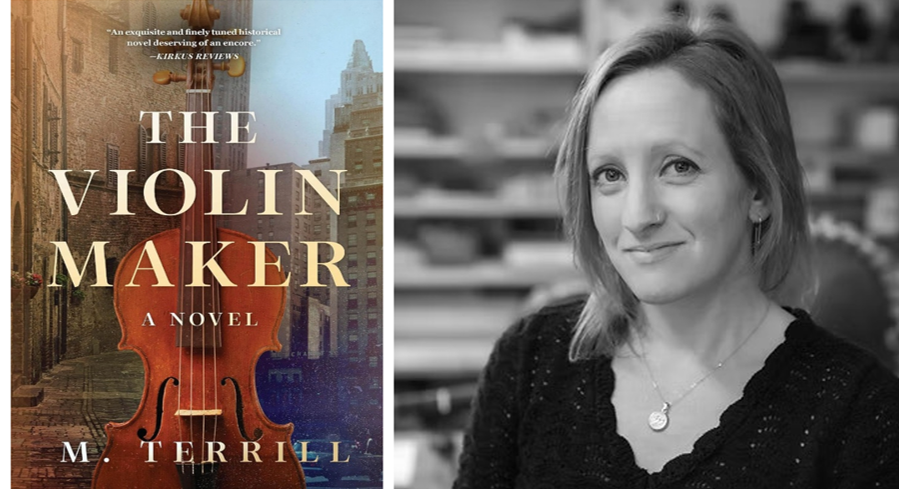
Thomas Barlow is a violin dealer in 1950s New York City, a luthier (violin maker) who makes, appraises, and repairs stringed instruments. He’s also an expert in late 17th-century violins.
His college buddy and wartime squadmate Jonathan DeWitt seeks an appraisal for an old Italian cello. It was previously identified as the work of Andrea Guarneri, a famous luthier from Cremona, Italy. An independent appraisal of the instrument as one made by Andrea Guarneri will increase its sales value.
Pietro Guarneri is a concert master, musician, and luthier in 1690s Mantua, Italy. He leads Duchess Anna Gonzaga’s musicians and teaches music at the Ospedale of Mantua, an orphanage for girls. He also makes violins in his home studio.
His wife and infant son died in childbirth, leaving him bereft. He has become entangled in a treacherous web of political intrigue spun by the Duchess. He has an apprentice, whose identity he has to conceal. Elena is an orphan from the Ospedale; he is teaching her lutherie secretly because the nuns running the Ospedale would forbid it.
Although Barlow and Guarneri never meet, in this novel their lives enmesh because Pietro Guarneri made the cello Barlow is appraising in the 1950s. The author follows each man in chapters alternating between the centuries.
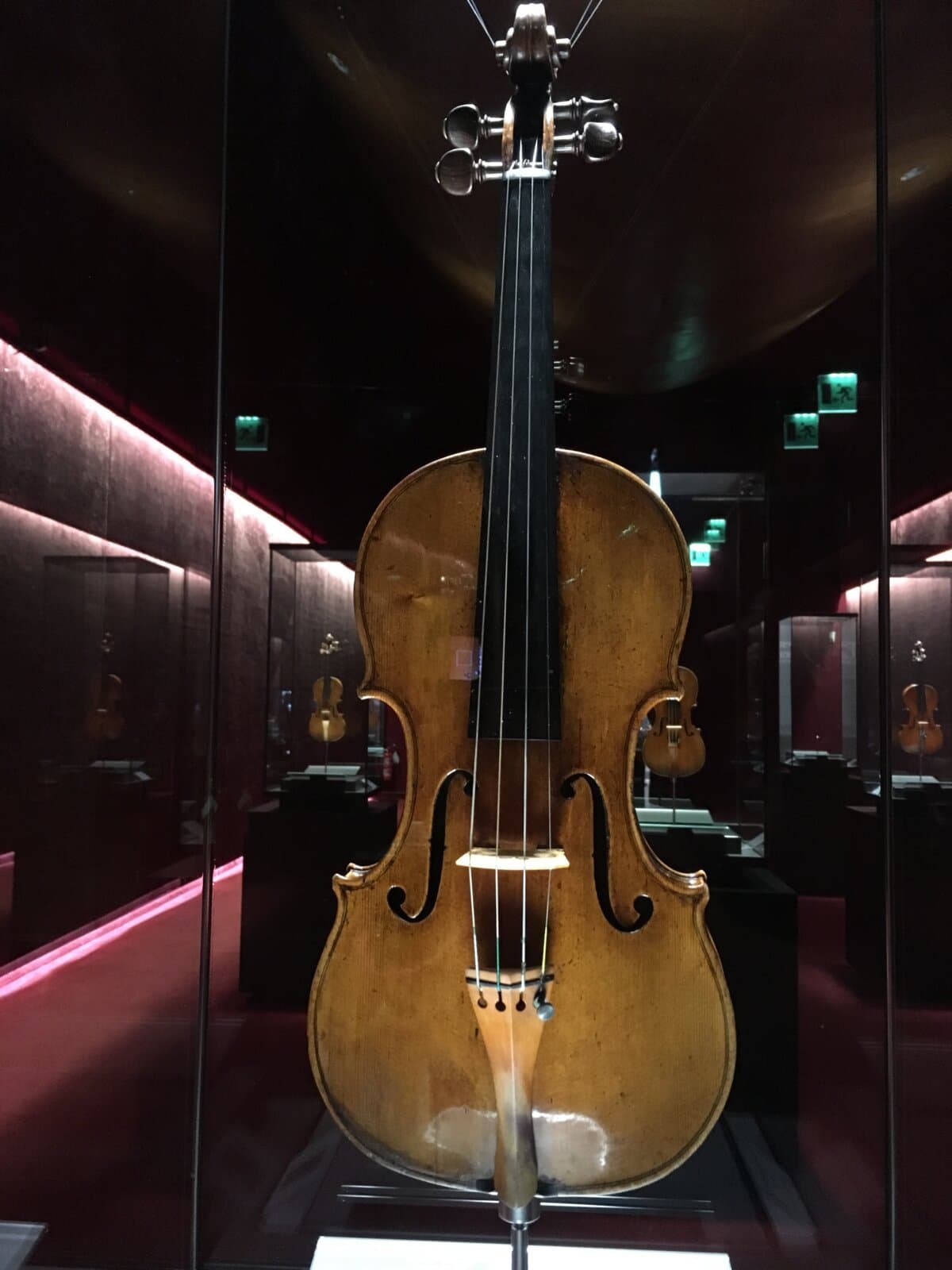
A 1734 Guarneri del Gesu violin. (<a href="https://commons.wikimedia.org/w/index.php?title=User:Dave74~frwiki&action=edit&redlink=1">Dave74~frwiki</a>/<a href="https://creativecommons.org/licenses/by-sa/4.0">CC BY-SA 4.0</a>)
She shows Barlow seeking to discover the origin of the cello he has been given to appraise intermixed with Guarneri’s activities after he receives an undesired commission to make a cello.
Who Made It?
On one level, “The Violin Maker” is just a mystery. The central issue is who made the cello Thomas Barlo is appraising.
But around this central mystery, others are introduced that intertwine. What happened between Thomas Barlow and Jonathan DeWitt? The book opens with Barlow reluctant to have dealings with DeWitt, a former friend. Barlow initially considered refusing to conduct the appraisal.
How did Pietro Guarneri get in conflict with the Duchess? He is keeping secrets from her and seeks to keep his distance from her and her political machinations.
As the book advances, readers are given answers to these questions. Yet each answer seems to raise new questions and issues. Barlow’s questions are often answered by Guarneri’s actions; these are answers readers see, but Barlow doesn’t. With each complication, readers are drawn deeper into both stories with tension ratcheting up in both worlds.
Violin Appraisal
Yet this is not a traditional mystery. Terrill produced a deeply layered story. Her narrative examines the mid-20th-century world of violin appraisal and orchestral performance as well as the late-17th-century world of stringed instrument construction.
She shows the complexity of modern appraisal. She explores methods used to date instruments and those used to “upgrade” an appraisal; this approach makes an instrument appear older or manufactured by a more prestigious luthier than who actually created it.
She also presents the Italian golden age of violin-making—the world of Stradivarius, Guarneri, and del Gesù instruments. She describes the techniques used to carve, assemble, and varnish quality violins. It offers a fascinating look at the craftsmanship of this earlier age.
In both cases, technical information is presented to advance the story, not for its own sake. Appraisal and construction methods are introduced to produce clues and false leads. Readers see the world through the eyes of Thomas Barlow and Pietro Guarneri, through the craft each man pursues.
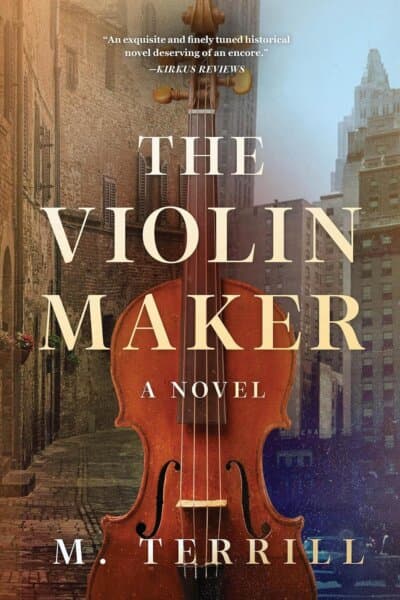
The author brings the rich history of the Renaissance to the present day in this novel.
Rich Backdrop
Terrell also offers a richly-tapestried background for her novel. The New York of Thomas Barlow mixes the gritty world of cheap diners, dive bars, and cold-water flats with the refined upper-class world of arts patronage and luxury living.
It is a world where men and women chain-smoke and drink heavily, where fistfights occur, trains are the main transportation, and payphones are still relevant.
The Mantua of Pietro Guarneri shows the world of late Renaissance Italy. Readers see a world of political intrigue, made more desperate because the Italian states are losing relevance.
This is a world without electricity or fuel-powered engines, where work is done during daylight hours and by muscle-power and hand. It’s a world where faith still reigns and where men and women are bound by traditional roles.
The author populates these worlds with fascinating people, real and fictional. In the 1950s, readers meet violin dealer and restorer Emil Hermann, mother and daughter society doyens Anna and Huguette Clark, and musicians Robert Maas and Oswald Schilbach.
In Italy, Pietro Guarneri and his family are real, as is Anna and Ferdinando Gonzaga. Terrill fits the historical and fictional pieces together flawlessly, yielding a tale that could have happened.
“The Violin Maker” offers an entertaining story which leaves readers on the seat of their chair. The two threads work to an explosive climax with a satisfactory resolution. The novel remains faithful to the periods in which it takes place, a rare combination today.
Highly recommended.
’The Violin Maker’
By M. Terrill
Koehler Books: Oct. 13, 2026
Hardcover, 342 pages
What arts and culture topics would you like us to cover? Please email ideas or feedback to features@epochtimes.nyc