An adulterant in fentanyl is creating a new crisis of withdrawal symptoms for users and provoking public concern in multiple U.S. cities.
The new drug, a veterinary sedative called medetomidine, is now widespread in the fentanyl turning up in Philadelphia, according to a report from a forensic testing lab. This crisis is not a result of overdosing on medetomidine, but of the withdrawal that patients experience within hours of using.
On Dec. 19, 2025, New York state issued a health alert about medetomidine. The New York State Department of Health’s program monitoring illicit drugs found medetomidine in 37 percent of the samples of opioids tested. That number was just 4 percent in May 2024.
A testing program for street drugs first identified medetomidine in Maryland fentanyl in 2022, but it drew more attention with a surge of withdrawal cases burdening the Philadelphia hospital system in 2024. Law enforcement has found that drug dealers are sourcing the drug from China-based chemical manufacturers.
This is a breakdown of what we know so far.
Severe Withdrawal Symptoms
Medetomidine is a Food and Drug Administration-approved sedative for use in animals; as a sedative, it relieves pain, relaxes the muscles, slows the heart, and can cause hallucinations. It is not approved for use in humans.
As the sedative effect of medetomidine wears off, withdrawal symptoms begin with the heart rate accelerating rapidly. According to public health reports, patients could uncontrollably vomit, lose control of bodily functions, and have blood pressure high enough to damage the brain.
The severe withdrawal symptoms from medetomidine are sending drug users to intensive care just to cope with the symptoms. The drug is unresponsive to standard treatments for opioid withdrawal such as Narcan or naloxone.
Users with medetomidine withdrawal generally have to be treated with dexmedetomidine, which is a sedative approved for humans but available only in the hospital. The overlapping symptoms of fentanyl overdose and sedative withdrawal mean that cases have gone unrecognized, resulting in seizures and deaths.
Spreading Across the Country
Multiple cities and states have reported medetomidine increasing in the illicit supply of drugs since its initial detection.
Medetomidine has been found in street drugs in several other states and cities, including Chicago, Pittsburgh, New Jersey, Maryland, Ohio, and Michigan. These and other states have also published health alerts after identifying medetomidine in overdose patients or in sample testing of street drugs.
In Philadelphia, the Center for Forensic Science Research & Education found medetomidine in the fentanyl supply for the first time in May 2024. Philadelphia authorities have associated the drug’s presence with a spike in withdrawal-related emergency room visits.
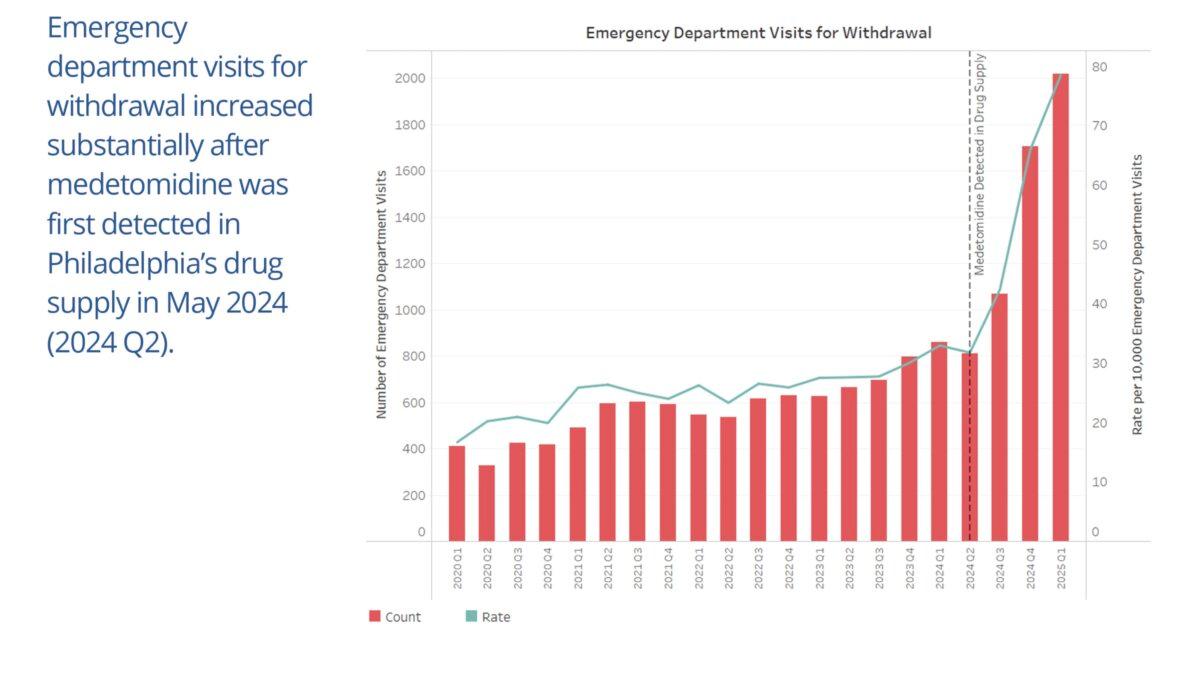
Philadelphia emergency department visits for withdrawal per quarter. After medetomidine was first detected in the drug supply in Philadelphia in May 2024, visits for withdrawal symptoms increased substantially. (Philadelphia Department of Public Health)
Patients admitted to the emergency room for symptoms of withdrawal in Philadelphia hospitals doubled over nine months, from 1,000 in the third quarter of 2024 to 2,000 in the first quarter of 2025.
By June 2025, tests of illicit fentanyl from Philadelphia found that medetomidine was found in 84 percent of the fentanyl supply. During the same period, the percentage of drug samples containing xylazine, also a powerful animal sedative apparently substituted by medetomidine, dropped to near zero.
Known by the street name “tranq,” xylazine has been used by street dealers as a “cut,” or way to multiply the hits of fentanyl that a dealer can sell. Xylazine has terrible side effects, including festering wounds that do not heal. Medetomidine is 100 times to 200 times more potent than xylazine, which is driving the severe danger from withdrawal but does not create the wounds and scarring seen from the use of xylazine.
Detection of medetomidine in Pennsylvania coincided with the state regulating xylazine.
In 2023, Pennsylvania Gov. Josh Shapiro, a Democrat, listed xylazine as a Schedule III Drug under the Controlled Substance, Drug, Device and Cosmetic Act in the state.
His office said that scheduling required the manufacturer to implement stricter control in the ordering system, including getting the veterinarian to sign for delivery. It also increased the fines or punishment that someone will face if caught with the drug. In May 2024, state lawmakers made the designation permanent.
Public data on confirmed medetomidine withdrawal cases have been piecemeal. The U.S. Centers for Disease Control and Prevention has collected data from several cities, including Chicago, Philadelphia, and Pittsburgh.
During one week in May 2024, three Chicago hospital emergency departments treated a total of 181 patients for opioid-related overdose. Of those 181, all but three patients were suspected to be medetomidine-induced cases.
From September 2024 to January 2025, three Philadelphia hospital systems reported 165 people hospitalized for fentanyl withdrawal. In the six months from October 2024 to March 2025, Pittsburgh hospitals had to admit 10 patients to intensive care for symptoms of severe withdrawal from using synthetic opioids.
Chinese Sales Reps Sell Medetomidine on Social Media
In 2025, the Justice Department offered more information on how medetomidine is reaching fentanyl users in the United States.
China-based sales reps for chemical manufacturers are selling medetomidine to U.S.-based drug dealers, according to an indictment of four Chinese chemical companies unsealed on Sept. 2, 2025. The indictment alleges that the companies “knowingly and illegally market and export” controlled substances that they “intend for domestic drug traffickers to use as mixing agents.”
Four chemical manufacturers and 22 Chinese nationals were charged in a conspiracy to sell drugs and cutting agents to alleged Ohio drug dealer Eric Michael Payne.
According to the indictment, sales agents of these chemical companies marketed the synthetic opioids protonitazene and metonitazene and the sedatives medetomidine and xylazine on the internet; sales agents provided their phone numbers, asking people to contact them to buy the chemicals.
The agents also allegedly bargained over prices and quantities. Once finalized, buyers would pay with cryptocurrency. Chinese chemical companies shipped the cutting agents to the United States.
Payne allegedly resold the cutting agents to other drug dealers.
“We will not rest until we stop Chinese companies from shipping poison to our citizens and bring everyone involved in this lethal trade to swift, complete justice,” Attorney General Pam Bondi said in a statement announcing the charges in September 2025.