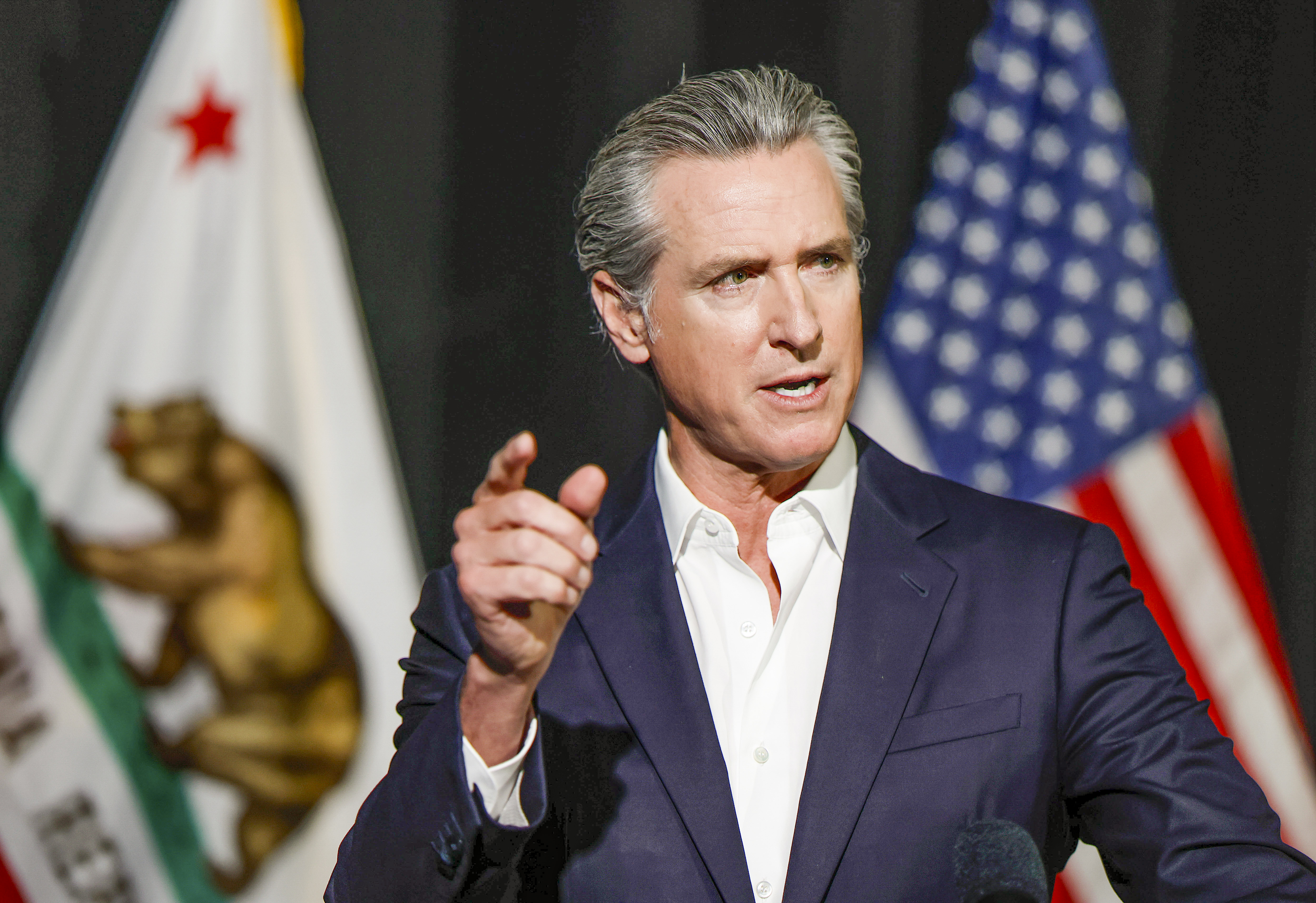
Gov. Gavin Newsom on Sept. 10 signed bills that restrict how social media companies may design products for children and that tighten rules for AI companion chatbots.
He announced the package on X.
“I just signed the strongest kid safety laws for AI chatbots and social media in America,” Newsom wrote. “California is banning addictive social media features for kids, cracking down on dangerous AI chatbots, and strengthening privacy protections for ALL kids. PROTECT OUR KIDS!”
The signing took place in Marin County, where Newsom was joined by his wife, Jennifer Siebel Newsom, and the legislators who carried the measures.
The social media bills focus on product design.
AB 1709, by Assemblyman Josh Lowenthal, a Democrat representing Long Beach, bars platforms from offering users under 16 autoplay and algorithmic feeds drawn from a user’s history and profile.
AB 2, also Lowenthal’s, adds civil penalties when children are injured.
Fighting Online Addiction
In September 2024, Newsom signed SB 976, the Protecting Our Kids from Social Media Addiction Act. That statute would have required parental consent before addictive feeds reached minors and would have limited alerts during school hours and overnight. The 9th U.S. Circuit Court of Appeals on Jan. 28, 2025, blocked SB 976 after NetChoice sued, arguing the law impinged upon protected speech.
The new package focuses on strict age verification and penalties. Chatbots are another focus.
SB 1119 is titled Adam’s Law, named after Adam Raine, 16, of California, whose parents, Matthew and Maria Raine, sued OpenAI in San Francisco Superior Court on Aug. 26, 2025. Their complaint argued ChatGPT became their son’s “closest confidant,” mentioned suicide more than 1,200 times, and urged him toward what it called a “beautiful suicide.”
Adam’s Law, the governor’s office said, requires companion-chatbot firms to keep crisis protocols for suicidal ideation, provide parental controls, notify a parent if a child disables safety settings, submit to independent child-safety audits, and file annual risk assessments.
The bills also include SB 867, which restricts companion-chatbot toys, while other bills limit targeted ads aimed at children and set rules for K-12 pupil data inside AI systems.
AB 1946 adds a reporting route for child sexual abuse material. SB 1276, by state Sen. Susan Rubio, a Democrat from Baldwin Park, extends child sexual-exploitation law to digitally altered or AI-generated material depicting a person under 18 in sexual conduct.
“Our children’s safety deserves to be at the center of every conversation about technology,” Newsom said. “As innovation moves faster, our protections must keep pace. Today’s legislation makes clear that California will not stand by while unregulated technology puts our children at risk. Innovation comes with responsibility and protecting our children comes first.”
Siebel Newsom said technology should support children’s well-being, not exploit their vulnerabilities.
“With this critical legislation, California is sending a strong message that when it comes to our kids, safety must not be an afterthought – but baked into design and a necessary requisite for all innovation,” she said.
State Sen. Steve Padilla, a Democrat and co-author of the chatbot bill, said California must set an example for the rest of the country.
“Adam’s Law will save the lives of children here in California and across the country as it becomes a national model,” Padilla said.
Assemblyman Josh Hoover authored AB 2071, which directs public schools to plan digital-wellness instruction.
“Protecting kids online is not a partisan issue. As a parent and former school board member, I have seen first-hand the impacts that screens and social media have had on our kids,” he said.
AI Safeguards
Earlier, on Oct. 12, 2025, Newsom signed measures requiring Apple and Google operating systems to send age-range signals, add warning labels after three hours a day for users under 17, and ban using an AI tool as a shield when a user’s prompt produces harmful content.
This followed after Megan Garcia in 2024 filed a lawsuit alleging a Character.AI chatbot contributed to the suicide of her 14-year-old son, Sewell Setzer III.
Character.AI later said it would block open-ended chat for users under 18. California dockets have also seen lawsuits arguing that infinite scroll, autoplay, and recommendation engines were built to keep adolescents on the apps.