
The failure of just one of California’s unsafe dams could endanger more than 400,000 people and cause nearly $92 billion in economic damage, according to a state auditor’s report.
The new report from the auditor says 57 dams in California are in poor or unsatisfactory condition, posing a safety risk to hundreds of thousands of residents.
Out of those 57 dams, 40 have “high or extremely high” hazard classifications as of May, the Oct. 13 report said.
“Failure of just one of these 40 high or extremely high hazard dams could pose harm to as many as hundreds of thousands of people and cause billions of dollars in property damage,” the auditor warned, citing the Department of Water Resources’ (DWR’s) assessment of 1,222 Californian dams.
If these dams fail, they could collectively endanger up to 1.5 million people and result in more than $265 billion in economic damage, the report said.
Moreover, highly hazardous dams in poor condition are generally concentrated in populated areas like the Bay Area, San Diego, and Los Angeles, the report noted.
The most common factors for the poor conditions are old age, the inability to pay for repair costs, and the lack of comprehensive safety standards in effect when the dams were built, the report said.
While the DWR has enforcement authority over dams, it has “only sent notices of violations to dam owners but has not taken further action, thereby allowing serious deficiencies to persist,” the auditor said.
The department stated that limited resources hindered efforts to repair dams before they failed.
Of the 1,222 dams, the auditor found that owners of 60 dams with higher hazard classifications did not comply with California law requiring they submit emergency action plans aimed at protecting life and property in case of structure failure.
Local maintaining agencies (LMAs) were charged with maintenance of levees—structures that help contain or control water flow during floods.
In the report, the auditor wrote that LMAs were lacking when it came to levee maintenance, while the DWR was reluctant to intervene, posing heightened risks to communities.
California Gov. Gavin Newsom proclaimed an emergency last month to prepare the state for El Niño, when southern areas of the state face increased rainfall and flash flooding.
The largest impacts of El Niño typically affect the United States from October through May.
In the emergency declaration, Newsom highlighted the risks posed to dams by El Niño conditions.
In the proclamation, Newsom ordered the DWR to contact dam owners and remind them of their responsibility to repair, maintain, and safely manage dams and other structures.
Meanwhile, the California state auditor’s report included a response from the DWR regarding the draft version of the document.
The response criticized the audit report for portraying a “fundamental lack of understanding” of the complexities involved in flood management and dam safety.
The DWR said the audit misrepresents that poor maintenance and lack of action are the sole reasons for dams being in unsatisfactory condition.
“This further demonstrates the lack of technical understanding that the most critical deficiencies are found through DWR’s reevaluation program; these are not visible in an inspection and most often occur because design loads (earthquakes and floods) are larger than originally expected,” the department said.
“Design standards, engineering methods, and science have changed over time. These dams were not necessarily built poorly.”
The DWR’s reevaluation program periodically reviews dams deemed to pose a threat to life against current dam safety standards.
The department said that the program is responsible for detecting more than two-thirds of dam deficiencies.
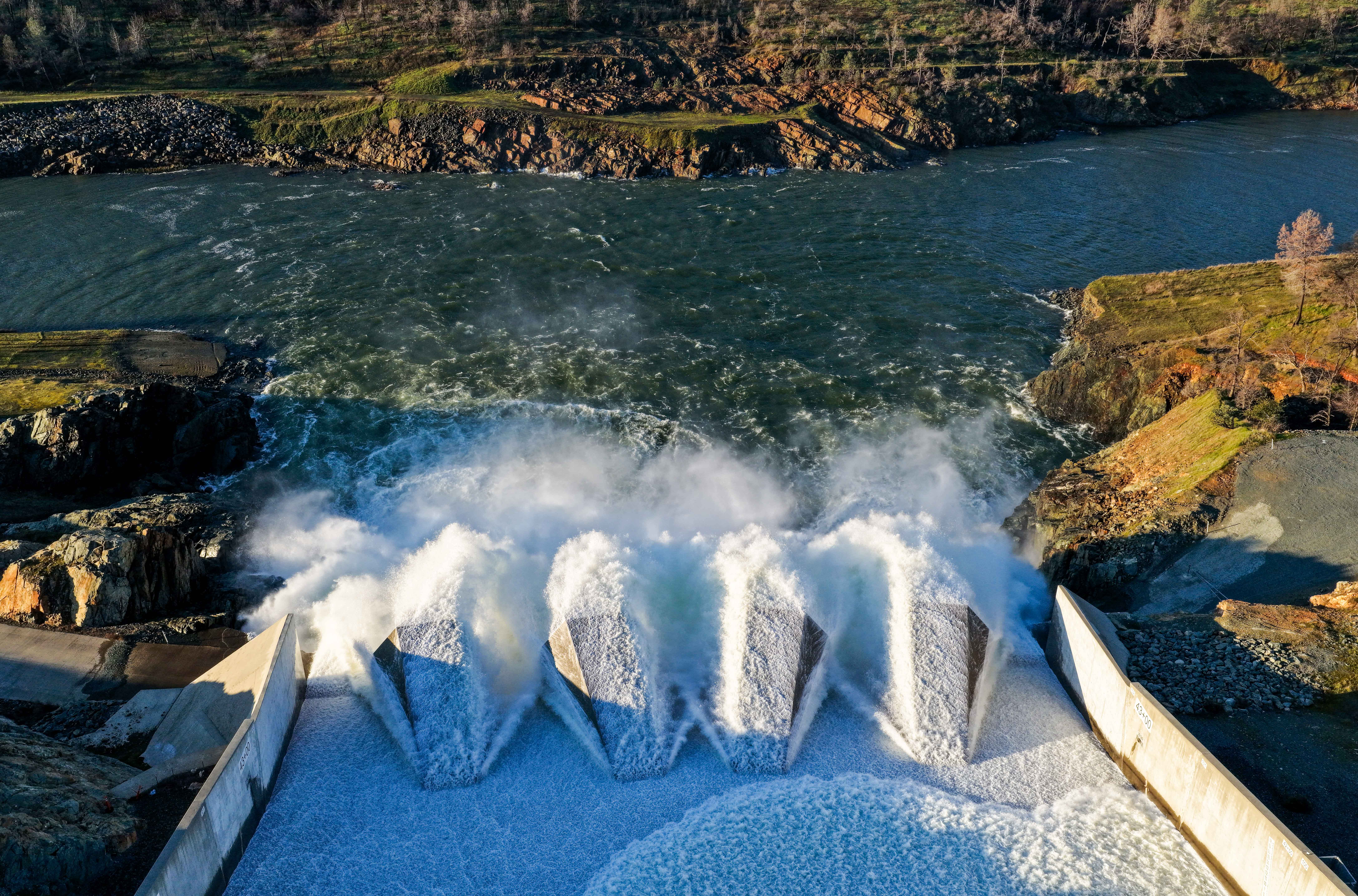
In a Sept. 30 statement, the DWR announced completing a $235 million rehabilitation of California’s Oroville Dam, the tallest in the United States.
“This investment in Oroville Dam’s infrastructure ensures the reliable and safe operation of the State Water Project’s largest flood protection and water supply facility,” John Yarbrough, deputy director of the DWR’s State Water Project, said in the statement.
Dam safety is a wider national issue as well.
According to a report from the American Society of Civil Engineers, almost 17,000 dams in the United States are considered potentially high hazard.
The report highlighted that the average age of dams in the United States is more than 60 years, with seven out of 10 estimated to be at least 50 years old in 2025.
“Without a more significant commitment to dam safety through increased annual investment in inspection, monitoring, planning, and necessary dam repairs, the cost to bring the nation’s dams into a state of good repair will continue to rise,” the association said.
“And downstream communities will face a greater risk of danger from potential dam failure.”