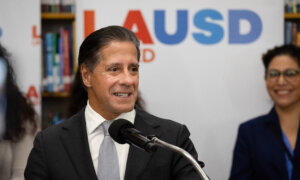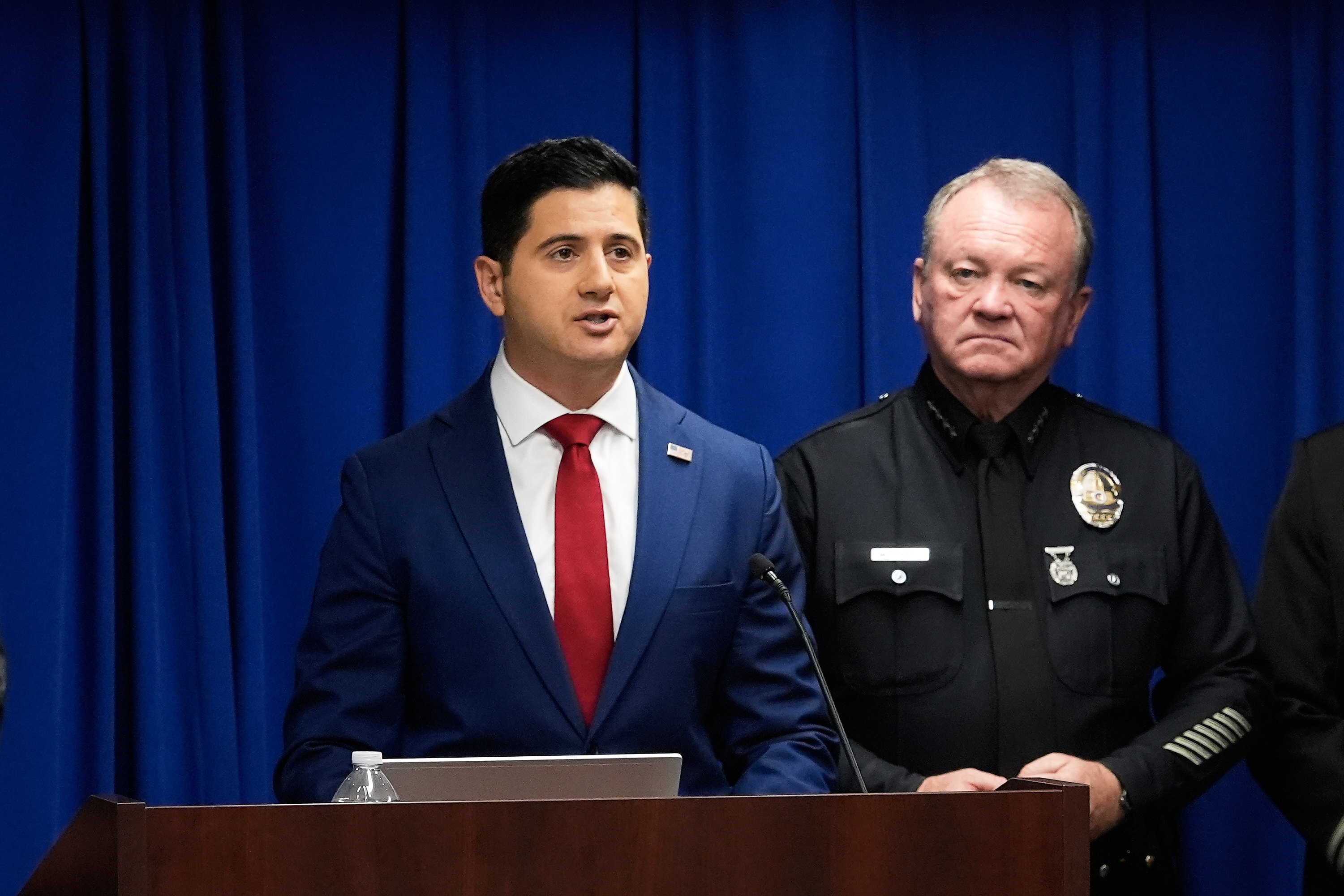

A federal judge disqualified attorney Bill Essayli, who was temporarily appointed to lead the U.S. Attorney’s Office in the Central District of California, from three cases after ruling he had stayed in the job as an appointee longer than allowed by law.
Democrats are continuing to block Essayli’s confirmation, along with nearly 100 others, in the U.S. Senate, prompting a handful of similar lawsuits from people looking to dismiss indictments across the nation.
Judge John Michael Seabright of the U.S. District Court for the District of Hawaii disqualified Essayli from supervising criminal prosecutions in three cases on Oct. 28, finding that he has been unlawfully serving as acting prosecutor for the district since July 29.
Seabright ruled that Essayli can’t use the title “acting U.S. attorney” but can use the title “first assistant U.S. attorney.” He can run the office as he did before the ruling, according to a spokesperson in the Los Angeles U.S. Attorney’s Office.
“I continue serving as the top federal prosecutor in the Central District of California,” Essayli said on X on Oct. 28. “It’s an honor and privilege to serve President Trump and Attorney General Bondi, and I look forward to advancing their agenda for the American People.”
Essayli, 39, was sworn in as acting U.S. attorney for the Central District of California on April 2. He is a former federal prosecutor and served nearly two terms as a state assemblyman before Trump appointed him to oversee the Los Angeles U.S. Attorney’s office.
He was sued by three men facing federal firearms charges who sought to have their indictments dismissed over the appointment rule.
Under federal law, if a permanent U.S. attorney is not nominated by the president and confirmed by the Senate within 120 days, federal district court judges can appoint their own interim judges until the vacancy is filled.
The judge ruled that the plaintiffs’ indictments could proceed.
Nominee Confirmations Blocked
Senate Democrats have so far blocked the confirmation of Trump’s 93 U.S. attorney nominees through several procedural tactics, according to Republican majority members. The Democrats have obstructed the nominees using what Senate Judiciary Committee Chairman Chuck Grassley (R-Iowa) called an “unprecedented” blanket hold.
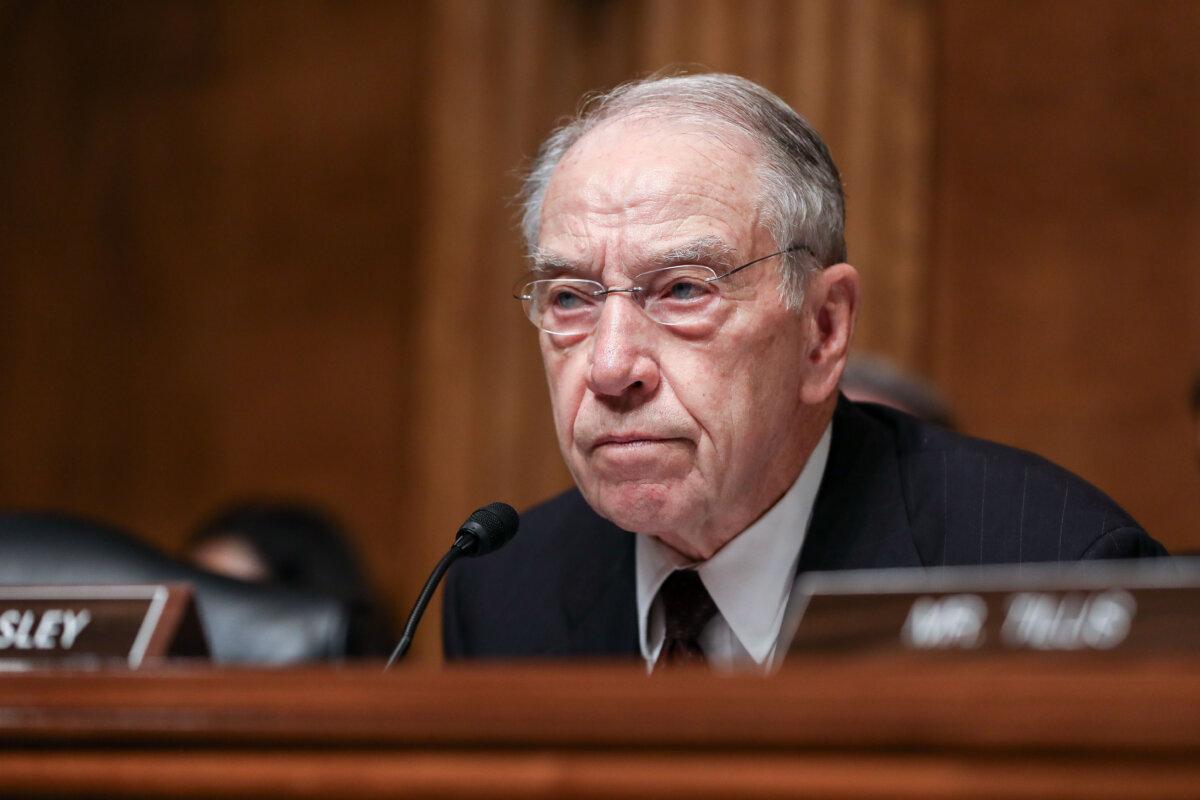
Sen. Chuck Grassley (R-Iowa) during a Senate Judiciary hearing on Capitol Hill in Washington on Oct. 22, 2019. (Charlotte Cuthbertson/The Epoch Times)
The hold was a communication to the Republican majority that they objected to approving the entire category of nominations by unanimous consent.
“Holds should be used selectively,” Grassley said in May. “Blanket holds intended to wholly obstruct the confirmation process are misguided and threaten to undermine the Senate’s advice and consent role.”
In September, Grassley requested consent to confirm 10 of the nominees by voice vote after they passed out of committee. Sen. Dick Durbin (D-Ill.) objected to the confirmations.
Trump-appointed U.S. attorneys in California, Nevada, New Jersey, New Mexico, and Virginia have faced motions challenging the lawfulness of their appointments.
Lawyers for former FBI Director James Comey, who faces charges in Virginia of making a false statement to Congress and obstruction in a criminal case, filed motions in October asking the court to dismiss the charges against him by an illegally appointed prosecutor.
Comey alleged that the U.S. attorney for the Eastern District of Virginia, Lindsey Halligan, was not legally appointed because the process violated constitutional procedures.
New York Attorney General Letitia James also plans to ask a Virginia judge to dismiss charges against her of bank fraud and making false statements to a financial institution. She also claims that the U.S. attorney was improperly appointed, according to a court filing.
Correction: A previous version of this article misspelled the name of New York Attorney General Letitia James. The Epoch Times regrets the error.