Have you ever left the doctor’s office feeling more confused than when you walked in? Nearly three out of four Americans say they have. Many hesitate to even raise their real concerns during the appointment.
In today’s hurried health system, the patients who fare best aren’t necessarily the wealthiest or luckiest; rather, they’re often the most prepared. They’re the ones who arrive with specific goals and make their needs known. In medicine, being your own advocate isn’t optional. It’s survival.
You Belong at the Table
For many people, seeing the doctor means listening quietly and following orders. That’s changing. National
guidelines now call for “shared decision-making,” to which doctors bring their expertise and patients bring their values and preferences.
The result is better care. Studies show that patients who prepare questions and share their preferences are more likely to understand their options and feel satisfied with their choices. Better care leads to better outcomes.
“Doctors appreciate when patients are engaged and prepared,” Dr. Dorothy Serna, an internal medicine physician, told The Epoch Times. “They remember the people who bring a list of concerns and want to understand their options.”
The key, according to Serna, is to come in with your story ready, because your time with the physician is limited and every minute counts.
9 Ways to Make the Most of Your Visit
Going to the doctor can feel rushed and impersonal. Most appointments
last about 15 to 20 minutes, a window squeezed even further by the documentation that doctors must complete to get paid. That leaves little time for you, unless you walk in ready to make every minute count. Here’s how to get more out of every appointment:
1. Set the Agenda Immediately
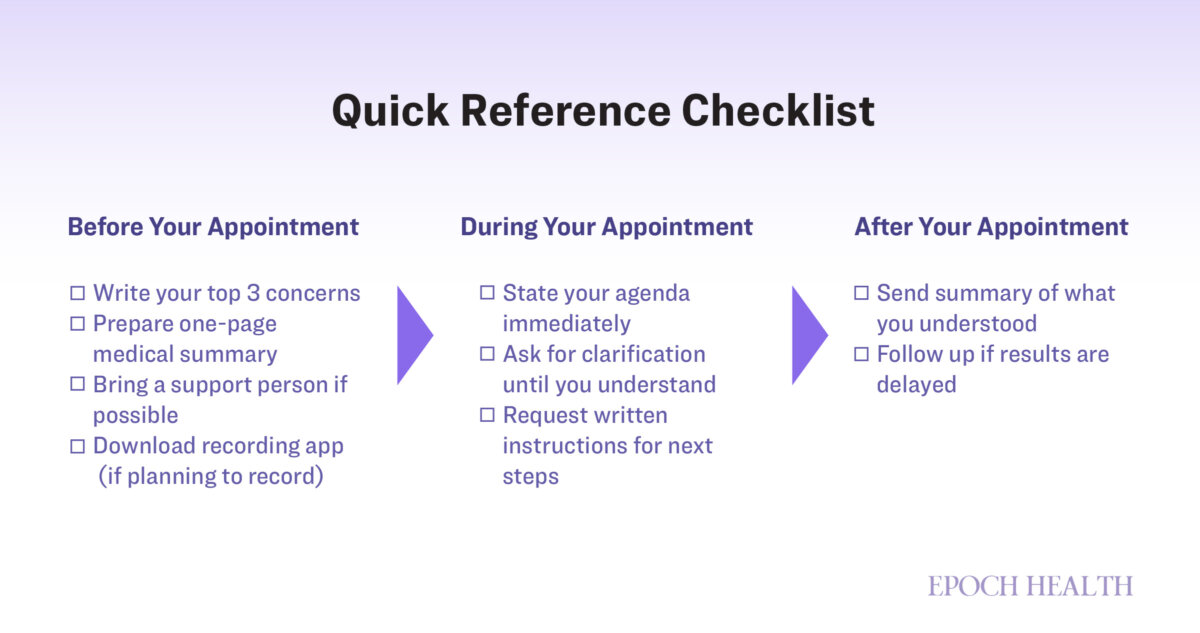
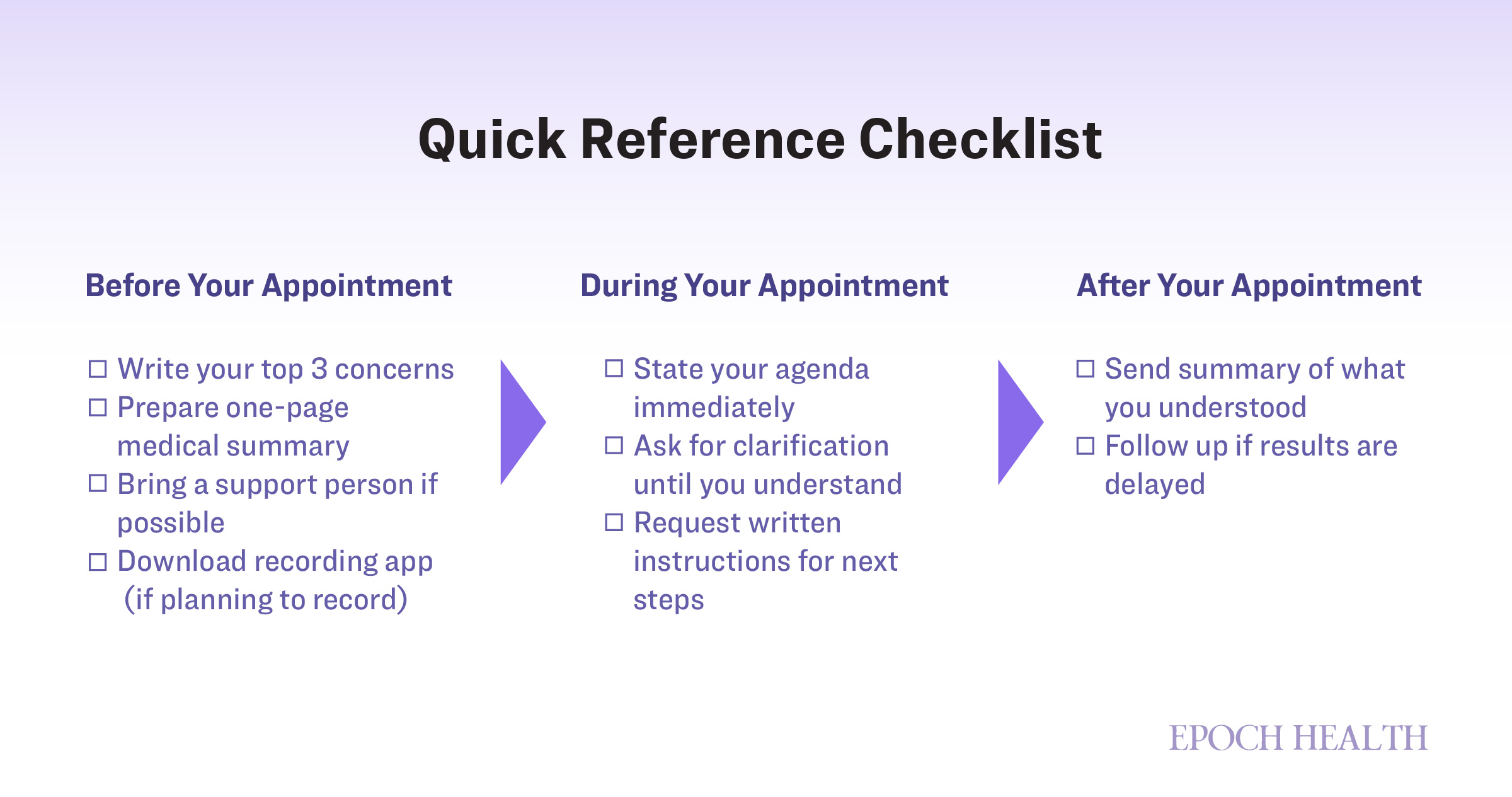
Walk in with a short agenda, not a script. Lead with your top two or three concerns, say them at the start, and ask for a few minutes of uninterrupted listening.
“Bring a list of your top three things that matter most and share them right away,” Dr. Marc Lato, a family physician and patient advocate, told The Epoch Times. The first few minutes matter most. Raise your priorities at the start, before the visit takes another direction.
A 2018 study found that patients with a prioritized agenda were more likely to have their most important issues addressed. Both doctors and patients said the practice made visits more productive.
“When I first started out in medicine, I hated lists,“ one surveyed physician said. ”I love lists now.”
A list, he said, helps prevent the dreaded “by the way” question just as the doctor is walking out the door.
2. Know Who Is in the Room
Most visits start with a medical assistant who checks your weight and vital signs. They get you into the system but may not be trained to answer detailed health questions.
Registered nurses, on the other hand, can explain instructions, help with prescriptions, and translate medical language into plain English. If you’re uncertain about something, ask the nurse.
When your main provider—doctor, nurse practitioner, or physician assistant—enters the room, make that your moment to raise your biggest concerns. Unlike registered nurses, nurse practitioners and physician assistants can diagnose, prescribe, and order tests, making them key players in your care.
3. Bring a Concise, 1-Page Medical History
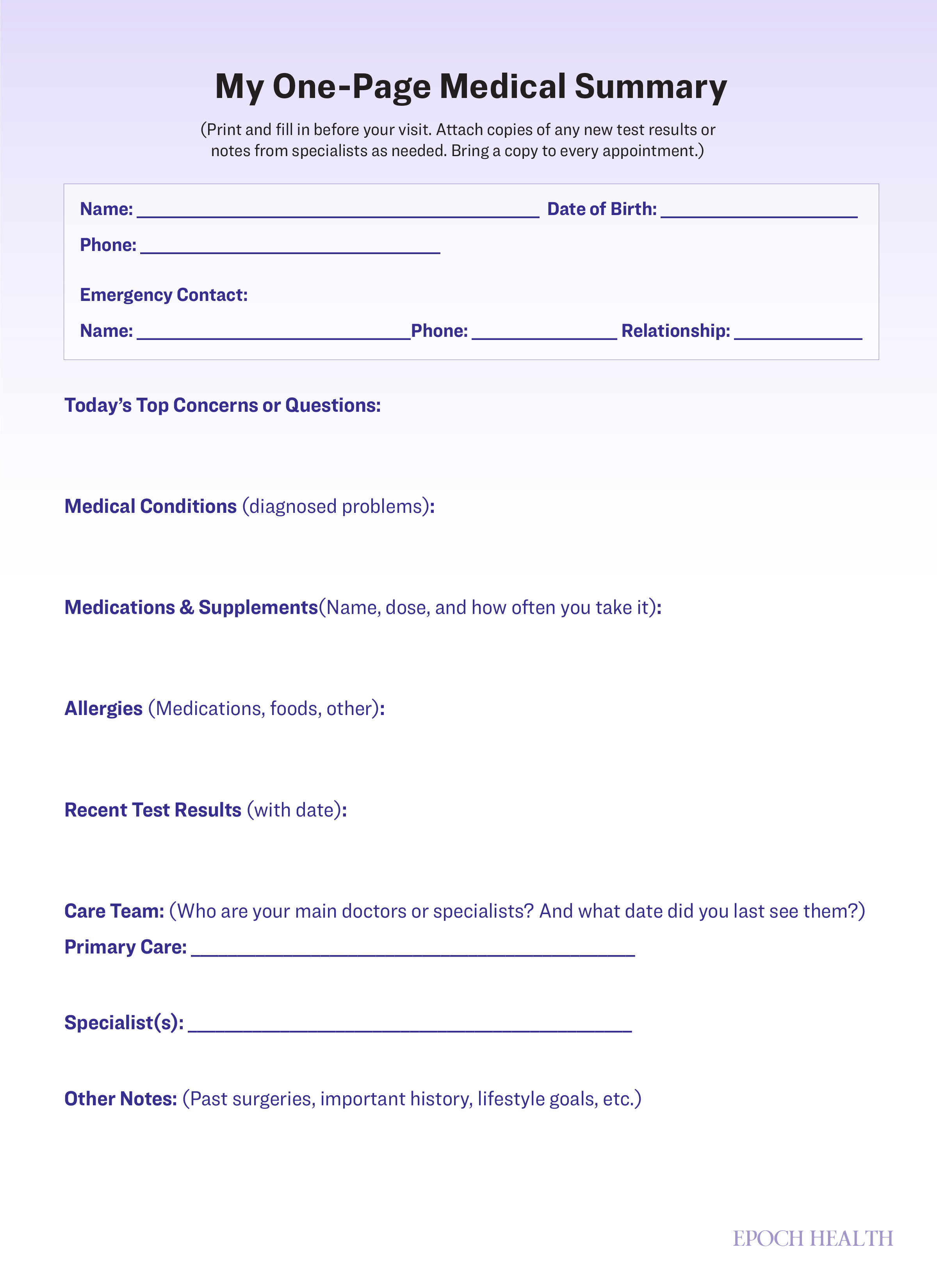
Think of your health record like a résumé. Highlight what matters and keep it concise.
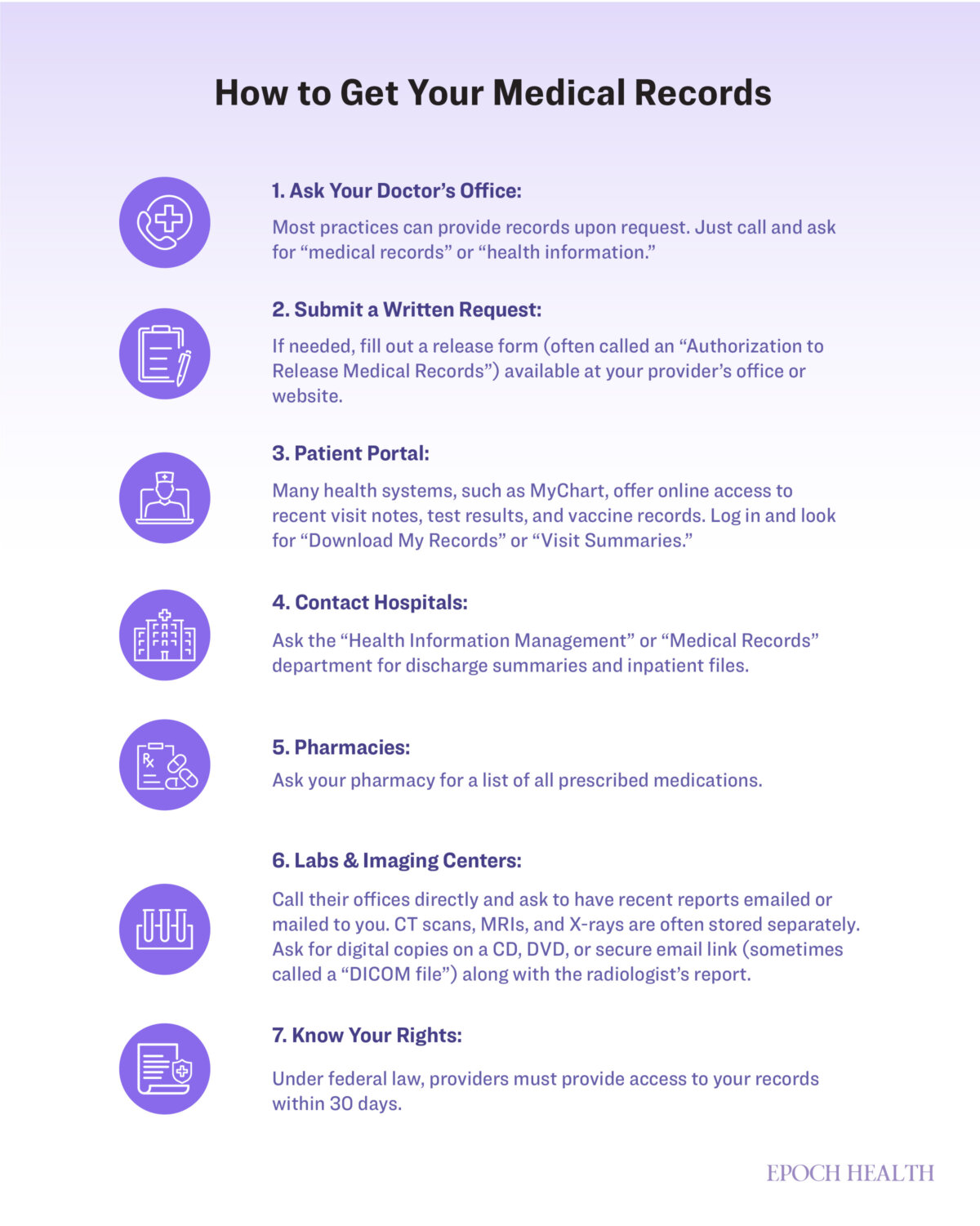
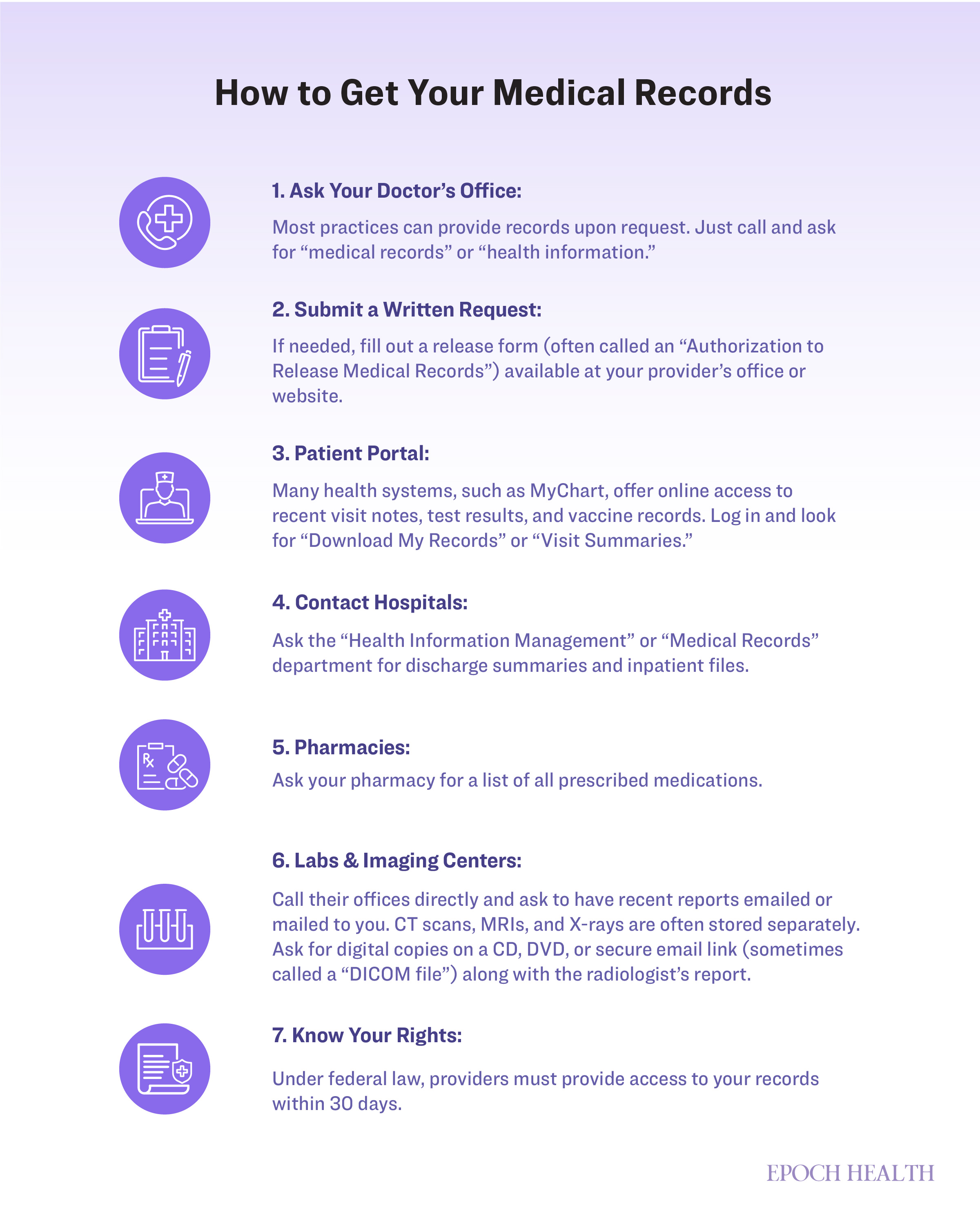
Most doctors don’t have access to your full chart. Records are often scattered, which means that you have to be the keeper of your medical story. Research shows that patients, especially older adults, who maintain personal health records have better outcomes.
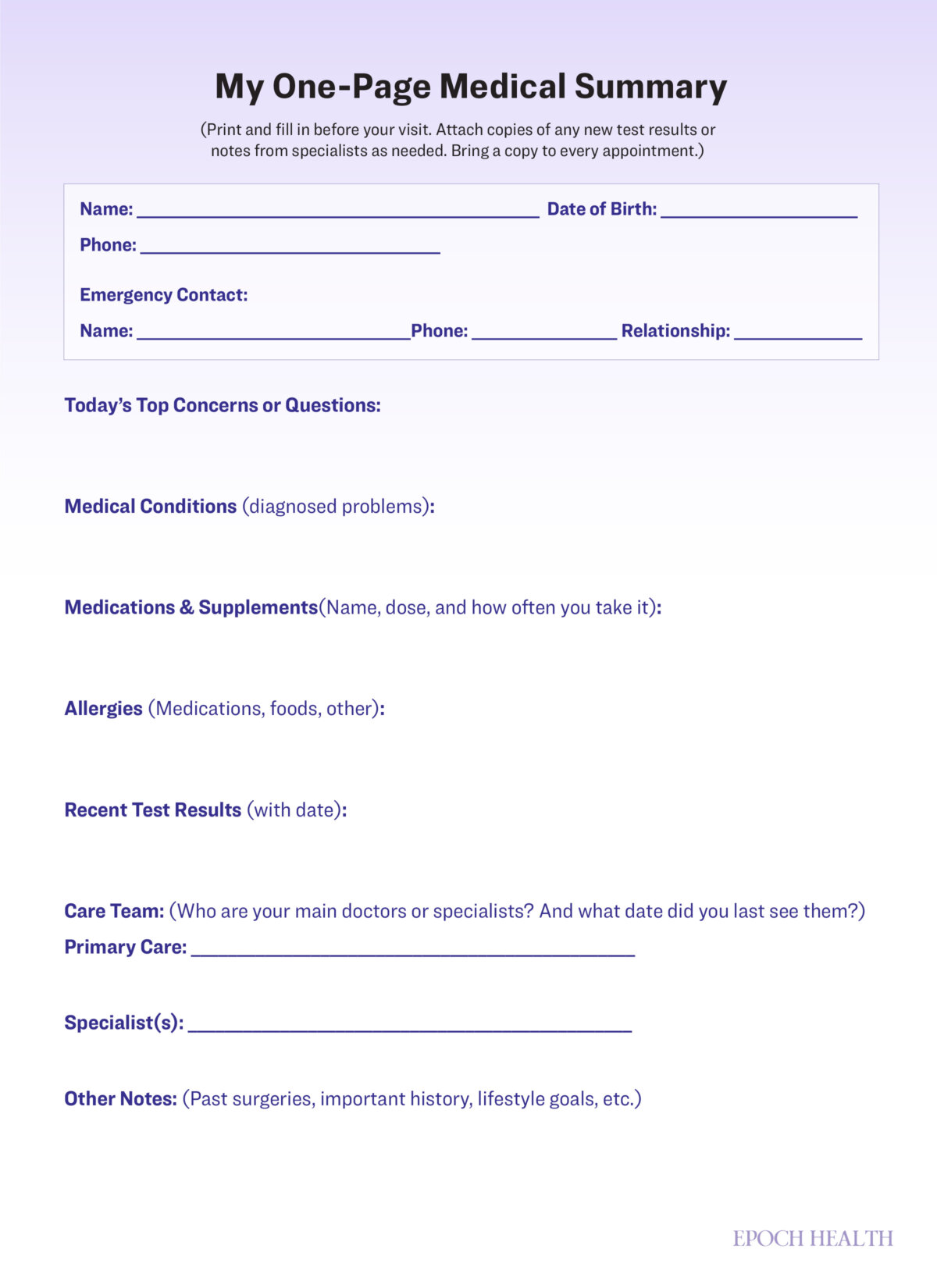
The best tool is a one-page summary that includes your main concerns, new symptoms, allergies, a medication list—including supplements—and recent test results. Add a brief directory of your care team if needed. Leave the stacks of paperwork at home.
“If some patients come in with their visit summaries from another doctor in a folder, I’m like, bless you,” Serna said. “Is it their job? No, the doctor should send it. But is it great when they do? Absolutely.”
Having it all on one page saves time, prevents mistakes, and helps your doctor focus on treatment instead of detective work.
4. Bring Backup
Visits move fast, and it’s easy to miss details or forget key questions. A relative, friend, or professional advocate can help track information and ease the pressure, according to Lato.
A 2023 report from the Coalition of Health Care Advocacy Organizations found that 92 percent of patients experienced better outcomes when an advocate was involved, and nearly all providers reported that they improved care while reducing staff burden.
If you don’t have a family member or friend to help, certified advocates can step in. They act as part coach, part navigator—organizing questions, coordinating care, and following up after visits. Many work independently and charge $100 to $250 per hour, although some nonprofits, such as the Patient Advocate Foundation, offer free or low-cost support.
5. Ask Until You Understand
Don’t leave the office with doubts. If something isn’t clear, ask for a plain-language explanation.
“Make sure you get answers you understand, not just, ‘We can talk about that later,’” Lato said. If confusion lingers, request written instructions or a printout of the next steps.
Free tools, such as the Question Builder app from the federal Agency for Healthcare Research and Quality, can help you prepare.
6. Record Your Visit
Even the most attentive patients forget details. Audio recordings can help you remember instructions and share them with family. A 2020
study in JAMA Network Open found that patients who recorded their visits had better follow-up and fewer hospitalizations.
Most states allow recording if you’re part of the conversation, but some require everyone’s consent, so ask first. Apps such as Medcorder and Abridge make it easy to record, transcribe, and organize your visits.
7. Push Beyond the Protocols
Clinical guidelines shape medical care, but they aren’t the only path. Few physicians have formal training in nutrition or lifestyle medicine; only about 13 percent feel fully prepared to discuss it, national
surveys show.
If you want alternatives, ask, “Are there ways to manage this without medication?” or “If medication weren’t available, what would you suggest?” You can also ask, “Is this the standard approach, or could we tailor it to me?”
If you’ve read about other treatments, raise them respectfully. Instead of demanding, try: “I’ve heard about this. Could it be right for me?” This collaborative approach keeps the conversation productive and focused on your individual needs.
8. Learn the Lingo
Doctors speak a language of their own. “Heart trouble” becomes “cardiac disease.” “High blood pressure” turns into “hypertension.” The gap can turn visits into translation exercises.
It’s a physician’s job to explain clearly, but patients who learn a bit of the dialect often get more from the conversation. Understanding terms such as “benign,” “idiopathic,” or “borderline” can make medical notes and your visit far less confusing.
Equally important is how you join the discussion. Instead of citing something you read on social media, refer to credible sources or ask, “What does the latest research say about this?” That keeps the focus on your health and signals that you’re seeking clarity, not confrontation.
9. Follow Up After the Visit
The conversation doesn’t end when you leave. Send a brief note through your patient portal or email summarizing what you understood and confirming next steps. It’s a simple way to catch miscommunications before they turn into mistakes. In many practices, messages are first reviewed by nurses or staff, but doctors see them when clarification is needed.
“I’d rather clear something up right away than have a patient wait weeks for another appointment,” Serna said.
Don’t assume that everything is handled behind the scenes. If results or instructions seem unclear, ask. Research shows that patients who follow up are less likely to face errors or missed information.
Take the Lead
The health care system isn’t easy to navigate, but preparation and speaking up can change the outcome.
“You are the only constant in your care,“ Serna said. ”Own your story, and don’t be afraid to advocate for it.”
What’s Next: Getting more from your doctor visit is just the start. Next comes deciding where to go when you’re sick or hurt. Our next article shows how to choose between the emergency room, urgent care, and your doctor’s office.