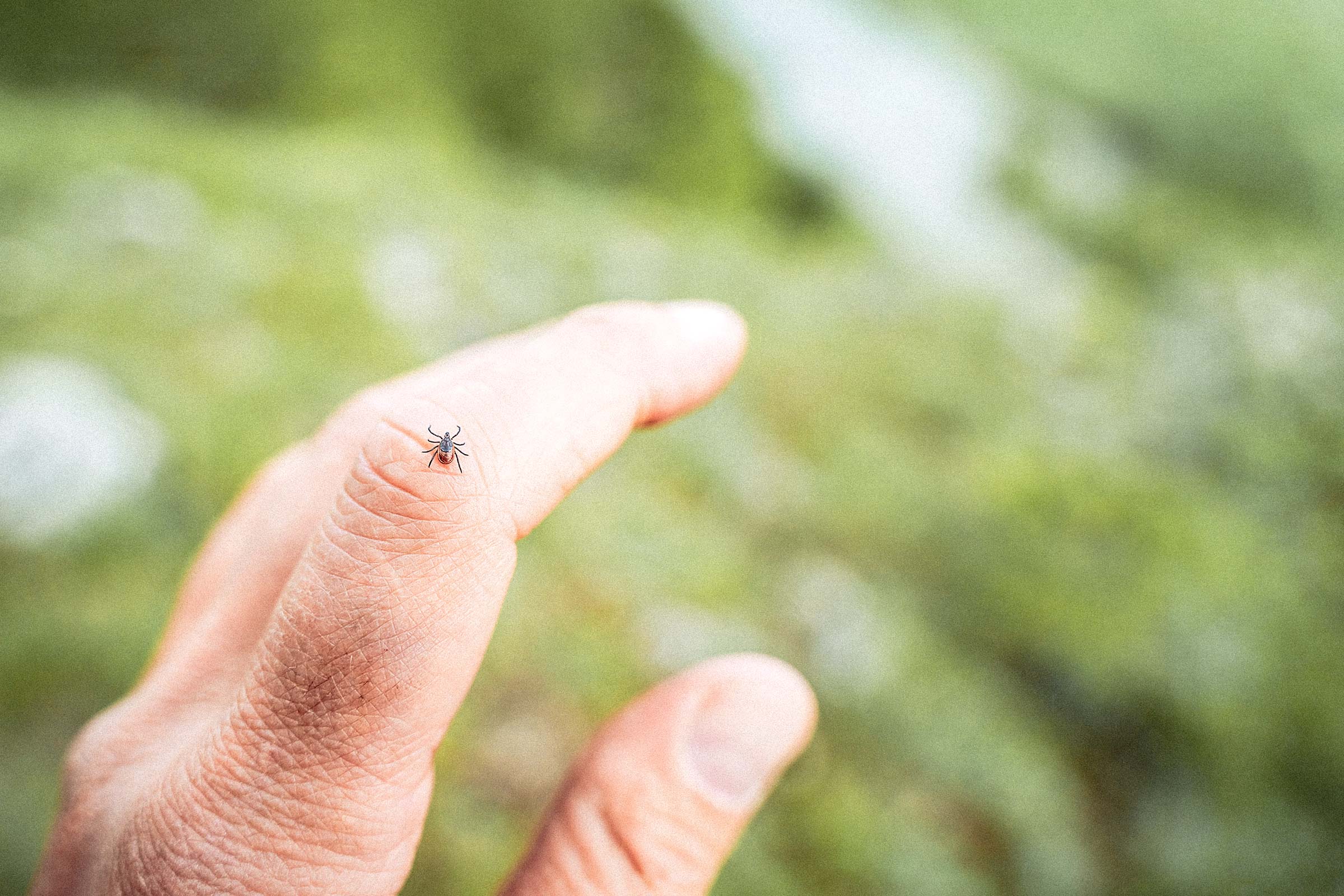

“The tick that you don’t find is the most dangerous tick,” according to Angela Tucker, a medical entomology education specialist at the University of Tennessee.
As spring arrives and summer approaches, more time outside means exposure to ticks—the unwelcome guests we all want to avoid.
Ticks are more than just a nuisance; they transmit diseases with serious consequences, and cases of tick-borne illness have more than doubled in the United States over the past two decades, with the season growing longer every year. Thankfully, there are multiple ways we can avoid being bitten.
Tick-Bite Threat Is Real
All ticks are dangerous.
“They vector pathogens, and any kind of tick that bites you can transmit pathogens that can be deadly or life-threatening,” Nicoletta Faraone, an associate professor of biochemistry and prominent tick researcher who runs a tick lab at Acadia University in Nova Scotia, Canada, told The Epoch Times.
What makes ticks especially dangerous, Faraone added, is something most people overlook: They carry multiple pathogens that often work together, making treatment more complicated. Ticks transmit bacteria, viruses, and protozoa, each requiring different drugs to treat.
The risk also depends on where you live, work, and play, since tick species and the pathogens they carry vary by region, Tucker said. If you’re unsure which ticks are common in your area, your local health department or the Centers for Disease Control and Prevention’s tick surveillance map are good starting points.
Tick Basics
Ticks are not insects, but eight-legged arachnids—cousins of spiders, mites, and scorpions. They cannot fly or jump, and are almost completely blind.
With so few resources, you may wonder how these tiny arachnids can be crawling on you by the dozens after just a few minutes in your yard.
“Basically, they can smell us,” Faraone said. “They detect what’s going on around them by smell. They also have a sensor to detect heat and humidity.”
Ticks can also detect the carbon dioxide we exhale, smell our body odor, and sense our body heat.
However, ticks take time to crawl up your body and find a patch of skin before attaching. Disease transmission typically occurs between 24 and 48 hours after attachment, which means that a thorough body check within that window can make all the difference.
How to Protect Yourself
Your first line of defense starts before you ever step outside—with what you put on your body.
Clothing
One of the simplest, safest, and most effective ways to keep ticks from biting you is the clothing you wear when you’re outside, especially in forests, tall grasses, or brushy areas—all of which are environments ticks are particularly fond of.
Wearing long sleeves, long pants, socks, and closed-toe shoes creates a barrier between ticks and your skin. Tucking pants into socks, while not earning you points for style, offers another layer of protection from our eight-legged friends. Choosing light-colored clothing also helps, as it makes the ticks more visible and easier to remove.
Repellents
There are three common chemical tick repellents on the market: DEET, picaridin, and permethrin. Not all of them work the same way: Some kill, some repel, and others interfere with the tick’s ability to find a host. When choosing what to use, always weigh the benefits and risks.
DEET
DEET is the most widely used, accounting for more than 80 percent of tick repellents and products sold commercially in the United States. DEET does not kill ticks, but it disrupts their ability to find hosts, including us. The recommended concentration for maximum effectiveness is between 20 percent and 30 percent, and DEET lasts about eight hours before you need to reapply.
However, DEET carries risks. It is among the most commonly detected chemicals in water systems worldwide, and studies suggest that it acts as a persistent, low-level contaminant in aquatic environments. Children are especially susceptible, with a study finding that increased DEET exposure in children was associated with lower levels of sex hormones and decreased bone mass.
Although the Environmental Protection Agency (EPA) states that DEET is safe for children, other sources advise that it should be used with caution on children, avoided by pregnant women, and not used under clothing. DEET should also never be used on pets, according to the Animal Humane Society.
Picaridin
Picaridin is a synthetic repellent that mimics piperine, a natural compound found in black pepper plants. It repels ticks, insects, and chiggers, but does not kill them. Picaridin is a relatively new addition to the U.S. market, available since 2005, and is the most popular repellent in Europe and Australia, where it has been in use since 1998.
It can be used on the skin or clothing and is available in various products, including sprays, liquids, aerosols, and wipes. It is often chosen as an alternative to DEET because it lasts longer against ticks—eight hours versus 12 hours—and has fewer toxicities.
Picaridin is approved by the EPA as safe when used as directed, but be sure to wash your hands after application, to prevent accidental ingestion and protect your eyes.
Permethrin
Permethrin is not a repellent, but an insecticide that kills ticks on contact.
Applied to clothing, shoes, and gear—never apply it to the skin—it offers significant protection.
A 2020 study found that outdoor workers wearing permethrin-treated clothing experienced 65 percent fewer tick bites than those wearing untreated clothing.
Permethrin-treated clothing is available in the United States. In fact, permethrin-treated Army Combat Uniforms have been standard issue for all U.S. Army personnel since 2013, although permethrin has been used on Army uniforms for considerably longer. In addition to repelling ticks, the treated uniforms repel mosquitoes, chiggers, and flies.
If using clothing treated with permethrin, be sure to wash it separately from other clothes.
When wet, permethrin is highly toxic to cats, so exercise caution when treating clothing or gear with it if you have cats at home.
There have been some concerns that permethrin may affect the endocrine system. One study detected it in the urine of outdoor workers wearing treated clothing. Although levels were below EPA and World Health Organization safety thresholds, even low exposures may still have potential health effects.
Essential Oils
For those seeking a more natural approach, certain essential oils show genuine promise. Lemon eucalyptus is the most well-studied: A recent study conducted by Faraone’s lab found that lemon eucalyptus essential oil was as effective as tick repellent fabric spray containing DEET in repelling two key tick species—the blacklegged tick, which spreads Lyme disease, and the American dog tick, which transmits Rocky Mountain spotted fever. On certain fabrics, its effects lasted for weeks.
Other oils with demonstrated effectiveness include clove bud, creeping thyme, and red thyme. A combination of creeping thyme and citronella achieved 91 percent repellency in one study.
Thyme, rosemary, and oregano have shown potential for killing tick larvae and preventing female ticks from reproducing.
Tucker said that lemon eucalyptus and citronella essential oils have been proven effective against ticks but urged consumers to be aware that not all products containing them are created equal.
“Just because a product contains one or both of these oils does not mean the product itself is effective,” Tucker said. She suggested a tool on the EPA website, which includes product names and the active ingredients, to help you choose the appropriate repellent for your needs.
Spraying clothing is a good strategy, as ticks usually land on clothing before crawling onto your skin. In addition, natural botanical options reduce potential toxicity to you and the environment.
The All-Important Tick Check
After any time outdoors, especially in wooded areas, tall grass, or brush, do a full body check. Pay close attention to the backs of knees, armpits, the groin, the scalp, and any skin folds.
After you have done an initial check, shower within two hours of coming indoors to wash away any that are not attached, and become aware of any that are.
“Shower to help you inspect and dislodge ticks from folds, under armpits, between legs, scalp, front, and back,“ Tucker said. ”Use a mirror to see your backside.”
When removing a tick, Faraone said, it’s important to use a tick removal tool rather than tweezers to ensure that you remove the mouthparts embedded in the skin. These tools slide beneath the tick’s body and gently lift it, keeping the entire tick intact. Tweezers are more likely to break off the mouthparts or the entire head, and squeezing can push potential pathogens into your body.
Removing Ticks From Clothing
One way to ensure that ticks don’t hitch a ride on your clothes after being outdoors is to strip down and put all clothing in the dryer on high heat. Ticks are sensitive to heat and moisture and become easily dehydrated, which is why they don’t like being in direct sunlight, Faraone said. The dryer kills ticks by heating them up and drying them out.
The washing machine alone is not sufficient.
“Ticks do not breathe the way that we do, so it is possible for them to survive the washing machine cycle,” Tucker noted.
Other household items can also help.
“Use a sticky lint roller over your clothes,“ Tucker said. ”It is also a good idea to take one with you outside, as it will help quickly remove ticks. If you don’t have a lint roller, duct tape can work great too.”
Tick prevention doesn’t require an overhaul of your outdoor routine, just a few consistent habits. Dress smart, choose your repellent carefully, check thoroughly, shower promptly, and dry your clothes on high heat. The ticks are out there, but now you know how to avoid them.