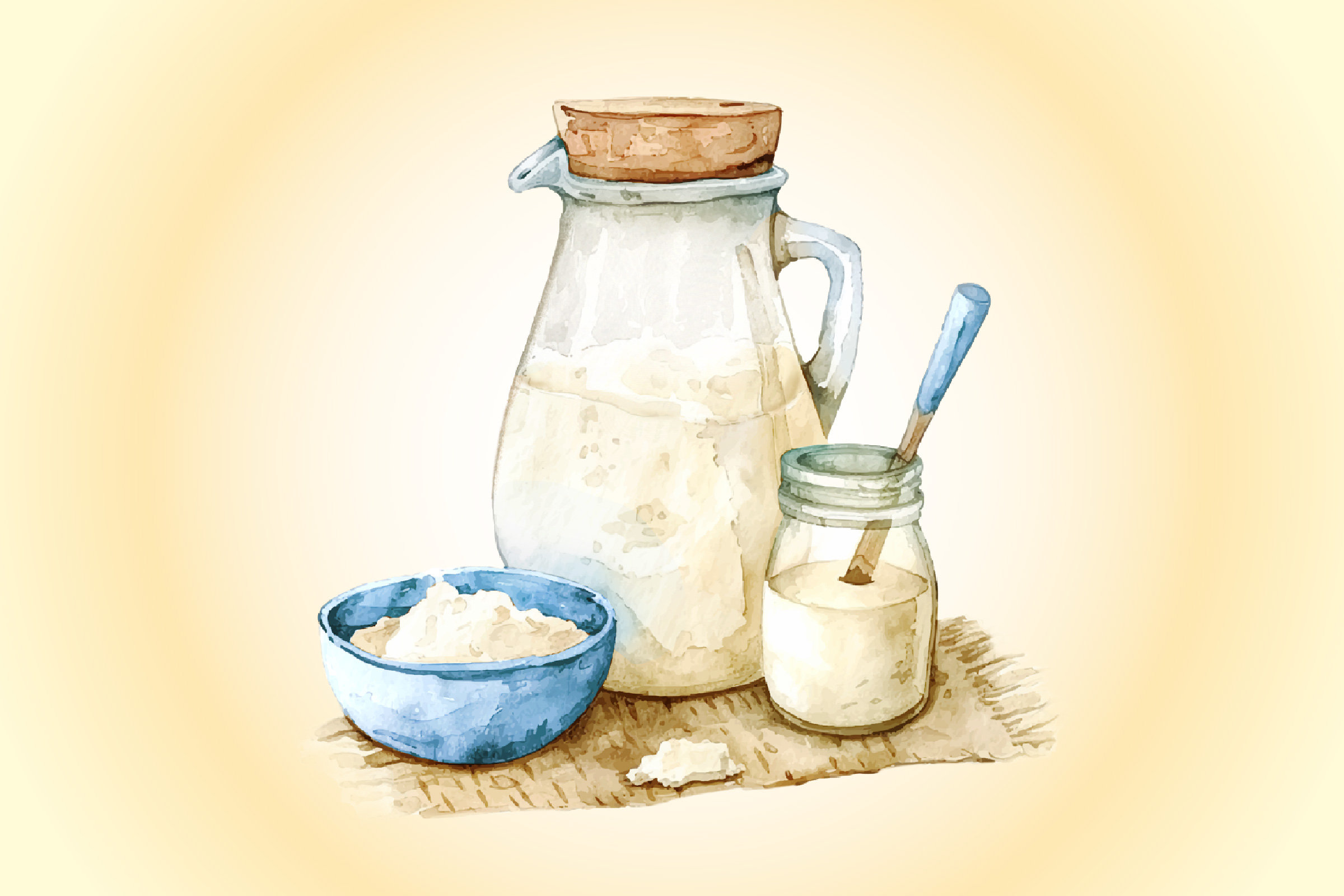
Kefir is one of the world’s oldest functional beverages. Originating in the mountains of the Northern Caucasus, Russia, it was a dietary staple for centuries.
There, kefir was made by placing milk and kefir grains into a goatskin bag and hanging it in a sunny doorway. Known for its health benefits, it was enjoyed by people who were believed to have some of the longest lifespans in the world.
Today, science is catching up—revealing the many ways in which kefir supports our health.

(Illustration by The Epoch Times, Shutterstock)
Key Nutrients
Kefir is a fermented dairy drink that contains a higher variety and density of probiotics than yogurt. The National Kefir Association defines kefir as a drink that contains:
- A dairy base
- At least 7 billion active units per cup
- A mix of probiotic cultures, including Lactobacillus lactis, L. rhamnosus, L. plantarum, L. casei, L. acidophilus, Streptococcus diacetylactis, Saccharomyces florentinus, Leuconostoc cremoris, Bifidobacterium longum, and B. breve
These beneficial microorganisms contribute to gut health in various ways, including promoting a balanced microbiome, aiding digestion, enhancing immune function, and producing bioactive compounds that support overall health.
Some of the key nutrients in kefir are:
- Protein: A one-cup serving of kefir contains 9.21 grams of protein. Adults need at least 0.36 grams of protein per pound of body weight daily.
- Probiotics: Kefir is known for its diverse content of probiotics—live microorganisms that, in adequate amounts, provide us with health benefits. The probiotics in kefir come from multiple strains of bacteria and yeasts.
- Calcium: One cup of kefir offers 36 percent of the daily value of calcium recommended for adults (316 milligrams).
- B Vitamins: One cup of kefir provides 25 percent of the daily value for vitamins B12 and B2 that adults need.
Health Benefits
“Fermented dairy products have long been associated with the ability to confer health benefits in those who regularly consume them,” the authors of a 2016 study investigating kefir’s health-promoting characteristics wrote.
Improves Gut Health
“Kefir is a fermented food that contains billions of bacteria and bioactive compounds that help to improve the diversity of our gut microbiome,” Rachel Gargano, a registered dietitian, told The Epoch Times. “A
diverse microbiome contributes to both gut health and overall health.”
Patients in intensive care units (ICUs) often have an unhealthy balance of gut bacteria, which can increase the risk of hospital-acquired infections.
Authors of a 2024 pilot study noted that previous research found that probiotic supplements alone didn’t significantly improve the diversity of gut bacteria. However, they proposed that fermented foods, such as kefir, might be more effective.
In the study, 54 critically ill patients were given kefir in increasing doses of 60 milliliters to 240 milliliters per day. Stool samples showed a significant rise in the gut microbiome wellness index—an indicator of overall gut health—especially 72 hours after taking kefir. Moreover, the specific microbial strains in the kefir given to patients were found at varying levels in their guts.
Importantly, no patients developed kefir-related infections, and there were no side effects such as vomiting or bloating. Based on the results, the authors concluded that kefir was both safe and feasible for ICU patients, particularly because of their lack of microbiome diversity when they were admitted to the ICU.
A study published in Frontiers in Microbiology examined the effects of kefir on gut microbial diversity. Twenty-eight healthy young adults were divided into three groups: those who consumed kefir, those who consumed yogurt, and those who consumed unfermented milk. Each group consumed the products daily for two weeks. The group consuming kefir had an increase in beneficial bacteria that produce lactic acid and short-chain fatty acids—compounds known to support digestion, strengthen the gut barrier, and reduce inflammation.
Reduces Inflammation
In a
randomized controlled trial published in Cell in 2021, a group of healthy adults followed one of two diets—one rich in plant-based fiber and the other rich in fermented foods, including kefir—for 17 weeks. Researchers monitored changes in their gut microbiomes and immune responses.
Those who followed the diet rich in fermented foods, such as yogurt, kefir, and sauerkraut, had an increase in the diversity of their gut microbes over time and lower inflammatory markers, indicating reduced inflammation in the body.
Another study also found that kefir reduced inflammation, but it found that the type of kefir mattered. The authors of the 2023 randomized controlled trial tested two types of kefir: one made with the traditional mix of bacteria and yeasts found in authentic kefir grains, and a commercial kefir, made without traditional kefir microbes.
Twenty-one men with high low-density lipoprotein (LDL) cholesterol took two servings of kefir daily for four weeks, switching between the two types after a four-week break. Researchers measured their health markers before and after each period.
The traditional kefir lowered LDL cholesterol and markers associated with inflammation and poor blood vessel function; however, the commercial kefir caused an increase in one marker of inflammation, tumor necrosis factor alpha—a protein that helps regulate the immune system and inflammation.
Improves Insulin Sensitivity
Studies suggest that kefir’s abundant probiotics can provide metabolic health benefits, helping the body convert food into energy and maintain balanced blood sugar levels.
A systematic review and meta-analysis published in Nutrition, Metabolism and Cardiovascular Diseases included 24 studies that compared people who drank kefir with those who didn’t. The researchers found that kefir drinkers had significantly lower fasting blood sugar—approximately 8 milligrams per deciliter. Kefir also improved insulin sensitivity. When our bodies use insulin more effectively, our cells can obtain the energy they need to function correctly.
Additional Benefits
Studies have shown that kefir affects our brain and our mood. A
study found that kefir containing two types of bacteria—Lactobacillus helveticus and Bifidobacterium longum—improved depression in older patients who were overweight or obese.
A systematic review found that kefir showed improvements in memory and cognitive function.
Other studies have shown that kefir can help maintain strong bones. In a 2015 study, 40 patients with osteoporosis were given either kefir-fermented milk with calcium daily for six months or calcium supplements only. Kefir with calcium slowed bone loss, increased bone formation, and slightly increased bone density compared with the group that took only calcium.
Several studies also suggest that kefir may help improve skin health.
A 2021 study found that homemade kefir improved the skin in healthy volunteers, and people with atopic dermatitis showed improvements in their symptoms, particularly their skin barrier function and the skin’s ability to retain moisture.
How to Increase Absorption
“Most fermented foods have micronutrients that are naturally more bioavailable,” Gargano said.
Some lab studies suggest that kefir’s micronutrients may be absorbed more effectively when paired with microalgae such as spirulina or chlorella—nutrient-dense green algae rich in protein, vitamins, and antioxidants, she said. However, these results haven’t been confirmed in human studies yet.
Beyond the variations in bacterial and yeast strains in kefir, other factors also affect its beneficial effects, such as the type of animal milk used—cow, goat, sheep, camel, or buffalo—pasteurization, temperature, and storage conditions, all of which affect the final product’s bioactive compounds and probiotic content.
Optimal Storage
Many factors affect kefir’s storage stability, including temperature, ingredients, and the production process. However, Gargano suggested storing it in the fridge.
“Because it contains live bacteria, it’s best to follow the ‘best-by’ date on the packaging, and once open, use it within a week,” she said.
Pro Tips
- Those with lactose intolerance can often enjoy kefir without any issues, as the fermentation process breaks down lactose in the milk, making it very low in the milk sugar.
- If you don’t care for the sour, tangy flavor of Kefir, Gargano suggested blending it with fresh or frozen berries and nut butter.
- Probiotics are sensitive to heat; thus, let your oatmeal cool down before adding kefir to it. Allowing the oats to cool first also boosts resistant starch, Gargano said. You can skip the heat altogether and make overnight oats with kefir instead, she said.
- When shopping for kefir, look for terms such as “live and active cultures” on the bottle and lists of specific probiotics, Gargano suggested.
Precautions
Fermented foods are safe for most people, although taking probiotics can cause digestive issues in some, so it may help to start slow, at least until your body adjusts.
Anyone on immunosuppressants should exercise caution, as kefir contains many strains of bacteria and yeast, which can increase the risk of illness. Anyone with a compromised immune system or who has recently had surgery should have a conversation with a health care provider before drinking kefir, Gargano said.
Recipe
Kefir is traditionally made with animal milk, such as cow’s, sheep’s, or goat’s milk. However, it can also be made with plant-based milk, coconut water, or just plain water. Kefir is made by fermenting milk or flavored water with kefir grains, which are clusters of bacteria and yeast that live together in a symbiotic community.
The following recipe incorporating kefir is courtesy of Sheridan Genrich, a clinical nutritionist, naturopath, and Epoch Times health writer.
Spiced Kefir Drink
Ingredients
- 1/4 cup whole milk
- 3/4 cup plain unsweetened milk kefir at room temperature
- 1 teaspoon maple syrup or 3 drops of stevia to taste
- 1/8 teaspoon ground nutmeg or cinnamon—or both
- A dash of ground cardamom for extra warmth—optional
Instructions
- Warm milk gently to about 100 to 110 degrees Fahrenheit—just warm to the touch, not hot. Avoid boiling to preserve the kefir bacteria.
- Stir in maple syrup or stevia drops until fully dissolved.
- Add spices and whisk until smooth.
- Pour in room-temperature kefir, stirring continuously to combine.
- If desired, sprinkle more cinnamon, nutmeg, or cardamom on top before serving.
Fun Facts
- The word “kefir” comes from the Turkish term keyif, meaning a “good feeling,” reflecting the joy that generations of people have found in the traditional drink.
- In the Caucasus Mountains, traditional kefir was made in goatskin bags, and passersby would give the bag a quick knock to keep fermentation active. As kefir was enjoyed daily, fresh milk was added, creating a continuous cycle of fermentation.
- In the early 1900s, kefir was used in Russian hospitals to treat a wide variety of ailments, including digestive disorders, atherosclerosis, tuberculosis, and cancer. Even today, kefir is commonly used in hospitals for patients, infants, and the infirm in Eastern Europe.
- National Kefir Day is celebrated on June 18.
Kefir for Kids
Kefir is a great option for growing kids, as it provides the nutrients they need to grow and develop, including calcium and vitamin D for strong bones and teeth, as well as healthy fats for brain and nervous system development.
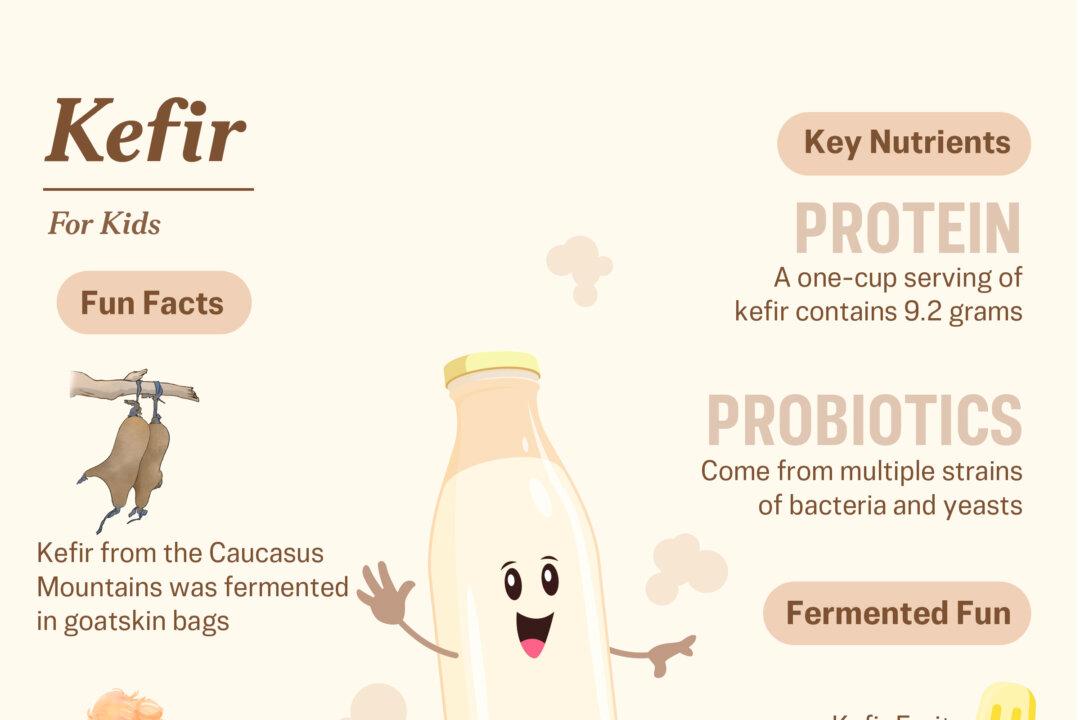
(Illustration by The Epoch Times, Shutterstock)
Fruit and Kefir Smoothie
Combine kefir with fruits such as blueberries, raspberries, or strawberries, add a banana, and blend for a delicious and nutritious breakfast.
Kefir and Fruit Popsicles
Mix kefir with your choice of fruit and freeze in popsicle molds for a fun frozen treat.
Frozen Kefir and Fruit Bark
Sweeten 2 cups of kefir with honey and vanilla and pour it onto a parchment-paper-lined cookie sheet. Spread the kefir evenly. Sprinkle your favorite fruit over the kefir. You can get creative and even add coconut, nuts, or other treats over the top. Place it in the freezer for at least two hours, then remove, break apart, and enjoy!