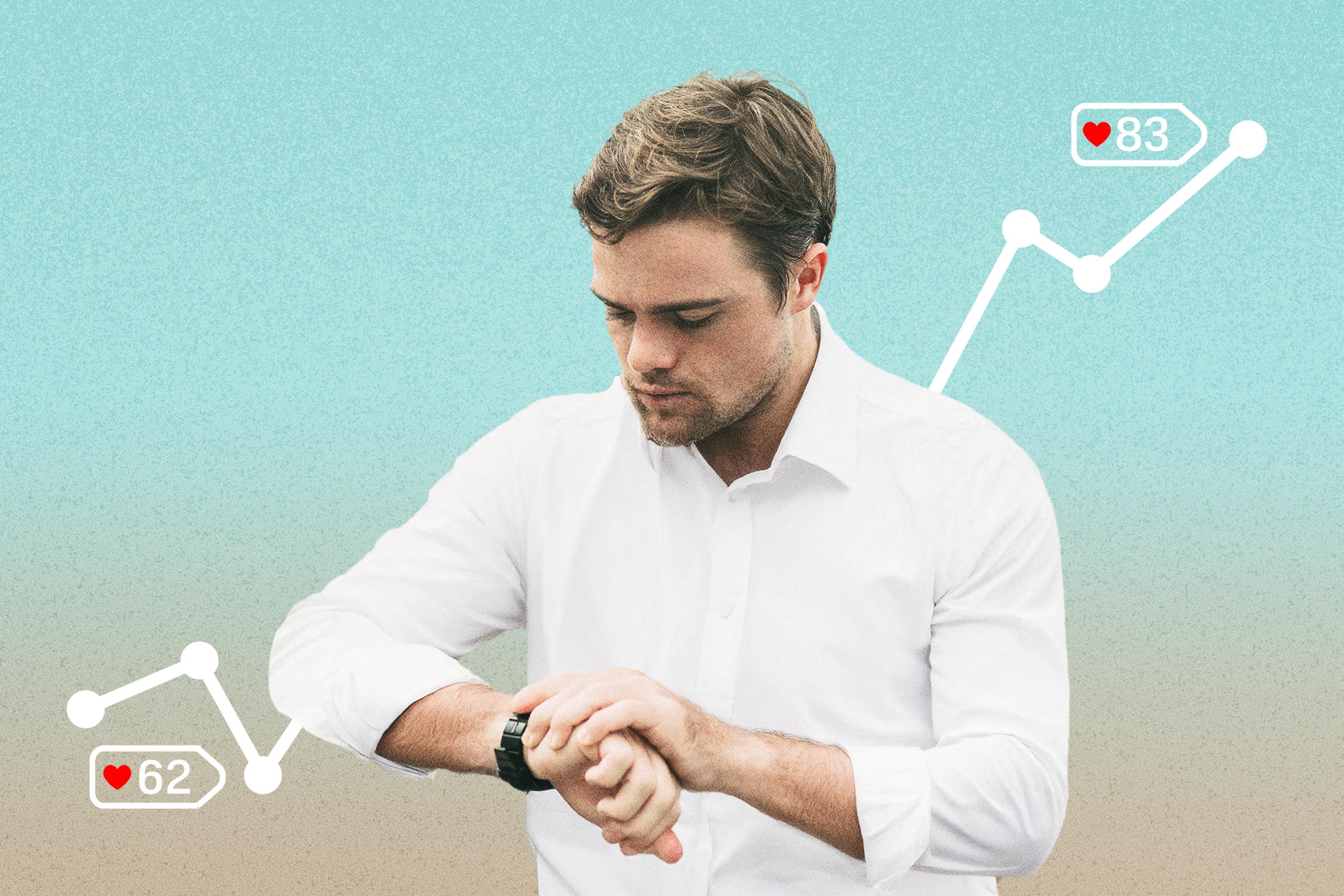
The first sign that something was wrong wasn’t a fever or a tick bite for Michael Snyder. It was a number strapped onto his wrist that refused to settle. The Stanford geneticist was mid-flight to Norway when he noticed his heart rate and oxygen levels staying elevated long past takeoff—a pattern that didn’t match any of his previous trips. He felt fine, but his body signaled otherwise. Days later, he tested positive for Lyme disease. His smartwatch had caught it first.
“Resting heart rate is definitely an indicator of all kinds of stress—physical and mental,” Snyder told The Epoch Times.
Snyder’s case appeared in a 2017 study published in PLOS Biology that found the same pattern in other volunteers: subtle increases in resting heart rate appearing before symptoms.
Like Snyder, millions of people now wear devices that track resting heart rate, but few pay close attention to it.
Resting heart rate isn’t a diagnostic test, and it can’t replace more advanced measures. However, as Dr. Cynthia Thaik, a Harvard-trained cardiologist in Los Angeles, told The Epoch Times, it is “woven into almost every system that keeps the body balanced.”
Understanding what shapes this quiet, easily overlooked number can turn it into one of the clearest clues to how your body is handling strain long before you feel it.
The Hidden Language of the Heart
A resting heart rate is the number of times the heart beats in one minute when the body is fully at rest. Each beat starts with an electrical signal that tells the heart muscle to contract. A more efficient heart can move blood with fewer beats.
Much of this rhythm is set by the autonomic nervous system—the balance between the sympathetic branch, which speeds the heart, and the parasympathetic branch, which slows it. Resting heart rate offers a glimpse of where that balance lies.
Thaik describes the heart as a sensitive reporter of both biology and emotion—a muscle that responds not only to hydration, inflammation, and nourishment but also to stress, adrenaline, and emotional strain. “It mirrors all of it,” she said. Wearables often reflect imbalances long before we notice them.
“In otherwise healthy people not on cardiac medications like beta blockers, a lower resting heart rate is associated with better cardiovascular fitness,” Dr. Deepak Bhatt, director of the Mount Sinai Fuster Heart Hospital, told The Epoch Times in an email. A sudden rise from someone’s usual baseline can signal increasing strain. Most adults fall somewhere between 60 and 80 beats per minute, but individual patterns vary widely.
Resting heart rate can’t reveal the rhythm itself—just the pace—so it’s best used as a trend, not a diagnosis, Thaik said.
When a Rising Number Matters
A single high reading isn’t a concern. Resting heart rate can fluctuate for everyday reasons, such as a poor night’s sleep, a stressful morning, mild dehydration, early illness, or even too much time indoors. These variations are normal. What matters is the trend. The full picture becomes clearer when viewed over weeks.
“There’s no universal ideal resting heart rate,” Thaik said. “The shift relative to your normal tells you far more than the absolute value.”
A gradual increase of five to 10 beats per minute over several weeks or months usually signals that the body is under more strain and recovering less fully between days. This can be caused by chronic stress, irregular sleep, anemia, thyroid changes, and low-grade inflammation, Thaik said.
“Broadly speaking, inflammation can contribute to an elevated heart rate,” Bhatt said. “A fever can raise it sharply, but even chronic inflammation may cause more subtle increases.”
Research helps explain why trends deserve attention. A meta-analysis of more than 1 million adults found that as resting heart rate climbed, so did the risk of early death, especially from heart disease. Each additional 10 beats per minute raised the risk by about 9 percent. An analysis of nearly 700,000 adults reported that a high resting heart rate predicted shorter life expectancy as strongly as high blood pressure.
The trend is evident among older women as well. In a long-term study of more than 129,000 postmenopausal women published in The BMJ, those with resting heart rates above 76 beats per minute were 26 percent more likely to have a heart attack or die from one than those at 62 beats per minute or lower. The higher rate didn’t predict stroke, but signaled coronary stress.
When HRV Adds More Context
Some clinicians also look at heart rate variability (HRV)—the tiny beat-to-beat shifts that show how well the nervous system switches between effort and recovery.
Higher HRV generally reflects more flexibility; lower HRV can mean the body is under strain. Bhatt noted that adaptability is what we want: a heart that speeds up when needed, then settles again with ease. Thaik added that HRV often captures resilience in a way a single number can’t.
HRV, however, is hard to track. Devices measure it differently, daily values bounce around, and it often takes weeks of patterns to become relevant.
Thaik called resting heart rate the “simple, everyday version” of HRV. But for people who want a deeper view of how their body handles stress, HRV is a more accurate tool. It isn’t essential, but it can add meaningful context when watched over time.
Listening In
Resting heart rate is most useful when it’s measured the same way each day. Many wearables estimate it automatically, but you can also check it yourself.
The easiest place to check your pulse is on the inside of the wrist. For consistency, measure first thing in the morning, before caffeine, screens, or getting out of bed.
- Sit quietly for five minutes to let your heart settle.
- Lightly place your index and middle fingers just below the base of the thumb.
- Move them until you feel a steady beat (pressing too firmly can muffle it).
- Count the beats for 30 seconds and multiply by two, or count a full minute.
Extensive wearable data
studies have found that true resting heart rate is typically lowest between 3 a.m. and 7 a.m., when the body is most aligned with recovery. Whatever method you use, consistency matters more than the device.
How you interpret the number matters as much as how you measure it. Thaik said that your personal baseline matters far more than any universal ideal, and that shifts from your normal carry the most meaning. She also cautions against checking too often.
“People often change what they’re measuring because they’re anxious about it,” she said. “The more impartial you can be—like an observer looking down from a skyscraper—the clearer the signal becomes.”
How to Lower Your Resting Heart Rate
Once you understand what shapes resting heart rate, the next question is: Can you change it? For many people, the answer is yes. Resting heart rate responds less to quick fixes and more to the steady rhythms of daily life. The same forces that push it upward—poor sleep, chronic stress, inactivity—are often the ones that bring it back down when consistently tended to.
Modern life nudges the body into a faster gear more often than we realize, so the goal isn’t perfection but creating conditions that help the heart return to its usual pace.
Move Regularly
Regular movement trains the heart to pump more efficiently so it can beat fewer times at rest. A
meta-analysis published in the Journal of Clinical Medicine found that nearly every type of activity—walking, strength training, yoga, tai chi—lowered resting heart rate, with endurance exercise showing the greatest improvements. Even 20 to 30 minutes of steady activity a day can help strengthen the heart’s overall efficiency.
Practice Slow, Intentional Breathing
Slow breathing stimulates the vagus nerve, the pathway that helps shift the body into its calming, parasympathetic state. Even a few minutes of paced breathing, meditation, prayer, or quiet focus can ease physiologic strain and bring the heart rate back toward its baseline. Cardiologists note that stress, especially when chronic, keeps the heart working faster than it needs to, and these techniques help counter that pattern.
Protect Your Sleep
Sleep is the nightly reset of the autonomic nervous system. Irregular bedtimes and fragmented sleep raise resting heart rate the next day. A consistent schedule alone can help bring it back toward your usual range.
Get a Dose of Natural Light
Morning light sets the body’s internal clock and sets up stronger recovery later in the day. In a
study published in BMC Public Health of more than 1,700 adults, each extra 30 minutes of sunlight before 10 a.m. shifted the body’s internal clock earlier and improved sleep quality—changes that often showed up as a lower resting heart rate the next morning.
Stay Hydrated Throughout the Day
Even mild dehydration makes the heart work harder to maintain blood flow. Small, regular sips of water help keep blood volume stable and ease that strain.
When to Check In With a Doctor
A resting heart rate will rise and fall with life—that’s normal. What deserves attention is a number that drifts from your norm and stays there. A steady climb can point to infection, anemia, thyroid shifts, or mounting heart strain. An unexpected drop—especially in someone who isn’t training like an endurance athlete—may signal a rhythm or conduction issue, or a medication effect. In either case, it’s worth checking in with a doctor.
The goal isn’t to chase a perfect number, but to notice when your baseline shifts and to understand what your body may be trying to tell you.