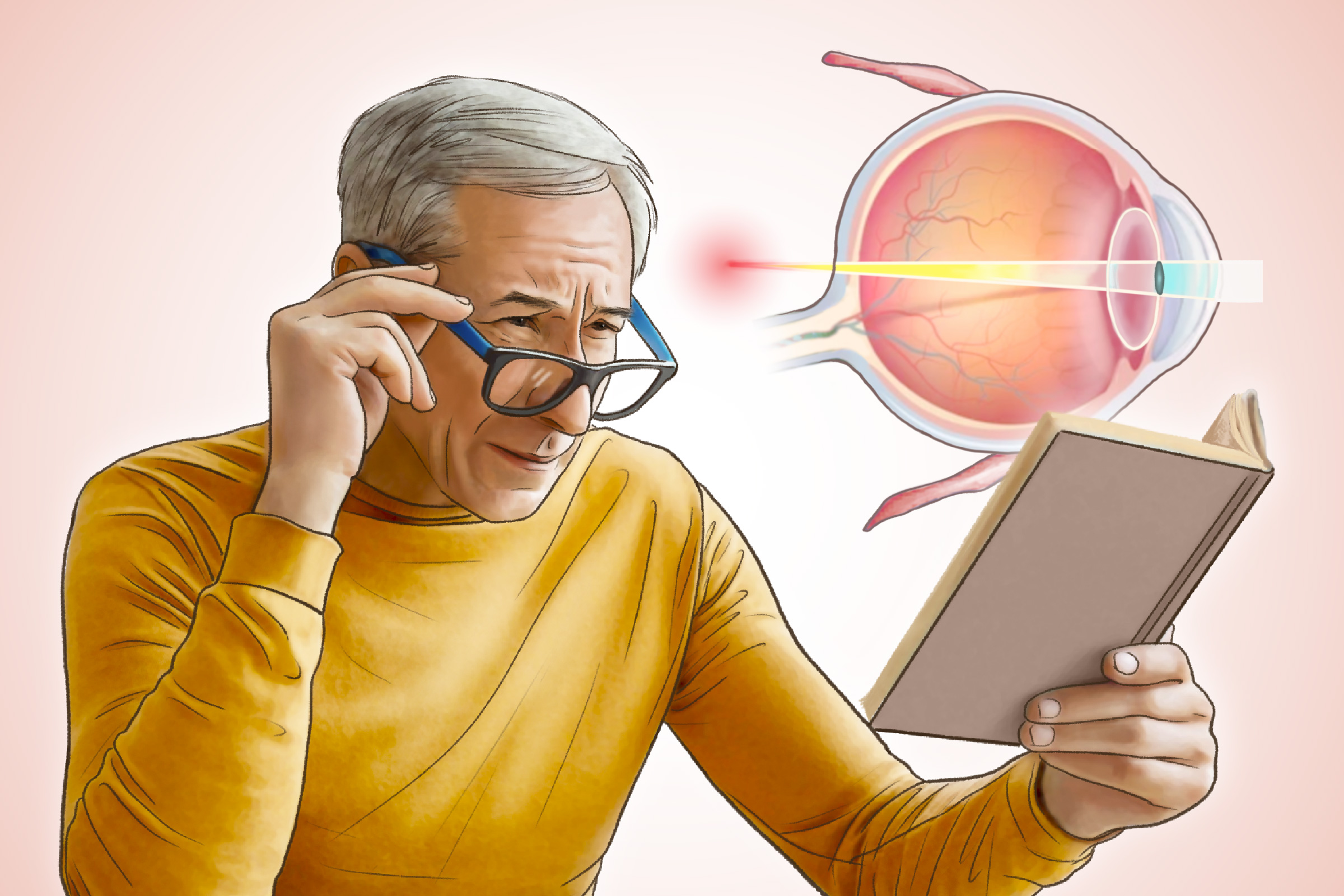

- Blurred Close-Up Vision: This is the hallmark symptom. For example, you can’t read a book when it’s close. However, you can refocus when you hold it at arm’s length.
- Eye Strain: The eyes may feel tired, sore, or fatigued.
- Worsening in Dim Light: Symptoms often intensify in poor lighting or when you’re tired.
- Headaches: These may occur particularly after reading or doing close-up tasks, such as knitting.
Risk Factors
In addition to age, which is the largest risk factor for presbyopia, there are other risk factors, including:
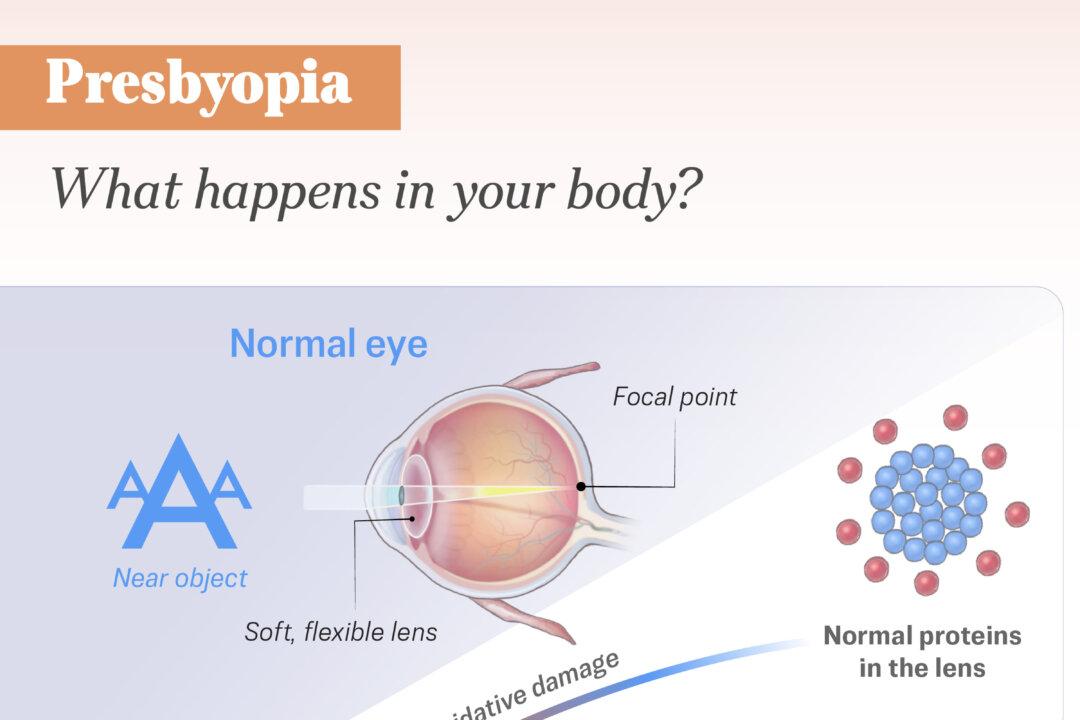
- Ultraviolet (UV) Radiation: Long-term exposure to UV radiation, caused by long-term sun damage, can speed up oxidative damage in the lens, making it stiffer and less able to focus.
A younger age of onset has been reported in countries near the equator, including those in Central and South America, most likely due to higher-than-average UV exposure. - Lifestyle Factors: A 2017 study found that cigarette smoking and a history of pregnancy experience were strongly and positively associated with presbyopia. Cigarette smoking and pregnancy can accelerate lens stiffening through oxidative stress and hormonal changes. Occupations or lifestyles involving extensive near work, such as teaching, as well as higher socioeconomic status, may increase near-vision strain or access to diagnosis, which also shows a strong association with presbyopia.
- Farsightedness (Hyperopia): People who are farsighted already have difficulty focusing on near objects. Since their eyes must work harder for close-up tasks, presbyopia symptoms may appear earlier or feel more noticeable than in people with normal vision.
- Certain Medications: Antihistamines, stimulants for attention-deficit disorder, antianxiety and antidepressant drugs, antipsychotics, antispasmodics, and diuretics may contribute to the earlier onset of presbyopia due to their effects on the autonomic nervous system, lens flexibility, and ocular physiology.
- Medical Conditions: These include diabetes, multiple sclerosis, and certain heart or neurological disorders, as they can affect the lens, ciliary muscle, or neural control of accommodation.
- Anemia: Low levels of red blood cells can reduce oxygen delivery to tissues, including the eyes, which may contribute to eye fatigue and make symptoms more pronounced.
- Previous Eye Surgery: Procedures such as intraocular surgery (surgery done on the inside of the eye) can change the eye’s focusing ability.
- Prior Eye or Head Trauma: Such injuries can damage the lens, ciliary muscle, or other parts of the eye’s focusing system.
- Premature Menopause: Hormonal changes, especially reduced estrogen levels during early menopause, can affect lens flexibility and eye function. As a result, women who undergo early menopause may experience presbyopia sooner than average, possibly due to hormonal effects on lens metabolism or ocular blood flow.
- Visual Acuity Test: Measures how clearly a person can see at different distances using eye charts. Both distance and near vision are tested to evaluate the loss of focusing ability associated with presbyopia.
- Retinal Exam: Checks the health of the retina, the light-sensitive tissue at the back of the eye. It ensures that vision problems are not caused by retinal disease. An ophthalmoscope or retinal imaging is usually used.
- Muscle Integrity Test: Evaluates the strength and coordination of the eye muscles, including the ciliary muscle.
- Slit-Lamp Test: Uses a special microscope with a bright light to examine the front structures of the eye, such as the cornea, lens, and iris, and can detect changes in the lens.
If presbyopia is diagnosed, the optometrist then performs a refraction test, which determines the exact prescription needed for glasses or contact lenses. For presbyopia, it shows how much extra lens power is needed for close-up tasks.
1. Eyeglasses
Optical correction through eyeglasses and contact lenses is the primary approach, particularly during the early phases of presbyopia.
- Bifocals: Provide clear distance and near vision, but don’t correct the intermediate range, such as computer screen distance. They cost more than single-vision lenses but eliminate the need to switch between glasses.
- Trifocals: Add correction for middle-distance vision in addition to near and distance vision.
- Progressive Lenses: Provide smooth, gradual transitions between distance, intermediate, and near vision without visible lines. They’re more cosmetically appealing than bifocals but may have narrower clear zones in the peripheral areas, which can cause distortion.
2. Contact Lenses
Many people choose contact lenses over glasses because they provide a full field of vision without frames.
3. Eye Drops
Prescription eye drops may temporarily improve near vision by changing pupil size or depth of focus.
- Pilocarpine Eye Drops: These drops can temporarily improve near and intermediate vision, even in low light, without significantly affecting distance vision. They work by slightly constricting the pupil to increase depth of focus. Some users may experience mild side effects, such as headaches or eye redness.
- VIZZ Eye Drops: This aceclidine ophthalmic 1.44 percent solution is a prescription treatment for presbyopia that improves near vision by constricting the pupil and creating a “pinhole effect” that increases depth of focus. Typically applied once daily, the drops can restore functional near vision for up to 10 hours, without significantly affecting distance vision.
- Experimental Options: Researchers are exploring new eye drops and combination medications to improve near vision in presbyopia with fewer side effects. Combinations such as carbachol with brimonidine may provide prolonged near vision improvement through pupillary constriction and increased depth of focus.
4. Surgical Procedures
Surgery generally isn’t recommended for presbyopia alone due to complication risks. However, several options exist for those who prefer to avoid glasses or contact lenses.
- Monovision LASIK or Photorefractive Keratectomy: Uses laser surgery to correct one eye for distance and one for near vision, which may reduce depth perception.
- Corneal Profile Modifications: Reshape the cornea to increase depth of focus.
- Conductive Keratoplasty: Uses radiofrequency energy to steepen the central cornea, although the effects are temporary.
- Corneal Inlays: Small devices implanted in the cornea, usually in the nondominant eye, that use a pinhole effect to improve near vision while preserving distance vision.
Surgical treatments for presbyopia carry risks such as glare, halos, and reduced night vision, particularly after LASIK. Corneal inlays may cause corneal haze or thinning and have been withdrawn in some cases due to safety concerns. Multifocal intraocular lenses can improve independence from glasses but may produce visual disturbances such as halos and starbursts, especially in dim lighting.
- Scleral Expansion Implants: Devices such as the VisAbility Micro-Insert are designed to increase scleral flexibility and improve focusing ability.
- Posterior Radial Scleral Incisions: Surgical cuts intended to enhance the flexibility of the sclera and support the eye’s ability to focus on nearby objects.
Lens-Based Procedures
- Monovision With Intraocular Lens (IOL) Implants: For patients with significant presbyopia or other refractive errors who are not suitable candidates for corneal surgery, monovision with IOL implants offers a surgical alternative. This approach is typically performed during refractive lens exchange (RLE) or cataract surgery, during which the natural lens is replaced with monofocal IOLs—one eye corrected for near vision and the other for distance vision. Multifocal lenses are also sometimes used. RLE is done before cataracts develop and can provide clear vision at multiple distances without relying on glasses.
- Phakic IOLs: These implanted lenses leave the natural lens in place while correcting refractive errors. They can be placed in the anterior or posterior chamber of the eye, and newer multifocal designs can improve both near and distance vision. These lenses are typically reserved for patients who cannot undergo corneal refractive surgery.
- Refractive Lens Exchange: This procedure removes the natural lens and replaces it with an artificial lens, and may be particularly beneficial for older patients with multiple vision issues.
5. Acupuncture
Traditional Chinese medicine (TCM) has long used acupuncture to enhance visual acuity.
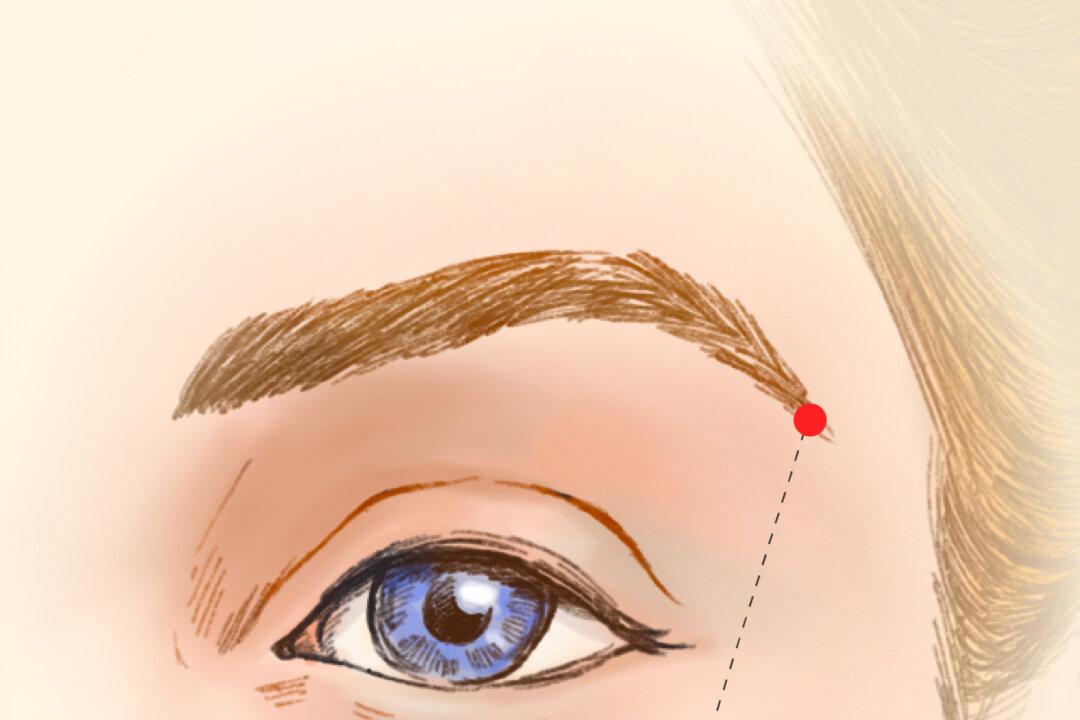
- Silken Bamboo Hole (Sizhukong): Located at the outer end of the eyebrow.
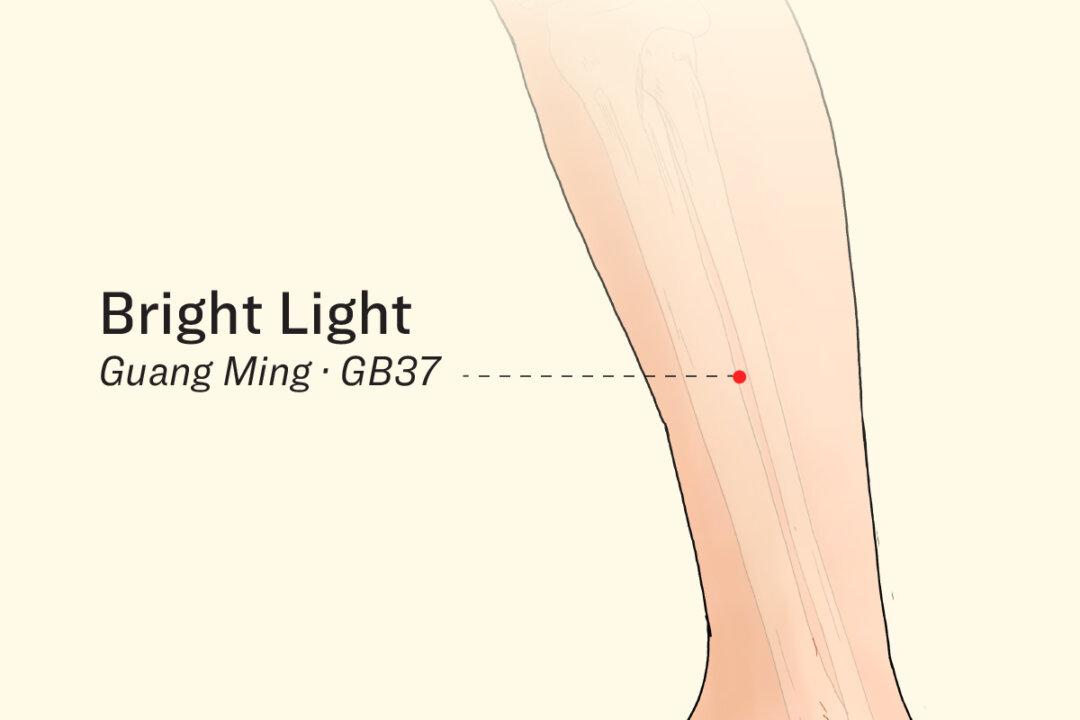
- Bright Light (Guangming): Located on the outer lower leg, about five finger-widths above the ankle.
1. Behavioral Modifications
The following nonmedical strategies can help people cope more effectively and maintain comfortable near vision.
- Reading Distance Adjustments: Holding books, phones, or screens slightly farther away can reduce eye strain.
- Text Size Increases or Magnification Tools: Enlarging print on digital devices or using magnifiers can make reading easier.
- Improved Lighting: Brighter, evenly distributed light can reduce strain and improve clarity for close-up tasks.
- Frequent Breaks: Following the “20-20-20 rule”—every 20 minutes, looking at something 20 feet away for 20 seconds—helps relax the eye muscles.
- Ergonomic Adjustments: Proper posture and an ergonomic desk setup, such as keeping the screen at eye level, maintaining an appropriate viewing distance, using adequate lighting, and sitting with good back and neck support, can significantly reduce eye fatigue, neck strain, and overall visual discomfort during reading or computer work.
2. Eye Exercises
Dr. Jingduan Yang, a TCM and integrative medicine doctor with a family history spanning five generations of TCM practitioners, recommends two simple eye exercises to help relieve presbyopia symptoms:
- Motion Tracking: Moving an object, such as a finger or pen, through the full field of vision while keeping the head still allows the eye muscles to stretch. Gradually increasing speed may improve results, although starting slowly can help avoid dizziness.
- Focus Changes: Alternating your focus between a near object and a distant one can train the eyes to adjust more easily and improve focusing ability.
Dr. Kuo-Pin Wu, director of XinYiTang TCM Clinic in Taiwan, also recommends a 20-minute eye care routine composed of exercises designed to improve presbyopia. (Watch the videos in our previous coverage):
- Training monocular focus using small text
- Gently rotating the eyes while closed
- Squeezing and releasing the eyes to relieve tension
- Applying gentle acupressure around the eye sockets
- Using the palming technique to promote overall eye relaxation
3. Herbal Products
The following herbs are all food-grade.
- Cassiae Tea: This herbal tea may help manage presbyopia symptoms due to its antioxidant and pharmacological properties. Drinking cassiae tea regularly has been shown to improve near vision, reduce dry eye symptoms, regulate pupil size, and lower intraocular pressure. It may be particularly beneficial for people involved in prolonged near‑distance work, such as smartphone use.
- Berry Extract: A 2024 study found that a formulation containing chokeberry, honeysuckle, and bilberry, which are rich in anthocyanins and iridoids, improved near vision in 92.3 percent of participants over age 50. Additionally, 80 percent showed enhanced tear production, which may help relieve dry eye symptoms.
4. Dietary Supplements
A study involving 48 participants ages 45 to 64 who regularly experienced eye strain found that taking a combination dietary supplement improved visual function and related discomfort. The supplement included 10 milligrams lutein, 20 milligrams bilberry extract, 26.5 milligrams black soybean hull extract (providing 2.3 milligrams cyanidin-3-glucoside), 4 milligrams astaxanthin, and 50 milligrams docosahexaenoic acid or DHA.
- Reduce Screen Time: Limiting screen time, taking frequent breaks, blinking regularly, and looking at distant objects can help reduce eye fatigue and slow the worsening of presbyopia.
- Wear Sunglasses: Sunglasses that block 100 percent of ultraviolet A or UVA and ultraviolet B or UVB rays protect the eyes from UV damage, which may contribute to presbyopia.
- Practice Eye Exercises: Exercises such as palming, eye rolls, focus changes, and convergence may help strengthen eye muscles, improve focusing flexibility, and reduce eye strain.
- Eat an Antioxidant-Rich Diet: Nutrients such as omega-3 fatty acids, lutein, and zinc support eye health and may reduce the risk or progression of presbyopia. Food sources include fatty fish, leafy greens, eggs, and seeds. Other antioxidants, including zeaxanthin, carotene, and anthocyanins, are found in foods such as carrots and berries. TCM links eye health to the liver and kidneys and recommends foods and herbs such as goji berry, cassia seeds, Tribulus terrestris, and horsetail. Modern research supports some of these insights, showing that goji berries are rich in polyphenols with antioxidant, anti-inflammatory, and antiaging effects.
- Ensure Proper Hydration: Staying well hydrated helps maintain eye function, while dehydration from insufficient fluid intake, caffeine, or alcohol can worsen vision problems.
- Increase Vitamins A, C, and E Intake: Vitamin A is essential for eye health and may help slow presbyopia progression, with sources including beef liver, eggs, dairy, carrots, sweet potatoes, and spinach. Vitamins C and E help protect the eyes from free radical damage and support cellular health, and can be obtained from citrus fruits, nuts, seeds, and vegetables, or supplements.
- Avoid Smoking and Limit Alcohol: Smoking and excessive alcohol use increase the risk of presbyopia, and avoiding them can help protect eye health and slow vision decline.
- Manage Medical Conditions: Controlling medical conditions that contribute to early presbyopia and avoiding medications with similar effects, when possible, may help delay symptom onset.
- Inadequate Correction: Inaccurate refraction or poorly designed or fitted glasses or contact lenses can result in insufficient correction. Multifocal lenses may cause ghosting or reduced contrast, while progressive lenses can create peripheral distortions. Without proper patient education, these expected effects may lead to dissatisfaction and discontinued use.
- Dry Eye Disease: This condition commonly affects people with presbyopia, particularly contact lens wearers. Age-related tear film decline and extensive near-work can exacerbate dryness, leading to discomfort and blurred vision. Multifocal lenses are especially sensitive to dry eye, so preventive measures include ocular surface evaluation, lubrication, and using daily disposable or highly wettable lens materials.