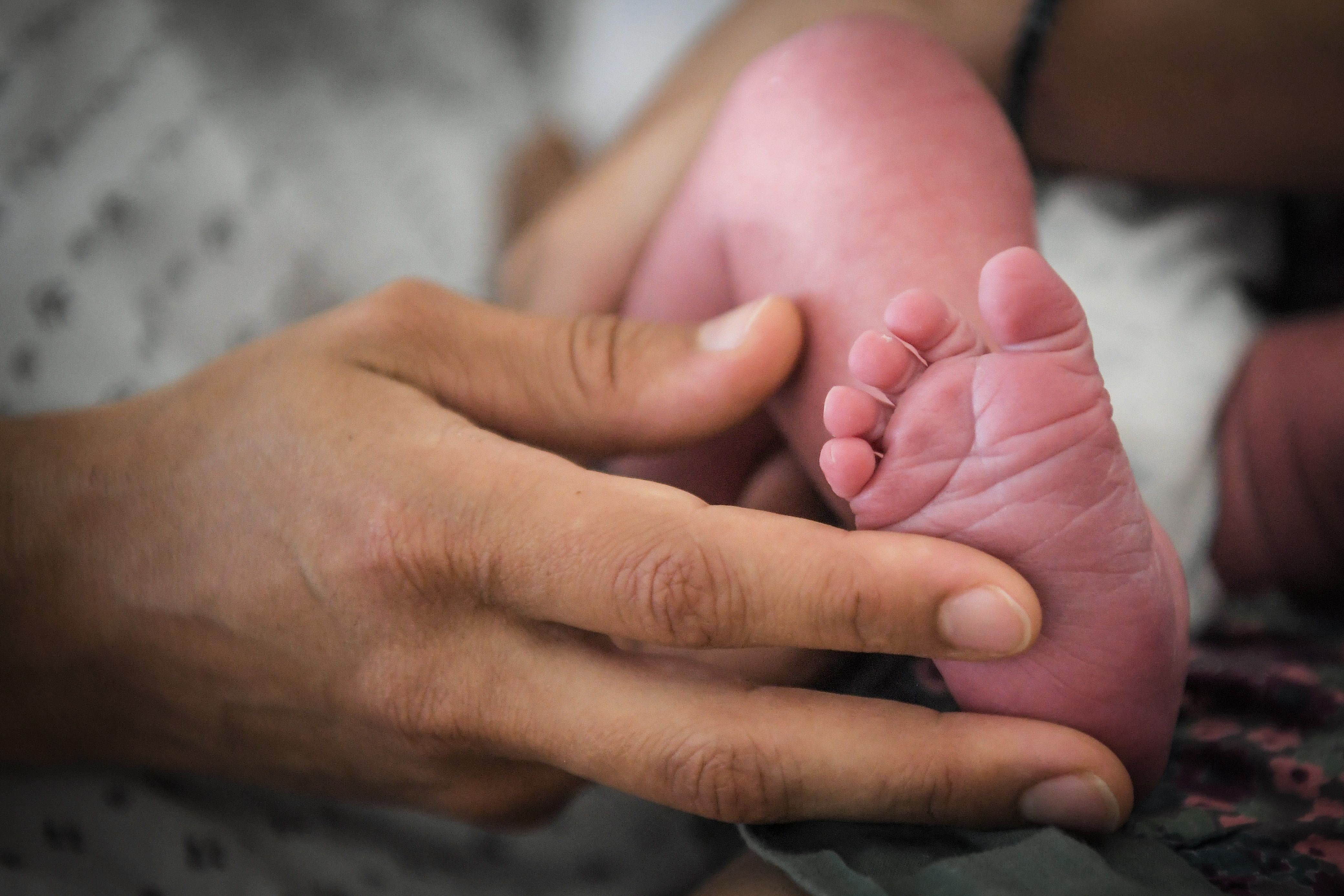

The contamination of drinking water with nitrates, used in fertilizers for crops, poses health risks to infants, even when the exposure is far lower than permissible levels, according to a June 25 peer-reviewed study published in the PLOS Water journal.
Nitrate is a naturally occurring compound used in inorganic fertilizers. It seeps into groundwater and is eventually consumed by humans. When a person ingests nitrates, the compound can interfere with the blood’s capacity to carry oxygen, a situation that can be fatal among children.
The Environmental Protection Agency (EPA) has set a maximum level of 10 milligrams per liter (mg/L) of water.
The study analyzed Iowa’s public drinking water data to identify the median mg/L nitrate level for each county between 1970 and 1988. It also analyzed 357,741 birth records from the state during this period, linking every birth to nitrate measurements taken within 30 days of conception.
The study found that the mean nitrate exposure at conception was 4.2 mg/L, less than half the limit set by the EPA.
“Exposure to at least 1 percent of the EPA standard nitrate level (>0.1 mg/L) was associated with increasing the probability of preterm birth,” the study states.
“Early prenatal exposure to high nitrate levels (> 5 mg/L) was associated with increasing the probability of a low birth weight.”
Exposure to elevated levels of nitrates, exceeding the EPA threshold of 10 mg/L, was found to pose no additional risk to birth outcomes than lower exposure levels. This raises the possibility that the EPA threshold may need to be brought down.
“This standard has not been updated since 1992,“ the study reads. ”Meanwhile, nitrate levels in America’s water has risen substantially.
“The current regulatory threshold (> 10 mg/L) may be insufficient for protecting the in-utero transmission of water-based nitrate during the first trimester of pregnancy. Delaying the EPA’s plan to reevaluate nitrate’s maximum contaminant level only delays the public’s ability to respond to rising levels of nitrate in our groundwater.”
The author of the study, Jason Semprini of Des Moines University Medicine and Health Sciences, declared no competing interests and said researchers received no specific funding for the work.
In a June 25 comment at the Science Media Centre, an independent charity that publishes expert opinions on scientific studies, Oliver Jones, professor at RMIT University based in Melbourne, Australia, said there were “several issues” with the study.
The data come from 1970 to 1988, so are more than three decades old, he said. Plus, the study author did not perform any measurements himself but used publicly available data. The water quality data were self-reported and thus may not be accurate, he said.
Moreover, the study shows a “very weak” possible link between prenatal nitrate exposure and birth outcomes. Jones said other factors could be at play.
“I am inclined to think that this is the case here because there is a large overlap in the data and because the effect disappears above 10 mg/L, which does not make sense from a toxicological point of view,” he wrote.
“Other factors that may affect health, such as the mother’s health or diet, were not available, so could not be taken into account. This is quite important in this case since at concentrations of less than 10 mg/L, the main source of nitrate is actually food, not water. It is thus possible that the results reflect diet, not nitrate.”
Regulatory Changes
In a June 25 statement on EurekAlert!, Semprini said current regulatory standards for nitrates in public water do not take into account prenatal exposure.
“Ignoring the potential harm from lower levels of prenatal nitrate exposure, the current regulatory standards are not adequately protecting America’s mothers or children,” he said.
The estimated impact from prenatal exposure to nitrates is similar to 15 percent of the harm suffered because of prenatal exposure to cigarette smoke, Semprini said.
“I do not want to diminish the importance of efforts to prevent smoking during pregnancy ... but, I must ask, do we give nitrates 15 percent of the attention we give to smoking?” he said.
According to a May 2023 post by the Centers for Disease Control and Prevention, infants younger than 4 months old face the highest risk of adverse health effects from overexposure to nitrates.
The main source of exposure in this case is ingestion of formula diluted with water, which is contaminated with nitrates.
In addition, pregnant women and their fetuses may be more sensitive to nitrate toxicity at or close to the 30th week of pregnancy, the Centers for Disease Control and Prevention said.