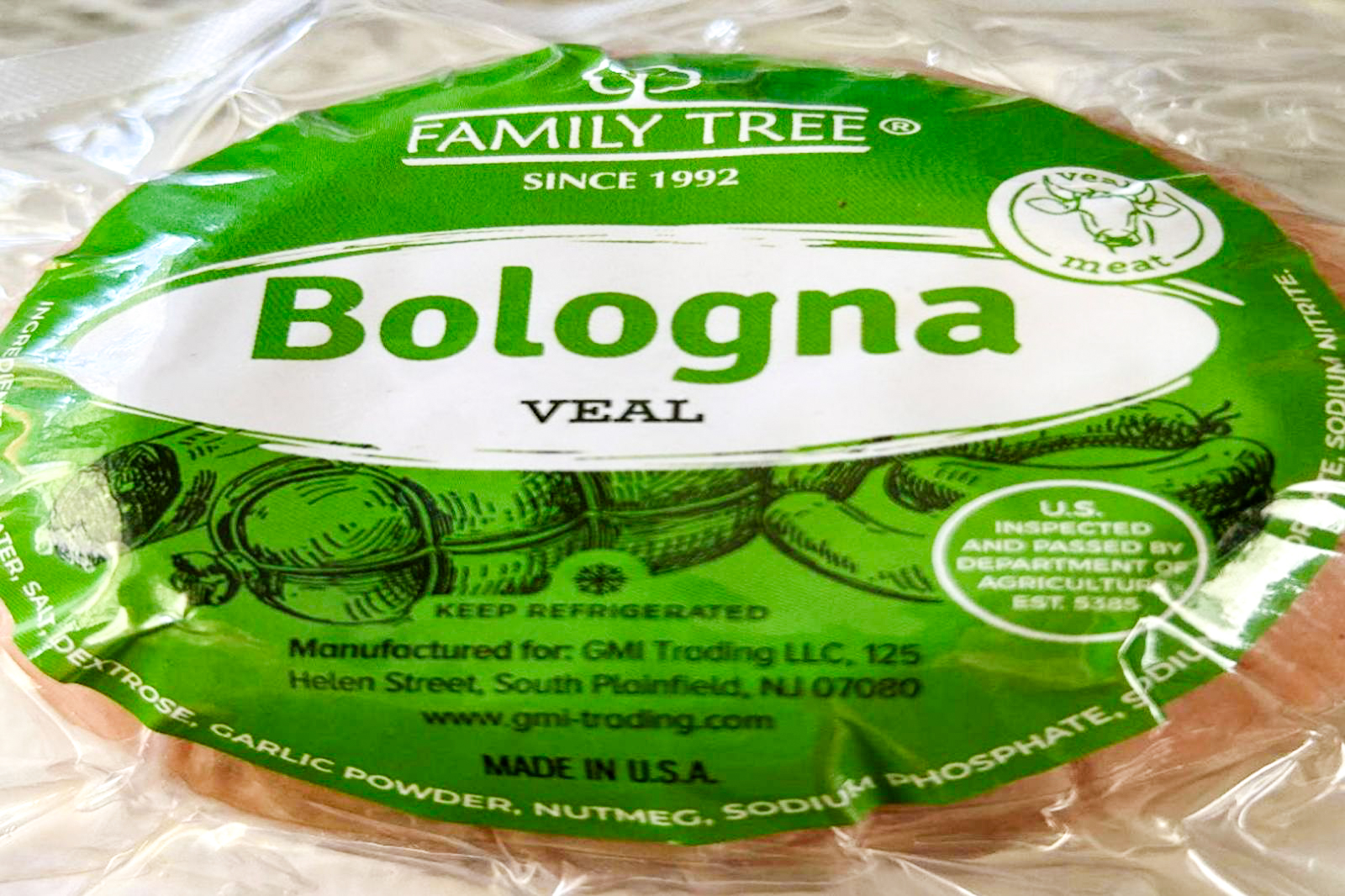

New Jersey-based Gaiser’s European Style Provisions Inc. is recalling roughly 143,416 pounds of ready-to-eat bologna due to misbranding, as they contain “meat or poultry source materials that are not declared on the product labels,” the Food Safety and Inspection Service (FSIS) said in a June 27 statement.
Made between March 20 and June 20, the items contain undeclared chicken, pork, and beef, and were sold under the brand names Family Tree Bologna Veal, Babushka’s Recipe Chicken Bologna, Fancy Bologna, Gaisers Russian Brand Doktorskaya Bologna, Gaisers Bologna Veal, Gaisers Turkey Bologna, and Chicken Bologna Kypoyka Paba.
Recalled products were distributed to wholesale and retail locations across the United States.
“The problem was discovered when FSIS was notified by the Office of Inspector General [OIG] of a complaint received through the OIG’s hotline. FSIS investigated the complaint and determined that the products contained source materials that were not declared on the label,” the statement said.
The withdrawal has been designated a Class III recall, the lowest of the three Department of Agriculture recall classifications.
FSIS said that while it was not expecting any adverse health effects for Class III recalls, it advised that individuals concerned about getting sick due to consuming the items should get in touch with a health care provider.
So far, there have been no confirmed reports of any adverse reactions, according to FSIS.
The agency said it was “concerned that the products may be in consumers’ refrigerators and freezers.”
“Consumers who have purchased these products are urged not to consume them. Restaurants and institutions are urged not to serve these products. These products should be thrown away or returned to the place of purchase,” the statement added.
The Epoch Times reached out to Gaiser’s for comment, but did not receive a response by publication time.
Gaiser’s recall is one of the latest product withdrawals this year due to misbranding issues.
On April 2, FSIS announced that Utah-based Hearthside Food Solutions LLC was recalling around 489,887 pounds of ready-to-eat bacon and sausage sandwiches due to misbranding.
Specifically, the items contained an allergen, sesame, that was not mentioned in the product labels. The items, manufactured between April 1, 2023, and March 25, 2025, have a shelf life of up to a year.
Earlier in February, Washington-based LPK1 withdrew approximately 303 pounds of ready-to-eat Chicken Caesar wraps due to similar issues. The items contained anchovies, a known allergen that was not declared on the labels.
Allergen Risk, Intentional Misbranding
Misbranding of food products can result in severe health issues to people consuming them if the items contain a substance to which they are allergic.
According to a May 2024 analysis by Public Interest Research Group (PIRG), there was an increase in food recalls in 2023 due to the presence of undeclared allergens.
“Nearly half of all food recalls in 2023, 154 items, were recalled because a known allergen was not disclosed on the label,” PIRG said.
“That’s a pretty serious uptick compared with the prior year, when only 121 recalls were due to undeclared allergens.
“About 6 percent of adults have a food allergy—and so do one in 13 children, or about two students in every classroom in America. Exposure to allergens in food is dangerous, and can even be deadly.”
While misbranding of food products may often be unintentional, there are some cases where businesses intentionally mislabeled the items they sold.
In August last year, a seafood distributor from Mississippi and two of its managers pleaded guilty to misbranding inexpensive, imported frozen fish as “more expensive and premium local species,” according to an Aug. 27, 2024, statement from the Department of Justice.
Even after the Food and Drug Administration executed a criminal search warrant for the company regarding mislabeled fish, the business continued to import frozen fish from Africa, India, and South America for more than a year to use as substitutes, the agency said.