For centuries, traditional healers have combined two kitchen staples to create a powerful, immune-boosting remedy that is also a culinary favorite. Honey-fermented garlic is rich in both prebiotics and probiotics, making it a versatile food for gut and overall health.
Transforming garlic and honey into herbal “liquid gold” is easy. With a few simple tricks that make the process safe and efficient, you can enjoy this sweet and tangy ferment in just a couple weeks.
When Culinary and Medicinal Uses Fuse
Garlic has long been valued for its ability to fight germs and support the immune system. When garlic is crushed, it releases allicin, a compound that works like a natural antibiotic. Some
studies suggest that it may even help against certain drug-resistant bacteria. Because of these properties, garlic has been used for centuries to ease colds, flu, and other infections.
You do not have to eat garlic raw to enjoy its many health benefits. Adding it to meals not only boosts flavor but may also give your body extra support during the winter months. Fermenting garlic cloves in honey is another option. The process transforms the flavor without reducing its medicinal qualities. It is one of my favorite recipes and is surprisingly simple.
Why Use Honey
Raw honey naturally provides the beneficial bacteria and yeasts needed for fermentation. Its mild acidity and low moisture content help prevent spoilage and inhibit the growth of harmful organisms. Honey also offers natural sugars for the yeast to feed on, creating a prebiotic- and probiotic-rich environment. When paired with garlic, the result is a powerful, immune-boosting blend.
The finished product has many uses in the kitchen and has even drawn scientific attention. A study published in July in Food Science & Nutrition examined the antimicrobial and antioxidant properties of garlic in different preparations: raw, fermented, and aged.
The study found that fermentation and aging increase certain plant compounds in garlic that act as antioxidants. These compounds help protect the body by neutralizing free radicals, unstable molecules that can damage cells over time.
Other fermentation mediums tested included ethyl alcohol and fruit vinegar, but after six months, fermented honey ranked second-highest in antioxidant activity.
While raw garlic remains unmatched in its antimicrobial qualities, fermented garlic is the champion of antioxidants, making it a prime supporter of the immune system—just in time for cold and flu season.
Honey-Fermented Garlic
Both honey and garlic have been valued in traditional medicine for thousands of years. Traditional Chinese medicine hails them for their warming and immune-boosting effects, and archaeologists even found honey in the tomb of Pharaoh Tutankhamen. Together, the ancient uses of honey and garlic have stood the test of time.
Ingredients:
- 20 to 30 garlic cloves
- 1/2 cup raw honey
- 1 tablespoon apple cider vinegar (or another vinegar) per cup of honey-garlic mixture, to prevent bacterial growth
(Measurements are approximate. Whatever size jar you choose, fill it with garlic and cover the cloves completely with raw honey.)Instructions:
- Choose a small jar, about 4 ounces.
- Peel the garlic cloves, removing the skins and ensuring that they are clean.
- Place the peeled cloves into the jar.
- Pour in enough raw honey to completely cover the garlic. Be sure to use raw honey; pasteurized honey is heated to extend shelf life and reduce crystallization, but the process strips away many of its beneficial ingredients.
- Add 1 tablespoon of vinegar to the mixture.
- Seal the jar and allow it to ferment.
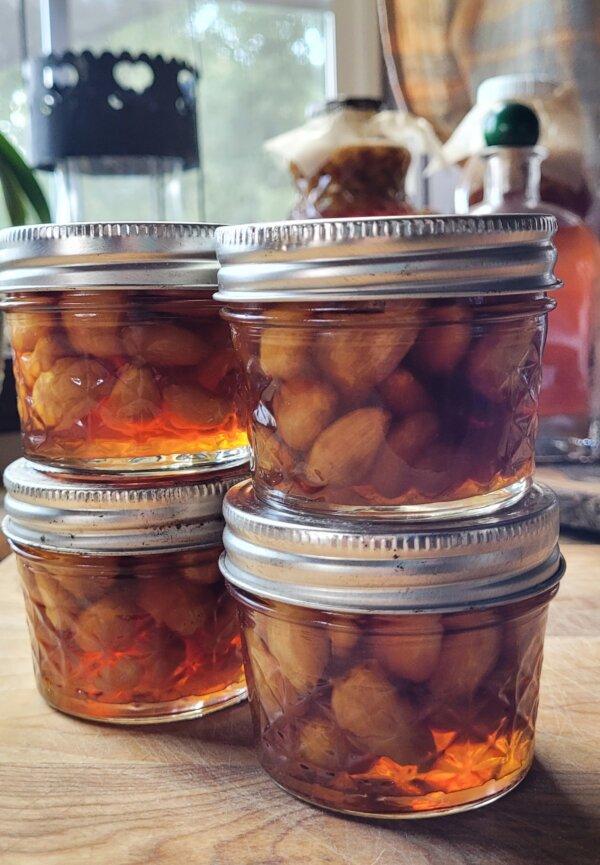
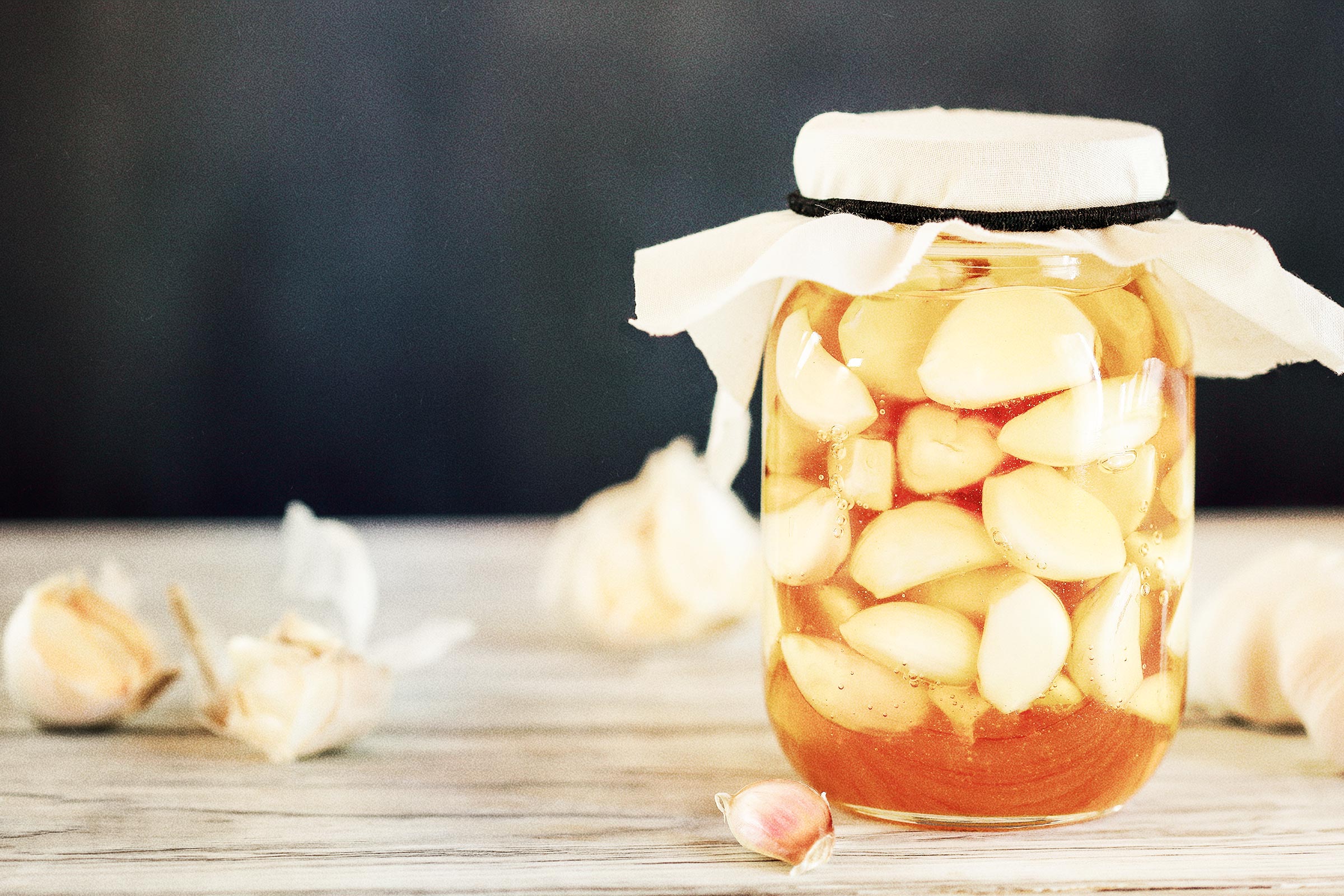
Aged honey-fermented garlic. (Courtesy of Alexandra Roach at Holistic-Ways)
Fermentation may take a few weeks or 1 to 2 months. The garlic may become very active and “bubbly.” If so, release the pressure from the jar by briefly opening and closing it once or twice a day during this active phase.
The honey will become more liquid and gradually darken; this is normal. Once fermentation slows and the bubbling stops, the jar can be stored in a dark, cool place for up to a year or longer.
The garlic cloves will soften and develop a milder flavor, making them delicious in roasted chicken or any dish that benefits from a touch of sweetness. The honey can be drizzled over figs and goat cheese or even over fire-roasted pizza.
If you would like to use honey-fermented garlic as a natural way to strengthen your immune system and ward off colds, add a teaspoon of the infused honey to a cup of tea each day or eat 1/2 to 1 of the mild cloves daily.
Gut-Healthy Benefits of Honey-Fermented Garlic
Prebiotics are food components that promote the growth of good bacteria in the gut, while probiotics are tiny living organisms that support intestinal health. Honey-fermented garlic contains both.
The beneficial probiotic bacteria come from the unpasteurized honey, while garlic contributes antioxidants and oligosaccharides: tiny carbohydrate chains that act as prebiotics. Together, they create a potent gut-friendly blend.
Keeping Your Ferment Safe From Botulism
Honey’s mild acidity and high sugar content typically prevent bacteria from growing during fermentation. However, because garlic has a high water content, there is a small chance that bacteria could grow on the surface of the garlic-honey mixture.
Botulism is a rare but serious illness caused by Clostridium botulinum bacteria and their neurotoxin. It is most dangerous for infants and people with weakened immune systems. Because raw honey can contain the spores of this bacterium, it is important to be cautious.
To ensure safety, add one tablespoon of vinegar per cup of ferment. The vinegar will raise the acidity to a level at which the Clostridium botulinum bacteria cannot survive. Any pH of 4.6 or lower is considered safe, and a pH meter can confirm your final product.
With safe preparation and proper storage, there is no need to worry. You can confidently enjoy honey-fermented garlic as a flavorful, probiotic-rich pantry staple.