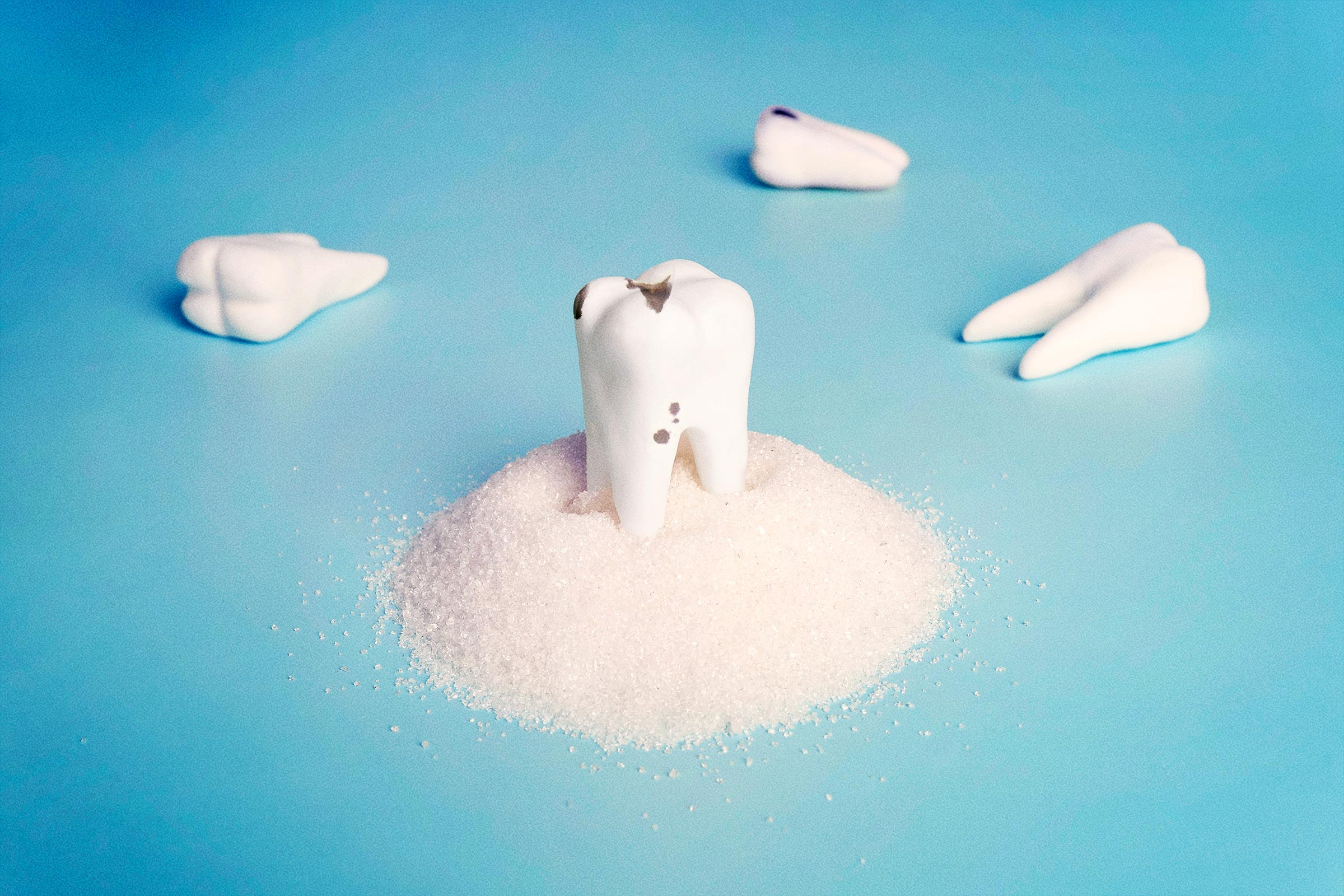

Dentists tell us to avoid sweets because sugar fuels acid-producing bacteria that can erode tooth enamel. In people with diabetes, excess blood sugar can migrate directly into saliva, effectively sweetening the mouth from the inside out.
A new study shows that diabetic patients’ saliva can become nearly as sugary as their blood, making the mouth more prone to cavities.
The sugary saliva is caused by fructose leaking from the blood into the saliva, transforming the mouth into a sugar-rich environment that fuels cavity-causing bacteria.
“The findings confirm a biological reality we have long suspected: The mouth is not an isolated ecosystem but a mirror of systemic health,” Dr. Thaddeus Connelly, an oral and maxillofacial surgeon and CEO of Gengyve, told The Epoch Times.
How Sugar Gets Into Saliva
People with poorly controlled diabetes are up to 90 percent more likely to have untreated cavities.
When blood sugar remains chronically high, it damages small blood vessels throughout the body, weakening them and increasing their tendency to leak. This includes the tiny vessels around the salivary glands, where blood normally provides water and electrolytes to create saliva. Through these leaks, sugar seeps into saliva before it even reaches the mouth.
Your saliva normally should contain very little sugar. However, the study, published in Microbiome, found that the higher a participant’s fasting glucose and HbA1c—a measure of long-term glucose level—the sweeter their saliva, and the more cavities and plaques they had.
Plaque-heavy mouths drive more cavity growth, since plaques contain more bacteria that rapidly consume sugar, creating a steep gradient that draws even more sugar from the salivary glands.
The oral microbiome also shifted, with more bacteria tied to tooth decay, such as Streptococcus mutans, and fewer beneficial bacteria.
While most previous studies extracted and analyzed saliva from the mouth, the new study also collected saliva directly from patients’ salivary glands, allowing for more accurate measurement of sugar. Because the salivary glands are a sterile environment with no bacteria, saliva collected from the mouth may have already come into contact with bacteria that readily digest sugar, leading to artificially lower sugar readings.
When analyzing sugar composition, the researchers found higher levels of fructose in saliva compared with glucose, another common sugar used by the body.
In lab experiments, the excess fructose in saliva allowed Streptococcus mutans to overpower the beneficial bacteria. In the mouth, higher fructose migration created conditions where cavity-causing bacteria can thrive by forming sticky biofilms (dental plaque when on teeth) that are better at pulling in and breaking down sugar, producing more acid as waste, making the oral environment more likely to cause cavities.
Sugar in Saliva Is Just the ‘Tip of the Iceberg’
About two-thirds of people with diabetes have severe gum disease, known as the “sixth complication of diabetes.” Severe gum disease becomes three times more likely when blood sugar is poorly controlled.
Sugar in saliva, Connelly noted, is just the tip of the iceberg. “It is part of a complex feedback loop involving diet, the microbiome (both oral and gut), and systemic inflammation,” he said, noting that inflammation connects oral health directly to the body’s ability to regulate blood sugar and stay metabolically healthy.
Kara Siedman, a nutritionist and director of partnerships with Resbiotic Nutrition, told The Epoch Times that the findings show why strategies that address blood sugar, diet, and the microbiome together may improve both oral and overall health.
However, the relationship goes both ways: Periodontitis also worsens diabetes.
High blood sugar floods the body with inflammatory molecules and bacterial toxins that spill beyond the mouth, worsening insulin resistance and raising blood sugar, making diabetes even harder to control, Connelly said.
Diabetes and oral disease reinforce each other in a vicious cycle driven by chronic inflammation. “Metabolic dysfunction alters the oral environment, while oral inflammation and microbial shifts further contribute to systemic and gut inflammation,” Kimberley Sukhum, a microbiologist and head of science at Tiny Health, told The Epoch Times. “It’s a complex interplay that highlights how interconnected our body’s microbial ecosystems really are.”
“The findings highlight the value of integrating oral health assessment into diabetes care and considering salivary glucose as a modifiable mediator of oral microbiome health,” Siedman said.
What You Can Do
The most effective way to reduce the risk of complications such as tooth decay is to control blood sugar levels. In the study, participants who completed a two-week inpatient program following Japanese diabetes treatment guidelines—including intensive management of blood sugar, blood pressure, dyslipidemia, and body weight—significantly reduced the amount of fructose leaking into saliva. As fructose migration dropped, the balance between harmful and beneficial bacteria shifted toward a healthier profile.
Treating gum disease can also support metabolic health. One study suggests that treating gum disease is comparable to adding a second diabetes medication, Connelly said.
“Western diets high in free sugars not only fuel oral pathogens but also reduce microbial diversity in a way that promotes inflammation,” he said. In contrast, plant-based and high-fiber diets can help stabilize these microbial communities.
Keeping foods high in fructose in moderation may also help.
Processed foods and sweetened drinks, such as soft drinks, flavored juices, condiments, and packaged snacks, often contain high-fructose corn syrup, which can be up to 55 percent fructose. Even agave syrup, which is often marketed as “natural,” contains up to 90 percent fructose and behaves like high-fructose corn syrup in the body.
Many naturally sweet foods—such as honey and some fruits—contain fructose, though levels vary widely. Fruit juices and foods sweetened with table sugar also supply fructose.
“Interventions that support saliva quality and biofilm homeostasis should be part of personalized diabetes management plans,” Siedman said. These include structured carbohydrate timing—spacing carbohydrate intake to avoid constant sugar exposure throughout the day—along with maintaining stable blood sugar targets, fluoridated dental products, and regular professional dental care.