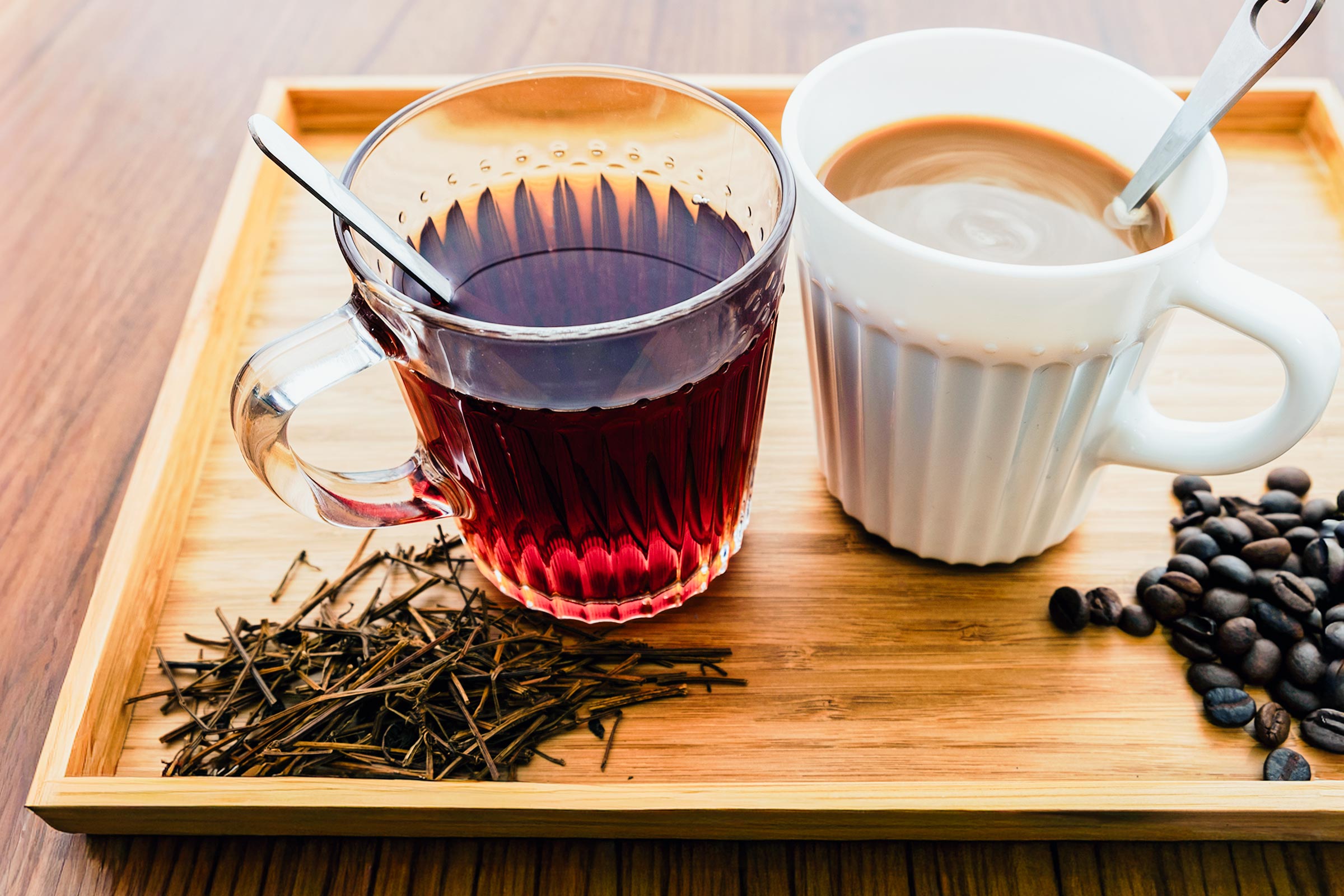

A decade-long study has found that tea drinkers, compared with coffee drinkers, have better bone health over the long term.
“People can view this as encouraging news for tea as a potentially bone-friendly beverage choice. For coffee drinkers, the key is moderation,” Ryan Liu, co-author of the study and a Flinders University researcher, told The Epoch Times.
Tea May Increase Bone Density
The study tracked nearly 10,000 women aged 65 and older and found that tea drinkers maintained slightly higher bone density than nontea drinkers, while drinking more than five cups of coffee daily was linked to lower bone density. Moderate coffee intake—two to three cups per day—appeared safe.
The findings, published in Nutrients, offer fresh insight into a long-standing question about caffeine and bone health, particularly for older women at risk of osteoporosis and fractures.
Researchers combined participants’ self-reported coffee and tea intake with bone density scans collected at multiple study visits over more than a decade, focusing on the femoral neck and total hip—two sites most closely linked to fracture risk.
Why Tea and Coffee Affect Bones Differently
Researchers suggest that caffeine may partly explain the lower bone density seen with very high coffee intake.
Both coffee and tea contain caffeine, but coffee generally delivers much higher doses per cup. Still, caffeine alone doesn’t fully explain why the two beverages appear to affect bone health differently.
Because the study was observational, it cannot prove cause and effect. However, findings from previous research offer clues to the biological mechanisms that may help explain the patterns seen in the study.
High doses of caffeine may accelerate bone loss by stimulating the cells responsible for breaking down bone while suppressing cells that build new bone. These effects may be more relevant with higher caffeine intake.
In one trial, chewing military energy gum containing 800 milligrams of caffeine over six hours increased calcium in the urine by 77 percent.
Tea, however, contains specific polyphenols and flavonoids that may counterbalance caffeine’s negative effects. These compounds have antioxidant and anti-inflammatory properties that support bone formation while slowing bone breakdown. Coffee has also polyphenols and flavonoids but they may not offer the same effect.
In a 2012 randomized trial published in Osteoporosis International of 171 postmenopausal women with low bone mass, those given 500 milligrams per day of green tea polyphenols—roughly equivalent to a few cups of catechin-rich green tea—showed signs of improved bone metabolism. Within one month, markers of bone formation increased, and by three months, the balance between bone formation and bone breakdown had shifted in a more favorable direction.
“The net effect observed in people likely results from the balance of these various compounds,” Liu said.
Tea appeared particularly beneficial for women with obesity, possibly because its anti-inflammatory compounds help counter inflammation linked to higher body weight, Liu noted.
The study also found that alcohol appeared to worsen coffee’s effects on bone density, possibly because both caffeine and alcohol can independently interfere with calcium absorption and bone turnover. Alcohol further weakens bones by reducing bone formation and impairing the hormones that regulate calcium balance.
Heavy or long-term alcohol use weakens bones by tipping the balance toward bone loss—affecting calcium-handling organs, bone-regulating hormones, and even the bone-forming and bone-absorbing cells themselves.
“The combination of higher coffee and alcohol intake might be more detrimental to bone density than either alone,” Liu said.
What This Means for Your Daily Routine
While the bone benefits from tea were modest, small improvements at the population level can translate into fewer fractures, the researchers note.
For those who want to optimize their beverage choices for bone health, green tea offers the highest levels of beneficial catechins, with matcha providing even more since the whole leaf is included in the drink.
Coffee drinkers watching their caffeine intake should know that Robusta beans contain roughly twice as much caffeine as Arabica beans, and cold brew often delivers more total caffeine than other brewing methods. In terms of roast color, light roasts may deliver slightly more caffeine when measured by volume.
However, Liu said that no single beverage is a cure-all. “The foundation for life-long bone health remains a balanced diet rich in calcium and protein, adequate vitamin D, and regular weight-bearing exercise,” Liu said.
Kara Seidman, a nutritionist and director of partnerships at Resbiotic Nutrition, told The Epoch Times that the effects of these beverages on bone health aren’t driven by the drinks alone. Instead, they’re shaped by individual physiology and lifestyle factors.
“The key takeaway is not to demonize coffee or over-prescribe tea as a treatment,” she said, “but to personalize guidance based on the individual.”