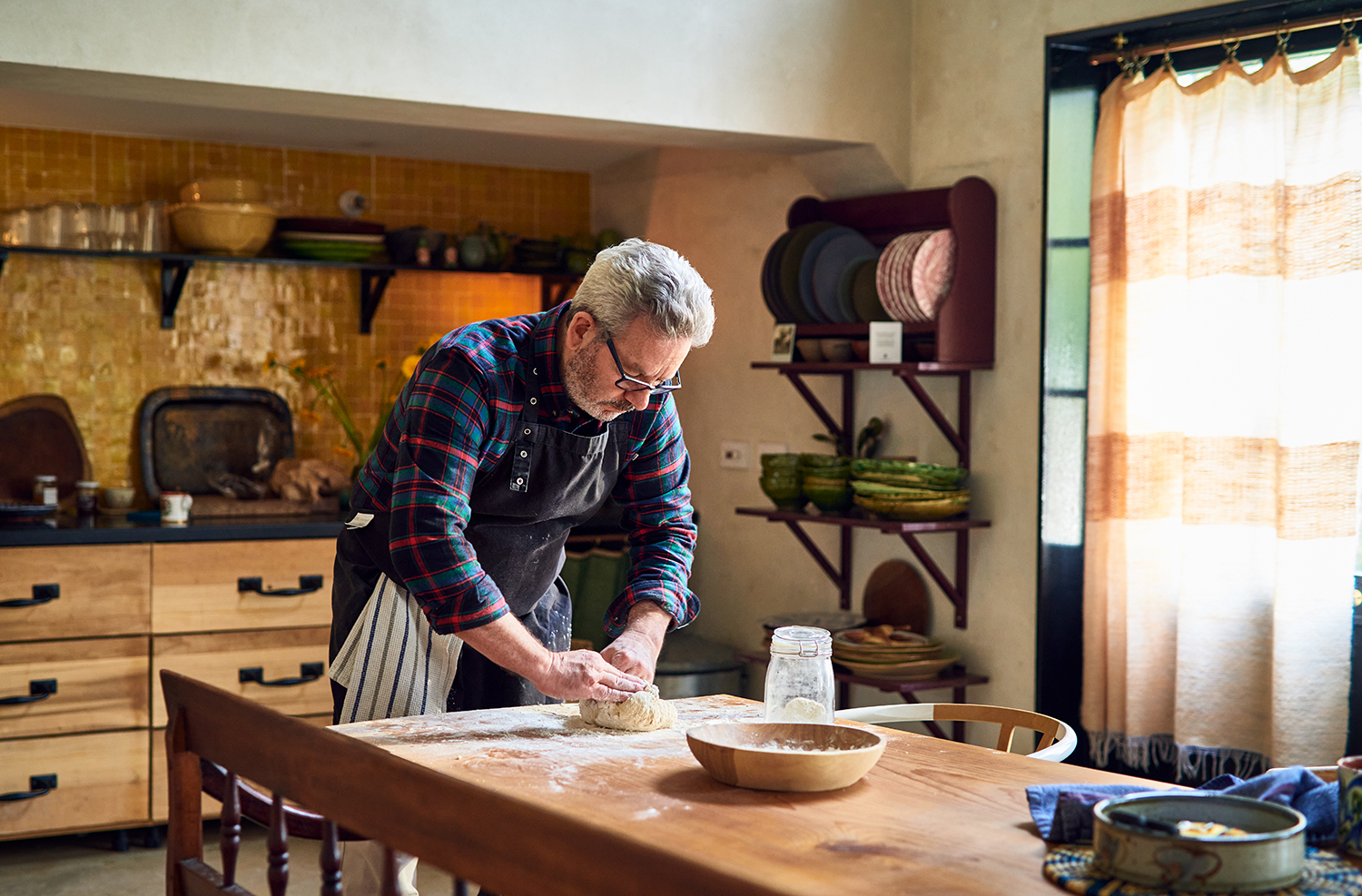
Meal habits and brain health might seem worlds apart, but research suggests that simply cooking at home, especially for older adults, could be a game changer in reducing dementia risk—with the biggest benefits seen among those with fewer cooking skills.
“Cooking is not just about food, it’s a full brain-body activity. And that combination may be part of why we’re seeing these protective effects,” Lindsay Malone, an instructor and clinical dietitian in the Department of Nutrition at Case Western Reserve University’s School of Medicine, who was not involved in the study, told The Epoch Times.
Why Cooking May Protect the Brain
The
study, recently published in the Journal of Epidemiology and Community Health, suggests that cooking regularly could lower the chance of dementia by 30 percent. For older people with limited cooking skills, the risk reduction could be as high as 70 percent. The study analyzed data from nearly 11,000 participants aged 65 and older, over six years, ending in 2022. During that period, about 11 percent of participants developed dementia.
Cooking from scratch at least once a week was associated with a 23 percent reduction in dementia risk for men and a 27 percent reduction for women, compared with those who rarely cooked.
The researchers accounted for other factors that could influence dementia risk, such as lifestyle, income, and education, and found that the link between cooking and reduced dementia risk was independent of activities such as gardening, volunteering, or crafting.
Analysis revealed that cooking more frequently was linked to a lower risk of dementia for both men and women, with the extent of cooking skills influencing the effect.
Researchers identified two likely explanations. First, cooking involves physical activity—grocery shopping, standing, moving around the kitchen—that is independently linked to cognitive health. Second, it demands sustained mental engagement: planning, sequencing, attention, and memory.
For novice cooks, the benefit may be especially pronounced because the activity is cognitively novel, challenging the brain in ways that more practiced routines do not.
Study author Yukako Tani, an associate professor in the Department of Public Health at the Institute of Science Tokyo, told The Epoch Times that the findings suggest that the reduced risk of dementia may be explained by two complementary pathways: physical activity and cognitive engagement as a form of productive activity.
However, she suspects that there is also a ceiling effect on the benefits one can gain from cooking.
Because higher cooking skills were already associated with lower risk, additional cooking frequency may provide limited further benefit in this group. She noted that her interpretations are exploratory, and she said that “further research is needed to clarify the relative contribution of these mechanisms.”
Notably, cooking more than once a week did not appear to increase the benefit further, suggesting that simply getting into the kitchen regularly matters more than frequency.
The link between cooking frequency and dementia risk was reduced after adjusting for factors such as frequency of going out, time spent walking or standing, and whether participants purchased groceries themselves, indicating that physical activity may partly explain the observed cognitive benefit.
This observational study cannot definitively prove cause and effect, Tani said. Reverse causation remains a possibility: People with better cognitive function may simply be more likely to cook. The findings are also drawn from a Japanese population, and cultural differences in food and cooking practices mean that they may not translate universally.
Control Over What and How Much
A focus on certain food groups or nutrients can absolutely enhance the protective effects of home cooking against dementia, Stephanie Schiff, a registered dietitian at Northwell Health’s Huntington Hospital in New York, who was not involved in the study, told The Epoch Times.
She pointed to research showing that people who cook at home tend to increase their fruit and vegetable intake and decrease their intake of ultra-processed foods. Both are key components of the Mediterranean and DASH (Dietary Approaches to Stop Hypertension) diets, which have been shown to improve brain health, Schiff said.
“When you cook at home, you have control over ingredients, portions, and cooking methods, which is huge for overall health,” Malone said.
She recommended using a printed cookbook instead of scrolling for recipes online.
“It reduces decision fatigue and keeps things focused,” said Malone, who advised borrowing a cookbook from the library or buying one secondhand to test what you like before making a commitment.
The main message is that engaging in everyday activities that involve cognitive, physical, and functional engagement—such as cooking—may be associated with better cognitive health in later life, Tani said.
“Supporting environments that enable older adults to continue engaging in such activities” may be as important as the activities themselves, she said.