A virus lurking silently in 95 percent of Americans may be the hidden culprit behind lupus, a debilitating autoimmune disease that has baffled doctors for generations.
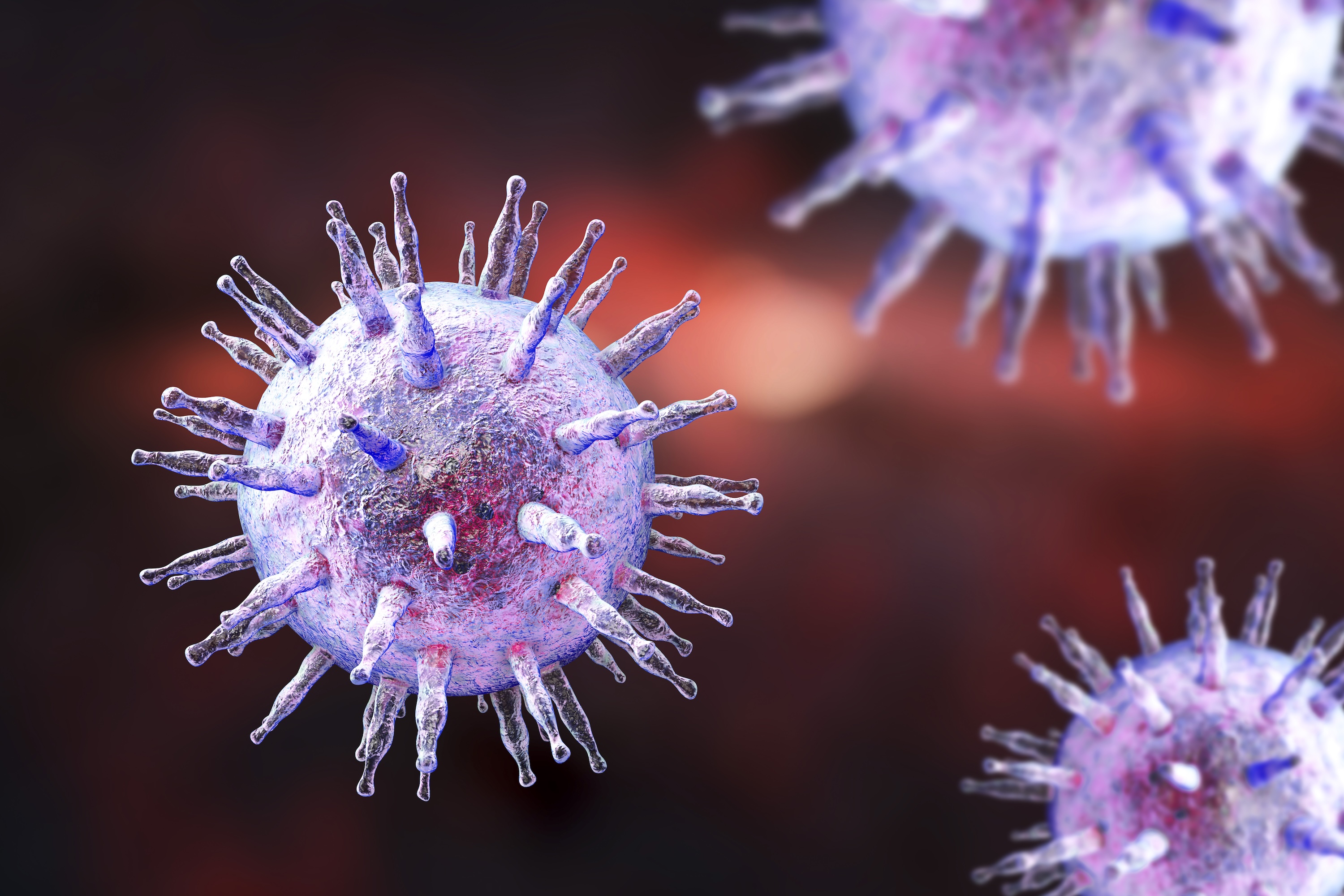
Stanford researchers have identified the Epstein-Barr virus (EBV), the common virus that causes mononucleosis, to be a direct cause of systemic lupus erythematosus.
“This is the single most impactful finding to emerge from my lab in my entire career,” senior study author Dr. William Robinson, professor of immunology and rheumatology at Stanford Medicine, said in a statement. “We think it applies to 100 percent of lupus cases.”
How EBV Triggers Lupus
Lupus occurs when the immune system mistakenly attacks the body’s own tissues, causing damage to the skin, joints, kidneys, heart, nerves, and other organs.
The human study, published in November 2025 in Science Translational Medicine, shows how EBV hijacks a small number of immune cells called B cells, triggering a widespread attack on the body’s tissues.
The team extracted and analyzed immune cells from 11 lupus patients and 10 healthy controls. They found that in healthy people, fewer than one in 10,000 B cells contains the dormant EBV. In lupus patients, this number increases to about one in 400, a 25-fold rise.
Researchers theorize that EBV may trigger lupus by changing gene activity in immune B cells.
They found that in its dormant state, EBV inside the cells occasionally produces a viral protein that activates inflammatory genes within the infected B cell.
These activated B cells then confuse the immune system by mistaking normal human proteins for enemy proteins and therefore mount an immune attack, a process that drives lupus.
When researchers extracted EBV-hijacked cells from lupus patients, they found that these cells released antibodies that attacked the person’s own tissues, supporting their theory that EBV drives lupus flares.
The most important finding from the study is the suggestion that EBV is responsible for effectively turning the B cells from normal cells to “angry cells” that create autoimmunity, Dr. Norman B. Gaylis, a Miami-based rheumatologist and board member at the American College of Rheumatology, who was not involved in the study, told The Epoch Times.
Gaylis said the finding that EBV triggers lupus by causing the immune cells to make antibodies that attack the body itself aligns with observations in patients who developed autoimmune systems after COVID-19, long COVID, or, in some cases, COVID-19 vaccinations.
Some long COVID patients suffering from chronic symptoms also test positive for autoantibodies, with research linking persisting symptoms to dormant EBVs becoming activated.
EBV May Be Linked to Other Autoimmune Conditions
Robinson said he suspects that this same process might play a role in other autoimmune diseases such as multiple sclerosis, rheumatoid arthritis, and Crohn’s disease, with which EBV activity has also been observed.
Although most people who carry EBV don’t develop lupus, certain strains of the virus may be able to trigger harmful activities within the immune system.
Efforts are underway to develop an EBV vaccine. Robinson noted that such vaccines need to be administered early in life, as they cannot clear the virus from people who are already infected.
The virus spreads mainly through saliva, with nearly 30 percent of children infected, although it causes no symptoms in most people.
Lupus affects millions of people worldwide, with nine out of 10 lupus patients being women. Although treatments can slow disease progression, there is currently no cure.
Robinson and his team said most people infected with EBV in childhood or adolescence carry the virus without symptoms, often unknowingly. Once infected, the virus remains dormant in the body.
Concerns About Overdiagnosis
Despite the breakthrough findings, Gaylis raised concerns about potential overreaction to the discovery.
Gaylis emphasized that tests used to help diagnose lupus, including the antinuclear antibody test, have limitations.
He said he worries that the findings could lead people to assume that anyone infected with EBV will develop lupus.
Gaylis said the findings raise many questions, chief among them being whether the discovery will change how lupus is diagnosed.
“I don’t think the answer is yes, because we can’t assume that everybody with [EBV] is going to get lupus,” he said.
Potential for Monitoring and Treatment
In terms of treatment, Gaylis said B cell modulation has already become a popular area of investigation and treatment for autoimmune diseases.
He pointed to a B cell modulator drug called rituximab, which was approved for rheumatoid arthritis but is used off-label for lupus and Sjögren’s syndrome.
At the American College of Rheumatology’s recent national meeting in Chicago, Gaylis said he learned that several companies are studying ways to eliminate B cells to reset patients’ immune balance, and that in some cases, they add stem cells to help that happen. This is research that could be informed by the growing understanding of EBV’s role in lupus.