
The Centers for Disease Control and Prevention has issued a reminder to healthcare providers in southwestern U.S. states about pneumonic plague, citing a 2025 case involving a young man in Arizona.
A CDC research paper, published on Oct. 1, detailed the man’s death in July 2025 from pneumonic plague.
According to the new CDC paper, the man had an occupational exposure to two sick cats, which are susceptible to contracting plague in areas where it is prevalent.
The man, who was described by the CDC as a “young adult,” was evaluated at an emergency department in Coconino County, reporting chest pain, abdominal pain, and a dry cough, the agency said. He also had tachycardia, a heart rate of more than 100 beats per minute; shallow breathing; and a higher-than-usual white blood cell count.
“Clinicians initially suspected hantavirus disease or bacterial pneumonia. The patient was admitted and received empiric antibiotic treatment with piperacillin-tazobactam, vancomycin, and azithromycin,” the CDC said.
However, the patient died less than eight hours after he was admitted despite oxygen therapy.
Days after his death, officials discovered multiple types of bacteria in his blood cultures that CDC officials said “raised suspicion for pneumonic plague, and the local public health department was immediately notified.”
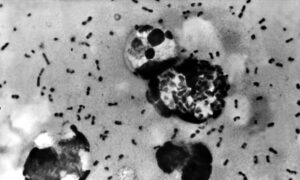
Later, the Arizona State Public Health Laboratory found Yersinia pestis, the bacterium responsible for plague, in initial blood cultures that were sampled during the investigation. They also isolated Yersinia pestis from lung tissue and blood cultures, according to the CDC.
“In areas with endemic plague, preliminary diagnostic test results combined with clinical suspicion for pneumonic plague can result in timely public health interventions,” the CDC said.
The CDC noted that the man’s death was the first from plague, a bacterial infection that has led to multiple worldwide pandemics, since 2007. The most common form of plague is bubonic, not pneumonic, according to the World Health Organization (WHO).
Pneumonic plague, which is based in the lungs, is easily transmissible to other people, the WHO said. Bubonic plague, meanwhile, is caused by the bite of an infected flea, and it leads to inflamed lymph nodes that can turn into open sores filled with pus.
“Any person with pneumonic plague may transmit the disease via respiratory particles to other humans. Untreated pneumonic plague, if not diagnosed and treated early, can be fatal. However, recovery rates are high if detected and treated in time,” the health organization says on its website, noting that it can incubate in the body in as little as 24 hours.
Although the bacterial infection is relatively uncommon in the United States, with a yearly average of seven cases, it still occurs in western states, mostly in northern New Mexico and Arizona.
In North America, plague mainly affects rodents such as prairie dogs, chipmunks, and ground squirrels, according to the U.S. Department of Agriculture’s website. But feline carnivores, such as bobcats, mountain lions, and domestic cats that prey on rodents, can contract the bacteria.
Canines such as domestic dogs, coyotes, and wolves are considered to be “somewhat resistant” to the infection, the department stated.
The CDC’s reminder comes as U.S. officials said on Oct. 5 that they are tracking a possible plague case in Russia after a lab worker in Siberia was diagnosed with pneumonia of unknown origin.