
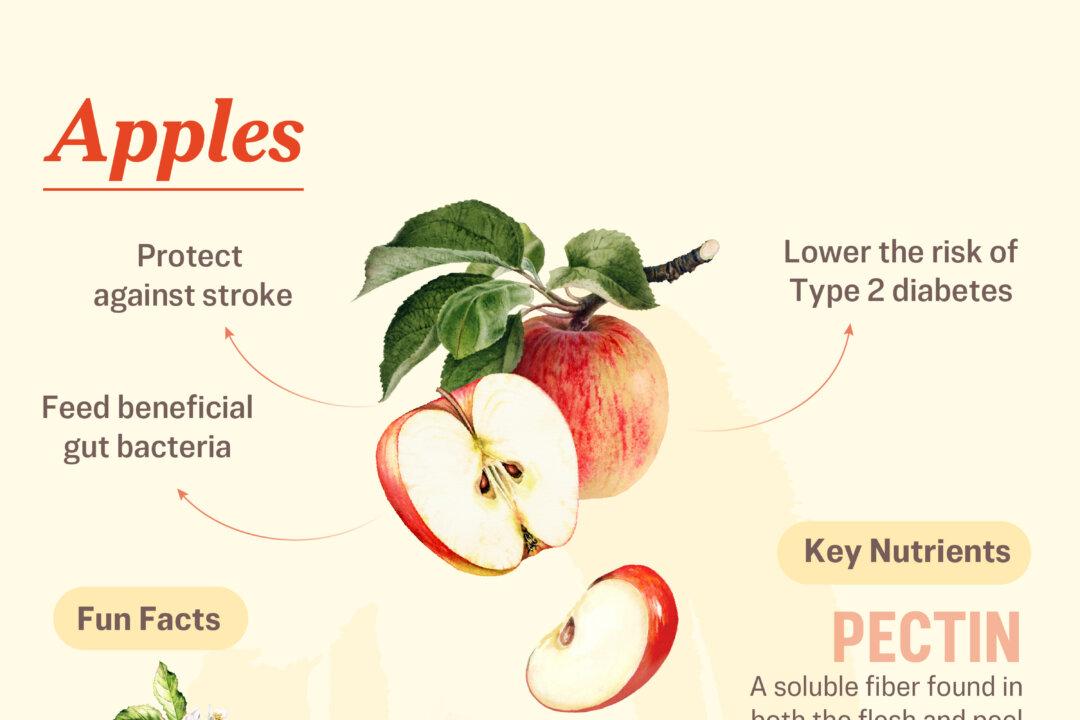
- Fiber: The flesh and peels of apples contain pectin, a type of soluble fiber.
- Quercetin: A powerful antioxidant with anti-inflammatory properties, quercetin is found almost exclusively in the apple’s peel, and in higher amounts in red apples than in green ones.
- Vitamin C: One large apple with the skin contains about 9.75 mg of vitamin C—just over 10 percent of the recommended daily amount for adults.
- Potassium: A large apple with the skin provides approximately 227 mg of potassium.
Protect Against Stroke
A 2020 review examined how eating whole apples influences cardiovascular disease risk factors, including stroke.
Feed Beneficial Gut Bacteria
In a small study, researchers investigated the impact of eating apples on gut health by examining gut bacteria. Eight healthy adults ate two apples daily for two weeks, and scientists observed how different gut bacteria responded to apple pectin.
Lower the Risk of Type 2 Diabetes
In a review published in Food & Function, researchers investigated whether eating apples and pears could reduce the risk of developing Type 2 diabetes. They analyzed five large studies involving 228,315 people. The analysis revealed that people who ate the most apples and pears had an 18 percent lower risk of developing Type 2 diabetes compared with those who ate the least. For every additional serving each week, the risk dropped by 3 percent.
Additional Benefits
Apples are rich in compounds believed to help protect the body against cancer, especially flavonoids such as quercetin, a powerful antioxidant. When compared with other commonly eaten fruits in the United States, apples have the second-highest level of antioxidant activity and total phenolic compounds. However, they have the highest concentration of free phenolics, compounds most easily absorbed and utilized by the body.
- “Many health-promoting natural compounds are located in the peel or directly under the peel. Be sure to rinse apples thoroughly with water and eat the peeling when possible,” said Garden-Robinson.
- While cooking does degrade some vitamins, such as vitamin C, it also makes specific nutrients, such as pectin, easier to digest and increases the bioavailability of quercetin. Cook and eat with the peels on for maximum nutrition. The best cooking methods are baking or steaming, versus boiling.
- Fermenting apples can significantly increase the bioavailability and absorption of their nutrients. Some examples include apple cider vinegar, apple cider, fermented apple sauce, apple wine, and apple sauerkraut.
- Apples can be stored on the counter short-term, however, “storing apples in the refrigerator significantly extends their shelf life compared to leaving them on the counter,” Gibbons said. “The cooler temperature slows respiration, essentially putting the apples to sleep, which helps them retain moisture, crispness, and nutrients for longer.” You can also wrap them individually in newspaper and store them in the pantry, or place them in paper bags in a crisper drawer where they can last for 6 weeks.
- Because of the ethylene apples produce, keep them away from other fruits, as they can make them spoil more quickly.
- Remove bruised apples from other fruit, and they can cause other fruit nearby to spoil more quickly—true to the adage, one rotten apple spoils the bunch!
- Browning: To keep cut apples from turning brown, toss them with lemon juice and put them in a sealed bag or container in the fridge, which will keep them fresh for two to three days.
- Past Their Prime: “Signs that an apple is past its prime include soft or mealy texture, wrinkled skin, and loss of its bright, fresh flavor. Browning flesh or a fermented smell are stronger indicators that the apple is no longer at peak quality,” Gibbons said. However, overripe apples are still safe to eat as long as there is no mold and they haven’t spoiled. They are also perfect for making applesauce, baking, or in smoothies, where texture isn’t as critical, she added.
- Pesticides: Apples are a nutritious fruit, but most conventionally grown apples have some pesticide residues. Watchdog groups, such as the Environmental Working Group, have placed apples on their “dirty dozen list” as they contain pesticide residues that may carry risks that are not fully understood.
To limit your exposure, consider buying organic apples and apple products whenever possible. Wash all apples with clean, running water or a solution of water and baking soda to remove residues. You can also peel them, but much of an apple’s nutritional benefits are in the peel.
- Some people can have allergic reactions to apples—the most common of which is oral allergy syndrome. Symptoms include hives, swelling of the tongue and lips, and itching inside the mouth. Other people can have reactions to the pesticides on apple skin, so be sure to wash apples thoroughly.
- Eating raw apples can cause digestive upset in some people.
- Taking certain medications with apple juice can decrease their effectiveness. Examples include the beta-blocker atenolol (Tenormin) and the renin inhibitor aliskiren (Tekturna).
Baked Apple Oat Slice
Ingredients
- 2 organic apples, with skin, pre-boiled
- 1/2 organic oats
- 1 egg
- 1 teaspoon cinnamon
- 1/2 cup organic yogurt or 1/4 cup grass-fed butter
Directions
- Batch cook four apples ahead of time. Core the apples and slice them into rough cubes.
- Add apples and water to a small saucepan. Bring to a boil, then reduce to medium heat for about five minutes with the lid on.
- Let them cool, then store in the fridge for up to one week. Alternatively, use half the apple mix at that time to make the slice.
Method:
- In a bowl, combine the pre-cooked apples, organic oats, cinnamon, egg, and yogurt. Or if using cold butter, use a pastry cutter to cut the butter in until moist and crumbly.
- Pour mix directly into an air fryer and cook at 315 degrees Fahrenheit for 15 minutes, or bake in a fan-forced oven at 350 degrees for 15 to 20 minutes, with the rack positioned in the center of the oven.
- For cutting neat squares, cool completely after cooking—at least three to four hours, or you can serve it warm, if you don’t mind it being a little softer.
- Apples float in water because they are made up of 25 percent air, making them less dense than water because of air pockets within their structure.
- The only apple native to North America is the crabapple, which tastes extremely tart or sour when eaten raw, but can be delicious when made into jams, jellies, apple sauce, and cider.
- It takes the energy from about 50 apple tree leaves to grow one apple.
- Some of the apples you are eating now may have been picked last year, during the previous season, Mario R. Miranda Sazo, a fruit extension specialist with Cornell Cooperative Extension, told The Epoch Times.
- Most people shop with their eyes and want a perfect-looking apple—thus, many growers sell only 60 percent to 70 percent of the fruit they produce to customers or distributors because of tiny imperfections. The rest often go to make juice, Sazo said.
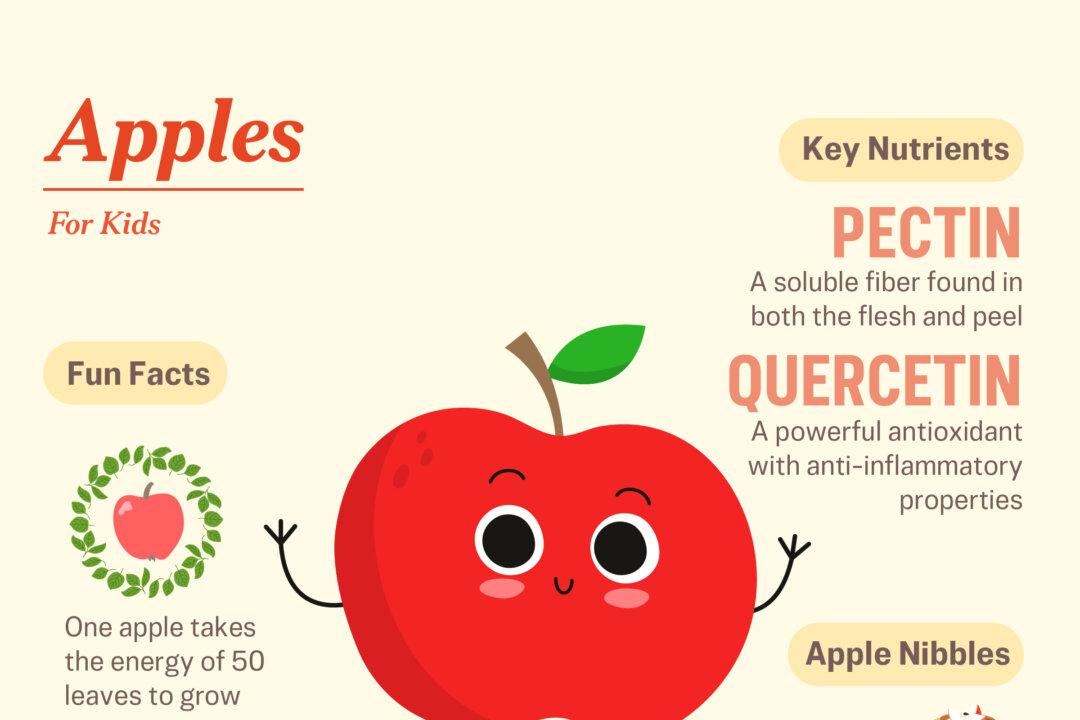
Apple Pancakes
Add a grated apple to pancake batter for extra nutrition, texture, and flavor that kids will love.
Baked Apple Chips
Sliced and baked fresh apples with cinnamon and a sprinkle of sugar or sweetener such as monk fruit, stevia, and xylitol are a simple, healthy, and budget-friendly snack kids are sure to love. Apple chips are also portable, making them perfect for lunchboxes, picnics, or road trips.
Apples and Peanut Butter
These two ingredients go perfectly together—slice apples into wedges and serve with peanut butter on the side for delicious dipping.