
The U.S. Coast Guard (USCG) apprehended 35 suspected illegal immigrants and three suspected smugglers in four separate maritime interdictions this past week.
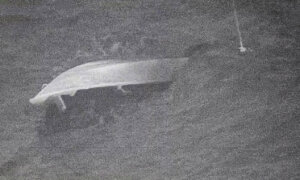
In the first interdiction, the Coast Guard’s Maritime Safety and Security Team (MSST) Honolulu intercepted a 34-foot sailing vessel on July 12 as it crossed the maritime boundary line about five miles off Point Loma, a peninsula in San Diego.
“The MSST Honolulu boatcrew boarded the vessel and spoke with the operator, who was identified as a U.S. citizen and claimed he was alone,“ a July 13 USCG statement reads. ”During the inspection, the crew found another individual hidden below deck, prompting further investigation.”
More people were found hidden below the deck. In total, “the vessel was reported to have two U.S. citizens, seven suspected aliens—four adults and three unaccompanied minors, and suspected narcotics aboard,” according to the statement.
All nine were transferred to the Imperial Beach Border Patrol at Ballast Point, San Diego.
In a second interdiction the same day, MSST Honolulu boatcrew intercepted a 36-foot sailing vessel near Point Loma. The vessel contained one operator, who allegedly had previous smuggling convictions, and three individuals suspected to be illegal immigrants.
On July 11, the USCG intercepted a 40-foot cabin cruiser vessel in Mission Bay, San Diego, finding 21 suspected illegal immigrants aboard—20 adults and an unaccompanied minor. The same day, authorities boarded an 18-foot vessel near Point Loma, finding four suspected illegal immigrants—three adults and one minor.
The USCG patrolled 95,000 miles of coastline in 2025. With 78,677 personnel at its disposal, the service uses 1,808 small boats, 223 cutters, and 135 rotary aircraft.
In a Jan. 13 post on X, USCG said that last year, its crews “surged enforcement operations against illegal maritime migration—interdicting or transporting over 11,000 illegal aliens, and keeping pressure on smuggling networks where enforcement is most effective: offshore and forward.”
Launched in October 2025, Operation River Wall sought to bolster the USCG’s efforts to secure roughly 260 miles of the Rio Grande in eastern Texas that make up the U.S. border in the region.
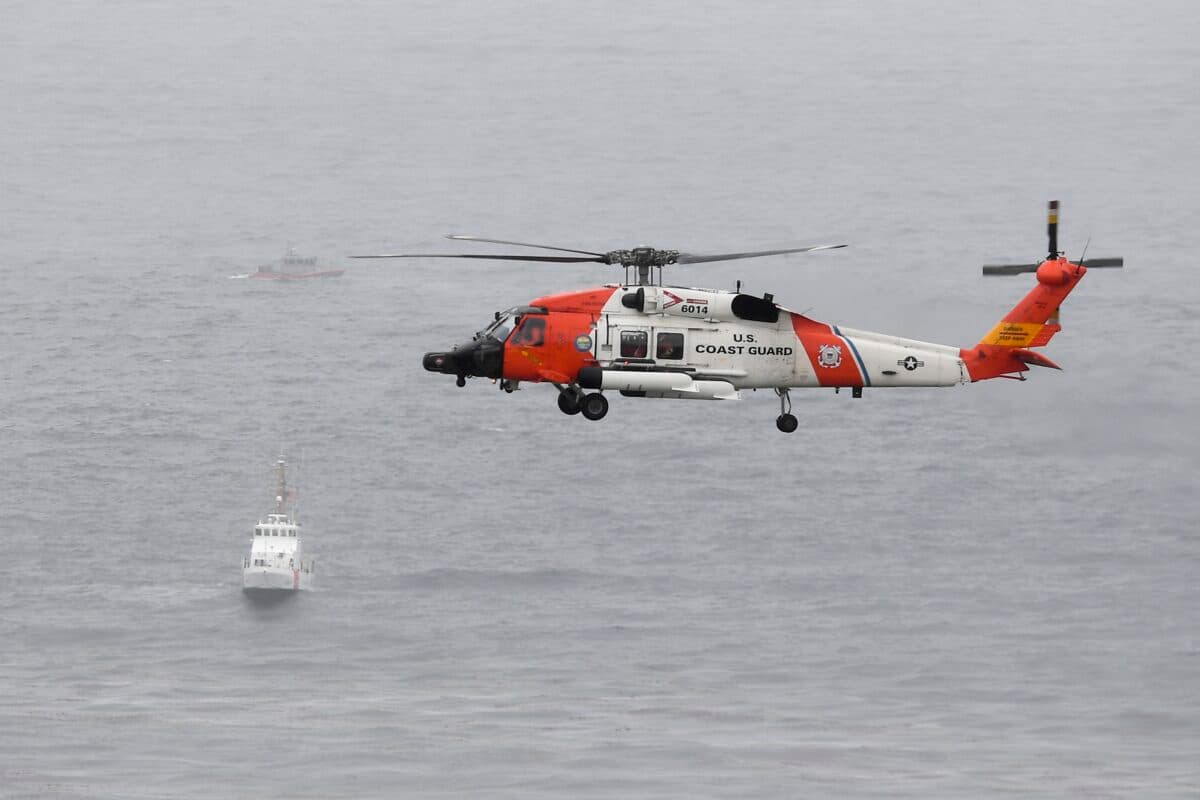
A U.S. Coast Guard helicopter off the San Diego coast on May 2, 2021, in this file photo. (Denis Poroy/AP Photo)
According to a Jan. 9 USCG statement, Operation River Wall was a key part of interdicting more than 11,000 illegal immigrants last year.
Performance Issues, Force Design 2028
In January, the Government Accountability Office published a report assessing that the Coast Guard needed to take action to improve its maritime interdictions of both drugs and illegal immigrants.
The Coast Guard failed to meet its fiscal year 2015 target for intercepting suspected illegal immigrants, after which the agency lowered it.
The Coast Guard then met the lowered goal for the next two years but missed it during the four subsequent years between 2018 and 2021. In fiscal year 2022, the interdiction target was lowered once more, and the Coast Guard met the goal in 2022 and 2023, only to miss it again in 2024.
“The Coast Guard did not meet the target for its primary drug interdiction performance measure in any of the 10 years from fiscal year 2015 through fiscal year 2024,” the report states. “The Coast Guard also did not meet the target for its primary migrant interdiction measure in 6 of 10 years during that same period.”
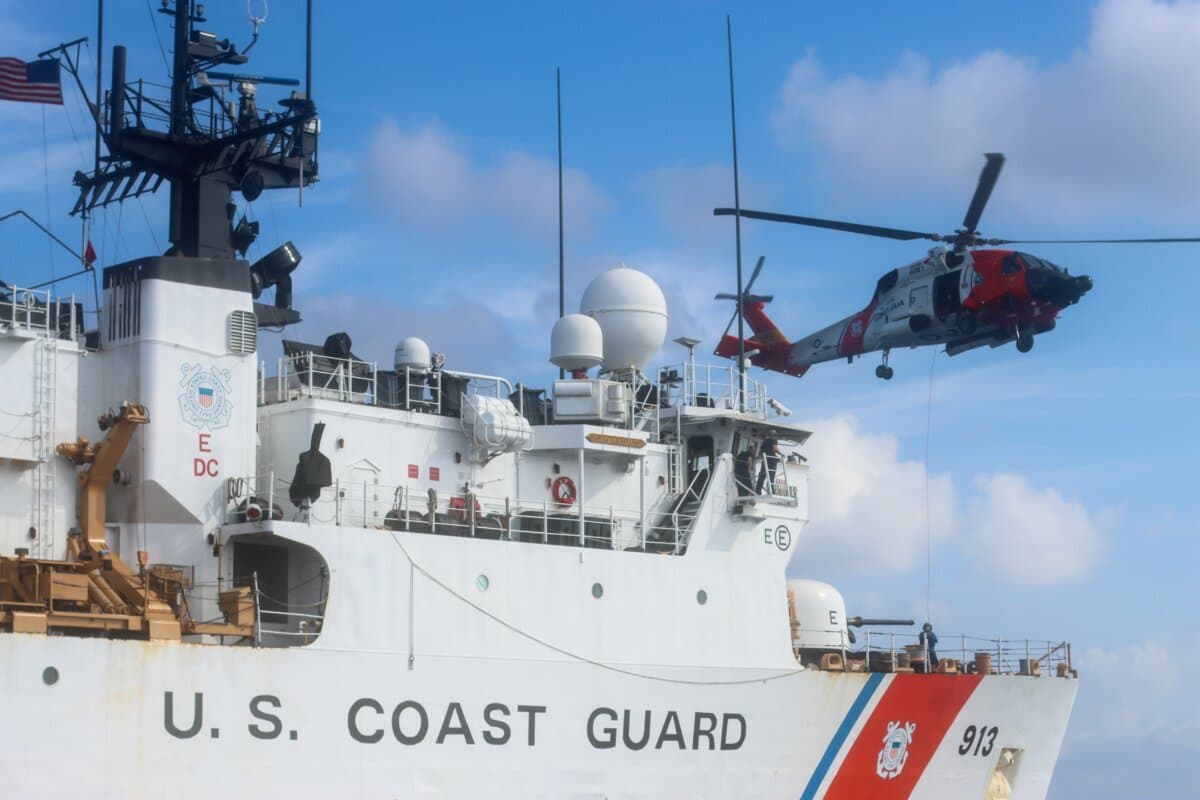
The crew of the U.S. Coast Guard Cutter Mohawk (WMEC 913) and a Coast Guard MH-60 Jayhawk helicopter flight crew conduct training evolutions in the Caribbean Sea on July 15, 2025. (Seaman Corrie Gill/U.S. Coast Guard)
Some of the reasons cited by Coast Guard officials for failing to meet illegal immigrant interdiction targets include declining asset availability and workforce challenges.
The Coast Guard is making changes to tackle these issues. It is implementing its Force Design 2028 plan, which aims to make the agency a more “agile, capable, and responsive fighting force,” according to the USCG website.
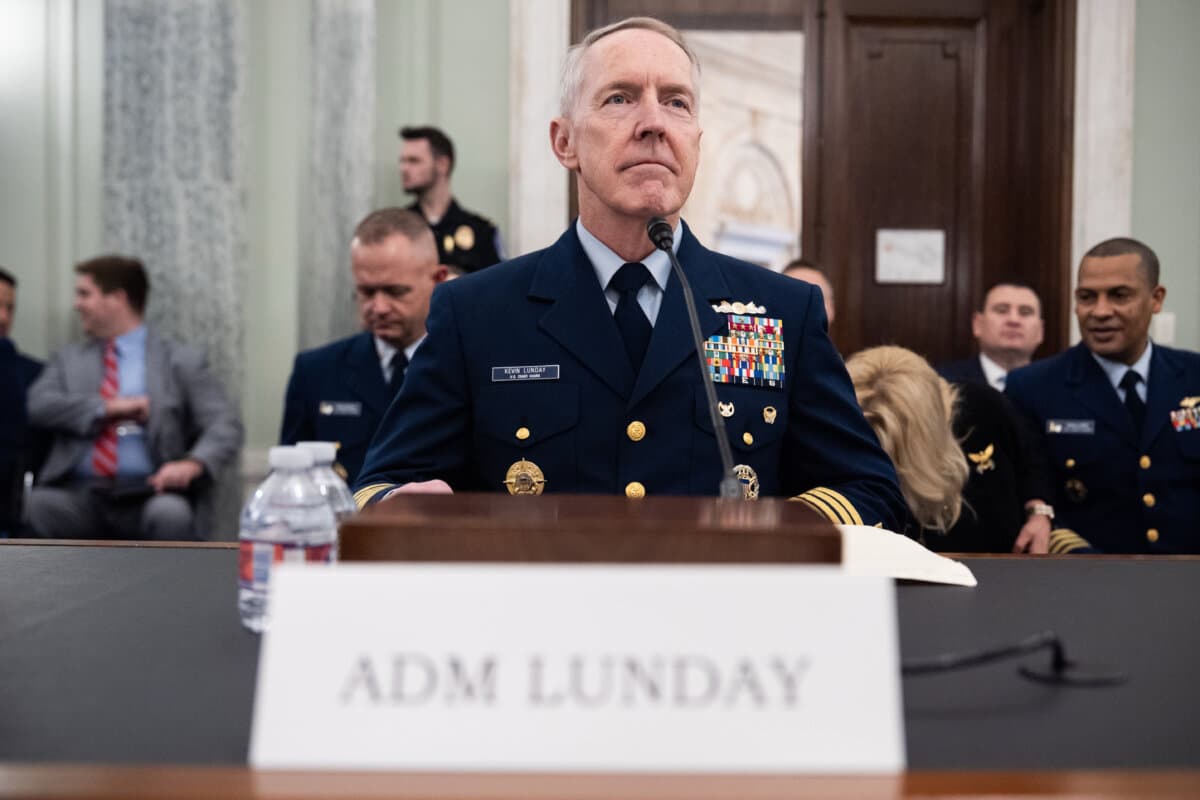
Adm. Kevin Lunday, acting commandant of the U.S. Coast Guard, arrives at a Senate Commerce, Science, and Transportation Committee hearing on his nomination for commandant of the Coast Guard, on Capitol Hill in Washington on Nov. 19, 2025. (Julia Demaree Nikhinson/AP Photo)
During a Jan. 29 testimony before a Senate hearing, Adm. Kevin E. Lunday, commandant of the USCG, said that the service was “moving at speed and scale to modernize [its] capabilities, employ cutting-edge technology, and invest in [its] people.”
By the end of the current fiscal year, the service is expected to obligate $20 billion in funding received from the One Big Beautiful Bill Act, signed into law by President Donald Trump last year, to procure new boats, aircraft, cutters, shore infrastructure, and technology, Lunday said.