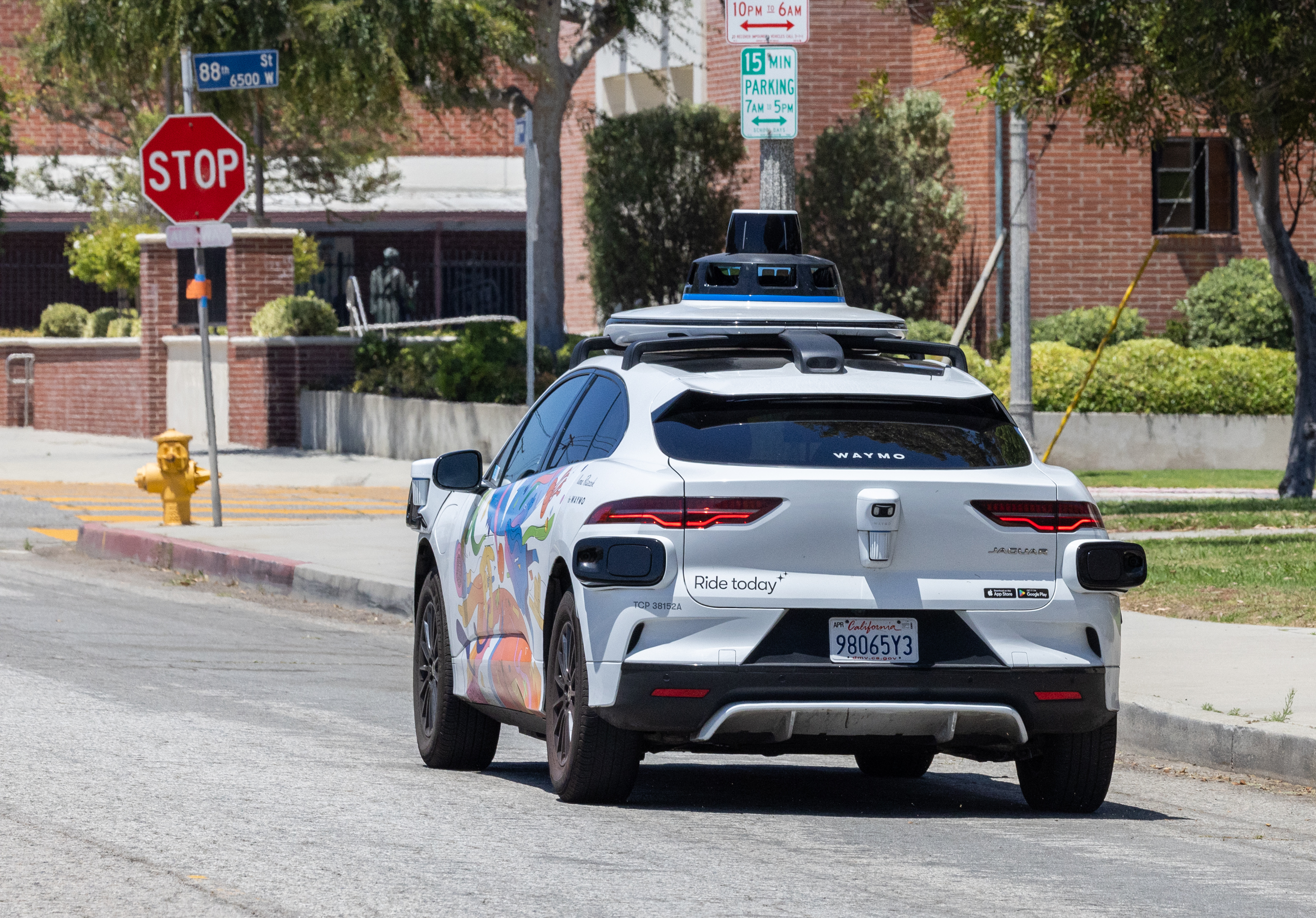

Waymo has launched driverless robotaxi rides on freeways in the United States, a first in the country for autonomous ride-hailing services.
In a Nov. 12 announcement, the Alphabet-owned company said it will provide some riders with routes that include freeways in the San Francisco Bay Area, Los Angeles, and Phoenix.
The expansion will also include curbside service at San Jose Mineta International Airport. The company is still in the testing phase at San Francisco International Airport.
Users need to opt in to Waymo’s new services and features through the app to be able to try this kind of trip.
“The open road symbolizes freedom and unlimited possibility—highlighted especially by the ease and speed by which freeways allow us to get where we’re going,” the company said in the announcement.
Waymo has been rapidly expanding its autonomous ride-hailing services domestically and abroad. Earlier this month, it announced plans to launch robotaxi services in San Diego, Detroit, and Las Vegas.
London is also slated to welcome these fully driverless vehicles to its streets in 2026 as a pilot project.
“Over the coming months, we’ll lay the groundwork for our service in collaboration with our fleet operations partner Moove, and continue to engage with local and national leaders to secure the necessary permissions for our commercial ride-hailing service in London,” Waymo said.
In April, Waymo brought its vehicles to Tokyo, where the company began adapting its technology and operations to the busy roads of Japan’s capital city.
Waymo isn’t the only company aiming to bring autonomous ride-hailing to the public, as Tesla recently launched limited self-driving cab services in Austin, Texas. However, with Tesla rides, a human safety operator sits in the front passenger or driver’s seat. Most Waymo cabs are unmanned.
Tesla’s website says its Robotaxi fleet is currently invitation-only and consists of Model Y vehicles, and riders are required to stay out of the driver’s seat.
Earlier this year, California greenlit Tesla’s autonomous ride-hailing services for limited operation in pre-arranged trips available to company employees. Tesla obtained a charter-party carrier permit, which allows the company to work toward expanding its service to members of the public, the California Department of Motor Vehicles stated in March.
Tesla’s self-driving technology relies on exterior cameras for 360-degree visibility and artificial intelligence (AI) to navigate roads. Its AI system identifies objects on the road and maintains speed to keep up with traffic conditions.
Waymo’s autonomous technology uses a combination of lidar, cameras, radar, and computing to create a 3D picture of the car’s surroundings for the Waymo Driver system to make decisions while on the road.
Over the years, Waymo has faced obstacles while trying to make autonomous ride-hailing widely available.
In 2024, the company temporarily paused expansion plans in California after public officials in San Mateo and Los Angeles counties raised concerns that Waymo cars could stall and cause public safety issues by blocking firefighters and police.
The U.S. Department of Transportation in 2024 probed Waymo’s autonomous driving system following reports of crashes and violations of traffic safety laws.
These cars have also been the target of vandalism. A mob surrounded, smashed, and set on fire a stopped car in San Francisco during Lunar New Year celebrations in 2024.
Similarly, protesters destroyed several Waymo vehicles during riots in Los Angeles earlier this year. Videos and photos showed rioters calling for the vehicles on apps. When the cars arrived, rioters sprayed graffiti, tore the cars apart, and set them ablaze.
Waymo, which is based in Mountain View, California, currently has more than 1,500 cars in its fleet spread across San Francisco, Los Angeles, Phoenix, and Austin, with the goal of building 2,000 more fully autonomous I-PACE vehicles through next year.