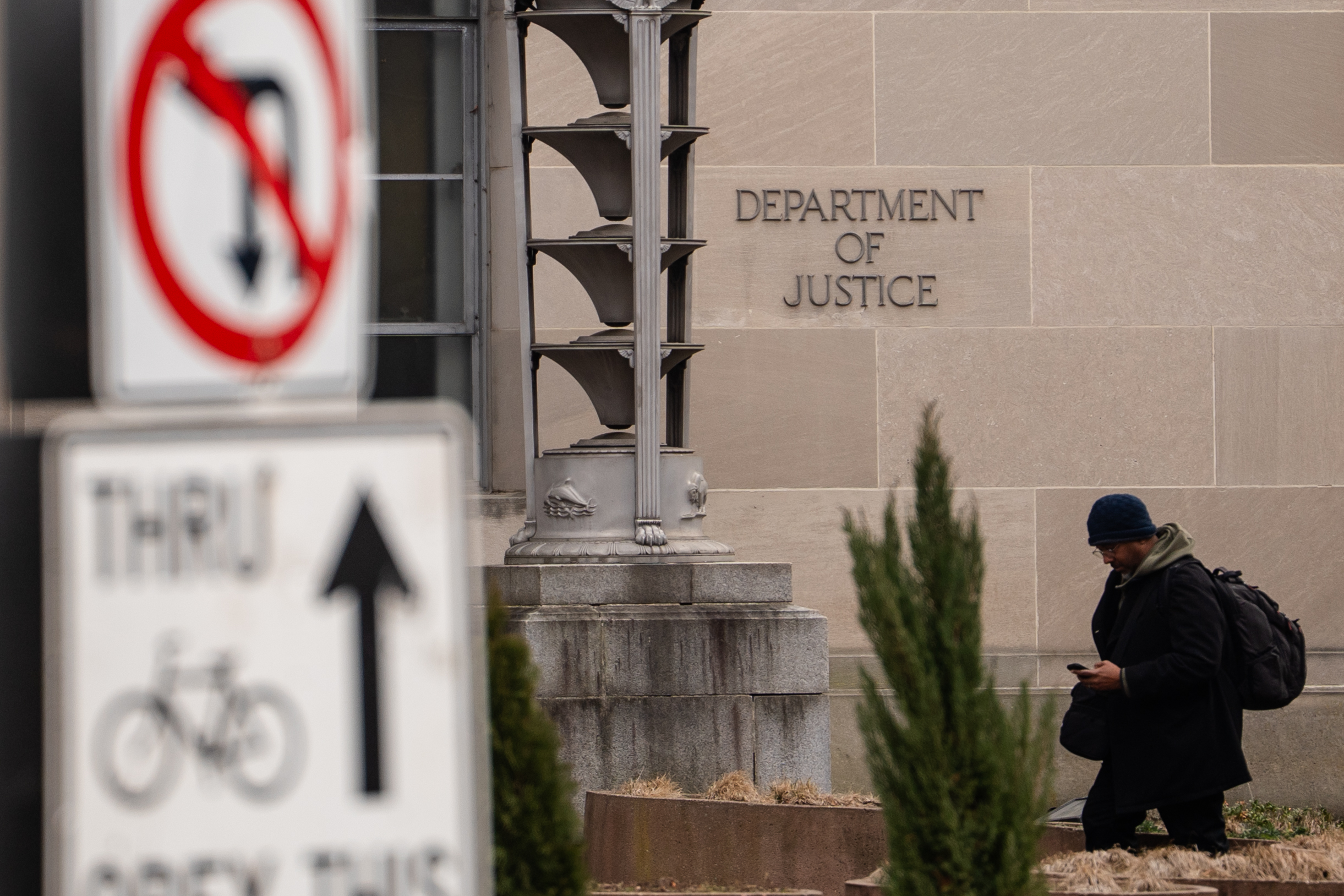

U.S. authorities on March 19 charged the cofounder of Super Micro Computer, also known as Supermicro, and two workers with diverting to China servers containing Nvidia-made chips, which are subject to U.S. export controls.
The Department of Justice (DOJ) said in a statement that it had arrested Yih-Shyan “Wally” Liaw, a U.S. citizen who co-founded Supermicro and served as senior vice president of business development at the publicly traded company, along with Taiwanese citizen Ting-Wei “Willy” Sun, who worked as a contractor for the company. Liaw is also a member of the company’s board of directors, according to a company statement.
The DOJ said that a third defendant, identified as Ruei-Tsang “Steven” Chang, a Taiwanese citizen who worked as a general manager for Supermicro in Taiwan, is still at large.
According to the indictment, between 2024 and 2025, the defendants allegedly diverted at least $2.5 billion worth of servers equipped with Nvidia-made graphics processing units (GPUs) to China in violation of U.S. export control laws.
Liaw and Chang allegedly directed executives of a Southeast Asian company, which the DOJ did not name in the indictment, to place purchase orders with Supermicro for servers with certain GPUs, purportedly for that company.
The servers were assembled in the United States, shipped to Supermicro facilities in Taiwan, and subsequently delivered to the company at another location in Southeast Asia, according to the indictment.
The unnamed company, in consultation with the defendants, allegedly used a shipping and logistics company to repackage the servers. The servers were then placed in unmarked boxes before being shipped to their final destinations in China, the indictment shows.
Prosecutors alleged that the defendants used false documents and sent false communications showing the Southeast Asian company as the end user in order to ensure the server allocations were approved internally at Supermicro.
“The indictment unsealed today details alleged efforts to evade U.S. export laws through false documents, staged dummy servers to mislead inspectors, and convoluted transshipment schemes, in order to obfuscate the true destination of restricted AI technology—China,” John Eisenberg, assistant attorney general for national security, said in the statement.
Supermicro was not named as a defendant in the case. The California-based tech company said it was cooperating fully with the investigation and had placed Liaw and Chang on administrative leave.
The company said it had terminated its contract with Sun following the indictment. Supermicro also emphasized that the workers’ alleged conduct was against its policies and compliance controls.
“Supermicro maintains a robust compliance program and is committed to full adherence to all applicable U.S. export and re-export control laws and regulations,” the company said in a statement.
Supermicro, founded in 1993 and based in San Jose, California, describes itself as a total information technology solutions provider for artificial intelligence, cloud, and storage.
The company said its products are designed and manufactured in-house in facilities located in the United States, Taiwan, and the Netherlands.
It was unclear whether the three defendants had been appointed legal counsel at the time of publication.
Exports of Nvidia’s AI chips have been restricted by U.S. authorities as Washington seeks to prevent the most advanced chips from being sold to China to protect its national security.
In an emailed statement to The Epoch Times, an Nvidia spokesperson said that “strict compliance” with U.S. export control laws remains a top priority.
“We continue to work closely with our customers and the government on compliance programs as export regulations have expanded,” the spokesperson said. “Unlawful diversion of controlled U.S. computers to China is a losing proposition across the board—NVIDIA does not provide any service or support for such systems, and the enforcement mechanisms are rigorous and effective.”