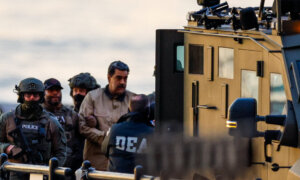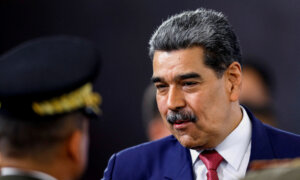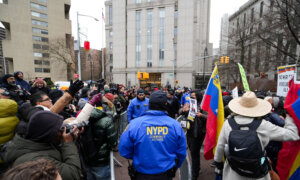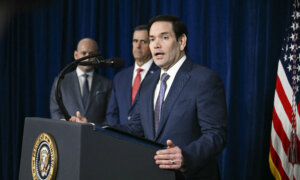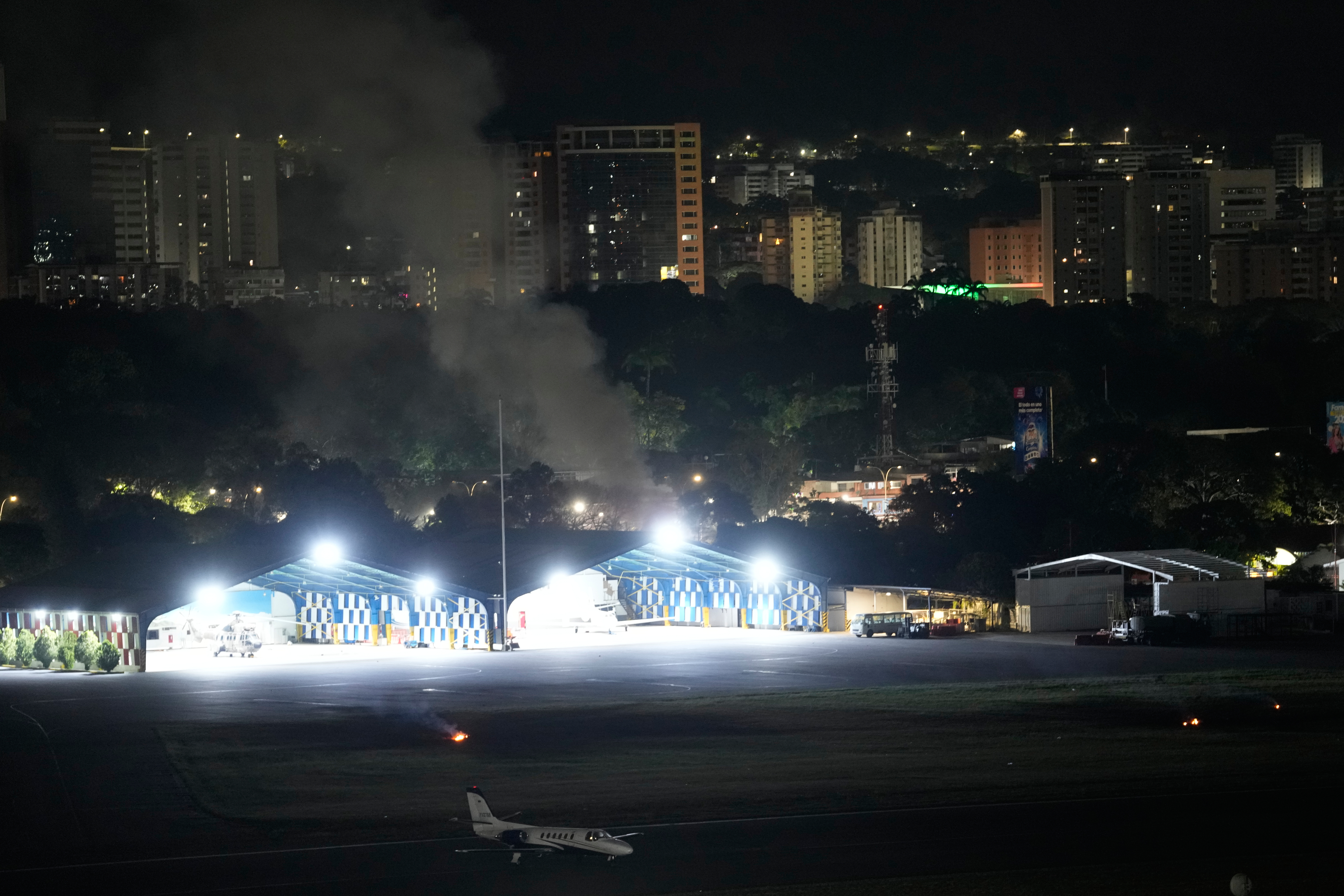
World leaders have reacted to the United States capturing Venezuelan leader Nicolás Maduro and his wife and indicting them on drug-trafficking charges after a strike on Jan. 3.
Leaders in Argentina and Ecuador backed the U.S. operation.
“The Government of the Argentine Republic values the decision and determination shown by the President of the United States of America and his Government in the recent actions taken in Venezuela that resulted in the capture of dictator Nicolás Maduro, leader of the Cartel of the Suns, declared a terrorist organization by the Argentine Government on August 26,” reads a government statement shared by Argentine President Javier Milei.
“Argentina trusts that these events represent a decisive step forward against the narco-terrorism affecting the region and, at the same time, open a new chapter that will allow the Venezuelan people to fully recover democracy.”
Ecuadorian President Daniel Noboa wrote an open statement to the Venezuelan people and opposition figures on X, saying: “It’s time to reclaim your country. You have an ally in Ecuador.”
The relatively quick U.S. strike could have long-lasting implications for the region and geopolitical order. Some of the top U.S. rivals—China, Russia, and Iran—responded with condemnation.
“Those who argued that the solution to the country’s problems was in negotiating with the US have seen what happened,” Iranian leader Ali Khamenei said in a statement after the strike in Venezuela.
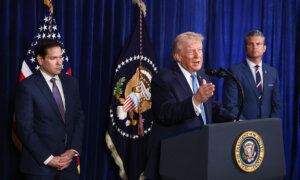
The economic and geopolitical fallout remains to be seen for China, which has heavily invested in Latin America and been a dominant recipient of Venezuela’s oil exports. President Donald Trump previewed significant U.S. involvement in Venezuela’s oil industry during a Jan. 3 news conference.
U.S. officials said the military action came as a result of Maduro’s refusal to take multiple opportunities to change course.
“The president offered multiple off ramps, but was very clear throughout this process: the drug trafficking must stop, and the stolen oil must be returned to the United States,” Vice President JD Vance said in a post on X on Jan. 3.
Trump said during the Jan. 3 news conference that the United States would temporarily run Venezuela “until such time as [the United States] can do a safe, proper, and judicious transition.” He said Maduro’s vice president, Delcy Rodríguez, has agreed to cooperate with Washington.
In remarks to reporters, Trump said Rodríguez was “essentially willing to do what [the United States thinks] is necessary to make Venezuela great again.”
However, Rodríguez also called for Maduro’s release and described him as the country’s rightful leader.
Some Latin American leaders, as well as U.N. Secretary-General António Guterres, raised concerns about the United States’ potentially having violated international law with its operation in Venezuela.
Multiple nations have called for an emergency session of the U.N. Security Council. Colombia, which just joined the security council as a non-permanent member, condemned the attack.
Following the strikes, Trump said Colombian President Gustavo Petro should tread lightly, while U.S. Secretary of State Marco Rubio hinted that Cuba could be next after Venezuela.
“If I lived in Havana and I was in the government, I’d be concerned at least a little bit,” he said.
Besides the leaders of Colombia and Cuba condemning the U.S. operation, Mexican President Claudia Sheinbaum also said her government “strongly condemns and rejects the military actions,” while suggesting that the U.S. action was a violation of Article 2 of the Charter of the United Nations.
“Based on its foreign policy principles and its pacifist vocation, Mexico makes an urgent call to respect international law, as well as the principles and purposes of the UN Charter, and to cease any act of aggression against the Venezuelan government and people,” Sheinbaum said.
Trump told Fox News that cartels are running Mexico and that he has repeatedly asked Sheinbaum whether her country wants U.S. help to root them out but that she has declined.
“So we have to do something,” Trump said, noting that many Americans die from drugs entering the United States from Mexico.
Reactions in Europe, Canada, Australia
European Union foreign policy chief Kaja Kallas confirmed speaking to Rubio and said the “EU is closely monitoring the situation in Venezuela.” Kallas said that although the EU holds the position that Maduro lacks legitimacy as president of Venezuela, the bloc is calling for restraint and the upholding of international law.
“The EU has repeatedly stated that Mr Maduro lacks legitimacy and has defended a peaceful transition,” Kallas wrote on X. “Under all circumstances, the principles of international law and the UN Charter must be respected. We call for restraint. The safety of EU citizens in the country is our top priority.”
Some other European leaders, as well as Canada, expressed positions similar to that of Kallas, with many offering carefully worded concerns about the transition period, which the United States has said it will lead. Others were more explicit in their skepticism about the legality of the U.S. operation, while some expressed support.
British Prime Minister Keir Starmer stated that the UK was not involved in the strikes and expressed his desire to speak with Trump.
“It’s obviously a fast-moving situation, and we need to establish all the facts,” Starmer said in a statement to British reporters.
The British prime minister said in a social media statement that the UK has “long supported a transition of power in Venezuela” but noted that his government supports “international law” and wants to see a peaceful “transition to a legitimate government that reflects the will of the Venezuelan people.”
French President Emmanuel Macron said on social media that Venezuelan people “can only rejoice” that Maduro’s dictatorship has ended. He said the upcoming transition must be peaceful and democratic, and expressed hope that opposition figure Edmundo González Urrutia, whom he called the rightful winner of the 2024 election, can “swiftly ensure this transition.”
German Chancellor Friedrich Merz condemned Maduro for rigging the 2024 election, saying that Germany does not recognize Maduro as a legitimate leader of Venezuela. However, he said the legality of the U.S. operation in Venezuela needs further scrutiny.
“The legal assessment of the U.S. intervention is complex and requires careful consideration,” Merz said. “International law remains the guiding framework. At this stage, political instability in Venezuela must be avoided. The objective is an orderly transition to an elected government.”
Italian Prime Minister Giorgia Meloni said that although her government does not believe that outside military action is the right way to end a totalitarian regime, an intervention of a “defensive nature against hybrid attacks” by a state that engages in narco-trafficking is justified.
“Italy, together with the main international partners, has never recognized Maduro’s self-proclaimed electoral victory, condemning the regime’s acts of repression and has always supported the Venezuelan people’s aspiration to a democratic transition,” Meloni said.
Canadian Prime Minister Mark Carney said his country welcomes the “opportunity for freedom” in Venezuela but noted that all parties need to “respect international law.” He called for a peaceful, “Venezuela-led” transition process.
Australian Prime Minister Anthony Albanese said his country has long been concerned about the situation in Venezuela, “including the need to respect democratic principles.” He said his government urges “all parties to support dialogue and diplomacy in order to secure regional stability and prevent escalation.”