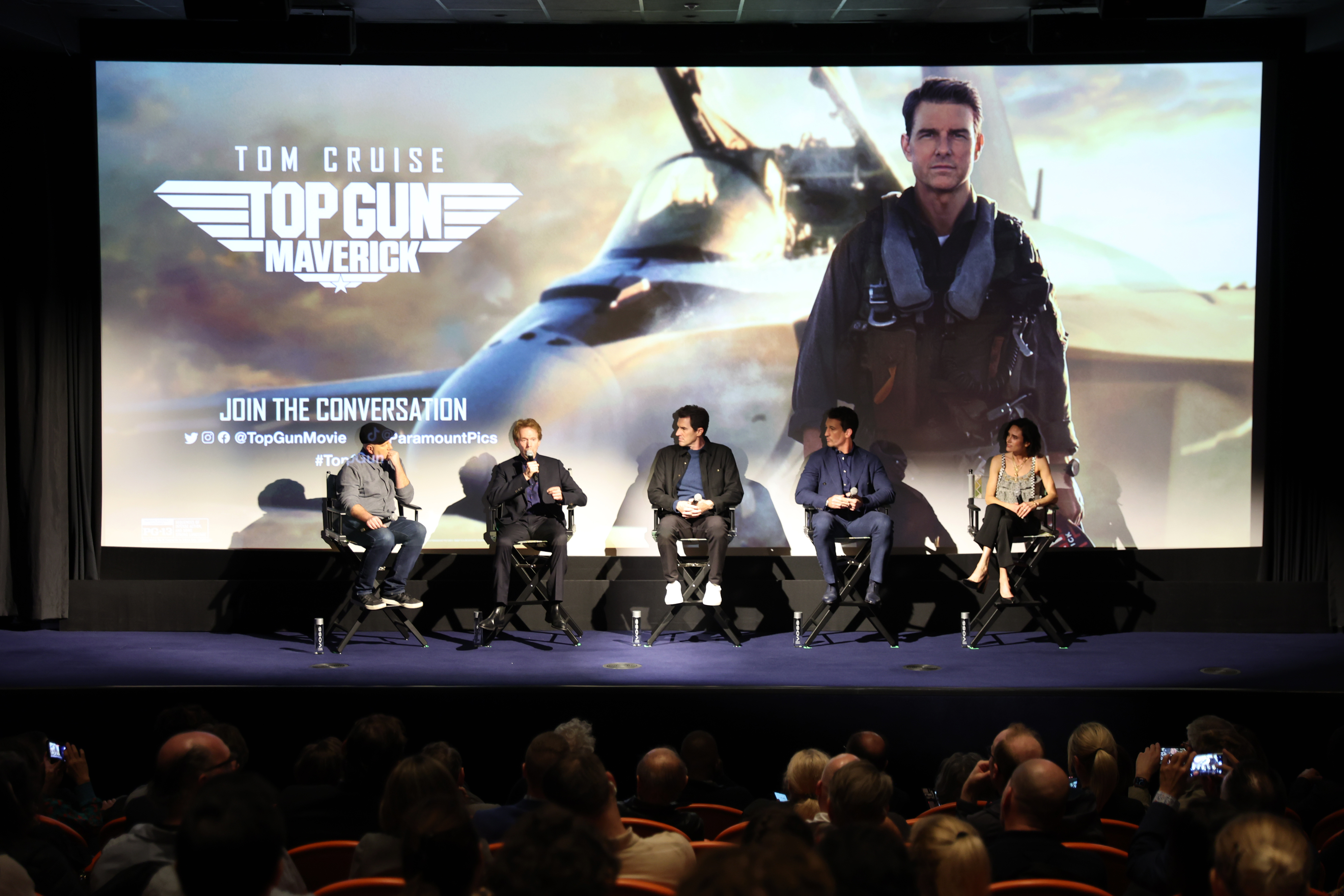

Paramount didn’t need a wingman to expand the “Top Gun” universe.
A federal appeals court sided with Paramount in a copyright infringement lawsuit filed by the family of a writer who inspired the 1986 “Top Gun” film.
The 9th U.S. Circuit Court of Appeals in Pasadena, California, ruled on Jan. 2 that Paramount’s 2022 Oscar-winning “Top Gun: Maverick” movie, which was a sequel to “Top Gun,” did not infringe on Ehud Yonay’s “Top Guns” 1983 magazine article that inspired the initial picture.
“The panel affirmed the district court’s conclusion that Maverick did not share substantial amounts of the original expression of ‘Top Guns,’ and plaintiffs therefore failed to establish a triable issue as to substantial similarity, as required to establish copyright infringement,” the ruling stated.
Yonay’s article about the United States Navy Fighter Weapons School, known as “Top Gun,” was published in California Magazine.
After the nonfiction work was published, Yonay granted Paramount all rights to the article for a fixed sum of money and credit for the original “Top Gun” film starring Tom Cruise, Tim Robbins, and Val Kilmer, but the agreement did not give Paramount indefinite rights.
The contract allowed “an author’s heirs to terminate certain copyright,” which is exactly what happened.
When Yonay died in 2012, his widow, Shosh, and his son, Yuval, became the copyright owners of the magazine article and terminated their agreement with Paramount in 2020.
Two years after the Yonays terminated the contract, “Top Gun: Maverick” appeared in theaters, with Tom Cruise reprising his role and training a younger group of graduates.
Paramount had the rights to use the article in the original 1986 “Top Gun” film, but not the 2022 sequel. The entertainment producer did not compensate the Yonays or credit Yonay in the sequel.
Plaintiffs Shosh and Yuval Yonay alleged that Paramount’s 2022 film reused elements of the original article published decades ago, but judges disagreed.
Circuit Judge Eric D. Miller, who was part of a panel of three judges that issued Friday’s ruling, noted that even though the magazine article and 2022 blockbuster “share some similarities,” he wrote that the plaintiffs failed to show the film was similar to their “original expression” and not just a similar concept.
Miller pointed out that the plots of the magazine article, which was a factual piece of work, and the fictional movie were not similar and added that facts, ideas, and concepts did not qualify as “unlawful appropriation.”
“The panel concluded that there was a lack of similarity in protectable elements of the article, and plaintiffs did not establish an original and protectable selection and arrangement of elements,” Friday’s ruling added.
The Epoch Times contacted Paramount and the Yonays’ lawyers for comment.