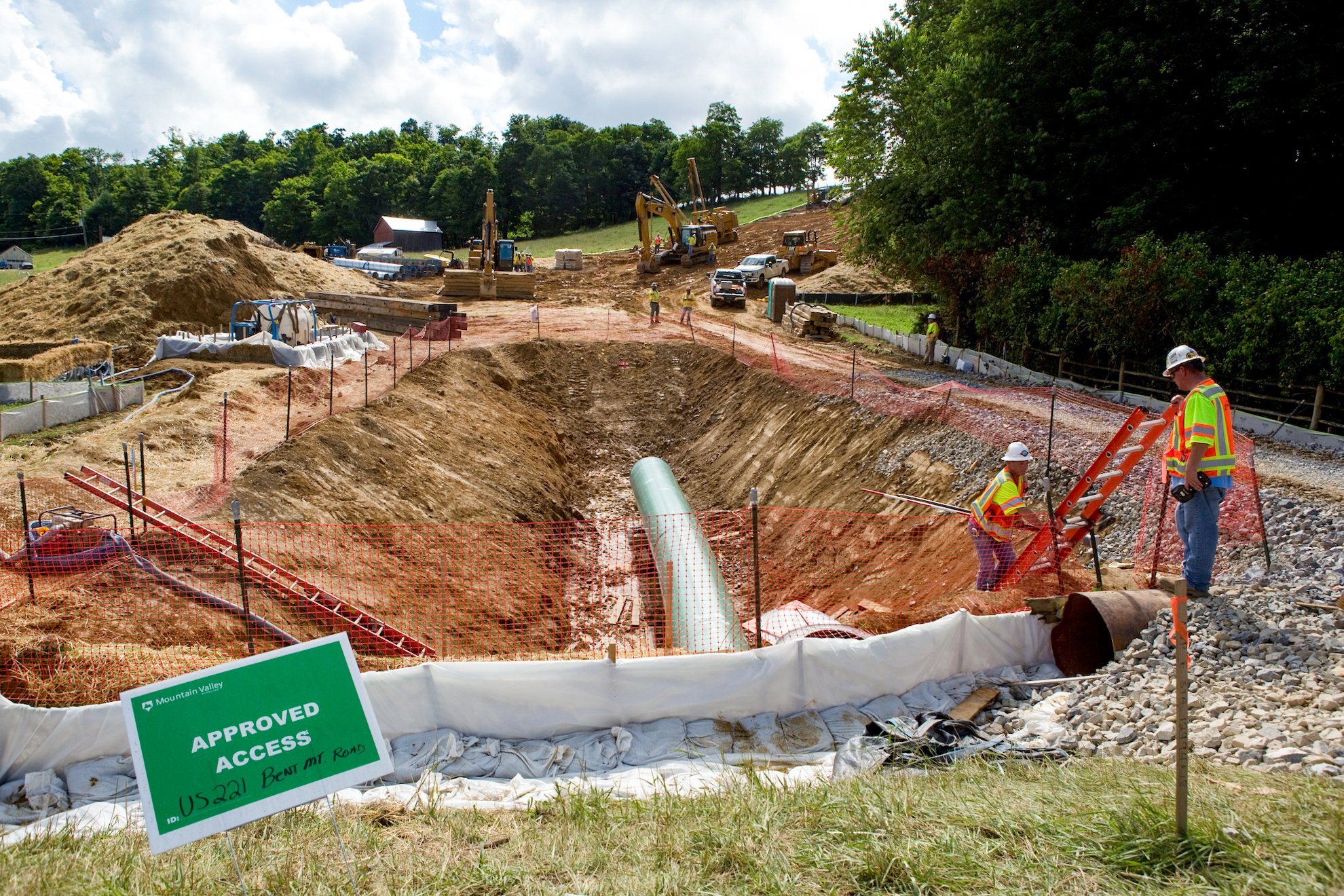

Comprehensive permit reform has been an elusive Republican priority since at least 2020, and congressional leaders, federal officials, industry experts, and association advocates are cautiously confident a deregulatory measure will make it onto President Donald Trump’s desk in 2026.
If so, they concede with acknowledged irony, it will get there because Democrats, environmental advocates, and the renewable energy industry have joined a bipartisan chorus clamoring to streamline regulations, trim permitting processes, and de-fog the litigative labyrinths that now bedevil energy development and constrict grid expansion.
That was the consensus at the Bipartisan Policy Center’s Permitting Summit in Washington on Feb. 3 that featured nine discussions on permit reform and an optimism buoyed by a House bill now awaiting Senate endorsement that, among other provisions, scales back judicial review timelines.
Odds are good, agreed key congressional committee members, two Trump administration officials, clean energy advocates, industry association lobbyists, pipeline builders, utility managers, and regional transmission organization operators, that the Standardizing Permitting and Expediting Economic Development (SPEED) Act will be signed into law this year.
The bill was adopted by the House in a 221–196 vote on Dec. 18, 2025.
SPEED Act co-sponsors House Natural Resources Committee Chair Bruce Westerman (R-Ark.) and Rep. Jared Golden (D-Maine) both believe their bill, with potential revisions, will pass in 2026.
“The best time to have planted a tree is 20 years ago. The best time to have done permitting reform was 20 years ago,” Westerman said.
“The next best time is today, and that’s when we need to do permitting reform. If we don’t get this done, I can foresee this becoming, like, a 2029 discussion. Who wants to wait another three years? I don’t.”
Golden called on Senate Democrats to pass the bill before November’s elections.
“I’m hopeful people are tired of what we’ve heard many times: ‘Let’s hold out for a better political environment for our party.’ That’s been true on both sides,” he said.
“I’m not sure punting this issue in advance of the next presidential election really makes sense. Now feels like a pretty good time to move on it.”
The SPEED Act revises 1969’s National Environmental Policy Act (NEPA) largely by codifying May 2025’s “Seven Counties” Supreme Court ruling that restricts the scope of environmental studies to direct impacts and determined that already-approved projects are not required to conduct new NEPA-related reviews spurred by lawsuits.
Proponents say the bill will cut red tape, reduce litigation, limit the scope of redundant environmental reviews, and provide certainty for investors in modernizing the 56-year-old NEPA, the first of several landmark environmental laws enacted during the Nixon administration, including the 1970 Clean Air Act, the 1972 Clean Water Act, and the 1973 Endangered Species Act.
Republicans and the nation’s energy industries have argued for years that NEPA and subsequent legislation have morphed beyond original intent to become regulatory quagmires and litigation landmines that ensnare proposed development in lengthy, expensive court battles.
Renewable energy developers said NEPA offers no “green” reprieve.
“It’s not like wind and solar are being greeted as saviors. People don’t like building anything anywhere, so there’s certainly going to be challenges against every energy project going forward,” American Clean Power Association CEO Jason Grumet said.
“The NEPA problem is significant for our industry. It’s an ‘own goal,’ a problem actually of our own making. We all realize the responsibility we all have in creating the problem.”
A 2024 Breakthrough Institute study reviewed 387 NEPA-related lawsuits from 2013 to 2022 and found that “litigation overwhelmingly functions as a form of delay, as most cases take years before courts ultimately rule in favor of the defending federal agency” in 80 percent of cases.
During the 2023–2024 Congress, there were 115 pieces of proposed legislation seeking to revamp NEPA, the Endangered Species Act, and the Clean Water and Clean Air acts. None made it to a floor vote. But circumstances have changed.
“For folks on the left, folks involved in the environmental movement, they complain about permitting and regulation, how it’s actually obstructed progress,” said former Rep. Sam Graves (R-Mo.), a summit moderator.
“And, certainly, folks on the right have been incredibly frustrated by the permitting process and development projects. It’s one of those rare instances where the left and the right are united. I’m hopeful we can make progress, finally.”
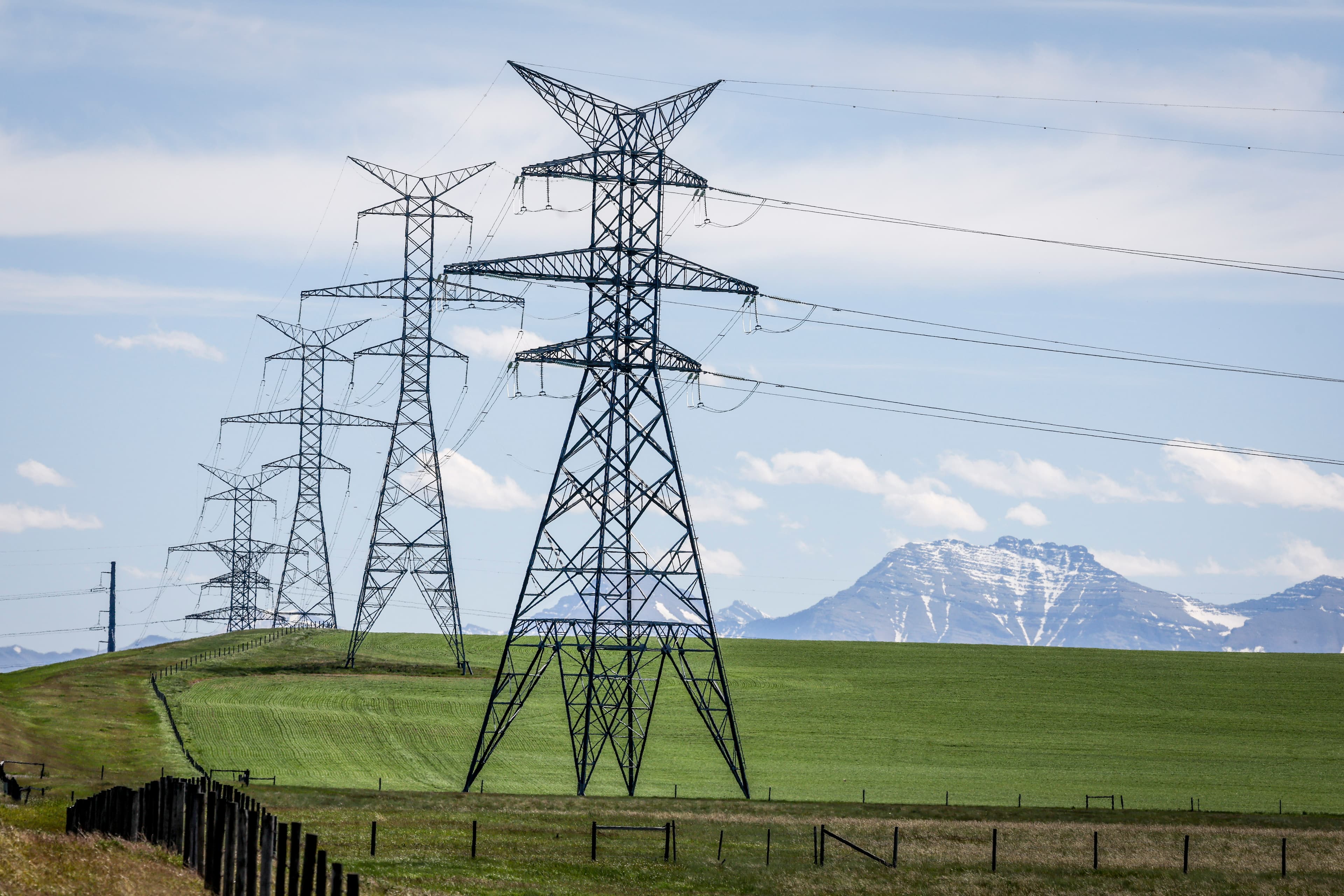
Power transmission lines are seen with the Rocky Mountains in the background near Pincher Creek, Alberta. Canada, on June 6, 2024. (The Canadian Press/Jeff McIntosh)
Self-Interests Align
Advocates from the Environmental Defense Fund, National Wildlife Federation, The Nature Conservancy, Blue Horizons Foundation, Clean Energy Buyers Association, and American Clean Power Association agreed with those representing the Interstate Natural Gas Association of America, ExxonMobil, ClearPath, Grid United, Google, and The Business Roundtable that permit reform is urgently needed.
“In my more than 20 years of working on this issue, I’ve never seen different industries, the business community, coalesce around these priorities the way we’re seeing right now,” Business Roundtable Senior Vice President Matt Sonnesyn said.
“This is the moment to do it.”
Interstate Natural Gas Association of America CEO Amy Andryszak said, “We’re finally in a place where ... you’ve never seen so many stakeholders in agreement that we need permitting reform to build the infrastructure necessary for this country.
“I am very hopeful that now is the time we can move together with a bipartisan, comprehensive bill.”
“Of course we can do it, right?” said Sen. John Hickenlooper (D-Colo.), who joined fellow Senate Natural Resources and Energy Committee member Sen. David McCormick (R-Pa.) at the summit.
“Congress is beginning—perhaps, finally—to recognize this is an imperative. This is a moment. We don’t have a choice: we will do it because we have to do it.
“Look at increasing demand—it’s coming like an 18-wheeler down the highway right at us.”
Hickenlooper said when self-interests align, anything is possible—even in Congress.
“We are at that unique moment where, if you’re full of anxiety about climate change, what can we do?” he said. “Well, we’ve got to go faster.
“Or, if you’re someone who’s really worried about AI and all the energy it needs, how do we get energy fast enough? That alignment of those two self-interests overlapping. It’s there.”
McCormick said that “the politics of this have changed.”
“People on both sides are saying this is important, and even some of the resistance on both sides to the other’s point of view have been softened,” he said.
The SPEED Act broadens agency judicial deference, limits who can bring legal challenges, and imposes deadlines on courts to resolve procedural litigation from six years—two years for transportation projects—to 150 days.
The proposed measure establishes a 60-day deadline for agencies to provide courts with all documents and materials used in their determinations and requires that courts issue a judgment within 180 days.
Appeals must be filed within 60 days; appellate courts must rule on appeals within 180 days.
The SPEED Act also trims who can file a NEPA-related lawsuit to those who submitted a “unique, substantive comment” during public comment periods demonstrating that they would be “directly and negatively affected.”
“We’re at a critical moment in federal permitting reform where the legislative, judicial, and executive branches are really leaning into this idea that we need to get things built,” Federal Permitting Improvement Steering Council Executive Director Emily Domenech said.
“I’m confident everyone in this room has a desire to responsibly develop our resources, protect the environment, and ensure American prosperity for years to come.”
Westerman suggested that proponents turn desire into action.
“Spend a little less time here and more time over in the Senate, visiting with our Senate colleagues,” he said.
“Sitting in here and talking about it is fun, but the rubber meets the road by talking to these senators and telling them how important it is to your business, how important it is to your state, how important it is to the economy.”
Press the issue, Westerman urged, noting that the “odds of getting permitting reform done in this Congress [depend] on how badly you want to see permitting reform get done” and that one way to do that is to ensure—repeatedly—that all 100 senators know the SPEED Act has widespread support.
“We have to keep the drum beating because we are in an election year. I don’t know what the timeframe [for adoption] is, but the timeframe gets shorter every day,” he said.
“And you all know how fast the Senate typically moves. That’s not very fast.”